A British outfit that started with March support, finished third in Portugal in 1989 and then fell apart in 1990 under ownership disputes.
After years of junior-category success, Onyx spent 1989 and 1990 in Formula One. The team's only podium came at Portugal in 1989, and it ended operations in 1990 amid ownership and money problems. Its best finish was third, and its six points all came in its first season.
Onyx Grand Prix was a British constructor that raced in Formula One during 1989 and 1990. It scored six championship points, and its best finish was third at the 1989 Portuguese Grand Prix, where Stefan Johansson brought the car home.
How did Onyx begin in the late seventies?
Onyx Race Engineering began in late 1978 as a partnership between Mike Earle and Greg Field, two old colleagues. Earle had run Church Farm Racing in F3, F2 and F5000, and the pair first tried their own chassis in Formula Two in 1979, with a largely unsuccessful campaign.
Earle had also worked with Greg Field and the driver David Purley at the LEC team in Formula Atlantic and Formula Two. The outfit was back in 1980 and 1981 with semi-works Marches driven by Johnny Cecotto and Riccardo Paletti. After 1981 Paletti's sponsors took him to Osella, and Onyx entered a private March for Emilio de Villota in five Formula One rounds. He failed to qualify for any of them.
Paletti died at the 1982 Canadian Grand Prix, which ended the plan to retain him for 1983. Greg Field then sold his share to Jo Chamberlain, a racing enthusiast.
Robin Herd, one of March's founders, then handed the running of its works Formula Two operation to Earle and Onyx. He approached Earle and Onyx to take it on, and the team inherited a class-leading chassis.
A team that began as a March customer scored once in Portugal and was gone within two seasons.
How did the Formula Two and Formula 3000 years go?
The 1983 season began with a class-leading chassis, a BMW engine and the best Michelin tyres, along with drivers Beppe Gabbiani, Thierry Tassin and Christian Danner. It was a disappointing year, and the team trailed the works Ralts, as well as a privately entered March.
In Formula 3000 Emanuele Pirro finished third in 1985 and runner-up in 1986, before Stefano Modena won the 1987 title for Onyx. Volker Weidler then battled the March 88B and finished 15th in 1988, a huge disappointment for the team.
Earle was eager to enter Formula One, and the team's junior record gave him a base to build from.
How did Onyx move into Formula One for 1989?
Paul Shakespeare bought the majority of the team in September 1988, providing much-needed cash for the step up. Dickson joined as team manager, while Marlboro and Moneytron provided sponsorship. The team also agreed a deal for Ford V8 engines and Goodyear tyres.
Jean-Pierre Van Rossem, the flamboyant Belgian behind Moneytron, soon bought all of Shakespeare's shares and became the majority owner. That arrangement would later cause the team a great many problems.
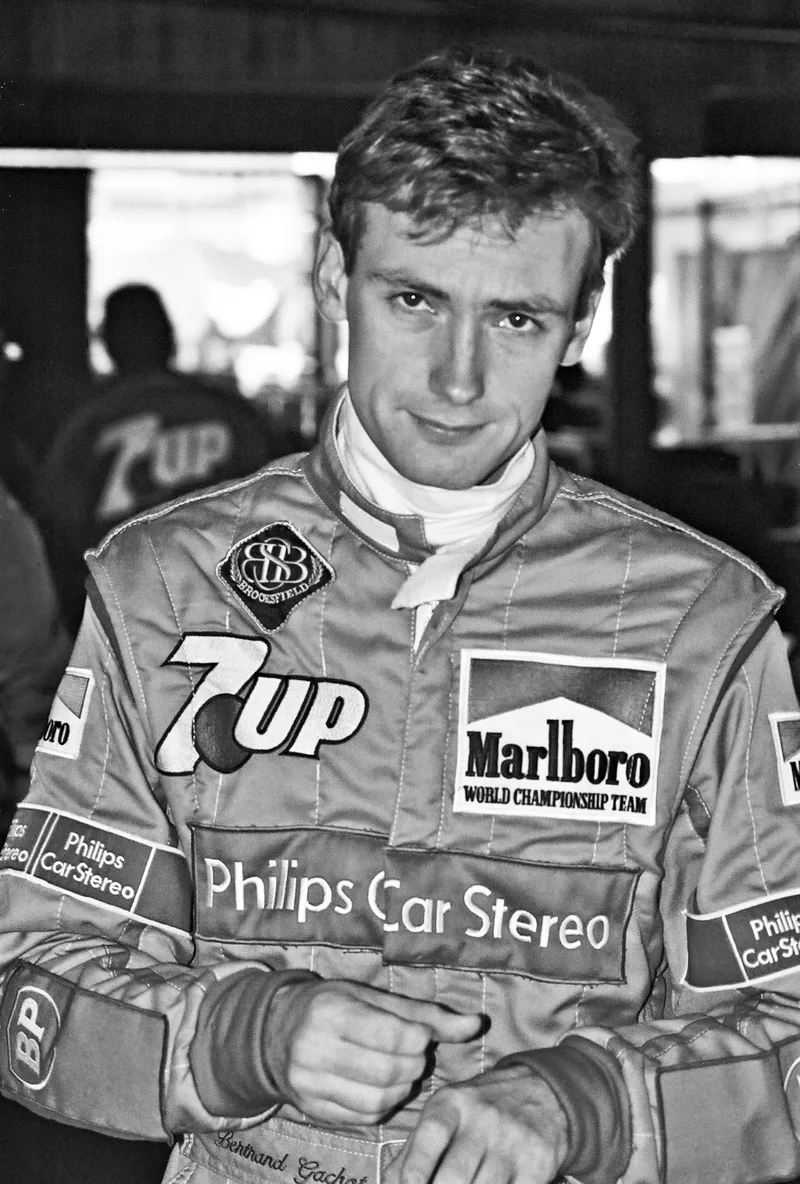
Alan Jenkins, formerly of McLaren, designed the tidy ORE-1 car. At its debut in England, Autosport's Nigel Roebuck called the Moneytron sponsorship tasteless. Earle signed Stefan Johansson, plus Bertrand Gachot, a young Belgian rookie whose introduction had brought Van Rossem and Moneytron into the team.
The business plan looked sound, the car and engine package were credible, and the driver line-up was a strong pairing, so the team looked set for a promising Formula One future.
What happened to Onyx in the 1989 season?
Onyx only just reached its first race, in Brazil, the scene of the season opener. The cars were completed on the morning of the launch, then flown to Brazil without any testing to fine-tune them. Neither car got out of pre-qualifying in the first three rounds, and a testing accident destroyed one chassis before Imola.
At Imola a brake failure wrecked Johansson's car, while Gachot narrowly failed to reach the final pre-qualifying session. Johansson also failed to get through pre-qualifying at Monaco. In Mexico Johansson set the sixth-fastest time in Saturday practice and qualified 21st, ahead of Nelson Piquet, Pierluigi Martini, Rene Arnoux and Eddie Cheever, before a mechanical failure ended the race.
Johansson started 19th at Phoenix, where Greg Field came back as team manager, but a front suspension failure ended his race. In Canada he qualified 18th, but a botched pit stop that tore the air gun rig apart led to his disqualification. Gachot had still not raced in a Grand Prix, although his chance was approaching.
Van Rossem spent US$20 million on a Gulfstream IV business jet before Phoenix, while the team's bills went unpaid. Bernie Ecclestone later banned him from attending further Grands Prix after a row over comments made in the Belgian press.
The French Grand Prix brought a change of fortune. Both cars topped pre-qualifying, Gachot started 11th and Johansson 13th, and Johansson finished fifth to score the team's first points. Gachot, running with Alesi, was then put down to 13th by a battery problem.
Johansson failed to qualify in Britain, and Gachot started 21st before handling problems blighted his race. Johansson qualified again in Germany, Hungary and Belgium, while Gachot missed out in Germany.
How did the 1989 season end for the team?
Gachot was dismissed after his final race at the Italian round, after complaining about the lack of testing and about how the team viewed his driving. At the last moment JJ Lehto was called up, and he failed to qualify at Portugal, a round that also brought the team's last points.
Johansson had stayed out on his tyres when the others pitted, and after Mansell and Senna collided he was running third. His tyres then began to go off, and the Williams cars passed him before retiring. He crossed the line third with no fuel left, and that result was the team's last points finish.
With Van Rossem slow to fund development, Johansson failed to qualify for the remainder of the year. Lehto improved steadily and made the grid in Spain and Australia.
Onyx finished 10th in its debut season with six points, and the result exempted it from pre-qualifying for 1990.
What went wrong in 1990?
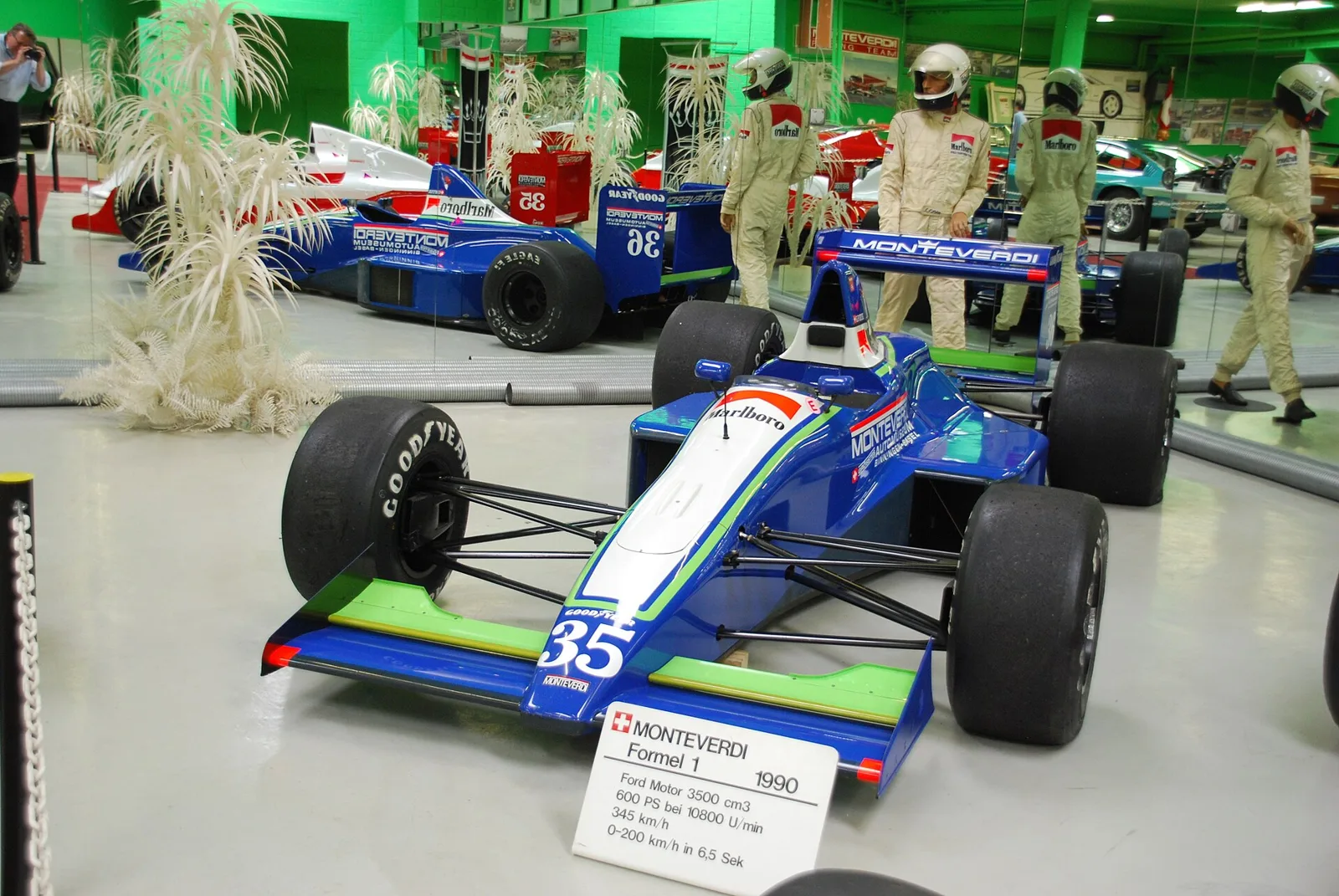
Earle and Chamberlain quit at the end of 1989, while Van Rossem's interest in the team waned and finances dried up. Van Rossem left with his Moneytron sponsorship, and Peter Monteverdi, a Swiss car collector and former racer, bought 50% of the team, with Karl Foitek and Brune Frei taking 25% each.
Foitek had to pay for the Goodyear tyres used in 1989 before the company would supply tyres for 1990. Earle and Chamberlain had been rehired before that, only to leave again. Alan Jenkins took charge, but he was let go after refusing to work alongside Earle, and the experienced staff left with Earle, Chamberlain and team manager Peter Rheinardt.
For 1990 the team kept JJ Lehto, and Gregor Foitek, whose father Karl part-owned the team, replaced Johansson at San Marino. Johansson took legal action for breach of contract and sought an injunction against the planned move under Monteverdi.
How did the 1990 races go?
Neither car qualified for the first two races, and Johansson destroyed two chassis in the process. At Monaco Foitek ran sixth at a late stage before a collision with Eric Bernard's Larrousse left him seventh, the team's best finish of the year. Foitek later took 15th in Mexico.
Monteverdi moved the team to Switzerland in July, and both cars failed to make the grid at France and Britain. By Germany the team had been renamed Monteverdi Onyx Formula One, but the cars only scraped onto the grid, and Foitek retired early.
Lehto finished six laps down and was unclassified there. Rumours circulated about poor preparation, including broken suspension parts welded back together and a sports car collection being cannibalised for spares. One incident saw Lehto complain of poor handling until his driveshaft was found to be fitted the wrong way round.
Karl Foitek pulled his funding and stopped his son from driving a car he now considered unsafe. With finances already a huge problem, the team wrapped up its operations at the Hungarian Grand Prix.
Did Onyx return after 1990?
After a spell running Arena Motorsport, Earle revived the squad for the 2014 World Touring Car Championship, planning a Ford Fiesta TC1 that Ford then declined to support in February 2014. In 2015 the team built a Ford Focus ST for the TCR International Series.
The Focus was underdeveloped and uncompetitive. It contested only half the events in its first season, recording two classified finishes at Monza, before its assets went to the FRD outfit for 2016. The projects kept the Onyx name alive in motorsport into 2015.
What was Van Rossem's role in the Porsche plan?
Jean-Pierre Van Rossem had publicly promised to attract top drivers and to invest in Porsche's engine plans, but his interest waned as the costs mounted. The episode left him at odds with the sport's leading figures, and it set the stage for his exit at the end of 1989.
Van Rossem said he was investing US$40 million in Porsche's Formula One engine project. Behind closed doors he was reportedly tiring of the cost of running a team, and he was rumoured to be slow with its bills.
He told Belgian television that he would quit Formula One if the Porsche deal fell through. Many saw the remark as an admission that he had tired of the sport and was looking for a reason to get out.
Controversial remarks to a Belgian newspaper that weekend angered Bernie Ecclestone and the then FIA president Jean-Marie Balestre. Van Rossem denied reports that he had called Balestre a Nazi, and Ecclestone then banned him from attending further Grands Prix.
What were Onyx's Formula One results?
| Season | Drivers | Documented results |
|---|---|---|
| 1989 | Stefan Johansson, Bertrand Gachot, JJ Lehto | Third at Portugal; six points; 10th in the Constructors' Championship |
| 1990 | JJ Lehto, Gregor Foitek, Stefan Johansson | Seventh at Monaco after a collision; team wrapped up at Hungary |