A rebuilt design team, a home-built wind tunnel and two drivers who won their first Grands Prix in one car gave McLaren its first title since 1998.
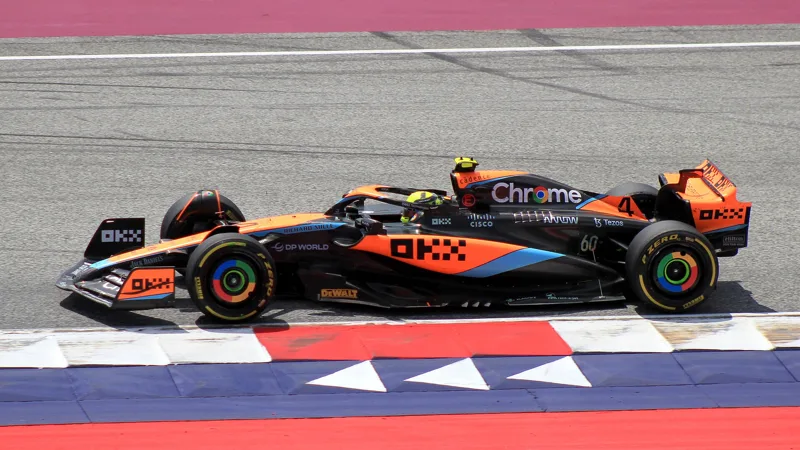
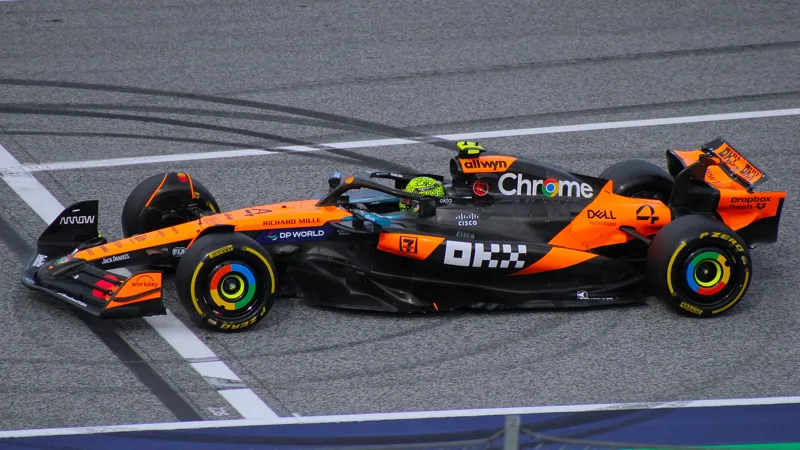
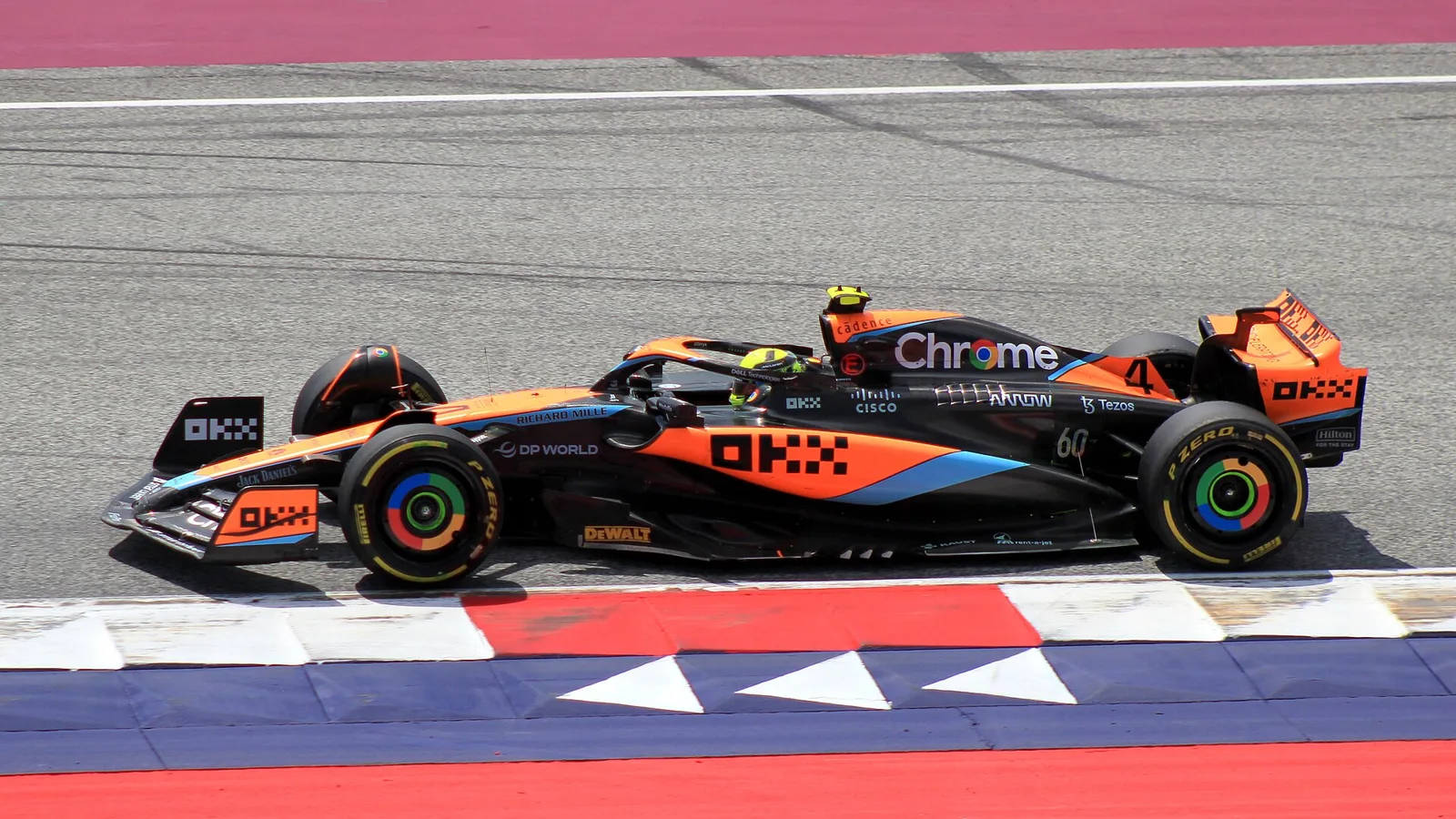
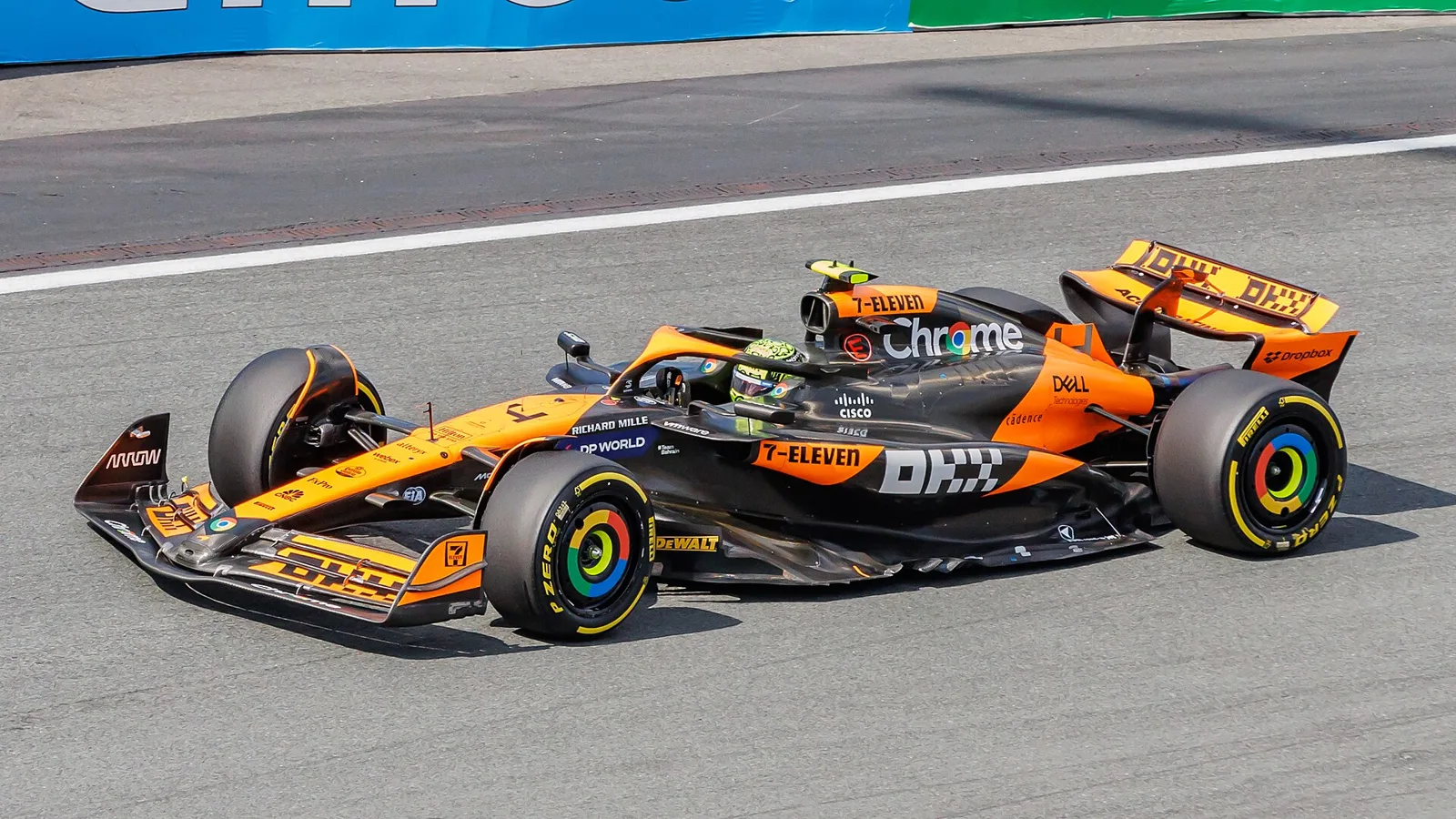
The McLaren MCL38 was the car McLaren used to win the 2024 Formula One World Constructors' Championship, its first title since 1998. Designed under Rob Marshall, it gave Lando Norris and Oscar Piastri their first Grand Prix wins. Its record was six victories and eight poles.
The McLaren MCL38 gave McLaren the 2024 World Constructors' Championship, the first title the team had won since 1998. Lando Norris and Oscar Piastri each recorded their first Grand Prix victory in it, and the car was produced by a design group that had been reorganised after a poor previous year.
The car was not a lucky one. It arrived at the Bahrain Grand Prix and steadily became more complete, addressing weaknesses that had plagued McLaren for years. Six wins, fifteen further podiums and a championship followed for a machine that got better as the season went on.
Who designed the MCL38, and why was it needed?
Rob Marshall led the design of the MCL38 for the 2024 campaign. The car it replaced, the MCL60, had come from James Key's drawing board, and Key departed in 2023 once it was clear the original MCL60 specification could not compete. Peter Prodromou and Neil Houldey, both already at the team, were given charge of the design department.
The MCL60 recovered through a run of mid-season updates, and those changes showed the engineers where the next car could go. A hiring drive followed, which brought in a designer from Ferrari, but he left the job after only a few months.
A car that began the year needing fixes and finished it as McLaren's first champion in more than two decades.
How did McLaren build its own wind tunnel?
For years McLaren used a tunnel in Cologne that belonged to Toyota. Every component tested there had to travel from the team's base in Woking to Germany, which slowed the process considerably. The team's own tunnel had been delayed by the pandemic.
Work on the MCL38 started in July 2023, and the new facility was running by August, with models tested inside it that same month. The team reported that its results matched track data well, and that the arrangement saved both money and time. Andrea Stella, the team principal, said in September 2023 that the early figures were promising, though he added that no one could yet tell how quickly rivals were moving.
Driveability was the first concern. Norris had found that each McLaren he had driven was hard to balance, and Stella suspected that the MCL60 upgrades had introduced handling habits that would need to be understood. Some fixes went onto the launch car and the rest arrived in-season. The team also knew that tyre wear was its biggest weakness against Red Bull Racing, and solving it would require mechanical changes as well as aerodynamic ones.
Zak Brown, the chief executive, wanted 2024 to begin from where 2023 had finished. Stella stressed that the goal was to hit development targets rather than chase a specific result. He also conceded that McLaren might still find it hard to close on Red Bull, which had stockpiled improvements during 2023.
What were the MCL38's design targets?
Stella named three targets: better aerodynamic efficiency, more mechanical grip and stronger tyre performance. The launch car kept several areas out of sight, but it revealed new front brake duct inlets, sidepod inlets, a floor edge and reworked suspension at both ends.
Writing for The Race, Gary Anderson argued that the visible changes were aimed at steadier suspension behaviour, which would in turn make the aerodynamics more predictable. The intention was a car that could be set up for many different circuits, rather than one that was quick only on a narrow type of track.
How was the MCL38 presented?
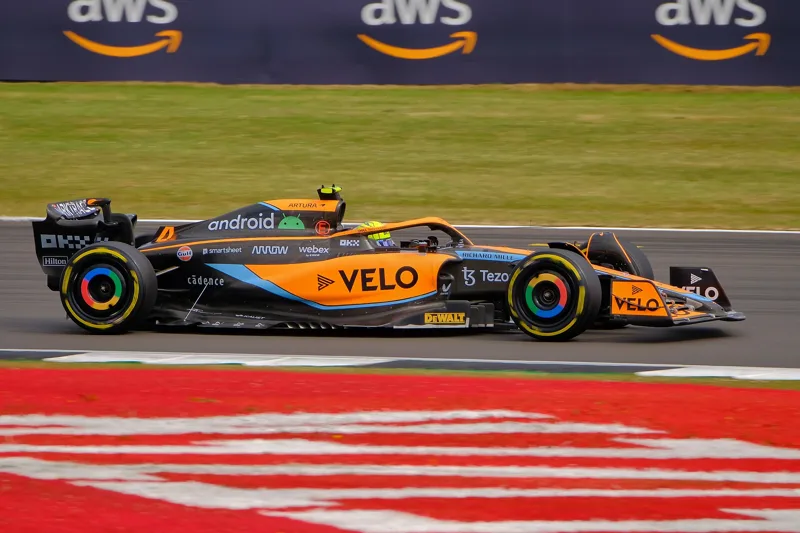
The livery stayed close to the MCL36 and MCL60, with papaya orange dominating and bare carbon fibre, which McLaren labelled anthracite. Two ideas were carried over from one-off schemes on the earlier car: a stealthier look with more exposed carbon, and chrome trim taken from the British Grand Prix design.
Blue was missing altogether, which broke a run of full-season McLarens that had carried it since 2018. A number of special schemes appeared during the year. The Japanese design came from the artist MILTZ and was produced with the sponsor Vuse. The Monaco car wore Brazil's national colours to mark thirty years since Ayrton Senna died, and Senna had won all three of his world titles with McLaren. The Singapore look, named Legend Reborn and backed by OKX, replaced the anthracite with white to recall the team's early-1980s cars.
How did the season begin?
Bahrain was the first race for the car. Norris qualified seventh and finished sixth, and Piastri finished eighth. Both drivers believed they could have started in the top three if their laps had been clean, and McLaren sat fourth in the constructors' standings after round one.
Saudi Arabia brought new rear and beam wings. Piastri qualified fifth and came home fourth, Norris finished eighth, and the team climbed to third. In Australia Norris took third and Piastri fourth, each gaining a place on the grid after a penalty for another driver.
Japan saw new brake duct inlets at the front. Norris finished fifth and Piastri eighth, the latter losing places late on after a mistake. China looked risky because Shanghai's slow corners were a known weak spot for the car. Norris nonetheless took pole for a wet sprint and finished the Grand Prix second, while Piastri was hit by Daniel Ricciardo and recovered to eighth with a damaged diffuser.
What did the Miami upgrades bring?
The Miami Grand Prix introduced a large package. It contained a new front wing, revised front suspension geometry, changes at the rear, new brake ducts and winglets, a fresh floor, a different sidepod inlet and an engine cover with new louvres. Brown described the upgraded car as almost a B-spec machine. Norris received the full kit, while Piastri's car carried about half of it.
Norris inherited the lead when a round of pit stops and a safety car reshuffled the order, and he held on to win his first race. Piastri set the fastest lap but ended fourteenth after a penalty promotion. The weekend put Norris level with Carlos Sainz on points and fourth in the Drivers' Championship on countback.
Emilia Romagna brought circuit-specific wings, and the rest of the upgrades went onto Piastri's car. Holding up Kevin Magnussen cost Piastri three grid places, and he finished fourth behind Norris in second. At Monaco both drivers finished in the same places they had qualified, Piastri second and Norris fourth, and Norris moved up to third in the standings.
How did the European rounds go?
Norris took pole in Spain and finished second with the fastest lap, while Piastri lost time through a driver error and came home seventh. Sainz rated the MCL38 as the quickest and steadiest machine, whereas Stella and Red Bull's Christian Horner judged it evenly matched with the RB20.
Austria saw a new front wing and front suspension in the search for better balance across corner types. Norris and Max Verstappen fought for the lead until they touched. Norris took a puncture along with damage that ended his race, and he was classified twentieth because he had run more than nine-tenths of the race distance. Piastri gained from the incident and finished second.
At Silverstone McLaren fitted a rear wing built for more top speed, with a revised engine cover and cooling layout. The weekend contained three costly errors: the drivers were not double-stacked in the first stop cycle, Norris overshot his box on his second stop, and the team chose soft tyres over mediums that were quicker. Norris finished third and Piastri fourth.
Hungary produced McLaren's first front row lockout since 2012, with Norris on pole and Piastri second. Piastri led at the start but lost the place at the second stop. Norris then opened a six-second gap before slowing and handing the position back, which gave Piastri his first Grand Prix win. The one-two was McLaren's first since 2021, and it took the team past Ferrari into second in the constructors' table.
In Belgium Norris ran wide on the opening lap and dropped to sixth, while Piastri climbed to third. Russell's win was later struck off after a disqualification, and both McLaren drivers moved up a place, lifting Piastri to fourth in the Drivers' Championship.
Why did the summer races matter so much?
Back from the summer break, McLaren brought a new Dutch Grand Prix package: a brake scoop, front and rear suspension, a floor, edge wing changes, plus beam and rear wings. Norris took pole, lost the lead to Verstappen on the first lap, took it back, won and set the fastest lap. Piastri took fourth.
Monza saw circuit-specific wings and a new sidepod. Norris took pole and Piastri second. Norris reckoned the MCL38 was roughly 20 km/h quicker in a straight line than the MCL60, but the race went against him. Piastri passed him at the first corner, and Charles Leclerc beat them both with a one-stop strategy while McLaren ran two stops. Piastri finished second and Norris third, and Norris took the fastest lap.
Azerbaijan turned the championship. Piastri qualified second, but Norris was caught by yellow flags in qualifying and took a fifteenth-place start after penalties for others. Piastri won, and Norris drove through to fourth. That result put McLaren top of the constructors' standings for the first time since the 2014 Australian Grand Prix.
What was the mini-DRS row?
Observers noticed during the Baku weekend that the rear wing bent so that the lower corners of its upper flap lifted and let air pass. The effect copied the drag reduction system even where DRS was not allowed. The idea had first appeared at Belgium and was then used at Monza and Baku, and the press dubbed it mini-DRS.
The FIA ruled the design legal under the existing regulations, but asked McLaren to stop the flexing, and the team complied. Stella said he was glad rivals had spent time studying what he called a red herring. Neil Houldey, the engineering director, treated the row as a point of pride and evidence of McLaren's inventiveness.
Singapore rounded off the sequence. Norris took pole and won, and Piastri finished third, even though the team had run low-downforce rear wings on a track normally considered high-downforce.
How did the championship run finish?
The United States Grand Prix brought a new front wing, suspension and brake ducts. Norris finished third but was given a five-second penalty for an overtake on Verstappen that the stewards judged an unfair gain, dropping him to fourth. Piastri was fifth.
In Mexico City Norris finished second after passing Leclerc's Ferrari, and technical analysts linked his pace to superior brake ducts. Piastri recovered to eighth. Sao Paulo was wet and chaotic. Norris started from pole but lost places at every safety car restart and finished sixth, while Verstappen won from seventeenth and all but ended Norris's hopes of the drivers' title.
In Las Vegas Norris finished sixth and set the fastest lap, which also produced a new circuit record. At Qatar he allowed Piastri through to win the sprint, then took a ten-second stop-go penalty in the race for failing to slow under yellow flags. He recovered to tenth, while Piastri took third. Abu Dhabi ended the year with Norris on pole and winning, and Piastri tenth after a first-lap clash with Verstappen. Norris finished second in the Drivers' Championship, Piastri fourth, and the team's points secured the constructors' title narrowly ahead of Ferrari.
What did the MCL38 achieve over the year?
The car produced six race victories, fifteen other podiums and eight poles. It added three sprint poles, two sprint wins and five further sprint podiums, and it set seven fastest laps, two of which were track records. Those totals were enough for McLaren's first constructors' title in more than a quarter of a century.
| Measure | Result |
|---|---|
| Race victories | Six |
| Other podiums | Fifteen |
| Poles | Eight |
| Sprint poles and wins | Three poles, two wins |
| Fastest laps | Seven, two of them track records |
| Norris in the Drivers' Championship | Second |
| Piastri in the Drivers' Championship | Fourth |
How was the car judged?
Early on the MCL38 was strong through medium and high speed corners, a clear step up from the early MCL60. It was short on top speed, its DRS was inefficient, and longer corners were a problem. Ferrari's SF-24 had the edge in race pace because of tyre management, but the MCL38 was better over a single lap. In the first races it counted as the third-fastest car overall.
Miami changed that picture. McLaren expected the package to add downforce, and it did, but the gain in slow corners was far larger than the factory's models had predicted. Stella attributed part of it to confidence, which he called an intangible benefit that simulations could not capture. By Silverstone the MCL38 was the team's most rounded car.
McLaren also made good use of its testing allocation. Having finished fourth in 2023, it was granted more wind tunnel time than any other team in the top four, and the team made eight rear and fourteen beam wings for this car alone. Its ideas travelled: Haas copied the sidepod inlet for its VF-24, and Mercedes later adopted the flexible front wing. Red Bull's answer to the same balance problem pushed it against the budget cap and made its car less stable as it chased downforce.
Some changes were left alone. A new floor was designed for Miami, but McLaren did not follow it with a second revision, even though its models indicated extra downforce. Ferrari and Aston Martin chased downforce with floor upgrades and paid for it in driveability and, in some cases, lap time. Michael Schmidt, writing in Auto Motor und Sport, observed that every McLaren upgrade since the MCL60 package at the 2023 Austrian Grand Prix had performed as expected straight away. Rivals were forced to slow development because of crash repair bills, and Mercedes stopped working on its W15 altogether.
Several commentators felt the car never delivered all it could. After the British Grand Prix, writers including Alex Kalinauckas, Luke Slater and Nigel Chiu said that McLaren could have won five more races without its strategic and driver errors. Stella said the team was unaccustomed to being in such a strong position, and Norris said he would count the season a success whatever the drivers' result. Bernadette Collins, a former strategist, concluded that a flawless season would have given Norris the title, and she noted that Verstappen's shortfalls were mostly down to reliability. McLaren's mechanical reliability was not an issue, and it scored in 46 of its 48 races.
Why did the customer engine point matter?
The MCL38 was the first car on customer engines to win a title since Brawn GP's 2009 success. That cut against the view that a team needed its own, purpose-built engine to win after the turbo-hybrid era began in 2014. Earlier, senior McLaren figures including Ron Dennis and Eric Boullier had insisted that works status was essential. Stella dismissed that position as an excuse rather than an engineering fact.
Critics of those earlier remarks pointed out that the FIA had since required parity between works engines and customer units, a rule that began in 2018. Later it collected the top international competition prize at the 2025 Autosport Awards.