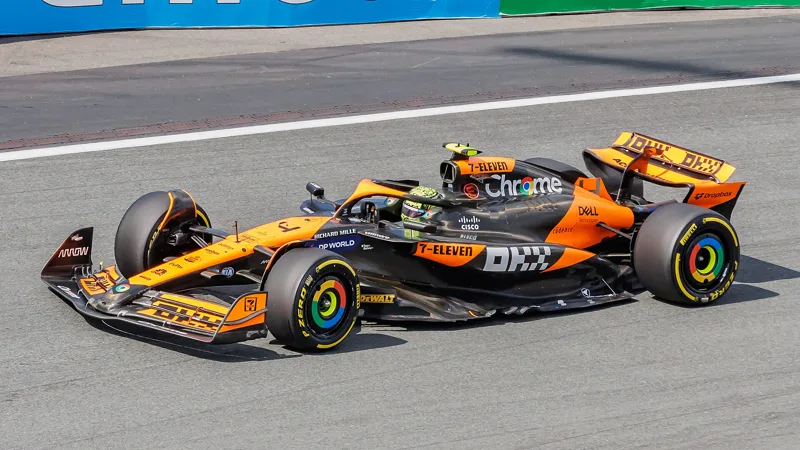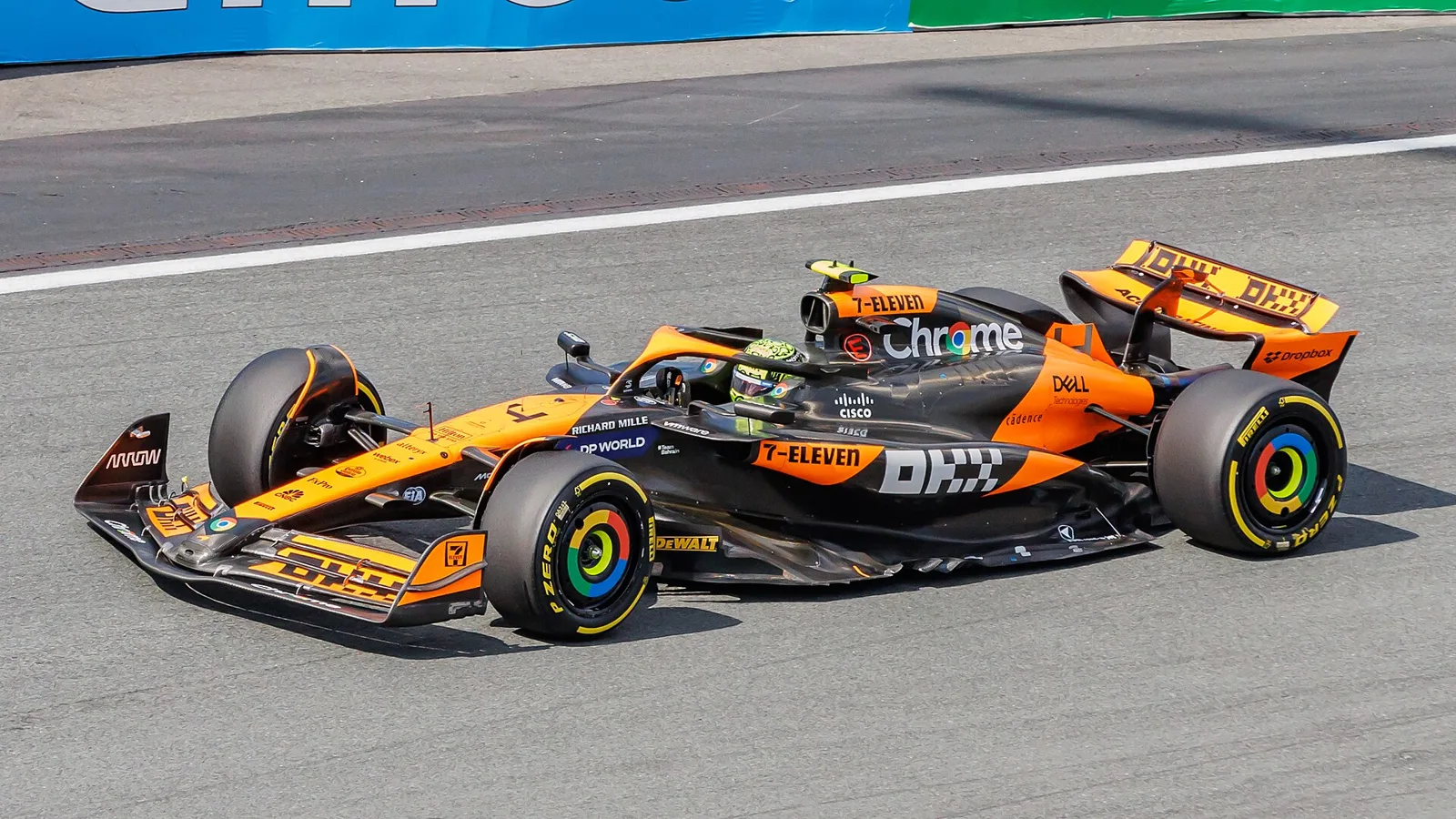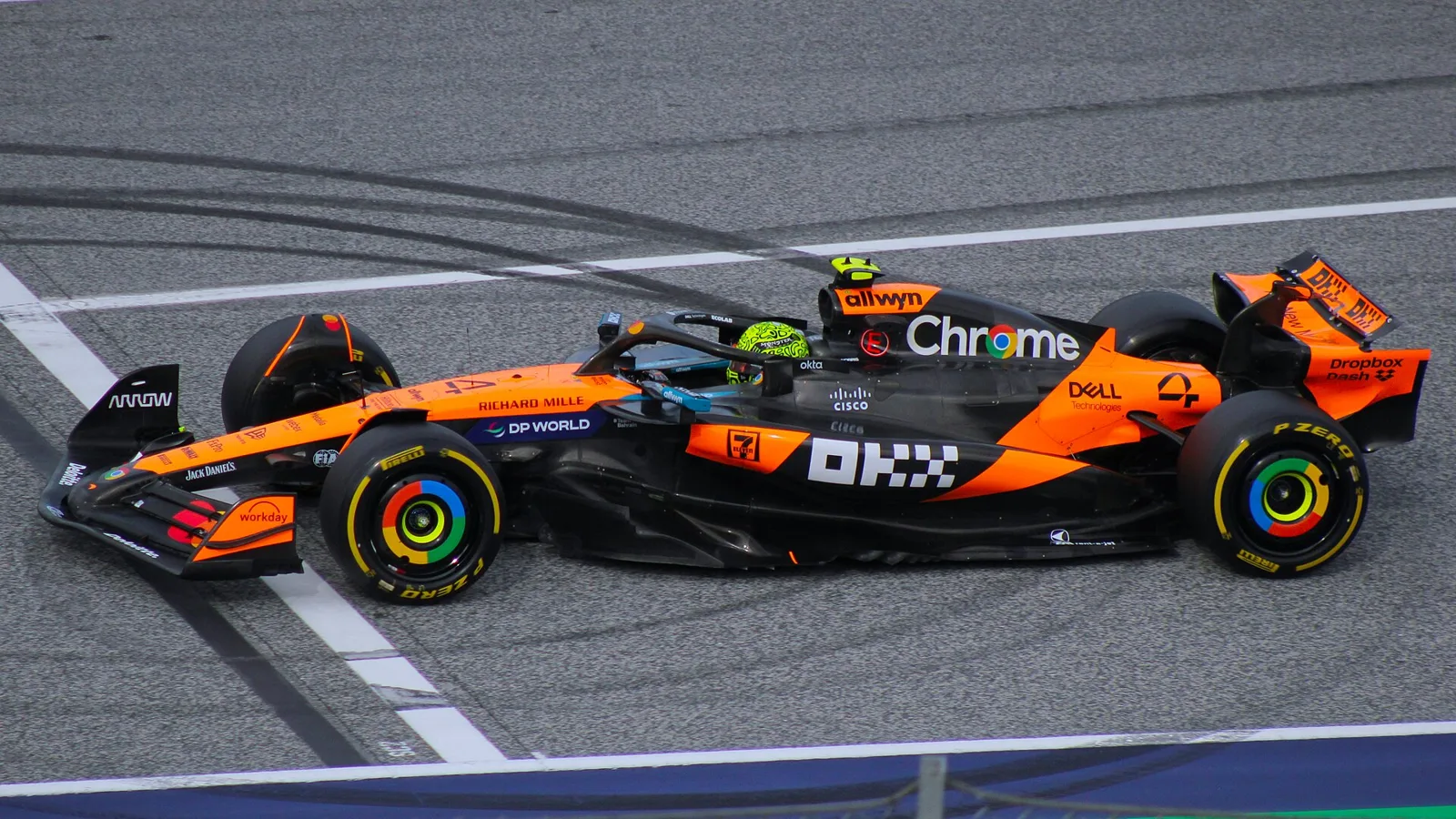
Lando Norris and Oscar Piastri drove McLaren's 2025 car to fourteen wins, a record run of podiums and the Drivers' title for Norris.
The McLaren MCL39 is the 2025 Formula One car that defended McLaren's Constructors' title and gave Lando Norris the Drivers' championship. Driven by Norris and Oscar Piastri, it won fourteen Grands Prix and was consistently the fastest car in the field.
The McLaren MCL39 was the Formula One car that carried the team to a successful defence of the Constructors' Championship in 2025. It also gave Lando Norris the Drivers' title, the first for McLaren since Lewis Hamilton. Over the season the car won fourteen Grands Prix and was regarded as the fastest car in the field.
What is the McLaren MCL39?
The MCL39 is a Formula One car built by McLaren for the 2025 world championship. Lando Norris and Oscar Piastri drove it, and Norris was in his seventh year with the team while Piastri was in his third. The car defended the Constructors' title and delivered the Drivers' title to Norris.
Commentators had tipped McLaren to defend its crown before the season began, and the MCL39 lived up to that billing. It was consistently quick across the calendar, and the team clinched the Constructors' Championship at the Singapore Grand Prix. Norris secured his own title at the Abu Dhabi Grand Prix.
The car was consistently the fastest in the field, and it delivered both championships to McLaren.
How did the MCL39 differ from the MCL38?
The MCL39 was a substantial step on from the MCL38, with changes to the radiators, sidepods, engine cover and airbox. Its suspension layout stayed the same in principle, but anti-dive measures were increased to hold the ride height more steadily.
Rob Marshall was the lead designer, and the MCL39 was the first McLaren car he oversaw from the very beginning. The radiators moved further up and further back than on the MCL38. The front pullrod and rear pushrod arrangement was kept, while sidepod inlets took new shapes, the engine cover was reworked and the airbox inlet was widened.
What was the development context?
McLaren won the 2024 Constructors' Championship, which cut its allocation of wind tunnel time to 70% of the baseline. Team principal Andrea Stella believed the team could make up the shortfall through efficiency gains elsewhere in the aerodynamic design process.
The team's 2024 success had rested partly on a front wing that flexed heavily under aerodynamic load, a feature that helped it challenge Red Bull during the ground effect years. New rules aimed at that flex took effect from the ninth race, the Spanish Grand Prix. Stella said a small adjustment had been planned for the new limits, and he denied that they would hurt the team.
Zak Brown described the approach as a brave risk. Neil Houldey, the engineering director, said there would be no compromise on 2025 development, even though the 2026 technical regulations and engine formula were entirely new. Stella maintained that the car followed the same linear development trend as the MCL60 and MCL38.
How did the MCL39 perform in pre-season?
Before the season the team was the pick to retain its constructors' crown, and Norris was the leading tip for the drivers' crown. The first laps came during a closed filming session at Silverstone early in 2025, where both drivers took turns at the wheel. Stella confirmed the filming car was essentially the same spec as the one used in the official test.
Norris felt the handling resembled the MCL38, but the back of the car was less settled than the team hoped. Rivals generally regarded the MCL39 as holding an edge, and that impression grew as the season went on.
How was the car's handling judged against its rivals?
Early on, observers praised the car's downforce, its efficiency and its balance. Its immediate competitors often struggled to keep balance through corners and to keep efficiency at different speeds.
Max Verstappen, the defending world champion, described McLaren's advantage as big, and he pointed to a comparatively weak RB21 in balance and grip. Running on new tyres was a weak point for the car, the team concluded. That accounted for some early qualifying trouble and prompted set-up changes.
How did the 2025 season open?
The season began with a win for Norris at the Australian Grand Prix, where he took pole and set the fastest lap. Piastri went off in the wet at the same corner as his team-mate and finished ninth after rejoining a lap down.
The China round was the first of the season to feature a sprint, and Piastri took his first pole for a Grand Prix there. He won the race, while Norris finished second despite brake problems in the closing laps. Bahrain also went to Piastri after Norris took a five second penalty for overshooting his grid box.
In Saudi Arabia Norris had a crash in the final segment of qualifying and started tenth, but he recovered to finish fourth as Piastri won and took the lead of the drivers' standings.
| Round | Winner | What happened |
|---|---|---|
| Australia | Norris | Pole and fastest lap; Piastri went off and finished ninth |
| China | Piastri | First Grand Prix pole for Piastri; Norris second |
| Bahrain | Piastri | Norris took a five second penalty |
| Saudi Arabia | Piastri | Norris crashed in qualifying and recovered to fourth |
| Austria | Norris | Pole and win; Piastri second |
| Britain | Norris | Piastri took a ten-second penalty and finished second |
| Netherlands | Piastri | Led from lights to flag, his first grand chelem |
| Mexico City | Norris | Won by over 30 seconds after a late virtual safety car |
| Sao Paulo | Norris | Pole and win in both the sprint and the Grand Prix |
How did the mid-season races shape the title fight?
The middle of the calendar produced some of the closest racing between the two McLaren drivers. Norris won the Miami sprint after a well-timed safety car let him jump his team-mate. The next day Piastri recovered from fourth on the grid to win the main race ahead of Norris.
At Monaco, Norris started from pole and Piastri from third, and they finished in those same places. The Spanish round brought stricter front wing tests, but McLaren had already concluded from practice at Emilia Romagna that the MCL39 would not be affected. Piastri took pole and set the race's fastest lap, with Norris second.
Canada brought two upgrades to the chassis and suspension fairings, which were run by Norris alone. Norris crashed late while attempting to pass Piastri, and having covered more than 90% of the planned distance, he was classified eighteenth. Norris accepted the blame, and Stella said he had paid a price in the drivers' standings.
Austria ended with Norris on pole and the win, with Piastri second. Houldey had confirmed minor rear suspension changes beforehand, saying they would add stability on corner entry. Britain followed with a chrome livery and another Norris win. On a safety car restart Piastri braked hard, so Verstappen had to swerve and briefly pass him. Piastri took a ten-second penalty yet still finished second.
Belgium saw another rear wing upgrade and a rolling start after standing water delayed the race by about 80 minutes. Hungary was a strategic race in which Norris opted for a single pit stop, and that decision paid off, while Piastri took the lead during the second pit stop cycle but could not retake first. The Dutch race then gave Piastri a grand chelem, while Norris retired late with an oil leak.
How did Norris and Piastri share the title fight?
Norris and Piastri were McLaren's two drivers throughout, and both won seven of the fourteen Grands Prix. Their battle stayed close until the final round, which drew attention to the team's operations and its handling of the two drivers.
Piastri's Dutch Grand Prix win was the first grand chelem of his career, as he led from the lights to the flag. Norris, trailing him, retired late with an oil leak and was classified eighteenth after covering more than 90% of the race distance.
Norris's fastest race lap at the Italian Grand Prix set a new Formula One mark for average speed. Its average of 257.781 km/h (160.178 mph) beat the record Rubens Barrichello had set at the 2004 race in Italy.
Mexico City gave Norris pole and then a win by over 30 seconds after a late virtual safety car. The result took him to the top of the drivers' standings by a single point. At Sao Paulo he turned pole into victories in the sprint and the Grand Prix alike, pushing his lead over Piastri to 24 points.
What went wrong in Azerbaijan and the United States?
Azerbaijan was a missed chance to clinch the Constructors' title, because both drivers made errors in qualifying. Piastri crashed early in Q3 and again on the opening lap, and he retired from both sessions. Norris bumped the wall on his final Q3 lap and could only qualify seventh, a position he kept in the race.
The United States weekend brought a lap one shunt and the team's first double retirement since the 2022 Sao Paulo race. In the Grand Prix, Norris recovered to finish second and Piastri came through to fifth. Stella confirmed afterwards that the MCL39 would receive no further upgrades, even as Verstappen's championship charge continued.
At Mexico City, Pato O'Ward drove in free practice at his home track in place of Norris. At Abu Dhabi he took over first practice from Piastri, the final substitution McLaren needed to meet its rookie driver obligations.
How did the title race finish?
McLaren secured the Constructors' title at the Singapore Grand Prix, where its drivers finished third and fourth. It was the first back-to-back Constructors' title for McLaren since 1991, and the team's tenth win in that competition overall, which put the team second among constructors for championship wins in the sport.
Las Vegas was the low point of the season. Norris took his third consecutive pole at the wet qualifying session, but both cars were disqualified for excessive plank wear, the first time both McLarens had been excluded from the same race. Norris stayed top of the standings, while Piastri kept second place on countback ahead of Verstappen, who was level on points with him. The team opened an investigation and Stella apologised to both drivers.
Qatar was unusual because the organisers mandated a 25-lap limit on any tyre set, which made at least two stops necessary over 57 laps. Piastri won the sprint, and then finished second in the Grand Prix after the rest of the field pitted early behind a safety car, while Norris finished fourth.
The Drivers' title was decided at Abu Dhabi. Piastri passed Norris for second and held it to the line, and Norris's third-place finish was enough to secure the championship. It was his maiden title, and it brought McLaren its first drivers' championship since Lewis Hamilton in 2008.
Why were the rear brake ducts so controversial?
Red Bull Racing protested the MCL39's rear brake ducts to the FIA. The governing body investigated and confirmed that the design was compliant, although its internal details were never made public. Analysts believed the ducts helped manage rear tyre temperatures better than rival designs.
The ducts were said to give the car far better control of rear tyre temperatures than the rest of the field. That mattered most at circuits that heat the rear tyres hard. Gary Anderson offered another explanation: the rear suspension may have controlled lift better, which raised the rear roll centre and improved traction out of slow corners.
What did the car look like on track?
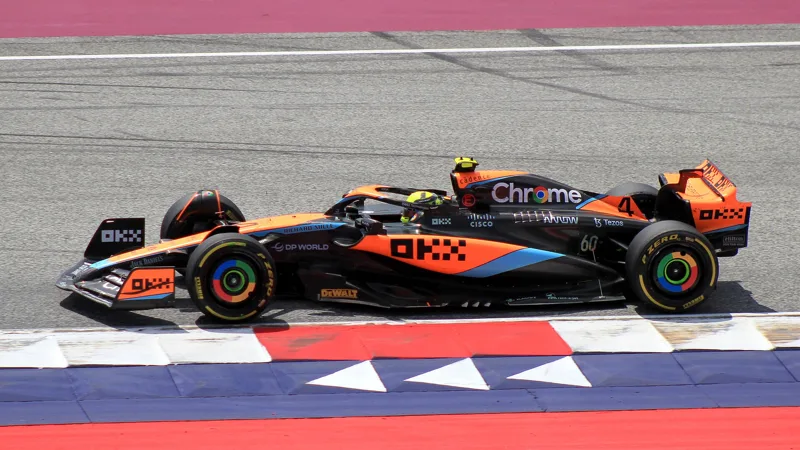
The MCL39 used a livery that was substantially identical to the MCL38 for most of the season, with one-off designs at special rounds. McLaren said it had never changed a livery in the season after a title win, or during a period of sustained success.
A one-off papaya and black camouflage was used for the pre-season filming day. Special liveries followed at Monaco and Spain, inspired by the M7A that first carried McLaren's papaya scheme. At the British Grand Prix a chrome design returned with more chrome than in 2023 and 2024, and the United States and Mexico City rounds featured a palette based on Google Gemini.
The Abu Dhabi car carried a design chosen by a group of fans, with artwork that commemorated significant moments in the team's history.
What is the car's legacy?
Norris was handed one of his MCL39 cars in 2026, a gift tied to a new contract deal. After the season, a modified MCL39 was run at Yas Marina to simulate the 2026 cars while testing tyres for Pirelli.
The car's place in McLaren's history rests on the double it delivered. Only the MP4/13 from 1998, designed under Adrian Newey, had previously achieved that double for McLaren. The season also prompted scrutiny beyond the track, with an Australian Senate Estimates hearing mentioning the title fight.
An Australian newspaper listed five pit stops that it argued cost Piastri 32 points, while remaining critical of the conspiracy theories claiming that McLaren had favoured Norris. Those debates have not changed what the car achieved on track.