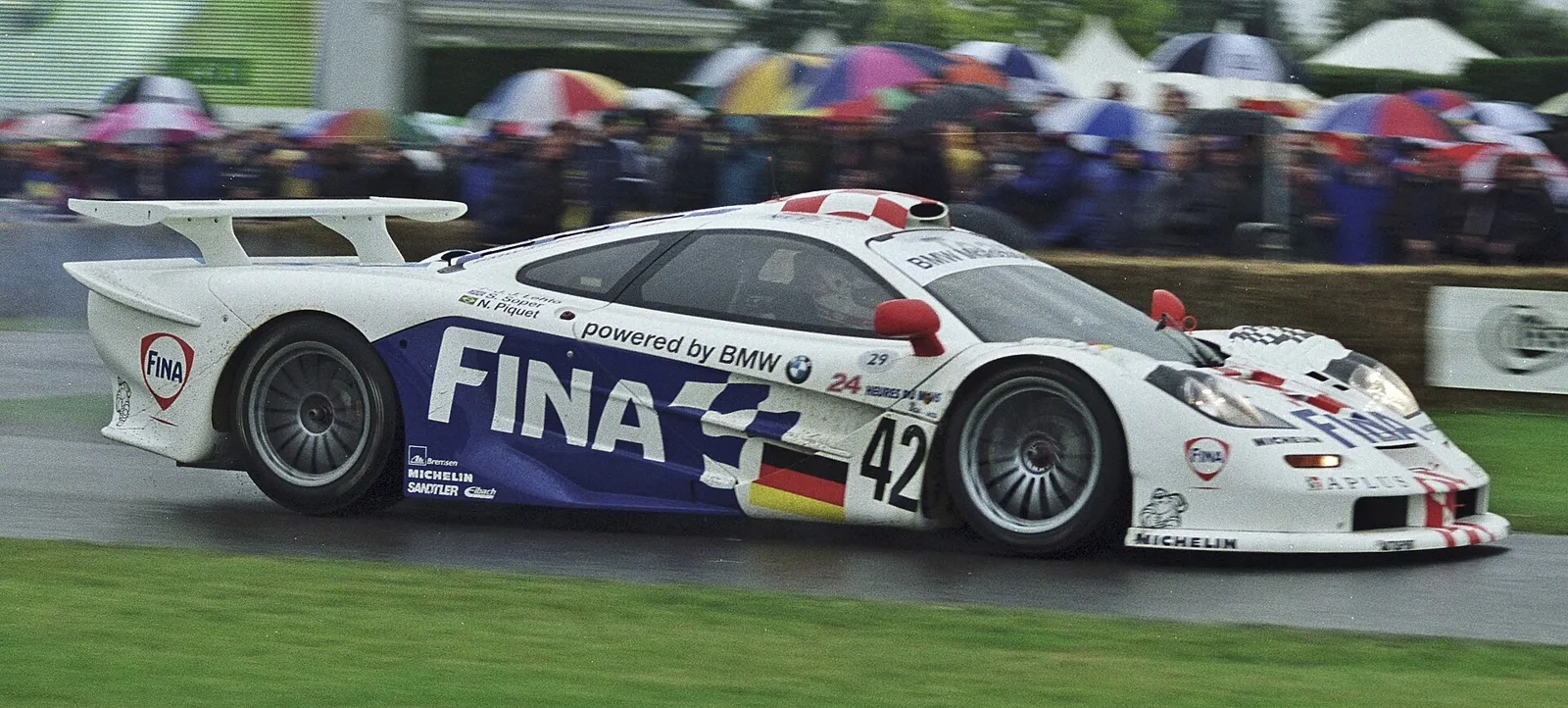
Founded in the 1970s as a restoration firm, Lanzante won the 1995 Le Mans race with a McLaren F1 GTR and now builds exclusive supercars and special editions.
A British specialist in servicing, restoring and building special vehicles, Lanzante races as Lanzante Motorsport. Its best-known win came at the 1995 Le Mans race with a McLaren F1 GTR, and the firm now builds P1 specials, TAG Turbo cars and the 95-59 supercar.
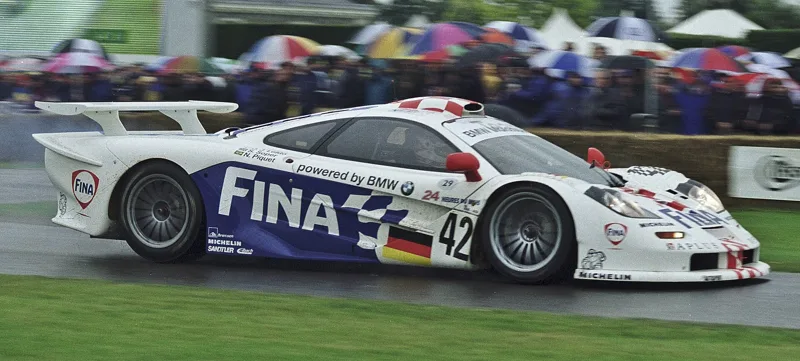
Lanzante Limited is a British company that services, restores and develops unusual vehicles, and it races in both modern and historic events under the name Lanzante Motorsport. Its best-known racing moment came at the 1995 24 Hours of Le Mans, when a McLaren F1 GTR it ran for McLaren won on debut, leading to its long association with McLaren cars.
How did Lanzante start?
Lanzante was founded in the 1970s by Paul Lanzante, initially to restore and prepare historic cars. Its logo is an image of the Hindu god Ganesha, which George Harrison recommended to Paul. The two were close, and Paul was named on the inner sleeve of a Harrison album alongside Jackie Stewart. In the 1980s Lanzante restored Harrison's Radford Mini, which was repainted by the artist Phil Lemon.
In 1993 Dean Lanzante, Paul's son, joined the business, and within two years it had moved into motor racing. Lanzante is now recognised as a key service centre for elite McLarens, and in 2022 it serviced 25 McLaren F1s alone. The base also houses McLaren Petersfield, one of the company's UK dealerships.
A restoration firm that won Le Mans on debut with a McLaren and turned that link into a line of exclusive, limited-run supercars.
What did Lanzante win at Le Mans in 1995?
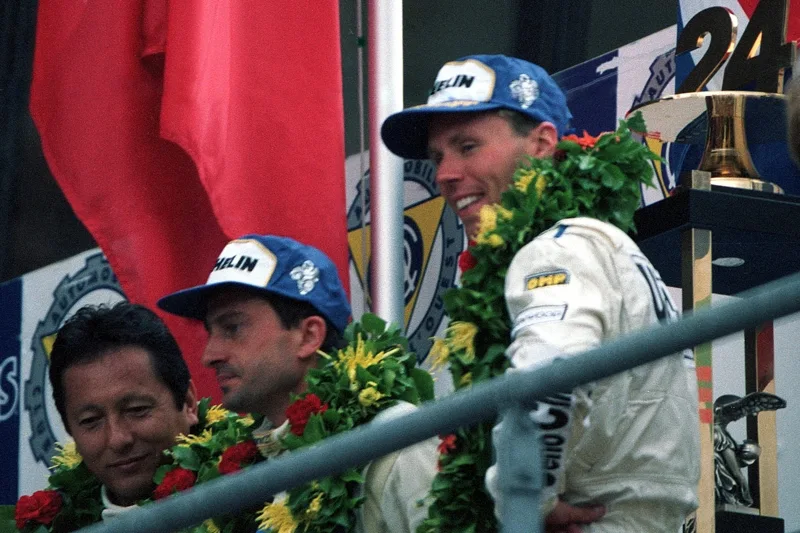
In 1995 McLaren Automotive loaned its development car, a McLaren F1 GTR, to an entry backed by Kokusai Kaihatsu UK, and Lanzante organised and ran the team. Drivers JJ Lehto, Masanori Sekiya and Yannick Dalmas made up the line-up, which included a small number of McLaren employees and experienced endurance engineers.
The car was the fastest McLaren in qualifying and inherited the race lead when other McLarens failed. It won the 24 Hours of Le Mans by a single lap, The result meant the McLaren was the first car, and Lanzante the first team, to win at Le Mans on debut. Lehto and Sekiya's involvement also made it the first Le Mans win for a Finnish driver and for a Japanese driver. The team then stayed with Porsche for the rest of 1995.
| Year | Event | Result |
|---|---|---|
| 1995 | BPR Global GT Series, Porsche 911 Turbo | Best 6th at Silverstone, 15th in championship with 88 points |
| 1995 | 24 Hours of Le Mans, McLaren F1 GTR | Won by one lap on debut |
| 1996 | British GT, McLaren F1 GTR | Race win at Donington Park, GT1 category title |
| 1996 | BPR, Porsche 911 GT2 | Best second at Monza and the Nurburgring |
| 2003 | Lotus Elise, Brands Hatch | Eighth overall, second in class |
How did Lanzante's racing develop after the Le Mans win?
Having run historic events for years, Lanzante moved into modern racing in 1995 by entering the BPR Global GT Series with a Porsche 911 Turbo in the GT3 category, driven by Paul Burdell, Wido Rossler and Soames Langton. The team entered eight rounds, with a best finish of sixth at Silverstone in the British Empire Trophy race. Three retirements, at Paris, Donington and Monza, held the car back, and the team finished 15th in the championship with 88 points.
In 1996 Lanzante bought its own McLaren GTR for the British GT Championship and ran a Porsche 911 GT2 in BPR. The Porsche picked up several podiums, with a best of second at Monza and the Nurburgring. Its season was not without problems: at Spa the team was disqualified from a third place because Burdell did not complete the required laps. At the penultimate Nogaro round, Soames Langton crashed the Lanzante Porsche in a serious accident that left him in a coma and later with locked-in syndrome. The team skipped the Zhuhai finale.
The McLaren had a better year in British GT. Ian Flux and James Ulrich drove it to a win at Donington Park, and although the overall title went to the Marcos drivers, they took the GT1 category title.
When did Lanzante return to racing?
Lanzante did not return to modern racing until 2003, when it developed a Lotus Elise. Dean Lanzante and Chris Yandell gave the car its debut at Brands Hatch in the season's last round. They came home eighth overall and second in class. Afterwards the car was refined for Britcar racing, and Adrian Newey, the Formula One designer, shared the driving.
What special cars has Lanzante built?
In 2020 Lanzante rebuilt a Lotus 2-Eleven with a full GT4 bodykit, a roll cage, brakes, a pedal box and a respray to Nardo grey. Its McLaren work centred on the P1. After McLaren built six new P1 GTRs for Lanzante to convert into road-legal P1 LM variants, five were sold and the prototype XP1 LM was kept for development. The modifications included a new drivetrain set-up for more power, a larger splitter and dive planes, lighter exhausts and removal of the air-jack system.
In 2016 XP1 LM set the fastest time ever recorded by a road car up the Goodwood hillclimb, at 47.07 seconds, driven by Kenny Brack. On 27 April 2017 it beat the road car lap record on the Nurburgring Nordschleife with a time of 6:43.22, still on road-legal tyres but without the front number plate.
Lanzante also made a P1 GT for a client in the Middle East, rebuilt from a P1 GTR chassis and named after McLaren's F1 GT cars, and a P1 HDK, a stripped-back P1 with upgraded suspension and fixed rear wing, of which nine were planned. The second P1 HDK received a 4-litre engine by Cosworth, with estimated output over 1,000bhp.
The P1 Spider followed in June 2022, with five planned. Paul Howse, who had designed the original P1, reworked the bodywork after the roof was removed, using two carbon fibre buttresses behind the seats. The estimated price was a multi-million-pound sum including a donor P1.
What did the LM 25 and TAG Turbo projects involve?
To mark the 25th anniversary of McLaren's Le Mans win, Lanzante released seven modified McLarens called the LM 25 editions, covering coupe and convertible versions of the 600LT, 765LT, Senna and Senna GTR. The models were launched at Goodwood in 2023. One Senna GTR LM 25 sold at Sotheby's in Monaco for more than a million euros in 2024.
In September 2018 Lanzante introduced the Porsche 930 TAG Turbo, based on a McLaren test mule from the 1980s that had used a 1.5-litre turbocharged engine built by Techniques d'Avant Garde. McLaren allowed the project, and Lanzante bought 11 engines originally fitted to its F1 cars. A TAG Turbo sold at RM Sotheby's Monterey in 2025 for more than a million dollars. A limited Championship Edition of three cars, weighing 920kg with 625PS, followed in 2024.
What is the 95-59 supercar?
At Goodwood in 2025 Lanzante launched the 95-59, a supercar based on the McLaren 750S and designed by Paul Howse. It is a homage to the McLaren F1 GTR that won the 1995 Le Mans race. The name refers to that year and the race-winning car's number, and the display car used the same Ueno Grey finish.
The 95-59 has a three-seat layout with the driver in the centre and a twin-turbo V8 uprated to over 850hp. It keeps McLaren visual cues but adds more aggressive aerodynamics and a central titanium exhaust. Lanzante plans 59 examples at an estimated a seven-figure sum each.
What is the legacy of Lanzante?
Lanzante's legacy rests on its Le Mans win and on a long working relationship with McLaren. Its service work, special editions and road-legal conversions have turned a small restoration firm into a specialist builder of exclusive cars.
Its racing record is modest after 1996, but the company has kept its role in endurance racing history alive through its McLaren and Porsche projects, and it continues to create limited-run cars for collectors.
What other special projects has Lanzante taken on?
Lanzante's work is not limited to McLarens. In 2018 it bought up never-released Petronas FP1 bikes, a project shaped with Carl Fogarty, then restored and sold them. It has also built limited runs of supercars based on race cars, including road-going versions of the Pagani Zonda R and the McLaren P1 GTR. Lanzante developed the Porsche 930 TAG Turbo, a Formula One-powered road car from the 1980s, and at Goodwood in 2025 it confirmed a road-legal version of the Bugatti Bolide.
In 2024 Lanzante said it was weighing customer enquiries about road-legal versions of Adrian Newey's forthcoming Red Bull RB17. Conversions were initially expected to cost around 500,000 pounds on top of a 5 million pound vehicle purchase price. A project to build the world's first road-legal Pagani Huayra R was also due to complete in 2025.
How are Lanzante's specials priced?
Lanzante's specials carry large price tags. The P1 GT conversion was estimated at 500,000 pounds on top of the price of a P1 GTR. The P1 Spider was estimated at a multi-million-pound sum in 2022, including a donor P1. The 95-59 is expected to cost a seven-figure sum each across its planned run of 59 cars. A Senna GTR LM 25 changed hands in Monaco in 2024 for more than a million euros, and a TAG Turbo fetched more than a million dollars at RM Sotheby's Monterey in 2025.
How has Lanzante used Goodwood?
Lanzante has used the Goodwood Festival of Speed as a showcase for many of its projects. In 2016 the prototype P1 LM set a road-car record there, and in 2023 the company displayed one of the TAG Turbos, while in 2024 it showed the Championship Edition. In 2024 it also brought two road-going converted Porsche 935s and a 1,000-horsepower McLaren P1 GTR tuned to a drift specification for Mike Whiddett. The 95-59 was launched at the 2025 festival.
How did the McLaren relationship grow into the P1 programme?
The relationship with McLaren moved from service work into special-edition production. Lanzante serviced McLaren F1s, ran McLaren-linked racing, and then built the P1 family of cars. The P1 GTR-LM, P1 GT, P1 HDK and P1 Spider each reflected a different customer request, from road-legal track conversions to a more luxurious grand tourer.
The 25th anniversary of the 1995 Le Mans win was marked by the LM 25 editions, which connected the company's cars back to that result. Some P1 GTRs were also painted in the older Lark and Gulf colour schemes from McLaren's 1990s racing history, so the cars carried the marque's racing past onto the road.
Where did the TAG Turbo engines come from?
The display car's engine began life in 1984, installed in Niki Lauda's MP4/2, the car he used to win the British Grand Prix that year. Lanzante brought in Cosworth to restore the engines, and each finished car carried a plaque recording the engine's race history, its engine number and the car's production number. Stefan Johansson, a former Ferrari and McLaren Formula One driver, commissioned vehicle 8 of the 11 and hand-painted its exterior before it was shown at Goodwood in 2023.