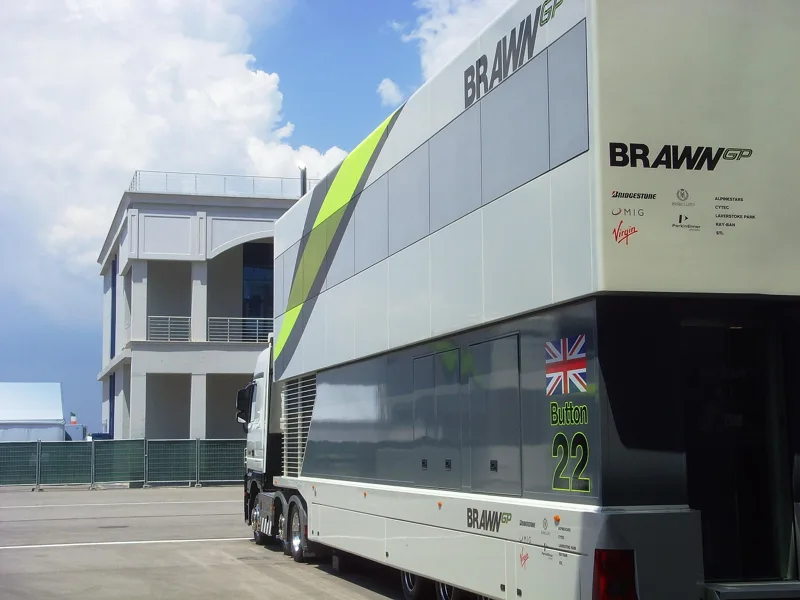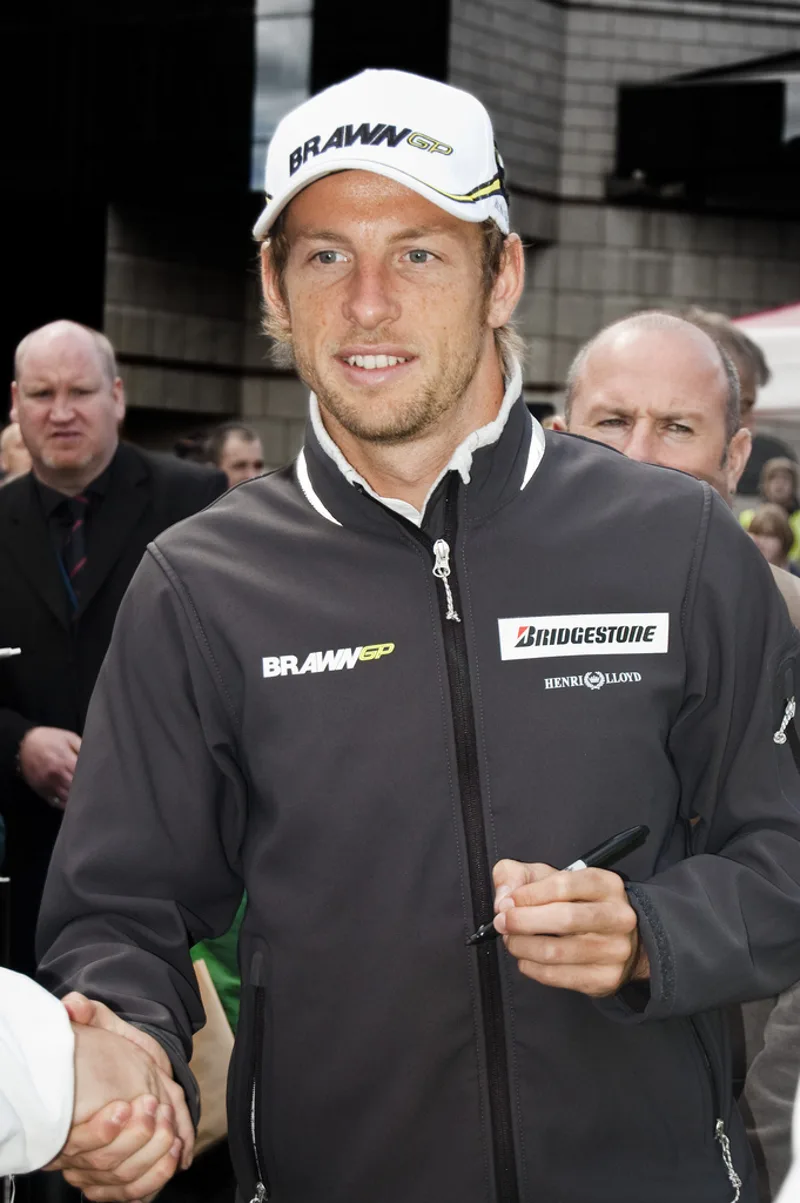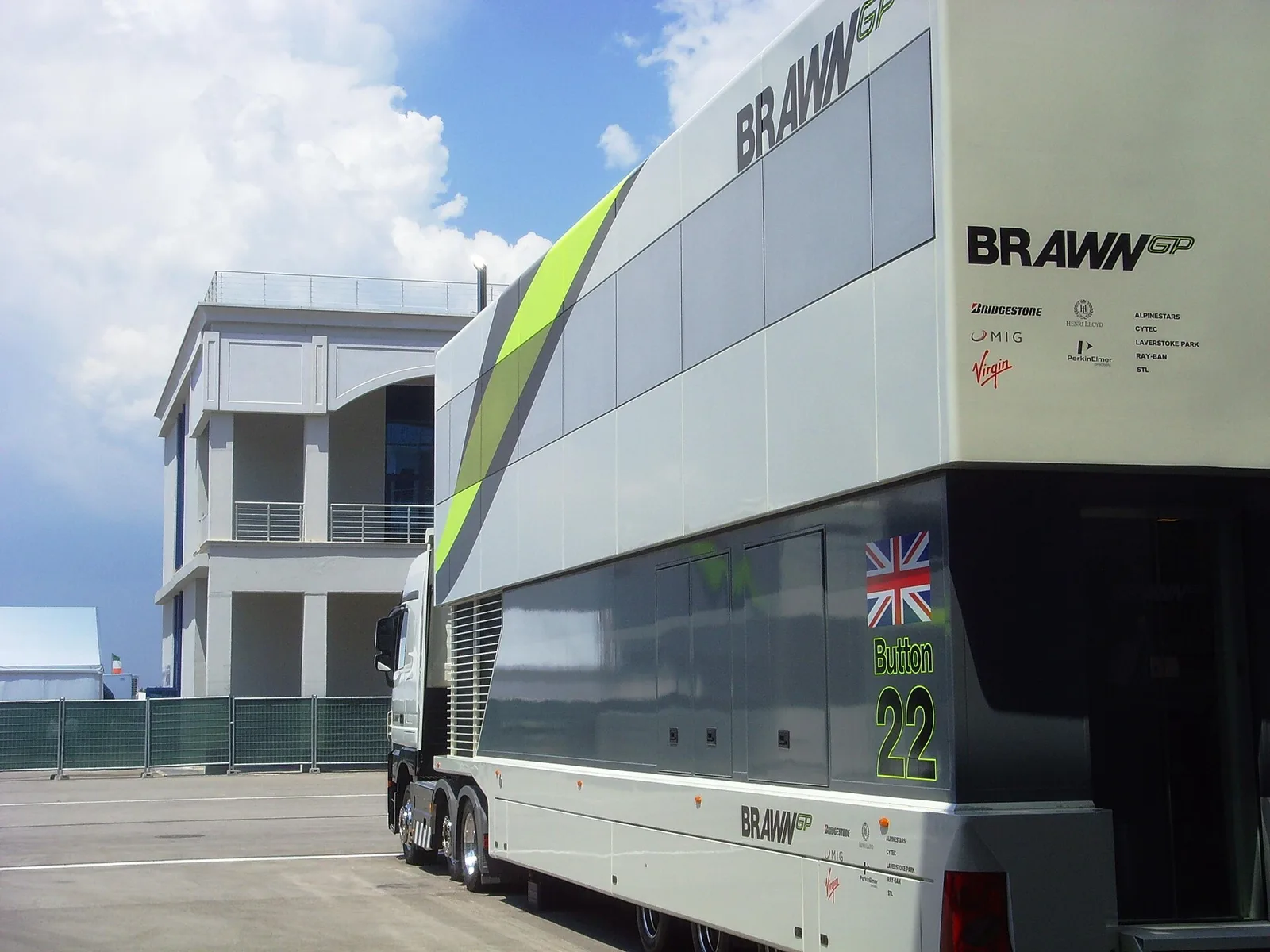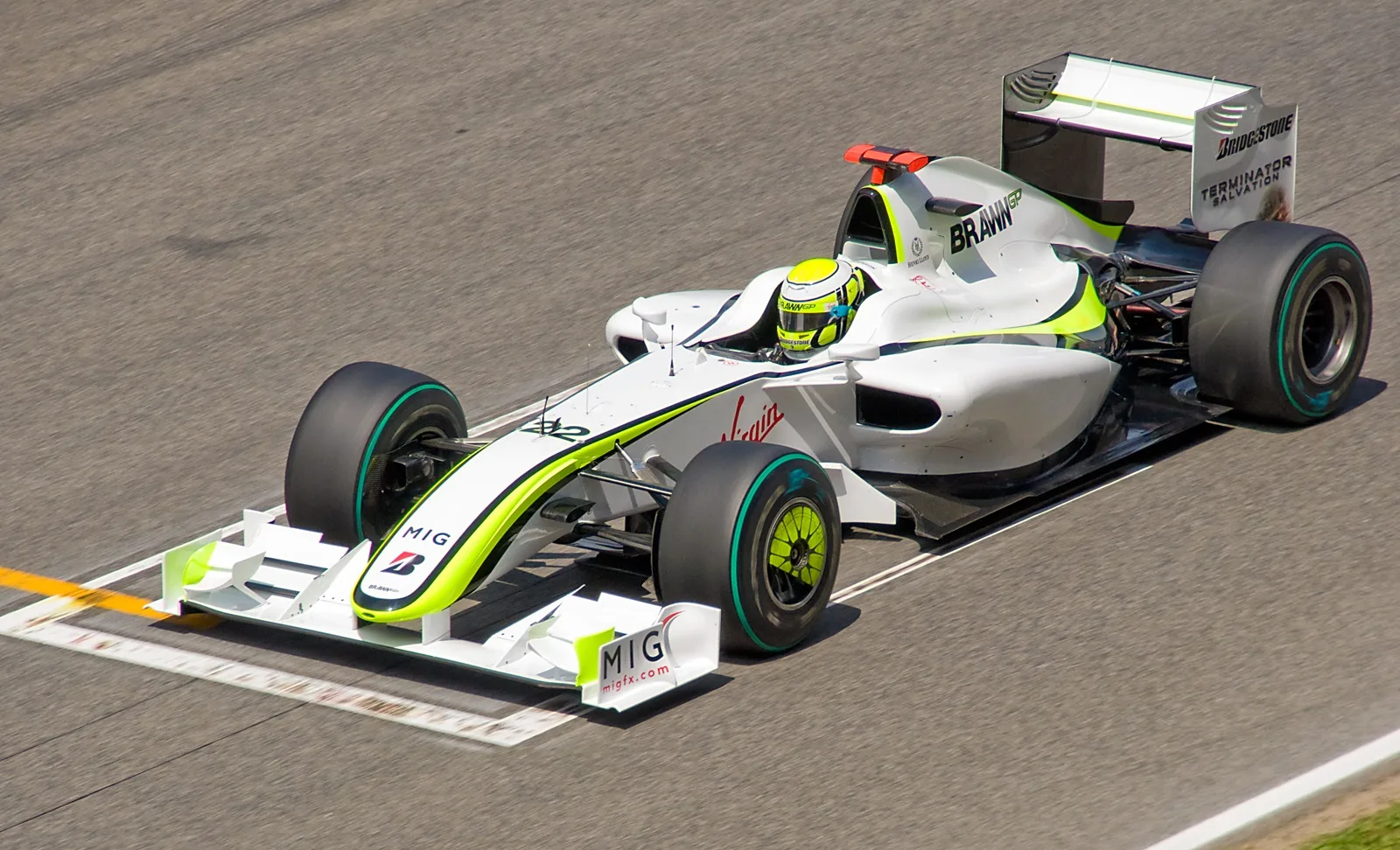
A Honda design finished by Brawn GP with only three chassis, a Mercedes engine and a diffuser that the FIA ruled legal.
The Brawn BGP 001 was the Formula One car Brawn GP used to win the 2009 championship, after Honda's withdrawal left its design to be completed. It won eight of 17 races with a Mercedes-Benz engine and a double diffuser that the FIA ruled legal in April 2009.
The Brawn BGP 001 gave Brawn GP its only championship season in 2009, turning a Honda design into a title-winning car. It won eight of its 17 races, and Jenson Button took the Drivers' title in it. Its double diffuser drew protests from rivals, yet the design was ruled legal.
What did Brawn GP inherit?
This was the sole Formula One car Brawn GP built. Loic Bigois drew it around a monocoque made from moulded carbon fibre and a honeycomb composite core, and it used wishbone and pushrod suspension at both ends, as most of the grid did.
Development had begun under Honda, which started work on its 2009 car early in 2008 before announcing its exit in December 2008. Ross Brawn bought the team and renamed it Brawn GP, and the car had to be completed under the new owner.
The Mercedes engine forced changes. The rear end lost six inches, which unsettled the balance, and by the time the team noticed the change there was no time for a new design. Brawn also said the car was too heavy and that some of its parts were poor.
Nick Fry later credited the Mercedes engine with half of the team's improvement in performance. Brawn chose it over Ferrari supply, reportedly because the team feared Ferrari could control the performance of a customer engine. Fry added that the team would not have won the title with the Honda engines.
A Honda design finished by Brawn GP, a Mercedes engine and a double diffuser that the FIA allowed to race.
Why was the double diffuser controversial?
The BGP 001 had a double-decker diffuser with a different central channel. Its most contested feature was a hole at the rear that sped up airflow before it expanded into the higher rear venturi section. Renault, Red Bull and Ferrari argued that the design broke the rules.
The race stewards in Melbourne rejected the complaint, and the car raced. Ferrari, BMW Sauber and Red Bull later launched a formal appeal, and the FIA International Court of Appeal heard it from 13 April 2009.
On 14 April 2009 the court ruled that the diffusers met the 2009 regulations and rejected the appeal. Had the appeal succeeded, the first two wins of the season could have been removed. The ruling let the car keep racing as it was.
The 2009 rules also demanded narrower, higher rear wings and wider, lower front wings. Slick tyres returned that year after an absence since 1998, and they were said to add about 20% to grip.
How did the engine and gearbox work?
The BGP 001 ran a Mercedes-Benz FO 108W, a naturally aspirated V8 limited to 18,000 rpm. Because the car was designed for a Honda engine, the installation involved compromises. Simon Cole, Brawn's chief trackside engineer, explained that the team had avoided Ferrari power because it worried Ferrari could control the car's performance.
The team's own gearbox was a semi-automatic sequential unit with seven forward gears and one reverse, operated by paddles. Brawn skipped KERS, which could have added 80 bhp (60 kW) for stretches of up to 6.6 seconds a lap, because the system would constrain the car's design and add weight.
Each car was limited to eight engines for the season. The team reused its engines heavily, and one engine build won three Grands Prix in succession, a first for Formula One.
How many chassis were built?
Only three chassis were built, one for each driver and a spare, while bigger operations like McLaren made up to eight. Wear on the reused chassis meant the cars slowed as the season went on, and the spare was used by Barrichello in Singapore.
Jenson Button ran the second chassis, BGP 001-02, at every practice, qualifying session and race from the Australian Grand Prix to the Brazilian Grand Prix. The title therefore went to Button in the oldest car on the grid. The chassis was later painted silver for the Mercedes GP launch in 2010 and then returned to its Brawn livery.
How did the 2009 season begin?
The car made its debut at Silverstone on 6 March 2009, when Button completed a shakedown. Testing followed at Catalunya from 9 to 12 March and at Jerez from 15 to 18 March. Button topped the timesheets on several days, and Felipe Massa called the BGP 001 the most competitive pre-season car.
The first race was the Australian Grand Prix on 29 March 2009. Button took pole and won, with Barrichello second, which gave the team a 1-2 on its debut. No debut had produced that result since 1954.
Button then won six of the first eight races, taking Australia, Malaysia, Bahrain, Spain, Monaco and Turkey. Barrichello won at Valencia and Monza later in the year. Button's title came in the same car, while the car's development had fallen behind rivals after the Spanish upgrade.
What were the car's weaknesses and incidents?
Cold weather was a problem. At the British and German Grands Prix the car could not heat its tyres, because it managed them better in hotter climates, and in cooler air it was not hard enough on the tyres to build heat into them.
Barrichello's only mechanical retirement came at Turkey, where he lost seventh gear. Button's only other retirement followed a collision in Belgium. The first upgrade arrived at Spain, but development later fell behind as rivals improved.
At Hungary a suspension spring broke free from Barrichello's machine in the third qualifying period, and it hit Felipe Massa's helmet. Massa crashed head-on into a tyre barrier, was briefly unconscious and suffered a serious head injury.
Who sponsored the car?
The early car was plain white, carrying only the Bridgestone and Brawn GP logos. As sponsors arrived the body filled up, starting with Henri Lloyd and then Virgin Group. MIG Bank later covered the front of the car at the Chinese Grand Prix.
Terminator Salvation's artwork appeared on the rear wing at Spain, while Graham-London's logo sat on the mirrors before Britain. Canon sponsored the team at Singapore, and Itaipava beer carried the colours on both cars in Brazil.
What happened to the car afterwards?
The BGP 001 appeared in F1 2009 as a playable car. Codemasters confirmed on 18 June 2018 that it would return as a classic car in F1 2018, F1 2019 and F1 2020. Mercedes GP later used all three chassis as demonstrator cars, and one ran at Goodwood in 2010.
Chassis 02 was painted silver for the 2010 Mercedes GP launch and later returned to Brawn colours. It was also shown at the 2016 Goodwood Festival of Speed, and Ross Brawn now owns it.
Season summary
| Measure | 2009 figure |
|---|---|
| Races contested | 17 |
| Race wins | 8 |
| Button wins | 6, all in the first eight races |
| Barrichello wins | Valencia and Monza |
| Chassis built | 3 |
| Engine limit | Eight per car |
| Engine speed limit | 18,000 rpm |
| Diffuser appeal decision | 14 April 2009, diffuser legal |
How fast was the car in pre-season testing?
The BGP 001 topped the timesheets in its early Catalunya test, and on the second day Barrichello completed 111 laps and finished third. Button went quickest on the third day, more than a second in front of Massa's Ferrari, a margin that drew praise from Massa himself.
At Jerez the car kept setting the pace, six-tenths ahead of Renault's Fernando Alonso on day one. Button topped the final day two-tenths clear of Nico Rosberg's Williams, with Piquet Jr. and Hamilton further back.
Why did Button's helmet attract attention?
At the British Grand Prix fans were invited to submit designs for Button's helmet. He picked Bernie Zobl's Push The Button artwork, a public moment for the team.
The helmet came at a time when the team's profile was rising quickly. Sponsors' logos were added to the car race by race, as new deals were signed and the team's commercial reach grew.
How did the car's balance develop in the middle of the season?
Development did not keep up with rivals after the first Spanish upgrade. The car struggled with tyre temperature in cooler races.
The car suffered in colder weather because it could not build heat into its tyres. Barrichello's gearbox failure in Turkey and Button's collision in Belgium were the only retirements the two drivers suffered that season.