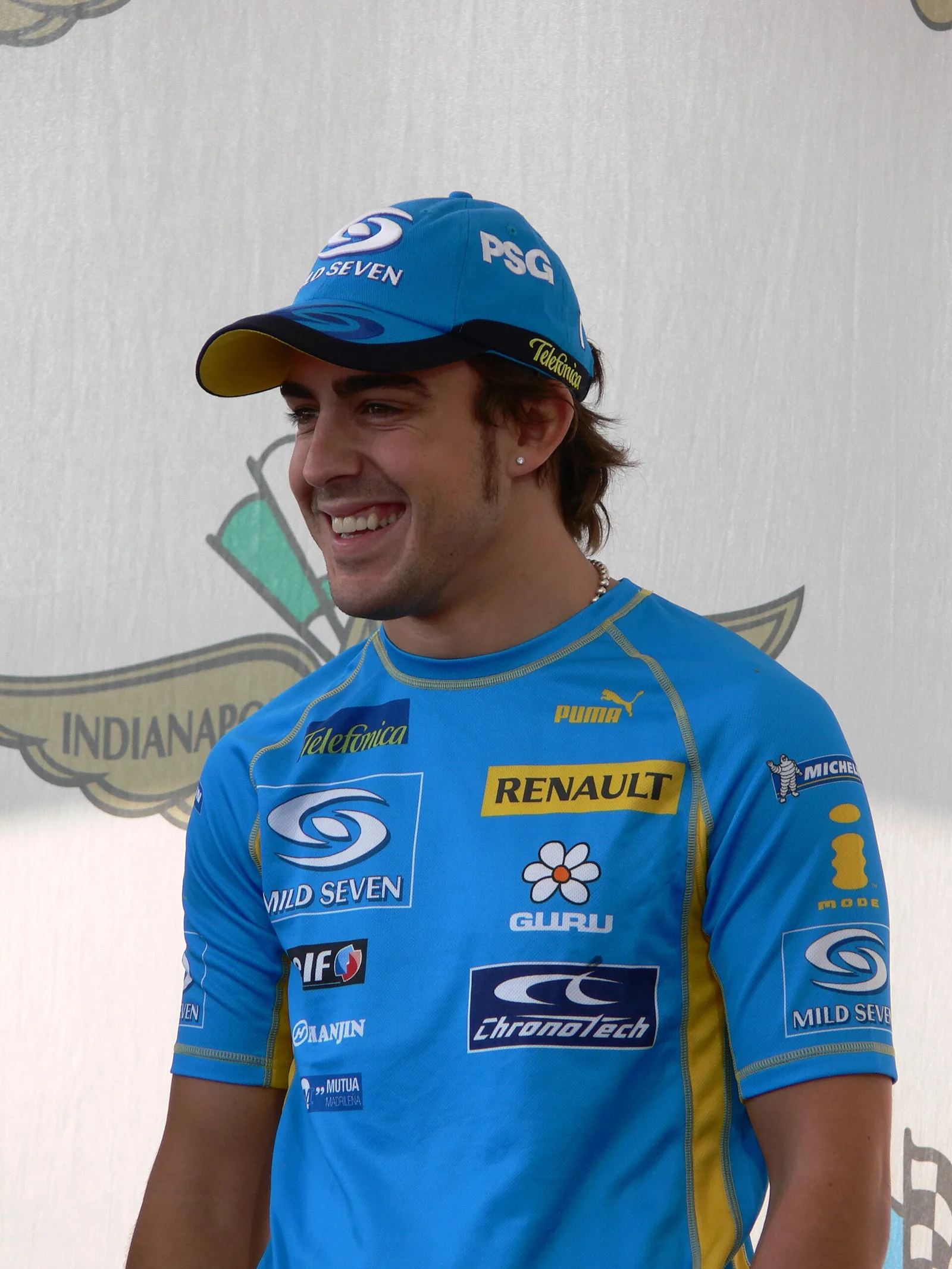

Fernando Alonso won back-to-back titles for Renault while Michael Schumacher, in his final season, pushed him to the very last race in Brazil.
Fernando Alonso won the 2006 Formula One World Championship for Renault, becoming the youngest double champion at the time. Michael Schumacher, in his final season, finished 13 points behind, and Renault took the constructors' title by five points over Ferrari.
Renault's Fernando Alonso claimed the 2006 Formula One title, his second in a row, with 13 points to spare over Michael Schumacher. It was the 60th season of Formula One and the 57th World Championship, held over eighteen races from 12 March to 22 October. Renault also took the constructors' title, five points ahead of Ferrari.
Who won the 2006 championship?
Alonso became the youngest double world champion at the time, and he did it against a seven-time champion in his final season. Schumacher finished runner-up, while Renault and Ferrari together won all but one of the eighteen races. Alonso and Schumacher each won seven races, which made their rivalry the central story of the year.
The two men were separated by only a handful of points for much of the second half, as Alonso's margin moved up and down with each result. That closeness made the final round in Brazil the decisive moment.
Schumacher announced his retirement from Formula One in September, to take effect at the end of the season. Kimi Raikkonen was named as his replacement at Ferrari for 2007, which left the team with a new leader for the following year.
Alonso's second title came in a season when Renault and Ferrari took all but one win, and the last race settled it.
What technical rules changed in 2006?
The most significant change was the engine. Capacity dropped from 3.0 litres to 2.4 litres and the cylinder count fell from ten to eight, so V8s replaced the V10s that had been used before. Engineers expected the smaller engines to shed roughly 200 bhp of peak output, which was meant to slow the cars.
The new engines started slower than their V10 predecessors in testing, but lap times were soon close to 2005 figures, and some circuits saw faster laps than the previous year. Scuderia Toro Rosso was given special dispensation to keep using 3.0-litre V10s, because re-engineering its cars so quickly would have been costly. Cosworth, which had long experience with V8s, became the first manufacturer to break the 20,000 rpm barrier on track in December 2005.
Other changes followed. Each driver could use just 14 sets of tyres over a race weekend, split into seven dry, four wet and three extreme-weather sets. A seven-speed plus reverse semi-automatic gearbox was mandated, and fuel tank capacity was standardised at 150 litres.
Why was the mass damper banned?
Several squads used a tuned mass damper, Renault most prominently, and it was outlawed after the French Grand Prix. The FIA argued that the device moved relative to the sprung body, which the bodywork rules forbade. Renault had built its cars around the device, so the decision hit the team hard.
The devices sat in the nosecone and helped keep the tyres in contact with the track in corners and over kerbs. A stewards' decision at the German Grand Prix had allowed the system, but the FIA appealed, and the International Court of Appeal upheld the appeal on 23 August 2006. The ban took effect before the Turkish Grand Prix.
How did the qualifying format work?
A new three-session qualifying system replaced the old format. Qualifying opened with a 15-minute session in which the six slowest cars were eliminated, and a second 15-minute session eliminated six more. The top ten then fought a final session, and drivers were allowed to lower their fuel loads by running as many laps as possible.
The system was refined during the season. Starting at the French Grand Prix, the final session was cut to 15 minutes, so every session had the same length. The FIA also decided to count only laps within 110% of a driver's fastest time, which closed a loophole in which teams declared large fuel loads and then leaked fuel on the out lap.
Which teams changed names or owners?
Three well-known names disappeared under new ownership. Minardi became Scuderia Toro Rosso under Red Bull, while Sauber was bought by BMW, which took 80% of the team and kept the Sauber name. Jordan was renamed MF1 Racing and later sold to Spyker. Toro Rosso ran Bridgestone tyres as Minardi but switched to Michelin in line with its parent team.
Honda completed its takeover of BAR and renamed the team Honda Racing F1 Team. Super Aguri arrived late in the process, paying a US$48 million bond and receiving the FIA's confirmation on 26 January 2006. Honda supplied engines to Super Aguri as well, which made 2006 the first season since 2002 in which Honda supplied multiple teams.
How did the driver market shape the season?
Several of the year's moves were already set before the first race. Alonso had agreed to join McLaren for 2007, while Schumacher's retirement and Raikkonen's arrival at Ferrari shaped the team's plans. Felipe Massa replaced Rubens Barrichello at Ferrari, and Barrichello moved to Honda to replace Takuma Sato.
Mid-season brought more change. Juan Pablo Montoya left McLaren after the United States Grand Prix, ending a career that had begun in 2001, and Pedro de la Rosa replaced him. Robert Kubica moved up to a BMW Sauber race seat for the Hungarian Grand Prix, after Jacques Villeneuve departed following a heavy crash in Germany.
Nico Rosberg, the inaugural GP2 champion, made his Formula One debut at Williams alongside Mark Webber. Super Aguri also changed its drivers during the year, with Yuji Ide losing his superlicence and Sakon Yamamoto stepping in.
How did the early races unfold?
Schumacher took back-to-back wins at Imola and the Nurburgring, and he looked as though he could lead the title race from the front. Then came Monaco, where he stopped on track during his final qualifying lap. The stewards concluded that the stop was deliberate, and his times were deleted, dropping him to 22nd on the grid.
He started from the pit lane and finished fifth, after a safety car period that left him behind. Alonso, meanwhile, won the British Grand Prix from pole and set the fastest lap, becoming the first Spanish driver to do so and the youngest to win from pole, at 24 years and 317 days.
Schumacher then won the United States Grand Prix at Indianapolis, his fourth consecutive victory there, followed by the French Grand Prix and the German Grand Prix at Hockenheim. After the damper ban, Renault found the following race hard going, and its cars barely scored.
What happened in the second half of the season?
Jenson Button won the Hungarian Grand Prix, the first win of his career. Alonso was leading when his car suffered a mechanical failure, and Schumacher collided with Nick Heidfeld. Massa then won in Turkey, which meant Formula One had a maiden winner in consecutive races.
Alonso extended his lead by two points after finishing a tenth of a second ahead of Schumacher in Turkey. The Italian Grand Prix brought another flashpoint. Alonso was penalised for holding up Massa in qualifying, and Schumacher won the race, cutting Alonso's lead to two points as Alonso suffered an engine failure late on.
Schumacher announced his retirement after that race, at the press conference that followed. Robert Kubica claimed his first podium finish in his third race, but the result was overshadowed by the news.
How did the title finish?
Three weeks later, Schumacher won in Shanghai and drew level on points with Alonso. It was the 91st and final victory of his career, and it gave him the championship lead for the first time that year, with seven wins to Alonso's six. Renault regained the constructors' lead through Giancarlo Fisichella's third place.
In Japan Schumacher's engine gave up with 17 laps remaining, and Alonso won ahead of Massa. At the Brazilian Grand Prix, the final round, Massa took pole and won his home race, the first Brazilian to do so since Ayrton Senna in 1993. Schumacher started tenth after a mysterious failure in qualifying and then suffered a puncture, finishing fourth.
Alonso finished second in Brazil, which was enough to secure a second successive title. He became the youngest man to win back-to-back championships, and Fisichella's sixth place gave Renault its second successive constructors' title.
How did the 2006 results break down by race?
| Grand Prix | Winner | Key point |
|---|---|---|
| San Marino (Imola) | Michael Schumacher | First of two consecutive wins |
| Nurburgring | Michael Schumacher | Second of two consecutive wins |
| British | Fernando Alonso | From pole, with fastest lap |
| United States | Michael Schumacher | Fourth consecutive win at Indianapolis |
| French | Michael Schumacher | Renault struggled after the damper ban |
| German | Michael Schumacher | Win at Hockenheim |
| Hungarian | Jenson Button | First career win; the only race outside Renault and Ferrari |
| Turkish | Felipe Massa | Maiden winner, second in a row |
| Italian | Michael Schumacher | Alonso penalised in qualifying |
| Chinese | Michael Schumacher | 91st and last career victory |
| Japanese | Fernando Alonso | Schumacher retired with engine failure |
| Brazilian | Felipe Massa | Home win for Massa |
What did the season leave behind?
The season closed several chapters at once. Michelin announced its withdrawal from the sport at the end of 2006, which meant Bridgestone alone supplied tyres in 2007. Bridgestone stayed until it left the sport after 2010, and Pirelli took over from 2011, so 2006 was the last season with more than one tyre supplier.
As of 2026, Renault's 2006 constructors' title remains the team's last, and Alonso's drivers' title was the last won by a Spanish driver. McLaren failed to win a race in 2006 for the first time since 1996, and no British constructor won a race for the first time since 1956. Those records give the season a place of its own in the sport's history.
Schumacher's last win had come at Shanghai, the 91st of his career, and his final race in Brazil ended in fourth place after a puncture. It was a farewell season that stayed close to the end.