A French winner from pole, an Alonso miss in the Last Row Shootout and the last race before Roger Penske bought the speedway.
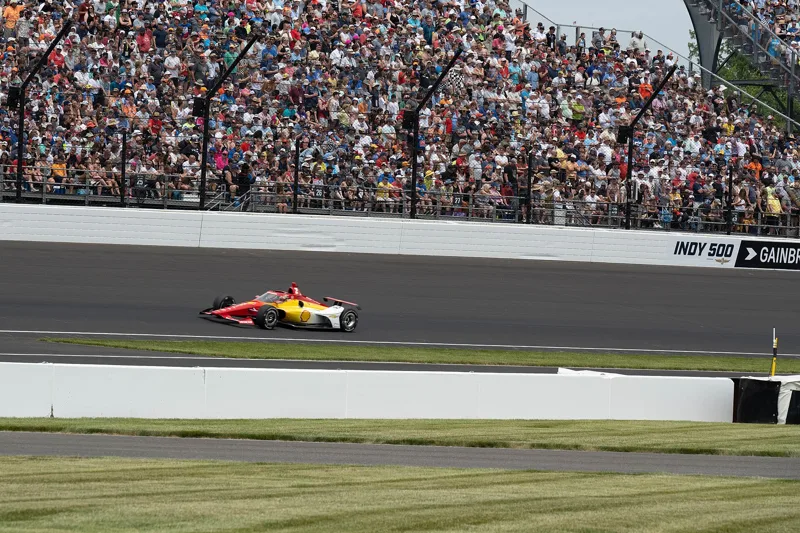
Simon Pagenaud won the 2019 Indianapolis 500 for Team Penske on 26 May 2019, starting from pole. He led 116 laps and became the first French-born winner since 1920. The win was Team Penske's record-extending 18th at the race.
Simon Pagenaud won the 2019 Indianapolis 500 on 26 May from pole position, giving Team Penske its record-extending 18th win in the race. He led 116 laps and took the lead for the last time close to the finish. He became the first French-born winner since Gaston Chevrolet in 1920.
What was the 2019 Indianapolis 500?
It was the 103rd running of the race, branded with Gainbridge sponsorship and held on Sunday 26 May 2019 at the Indianapolis Motor Speedway in Speedway, Indiana. It was the premier event of the IndyCar Series and ran over 500 miles (200 laps). It was also the final race under the Hulman-George family's ownership.
Penske Entertainment, a subsidiary of the Penske Corporation owned by Roger Penske, had agreed to buy the speedway, the IndyCar Series and IMS Productions. That purchase was announced on 3 November 2019 and was finalised in January 2020.
Gainbridge had signed on as presenting sponsor under a four-year deal, announced on 31 January 2019. Marathon Petroleum replaced Sunoco as the fuel provider, using the Speedway brand.
A French winner from pole, a record 18th for Team Penske and the last race under the old owners.
How did the May calendar build up?
The month began on 11 May with the IndyCar Grand Prix, which Pagenaud also won. Five different drivers had won the first five races of the 2019 IndyCar Series, and Colton Herta had become the youngest driver to win an Indy car race at Circuit of the Americas. Josef Newgarden led the championship going into the 500. It was his first win in that event since 2017 and his third in it overall. He became the second driver in a row to win both the Grand Prix and the 500 in the same year.
Practice began on 14 May and time trials ran on 18 and 19 May. Carb Day, the Pit Stop Challenge and the Freedom 100 were all held on 24 May. Fernando Alonso, a former Formula One world champion, was bumped in the Last Row Shootout on 19 May and failed to qualify.
How did qualifying change for 2019?
Qualifying was held over two days, Saturday 18 May and Sunday 19 May, with the bumping moved to Sunday. The top nine on Saturday went to the Fast Nine Shootout, positions 10 to 30 were locked in, and those in 31st or lower went into the Last Row Shootout.
On Sunday the Last Row Shootout started at 12:15 pm and filled positions 31 to 33. The Fast Nine Shootout began at 1:15 pm, awarding championship points from nine down to one to the drivers in it. Monday's post-qualifying practice was also cut to two hours.
Who was on the grid and what was new?
The official list had 36 car and driver combinations, all Dallara IR12 chassis using the Universal Aero Kit with Firestone tyres. Colton Herta was the first driver ever entered in the race to have been born in the 2000s.
Alonso returned for a second attempt with McLaren, using Chevrolet engines and car number 66, which Mark Donohue had carried to win in 1972. He tested at Texas on 9 April to re-acclimatise and adapt to the new aero kit.
Robert Wickens had been injured in a crash at Pocono in 2018, and Marcus Ericsson replaced him, with the car renumbered from No. 6 to No. 7. Marco Andretti ran a throwback livery marking 50 years since Mario Andretti's 1969 win.
What did practice show before the race?
| Session | Driver | Speed |
|---|---|---|
| Open test, 24 April | Takuma Sato | 226.993 mph, fastest lap of the day |
| Rookie test, 24 April | Colton Herta | 226.108 mph, fastest rookie |
| Tuesday, 14 May | Will Power | 229.745 mph (369.739 km/h) |
| Wednesday, 15 May | Josef Newgarden | 228.856 mph (368.308 km/h) |
| Thursday, 16 May | Ed Jones | 227.843 mph (366.678 km/h) |
| Fast Friday, 17 May | Conor Daly | 231.704 mph (372.891 km/h) |
How did the open test and rookie programme go?
The open test on 24 April had 15 teams and 28 drivers scheduled, but rain closed the track. Twenty drivers completed 707 laps in the first session. Four rookies passed their programme: Herta, Felix Rosenqvist, Santino Ferrucci and Marcus Ericsson.
Conor Daly was the only veteran to pass both the second and third phases of the refresher test. Fernando Alonso had electrical problems and cleared only the second phase. Drivers who had raced at Texas or Pocono in 2018 were exempt from the refresher. Tony Kanaan ran no laps at speed, and Max Chilton suffered a blown engine. Helio Castroneves, J. R. Hildebrand and Oriol Servia also failed to complete both refresher phases. Sato posted a no-tow lap of nearly 223 mph during the same session.
How did the practice days go?
On opening day Will Power was fastest, and Ed Jones set the fastest no-tow lap at 224.542 mph (361.365 km/h). On Wednesday Alonso crashed heavily at turn three and did not return to the track that day, while Rosenqvist also crashed at turn two.
Newgarden led the speed charts on Wednesday, ahead of Dixon and Pigot, while Alexander Rossi's no-tow lap reached 224.648 mph (361.536 km/h). O'Ward had also completed his rookie test that day, after his electrical trouble on the opening day.
Thursday practice was cut by 90 minutes because of rain, and Patricio O'Ward crashed heavily at turn two. Ed Jones was fastest that day, ahead of Takuma Sato and Zach Veach. Fast Friday was disrupted by lightning, which halted running for about an hour, and Kyle Kaiser crashed heavily at turn three, an incident that put the Juncos Racing entry in doubt for qualifying.
How did testing start before the 2019 race?
The first test came in August 2018, when Firestone ran a private session on the oval. Team Penske's Will Power represented Chevrolet, while Chip Ganassi Racing's Scott Dixon represented Honda, and the work focused on the universal aero kits that had debuted in 2018.
Stability criticism after the 2018 race led to changes to the front wing endplate and underwing panels. A series test followed on 17 October 2018, when six teams ran six cars to develop the aero specification and Firestone tyres, and drivers felt the speedway's newly upgraded recycled polyethylene binder for the first time.
Three Indianapolis 500 rookies, Ben Hanley, Colton Herta and Marcus Ericsson, took an oval acclimation test at Texas Motor Speedway on 19 April, in windy conditions, before the Rookie Orientation Program.
An additional refresher and rookie session was scheduled for 14 May, from 1 pm to 3 pm.
What were the optional Gurney flaps?
Each car could fit one of two optional Gurney flaps on top of its rear wing to add downforce. The flaps measured 3/8 inch tall and were either 13.2 inches (34 cm) or 24.5 inches (62 cm) wide, and they could generate 50-100 pounds of downforce.
The flaps sat alongside the Advanced Frontal Protection device, which every car carried for cockpit protection.
How did the race end?
Pagenaud won from pole, leading 116 laps. He took the lead for the final time with just over a lap to go, passing Alexander Rossi, the 2016 winner. He was the first pole sitter to win since 2009.
Power had entered as defending champion after winning the 2018 race, and the 2019 win gave Team Penske its record-extending 18th Indianapolis 500. Pagenaud also took the pole, Team Penske's record 18th pole in the race.
What did the 2019 race mean for the speedway?
Tony George gave the starting command for the last time before the sale to Roger Penske was completed.
The race also featured the Advanced Frontal Protection device, a titanium fin measuring 3 inches (76 mm) by 0.75 inches (19 mm). Cars were allowed one of two optional Gurney flaps on the rear wing to add downforce.