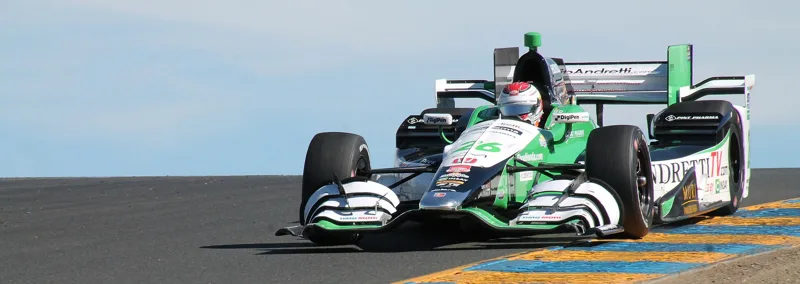
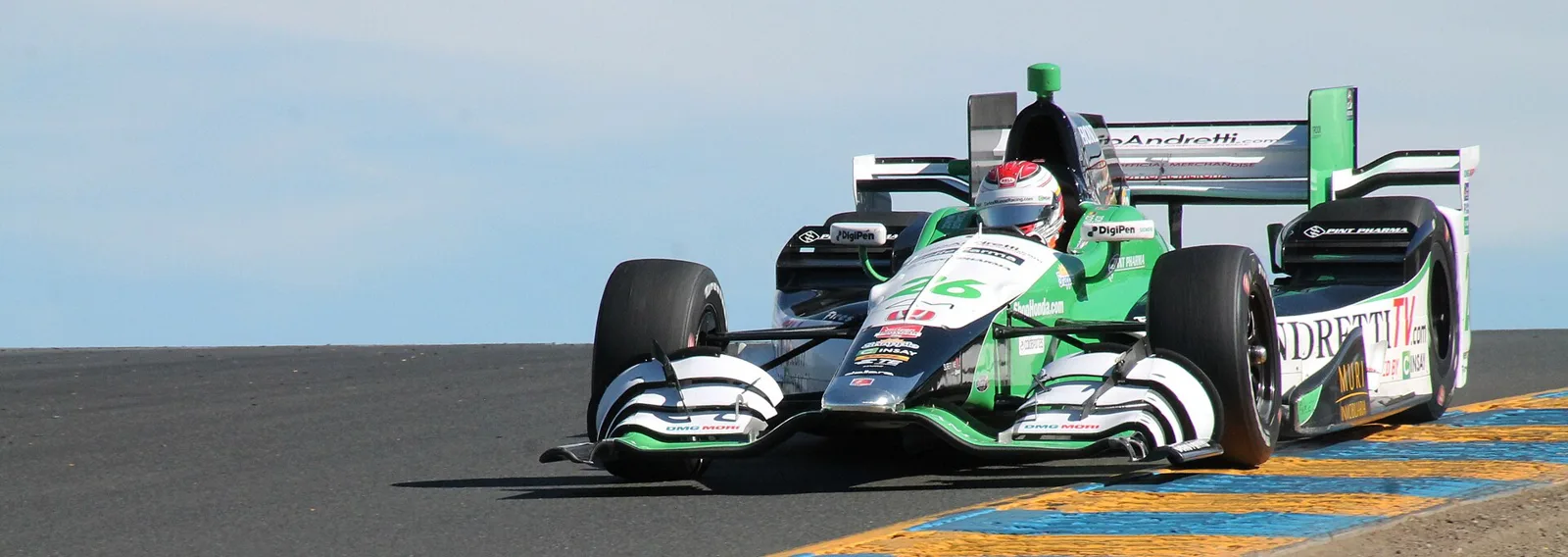
Rahal's first win since 2008 came in a record 80-lead-change race at Auto Club Speedway, where a final-lap crash revived the debate over pack racing.
Rahal took the chequered flag at Fontana on 27 June 2015, ending 124 races without a win. Kanaan and Andretti were second and third in a 250-lap contest that produced the most lead changes of any American open-wheel race.
Graham Rahal won the 2015 MAVTV 500 at Auto Club Speedway, ending a winless run that had lasted 124 races. The race produced 80 lead changes, a new record in American open-wheel racing, and it finished under a late crash that revived the argument about pack racing. Tony Kanaan finished second and Marco Andretti third.
Who won the 2015 MAVTV 500?
Graham Rahal won the race on 27 June 2015 for Rahal Letterman Lanigan Racing, taking his second career victory. It was his first win since the 2008 Honda Grand Prix of St. Petersburg, and it ended the longest winless streak of any Indy car driver at the time.
Rahal led the final ten laps and held off Kanaan in a battle that ended with the chequered flag. Rahal earned $100,417 in race winnings, and he said he had been knocking on the door on ovals for some time.
Eighty lead changes, a 124-race wait over and a final-lap flip that put the pack-racing debate back on the table at Fontana.
Why was the race rescheduled and what was at stake?
The MAVTV 500 was the 11th of 16 scheduled IndyCar races in 2015 and the 14th and final Indy car race held at the 2.000 mile (3.219 km) Auto Club Speedway. Unlike the previous three races at the venue, it was not the season finale, and it had been moved from its usual autumn date to a summer afternoon.
The race had a championship angle. Juan Pablo Montoya led the Drivers' Championship with 374 points, 27 ahead of his Team Penske teammate Will Power. Scott Dixon was third, 45 points behind Montoya, while Helio Castroneves was fourth on 322 and Rahal fifth on 283 points.
Chevrolet led the manufacturers' table with 1003 points, with Honda second on 840. Montoya had won the Indianapolis 500 a month earlier, and he spoke about the chance to become the first driver since Al Unser in 1978 to complete the Triple Crown.
How did the aero package shape the weekend?
IndyCar introduced a rule that was exclusive to this race. The rear wing mainplane angle had to be set between 0 and -10.5 degrees, a wider range than the -6 to -10.5 degrees used at Texas earlier that year. The change added downforce to offset track temperatures forecast near 90 degrees Fahrenheit (32 degrees Celsius).
Ed Carpenter argued that the track rewarded drivers who could use several grooves, and that drivers had settled into one groove in recent years and needed to use others.
Several drivers, including all four Team Penske drivers, met IndyCar officials to voice concerns about the pack racing that the package was likely to create. IndyCar president Derrick Walker said no changes would be made, because the complaints did not represent the views of most teams and drivers.
How did qualifying set the grid?
Simon Pagenaud took pole with an overall time of 1:05.7679 on Friday afternoon. It was his second Indy car pole and his first on an oval, and Helio Castroneves joined him on the front row. Marco Andretti was the fastest Honda and qualified third, with Carpenter fourth and Montoya fifth.
Tony Kanaan, Scott Dixon, Will Power, Takuma Sato and Sage Karam took sixth through tenth. Kanaan and Dixon both recorded two-lap times of 1:06.3033, and Kanaan started one place ahead because he had qualified before Dixon. Carlos Munoz, Josef Newgarden, Charlie Kimball, Ryan Hunter-Reay and Sebastien Bourdais followed, with Ryan Briscoe and Jack Hawksworth among the top twenty.
Pagenaud said the team had been put together only recently and was gelling well. He added that a 500-mile race could be won from the back, pointing to Montoya's Indianapolis win, and that running in different lanes and being smart in traffic would be the key.
What happened in practice?
Two practice sessions were held on Friday, June 26, and a preliminary session for the rookies ran at 8:30 a.m. Gabby Chaves led the rookie session at 167.933 mph (270.262 km/h). Ryan Briscoe was quickest in the first practice at 33.1109 seconds, ahead of Marco Andretti and Pagenaud.
Scott Dixon set the fastest lap of the final practice at 33.0839 seconds, with Pagenaud and Ed Carpenter second and third. James Jakes suffered an engine issue that caused the only caution in practice, and he did not make a qualifying attempt as a result.
The qualifying session was held in very hot conditions, with temperatures above 90 degrees Fahrenheit (32 degrees Celsius). Smoke from nearby wildfires partly covered the track, and it was a hot and hazy afternoon for the drivers.
How did the early laps unfold?
The race began at 1:36 p.m. with a rolling start after the broadcast had started at 1:00 p.m. local time. Pagenaud was passed for the lead by Marco Andretti at the first turn, and Castroneves got by Andretti at turn three to lead the first lap.
Castroneves, Montoya and Andretti traded the lead several times in the opening laps, while Kanaan steadily stayed inside the top five. Kanaan led his first lap on lap 15, but he was told to hold his line. Andretti retook the lead and Kanaan passed him back on lap 22.
Rookie Sage Karam briefly emerged as a contender and led his first IndyCar lap on lap 24. From laps 24 through 33 he and Kanaan traded the lead four times, and the early order was already unsettled.
How did the lead change through the middle of the race?
The first green-flag pit stops began on lap 34, when rookie Stefano Coletti came in because of oversteer. Tristan Vautier struck his front-left tyre changer during the stops, and the crew member was later released from hospital. Montoya led his first laps of the race from 44 to 46.
Takuma Sato took the lead on lap 47 and held it until Dixon passed him on lap 52. Sato then regained the lead on lap 55 and led for 14 laps, the most consecutive laps led by a single driver in the race up to that point. Kanaan passed him on lap 71, and Sato retook the lead one lap later.
Power and Castroneves battled hard, swapping the lead eight times in 23 laps from lap 76. By the 100th lap, 32 lead changes had been recorded, and Kanaan had raced back to the front on lap 99 to fight with Power. The race was becoming a series of close fights at the front.
Castroneves then led 18 laps in a row after lap 114, breaking Sato's record for consecutive laps led. Briscoe led for a single lap in that stretch, but Castroneves took the lead back.
What caused the major incidents in the race?
On lap 135, Graham Rahal raced alongside Castroneves for several corners, and Castroneves gave up the lead in the second corner on lap 136. On the backstretch, Briscoe swerved up the track while Castroneves turned down, and Briscoe's right bumper pod touched the nose of Castroneves' car.
That contact sent Castroneves into Power's left-rear tyre and then into the inside wall. Power was unhurt, but Briscoe's bumper pod flew off, and the first caution of the race came on lap 136. Castroneves had cosmetic damage and spent several laps in the garage before returning, several laps down, on lap 151. He retired on lap 155.
The second caution came two laps after Munoz's pass on lap 156, when Josef Newgarden was pinched into the outside wall by teammate Ed Carpenter. Both drivers crashed and retired, which ended Carpenter's run of podium finishes at Auto Club Speedway.
A third caution on lap 191 came after Rahal left pit road with the fuel hose still attached. The hose tore away from the fuel rig on the backstretch, and IndyCar officials decided not to penalise Rahal, calling it a human error. The team was later fined $10,000 for the incident.
A fourth caution came a lap after Dixon's nose caught Munoz's bumper pad on lap 220, and the pad flew off Munoz's car. In the restart on lap 228, Rahal passed Andretti for second and then snatched the lead from Power by a nose.
How did the closing laps decide the race?
Briscoe reclaimed the lead on lap 236 by using Power's draft, and Power then led lap 237 before Briscoe led the next three laps. On lap 241 Rahal gained momentum on the outside and passed Briscoe on the backstretch. Sato was squeezed between Power and Dixon and bounced off both drivers, sending Sato and Power into the outside wall on the frontstretch.
Power was furious and threw his steering wheel as the marshals arrived. He walked away and then shoved one of the marshals while being helped from the scene. IndyCar brought out a red flag to clear the debris, and Power was later fined $25,000 and placed on probation for the remainder of the season.
The race restarted on lap 248 with Rahal still leading. Kanaan drove hard for the lead, and Rahal used the inside lane to clear him as the final lap began. On that final lap Hunter-Reay was pinched by Montoya and Karam, pinballed off Karam and spun into Briscoe, which sent Briscoe into a violent flip.
Briscoe and Hunter-Reay climbed out of their damaged cars, unhurt. The caution came out for the sixth and final time, and Rahal was awarded the victory with Kanaan half a car-length behind at the moment of caution.
What were the final results?
Rahal won from Kanaan and Andretti, with Montoya fourth and Karam fifth. Dixon, Jakes, Kimball, Pagenaud and Hawksworth completed the top ten. Power led a race-high 62 laps but finished well down after his crash, and he earned two bonus points for leading.
| Position | Driver | Note |
|---|---|---|
| 1 | Graham Rahal | Second career win; first since 2008 |
| 2 | Tony Kanaan | Chip Ganassi Racing; half a car-length behind |
| 3 | Marco Andretti | Andretti Autosport; third place |
| 4 | Juan Pablo Montoya | Team Penske; extended his title lead |
| 5 | Sage Karam | Rookie; fifth after a final-lap clash |
How did drivers and critics respond?
Rahal said the team had been knocking on the door for some time and that the next three races would define the year. He also described his pit-lane incident as lucky, noting that the gearshift had not engaged until he moved the car back and forth.
Public reaction was divided between fans and drivers. Carpenter defended the close racing, Briscoe praised the racing despite his flip, and A. J. Foyt said the racing had been real racing. Power and Montoya criticised the style, with Power comparing it to the 2011 Las Vegas race, which had ended with the death of Dan Wheldon.
Team Penske's strategist, Tim Cindric, called the racing disappointing given the lessons from Las Vegas. Kanaan said the drivers were not in the car to see what 215 mph felt like in traffic, and he asked critics to try it themselves. Robin Miller called the race one of the five best he had seen, but he criticised the scheduling.
What did the race mean for IndyCar?
IndyCar CEO Mark Miles admitted that the series had gone too far with the aero package, although he criticised the drivers for their public complaints. The race averaged 512,000 viewers on NBCSN, the most for an IndyCar race on that network since September 2011.
Attendance was far lower. Fewer than 10,000 people watched in person, and some estimates put the figure below 5,000. Auto Club Speedway president Dave Miller said the track would not accept another summer date, and IndyCar announced two months later that the track would not return in 2016.
After the race, Montoya extended his lead to 46 points over Power with 407 points, while Dixon stayed third. Chevrolet's manufacturers' total rose to 1108 points, 187 more than Honda. NASCAR sold the property in 2020, and the track closed for demolition in October 2023.