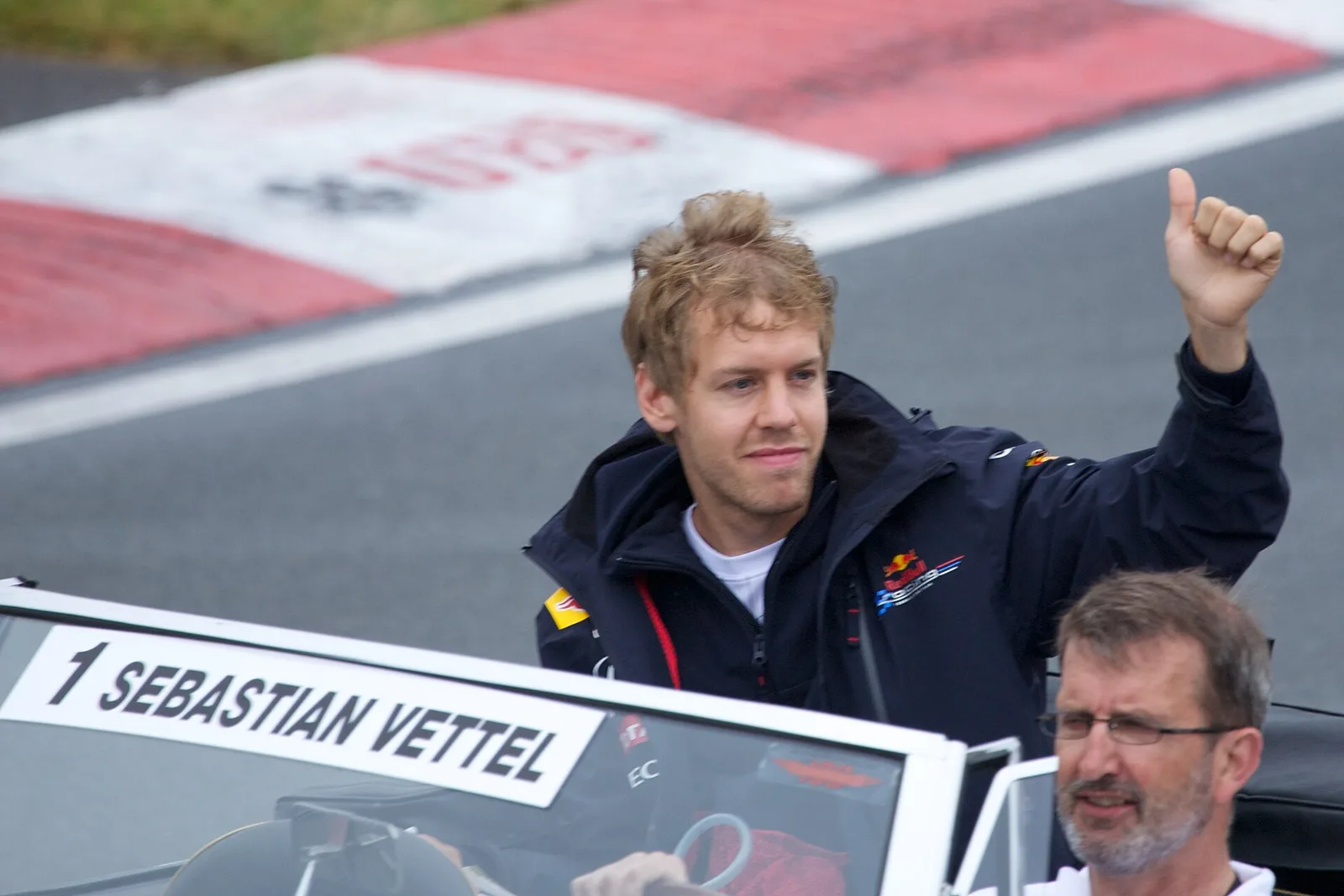
Pirelli's return, the DRS overtaking aid and a record pole tally, with Sebastian Vettel retaining his crown in Japan.
Sebastian Vettel secured his second World Drivers' Championship at the Japanese Grand Prix, becoming the youngest driver to defend a title. Red Bull Racing took its second consecutive constructors' crown in Korea. The season saw Pirelli return as sole tyre supplier, the DRS overtaking aid introduced and a record pole tally from Vettel.
The 2011 Formula One World Championship was the 65th season of FIA Formula One motor racing, and Sebastian Vettel retained his title in Japan, becoming the youngest driver to defend a championship. Red Bull Racing also held on to the constructors' crown. The season was shaped by Pirelli's return as sole tyre supplier and by a new overtaking aid, the Drag Reduction System.
Vettel's Saturdays were the defining feature of the year. He took his fifteenth pole position at Brazil, breaking the season record of fourteen that Nigel Mansell had set, yet the races were far less predictable than the qualifying results suggested.
What happened across the 2011 season?
Jenson Button won in Japan, where Vettel's third place was enough for the title, and Fernando Alonso finished second. Red Bull's constructors' title came a race later in Korea. Vettel's season also brought a ninth win at Singapore and a record pole tally.
Vettel won the season-opening race in Melbourne from pole, by eight-tenths of a second in qualifying, and went on to win Malaysia by three seconds from Button. Hamilton took China after passing Vettel four laps from the end, and Mark Webber recovered from eighteenth on the grid to finish third. Those early results made it clear that the championship would be contested by several drivers.
Turkey and Spain both went to Vettel, the first from the lights to the flag and the second after Webber had ended his run of consecutive poles. Monaco was marred by a string of accidents across the weekend, with two drivers hospitalised. Vettel achieved both pole and the race win there, ahead of Alonso and Button.
Canada brought a torrential downpour and a two-hour stoppage on lap twenty-five. Button worked through the field on a narrow dry line, and when Vettel ran wide off that line on the final lap, the race went to the McLaren driver. At Valencia Vettel took his sixth victory of the season, and all twenty-four cars finished the race.
The early season showed that no driver could control the championship on his own. Vettel had the fastest car over a single lap, but the races kept giving others openings. Hamilton's win in China, Button's win in Canada and the chaos at Monaco all showed how quickly a result could swing, and a run of consistent finishes mattered as much as any single victory.
Vettel set the pace on Saturdays, and Japan settled the title on Sunday.
Which drivers and teams changed in 2011?
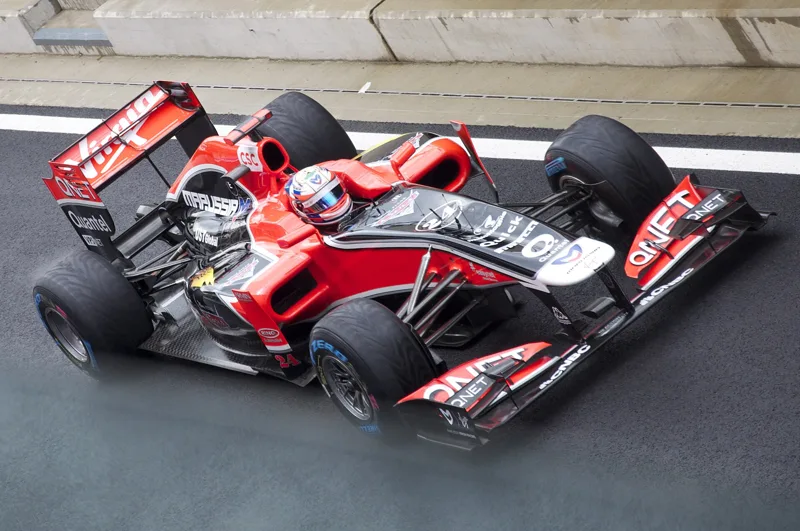
Several teams changed ownership or branding before the season started. Virgin Racing became Marussia Virgin Racing, Lotus Racing switched to Renault engines, and Sauber reverted to its own name. The two biggest newcomers to the driver market were Pastor Maldonado, who joined Williams as the 2010 GP2 champion, and Sergio Perez, who signed for Sauber as runner-up in the same series.
Red Bull's position also changed during the spring. Infiniti, the luxury brand of Japanese manufacturer Nissan, became a major sponsor of Red Bull Racing, and the team became Renault's official main works partner with factory support. The arrangement was not extended to a re-branding of the engine, but it gave the team a stronger footing.
Ownership changes ran through the grid. Marussia bought a controlling stake in the former Virgin team, Thesan Capital bought control of Hispania, and PDVSA became a long-term sponsor at Williams. The Sahara group bought 42.5% of Force India, which gave the team a new backer. Each change altered how the teams planned their seasons.
Robert Kubica was injured in a rally crash during the winter, and Nick Heidfeld took his seat at Renault. Heidfeld's contract was later terminated, and Bruno Senna drove alongside Vitaly Petrov for the rest of the year. Pedro de la Rosa also took a turn when he replaced Perez at the Canadian Grand Prix, and Hispania swapped its drivers around during the season as well.
Pirelli also changed the relationship between the tyre maker and the teams. Every team now ran the same supplier, and the company's tyre allocation shaped how each weekend was planned, which put the designers and strategists under the same pressure at every round.
Why did Pirelli and DRS matter so much?
Pirelli's tyres changed the way races were run, because teams were expected to make three pit stops at most Grands Prix. The compounds were colour-coded, and the company required a mandatory weight distribution, which limited how far teams could move the internal layout of their cars. The change meant strategy and tyre management became central to every race.
The Drag Reduction System was the most important new technology of the year. It let a driver open the rear wing to reduce drag and gain roughly 15 km/h (9.3 mph) when passing, but only within one second of the car ahead and only on designated zones. It was unlimited in free practice and qualifying, though prohibited in wet conditions,.
Which rule changes shaped the 2011 season?
The most visible changes were the DRS overtaking aid, smaller diffusers and a ban on double and exhaust-blown diffusers. The maximum height of the diffuser was cut from 175 mm (6.9 in) to 125 mm (4.9 in), and the double diffuser designs introduced in 2009 were excluded. Off-throttle blown diffusers were banned from the British Grand Prix, after several attempts to restrict them through the season.
Safety and chassis rules also tightened. The number of wheel tethers was doubled after the death of Henry Surtees in a Formula Two race in 2009, and the F-duct was banned as unsafe because it relied on a driver blocking a gap in the cockpit. Gearboxes had to last five races instead of four, and the minimum car weight rose from 620 kg (1,367 lb) to 640 kg (1,411 lb).
Sporting rules changed as well. The 107% qualifying rule returned, which could keep a driver out of the race if he failed to post a time within 107% of the fastest lap. Team orders were allowed again after the 2010 German Grand Prix, while the maximum penalty for teams was raised from $100,000 to $250,000.
The one-move defence rule was also tightened. A defending driver was limited to one move across the track, and from the Korean Grand Prix he had to leave room on the outside of a corner for an attacking car. The stewards also received automated car-tracking software, introduced at the Hungarian Grand Prix, to help them spot incidents and rule breaches as they happened.
The stewards gained more powers too. They could issue reprimands alongside penalties, with a grid penalty after three reprimands, and a curfew of nine hours before the first session was introduced for team personnel. Lewis Hamilton received six driver penalties over the season, which set a new record.
Which races shaped the title fight?
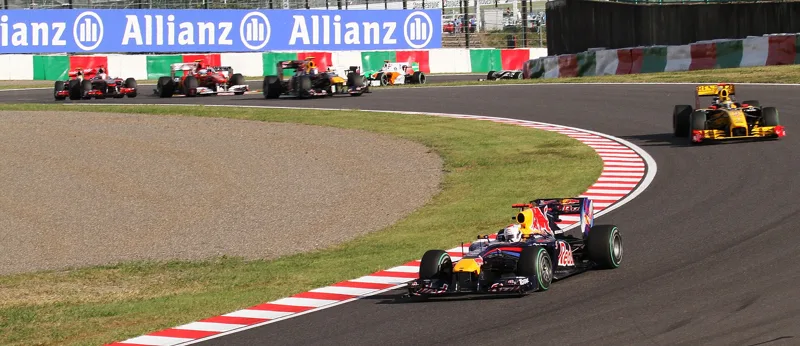
The title fight was decided in the second half of the year. Vettel's Singapore win left him within one point of the championship, and in Japan he out-qualified Button by nine thousandths of a second. Button won the race, and Vettel's third place was enough to secure the championship, while Alonso's second place kept him in contention until the end.
| Grand Prix | Winner | Note |
|---|---|---|
| Australia | Sebastian Vettel | Pole by eight-tenths of a second |
| Malaysia | Sebastian Vettel | Three seconds ahead of Button |
| China | Lewis Hamilton | Passed Vettel four laps out |
| Turkey | Sebastian Vettel | Led from the lights |
| Spain | Sebastian Vettel | Ended Webber's pole run |
| Monaco | Sebastian Vettel | Pole and win; accidents throughout |
| Canada | Jenson Button | Two-hour stoppage |
| Europe (Valencia) | Sebastian Vettel | Sixth win of the season |
| Britain | Fernando Alonso | Won by sixteen seconds |
| Germany | Lewis Hamilton | Unusually cold circuit |
| Hungary | Jenson Button | His 200th Grand Prix start |
| Belgium | Sebastian Vettel | Red Bull's first one-two since Istanbul |
| Italy | Sebastian Vettel | One win from the title |
| Singapore | Sebastian Vettel | Ninth win of the season |
| Japan | Jenson Button | Vettel third; title secured |
| Korea | Sebastian Vettel | Red Bull's second constructors title |
| India | Sebastian Vettel | Grand Chelem |
| Abu Dhabi | Lewis Hamilton | Led all but the pit stop phases |
| Brazil | Mark Webber | First win since 2010 Hungary |
Vettel's wins ran from the opening race in Melbourne to the penultimate round in India, which is a sign of how consistently the Red Bull car performed. Button and Hamilton were the only other drivers to win more than once, and Webber's single win came only at the end of the year.
Who won the 2011 Drivers' Championship?
Sebastian Vettel won the title at the Japanese Grand Prix, finishing third behind Button and Alonso in a race that Button won. He became the youngest driver to defend a championship, at 24 years and 98 days. Red Bull's constructors' title was settled a race later in Korea.
Button's win in Japan mattered more than the points suggested. With Alonso second, the result left Vettel needing only a third-place finish to take the title, and he delivered it. The title was therefore decided by a single race rather than by a long run of results, which gave the final weekend its tension.
A pole tally of fifteen gave him the season record. He had equalled Mansell's fourteen at Abu Dhabi, where he spun off at Turn 2 with a puncture and retired.
Lewis Hamilton's season was defined by a few strong weekends and a run of penalties. He won in China, Germany and Abu Dhabi, but he also received six driver penalties, the highest total of the season and a benchmark that the stewards would remember. His Abu Dhabi win came after leading every lap except the pit stop phases.
What the 2011 season left behind
Jenson Button finished the year with wins in Canada, Hungary and Japan, and his Hungarian victory came at his 200th Grand Prix start, at the circuit where he had won his first race. Button's consistency kept him in the title hunt into the final third of the year.
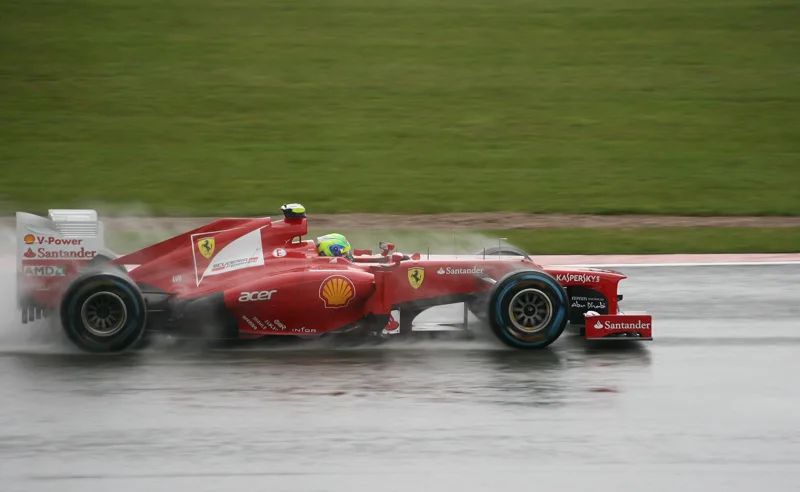
Paul di Resta finished as the best rookie, in thirteenth place for Force India, and that result showed how much a single season could matter to a newcomer. Narain Karthikeyan became India's first driver to take part in its home Grand Prix, and he finished seventeenth. Felipe Massa became the first Ferrari driver since 1992 to finish a season without a podium, which marked a poor year for the team.
The season also left a lasting mark on how races were run, because the new tools changed where overtaking happened and who could make a move stick. Pirelli's tyres, the DRS and the stricter penalty system changed the strategy calls that teams made. Hamilton's six penalties were the highest total of the season.