Felipe Massa won his home race, Michael Schumacher finished fourth in what was expected to be his final start, and Fernando Alonso took the drivers' title.
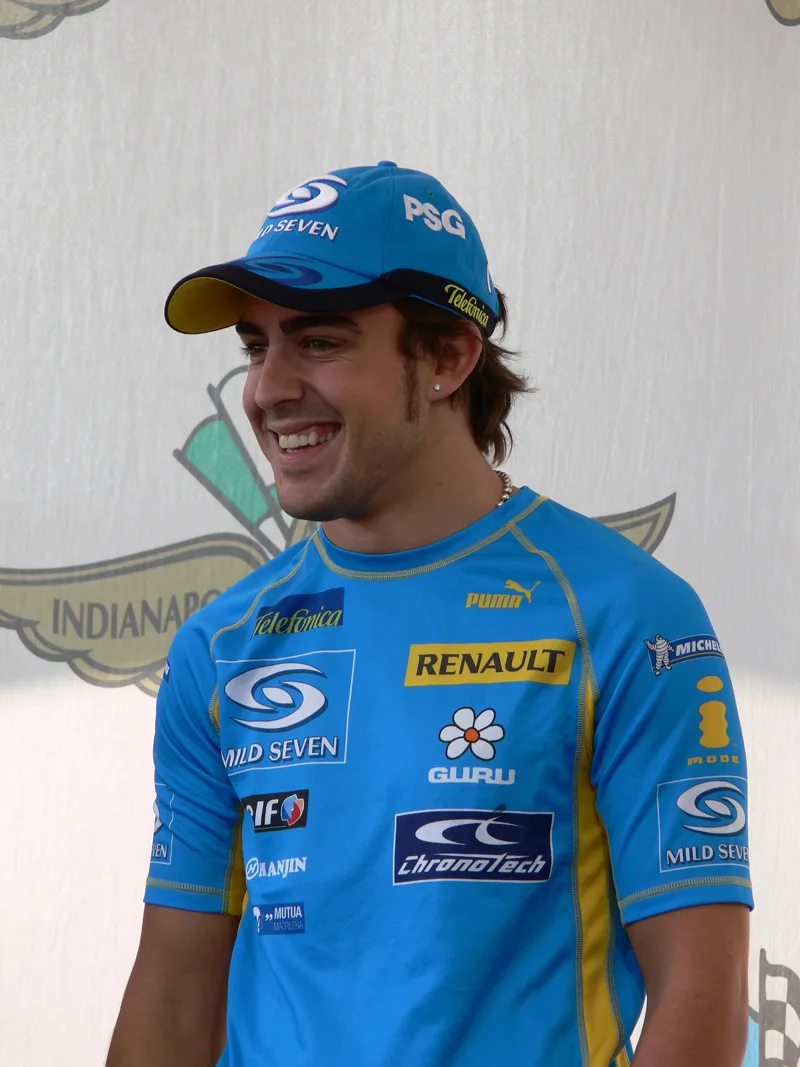
Felipe Massa won the 2006 Brazilian Grand Prix in Sao Paulo, the first home winner there since Ayrton Senna in 1993. Fernando Alonso was second in his Renault, which gave him the drivers' title and gave Renault the constructors' crown. Michael Schumacher finished fourth from tenth on the grid, in his last race before retiring.
Felipe Massa won the 2006 Brazilian Grand Prix on his home circuit in Sao Paulo, the first Brazilian to do so since Ayrton Senna took the flag in 1993. Renault's Fernando Alonso came second, enough to give him the drivers' championship and give his team the constructors' crown. Michael Schumacher crossed the line fourth after starting tenth, in what was meant to be his last race before retiring.
What was at stake before the 2006 Brazilian Grand Prix?
Alonso led Michael Schumacher by 10 points going into Sao Paulo, so a win for Schumacher alone would not have been enough without Alonso failing to score. Renault were nine points ahead of Ferrari among the teams and needed 10 points to lock down the constructors' title.
Further down the standings, Massa held third place in the drivers' table, a point clear of Giancarlo Fisichella, while Kimi Raikkonen sat nine points behind Fisichella. McLaren were third among the teams on 105 points, 81 adrift of Ferrari and 27 in front of Honda. Toyota and BMW Sauber were separated by a single point for fifth.
Pele had given Schumacher a lifetime achievement award before the start, a gesture that fitted the expectation that this was his final race.
Massa won at home, Alonso took the title for Renault, and Schumacher's last race ended in fourth place.
How did the start unfold?
Massa kept the lead at the first corner, with Raikkonen second and Jarno Trulli third. Alonso held fourth against a late challenge from Rubens Barrichello, while Schumacher's attempt on the inside of the BMWs was called off to avoid contact. Mark Webber and Nico Rosberg then collided at turn four.
Schumacher's Ferrari went past both BMWs three corners later. Robert Kubica's move on Nick Heidfeld along the back straight had slowed the pair of them, and the Ferrari had the speed to take advantage.
Webber came back to the pits with his rear wing missing and retired at the end of the lap. Rosberg, damaged in the same contact, lost control on the uphill main straight and hit the wall hard. Debris brought out the safety car, and just before it appeared Fisichella had taken Barrichello on the outside into the first corner.
How did the safety car change the order?
At the end of lap two the order was Massa, Raikkonen, Trulli and Alonso, while Fisichella and Michael Schumacher had moved up into fifth and sixth. A very light touch from Fisichella's front wing had damaged the left rear tyre of Schumacher's Ferrari, and the resulting slide cost him almost a lap.
The deflated tyre forced Schumacher to crawl round the rest of the lap while the field went past him. Ferrari needed 11 seconds to change all four wheels and add fuel. He rejoined only a few seconds ahead of his teammate Massa, almost a lap down on the leader.
Behind them, Barrichello, Ralf Schumacher, Kubica and Button filled out the top ten, with Button having profited from the two Williams retirements.
How did the race develop in the early laps?
The Ferraris were the quickest cars on track, and Massa pulled away from Raikkonen. The Toyotas of Ralf Schumacher and Trulli retired in the pits on lap 10, and Coulthard's Red Bull stopped on lap 14 with mechanical trouble. By lap 11 the order was Massa, Raikkonen, Alonso, Fisichella and Barrichello.
Button had climbed from 14th on the grid, and he passed Kubica on the restart by a whisker. On lap 27 he slipstreamed Raikkonen and outbraked him into turn one. Michael Schumacher, meanwhile, had climbed to 13th with help from pit stops by the Super Aguri cars.
On lap 31 Michael Schumacher went by Doornbos and then reeled in Liuzzi, who had only just clashed with Heidfeld. Heidfeld's front wing was damaged in that contact, and he had to pit on lap 38 to have it replaced, which dropped him out of the points.
How did the first stops reorder the field?
Raikkonen, Fisichella and Barrichello made their first stops on lap 21. Massa followed on lap 23 with a stationary time of just over eight seconds and rejoined third behind Button, who had moved into second. Button then made a 7.9 second stop on the next lap and came back out seventh.
Alonso pitted the lap after Button and rejoined just ahead of Raikkonen, though he remained behind de la Rosa and Heidfeld. Kubica stopped from second on lap 26 and dropped to ninth, and his teammate Heidfeld followed a lap later and fell behind the two Toro Rossos.
Massa was 17 seconds clear of de la Rosa, who did not stop until eight laps later. De la Rosa then made a single stop on lap 35 that dropped him to tenth. Schumacher went ahead of Heidfeld into ninth on the next lap.
How did the second round of stops change the race?
Barrichello made the first move in the last round of regular stops, on lap 46, with a stop of 8.3 seconds. Schumacher came in on lap 47 after 36 laps of running since his first unscheduled stop, and he rejoined eighth between Barrichello and de la Rosa.
Fisichella pitted on lap 49, and Button came in a lap later. Schumacher then passed Barrichello on the inside of the main straight. Raikkonen came in next and rejoined fourth, trailing Button, who was in the middle of lapping Yamamoto and the Spykers.
Massa stopped on lap 52 and came out in front of Alonso. Alonso pitted two laps later and kept his place.
Why did the Renault and Ferrari fight matter?
Renault's title depended on points, and a Ferrari one-two with Renault third and sixth would have tied the two teams. Ferrari would then have held the edge on race victories.
Fifteen laps from the finish Schumacher was tucked less than half a second behind Fisichella, while Raikkonen was only a few seconds further up. The Renault looked able to match the Ferrari on the straights, which made passing harder for Schumacher than it had been with other cars.
On lap 62 Fisichella braked too late for the first corner and his Renault ran onto the grass, which let Schumacher through. Fisichella came back out just ahead of Barrichello.
Heidfeld's BMW lost its rear suspension at the end of the main straight on lap 64, and he retired. Yellow flags in the first corner denied Schumacher his usual passing place on Raikkonen, but a slight error by the Finn at the hairpin let him draw level.
Who won the 2006 Brazilian Grand Prix?
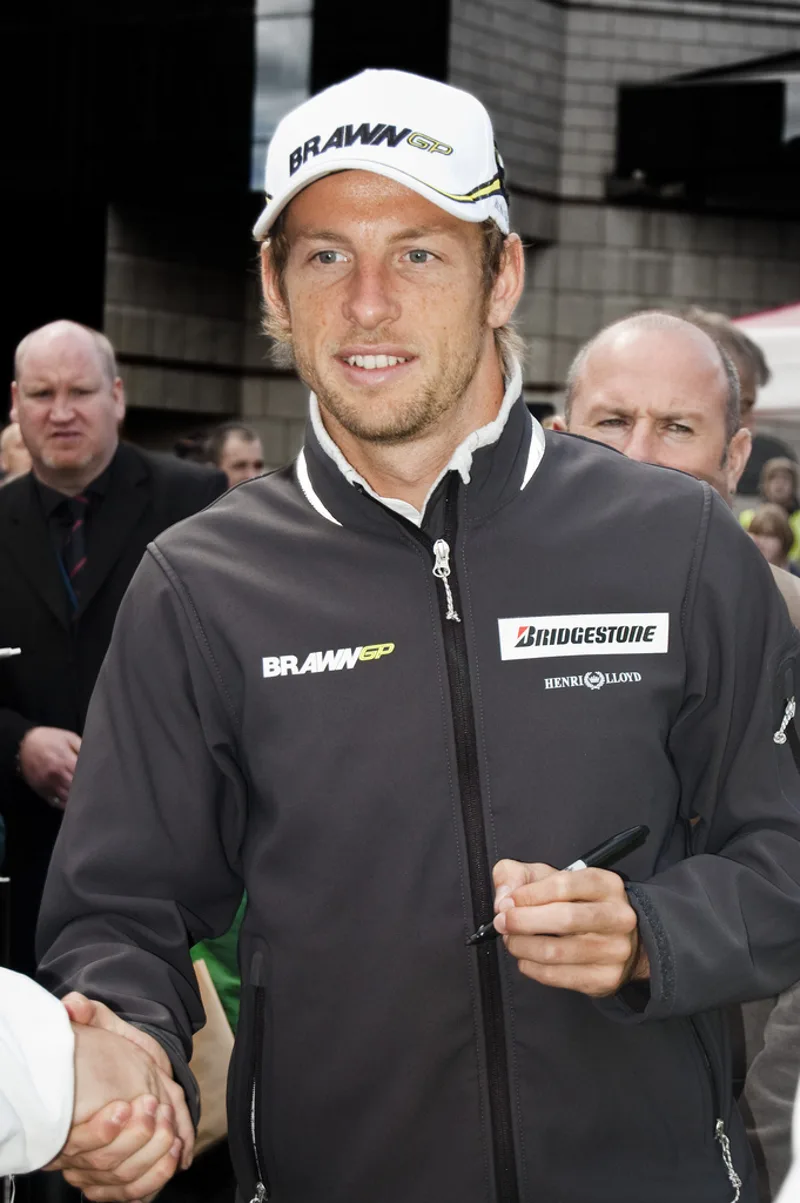
Felipe Massa won in front of his home crowd, with Alonso second in the Renault and Jenson Button third in the Honda. Massa was the first Brazilian to win at Sao Paulo since Ayrton Senna in 1993, and his lead had grown steadily since the restart.
Schumacher's quickest time of the race, a 1:12.1 set on the penultimate tour, was not enough to reel in Alonso or Button. Alonso's runner-up finish made him and Renault champions, and Fisichella's sixth place delivered Renault's second constructors' crown.
Four laps from the end Schumacher pulled alongside Raikkonen, who defended on the inside until he was forced onto the dirty line into turn two. Schumacher went on to finish fourth.
Was there a rule problem after the flag?
After the chequered flag Massa stopped on the track to take a Brazilian flag from a spectator. That broke Article 154 of the FIA Sporting Regulations, which sends cars straight to parc ferme. In principle a penalty should have followed, though the rule had not been put into practice.
In December 2006 the event's organisers collected a trophy at the FIA Gala, recognising their publicity work for the race.
What were the final results?
| Item | Detail |
|---|---|
| Date | 22 October 2006 |
| Venue | Autodromo Jose Carlos Pace, Sao Paulo |
| Race length | 71 laps |
| Winner | Felipe Massa, Ferrari |
| Second | Fernando Alonso, Renault, drivers' champion |
| Third | Jenson Button, Honda |
| Fourth | Michael Schumacher, Ferrari, from tenth on the grid |
| Sixth | Giancarlo Fisichella, Renault, constructors' title |
| Fastest lap | 1:12.1, Michael Schumacher |
| Television audience | 154 million viewers |
Why did the 2006 race mark an ending?
The race brought down the curtain on a six-year tyre war, because Michelin left Formula One. It also ended the Mild Seven and British American Tobacco sponsorship deals linked to Renault and Honda, and it was the final race for a V10 engine before Toro Rosso switched to Ferrari's V8 for 2007.
Schumacher retired after this race with seven drivers' championships, though he came back to racing with Mercedes in 2010. Raikkonen took his seat at Ferrari, and Alonso joined McLaren, where he would partner Lewis Hamilton.
As of 2026, Bridgestone had not won another race against competition, which left this as its last such victory.