Fernando Alonso and Renault took both titles, while a tyre-change ban and a six-car race at Indianapolis reshaped the season.
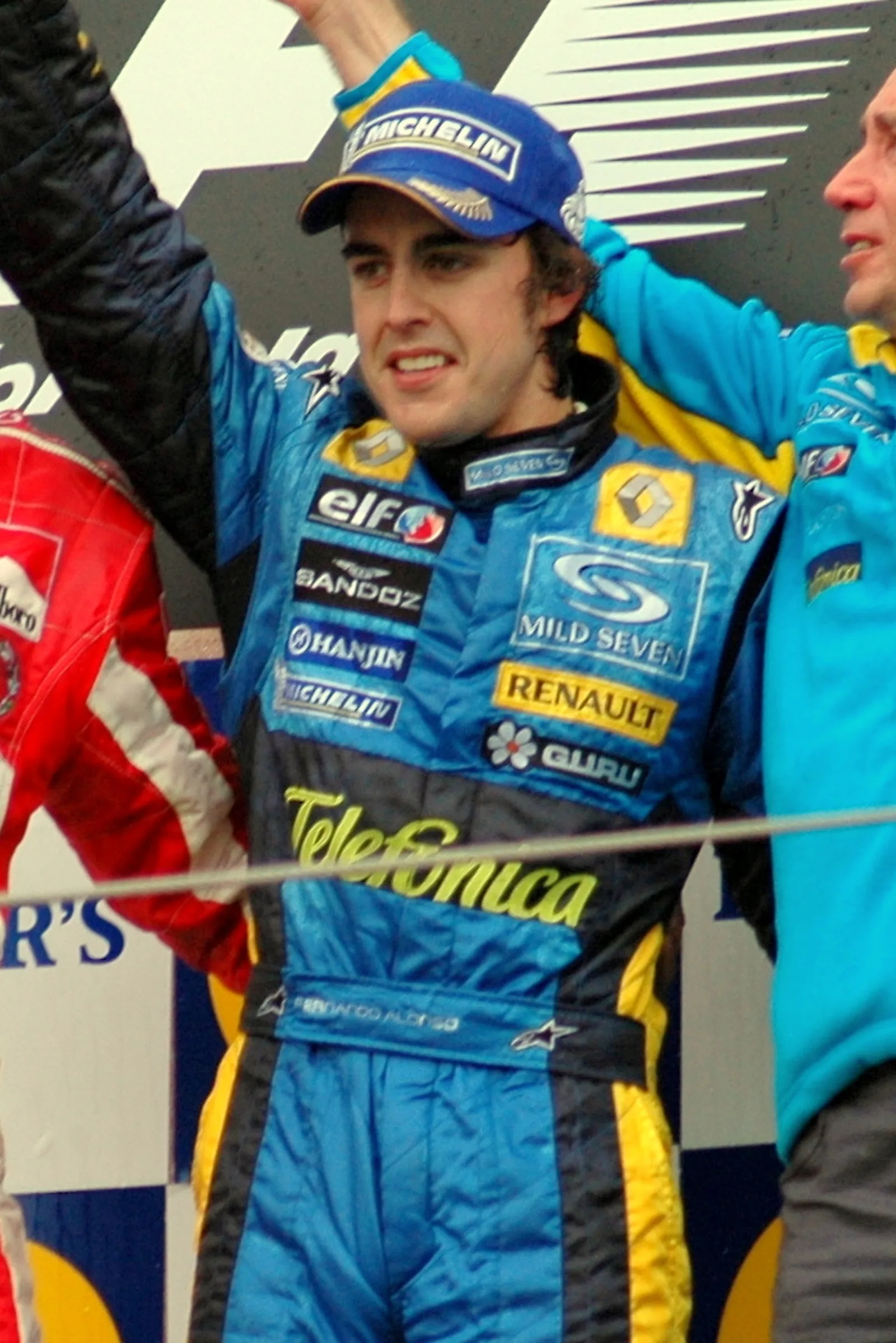
Renault's Fernando Alonso took the 2005 drivers' title with a controlled finish in Brazil, while the team secured the constructors' crown in China. The season ran 19 races and ended the Schumacher era at Ferrari. It was also Renault's first title as a constructor, a breakthrough year for the team.
Fernando Alonso and Renault took both world titles in 2005, bringing an end to a long period in which Michael Schumacher and Ferrari had largely set the pace. The championship ran across a then-record 19 Grands Prix, from 6 March to 16 October. Renault's constructors' crown was its first as a constructor, and Alonso became the youngest champion in the sport's history.
Who won the 2005 title?
Fernando Alonso won the 2005 Formula One drivers' title for Renault, clinching it in Brazil with two races to spare. Renault also secured, for the first time, the constructors' championship at the final race in China, despite winning two fewer races than McLaren.
Alonso's title was the first won by a Renault-powered driver since Jacques Villeneuve's in 1997. It also ended five years of Schumacher dominance that had begun in 2000, and it closed a period in which Ferrari, McLaren and Williams had shared the leading places since 1996.
Alonso's third place at Brazil was a controlled drive rather than a race win, and it underlined the approach that carried him to the title. His approach was consistency rather than dominance. Alonso finished in the points again and again, and that steady run let him take the title with rounds to spare, while his rivals were left chasing reliability problems and missed chances.
Alonso's title rested on consistency, and Renault's first constructors crown came in the final race in China.
How did McLaren and Raikkonen push Renault?
McLaren became the most dangerous rival for Renault as the year went on, and Kimi Raikkonen matched Alonso with seven race wins. Reliability cost him dearly, with engine change penalties and early retirements from the lead ruining several chances. Raikkonen still grabbed attention with the drive of the season.
That drive came in Japan, where he started near the back of the grid and passed Giancarlo Fisichella on the final lap to win. It was a reminder of the pace that McLaren had built up over the year, even though the team could not turn that speed into a championship.
Juan Pablo Montoya had arrived from Williams with a strong reputation, but he lost ground in the title race. He missed two early rounds with a tennis injury, and although he won three races, he was well beaten by Raikkonen over the season.
Reliability was a recurring theme across the field. The engine rules and the aerodynamic changes both aimed to improve competition and cut costs, but they also tested the limits of the teams that had to work within them.
Why did Ferrari fall back in 2005?
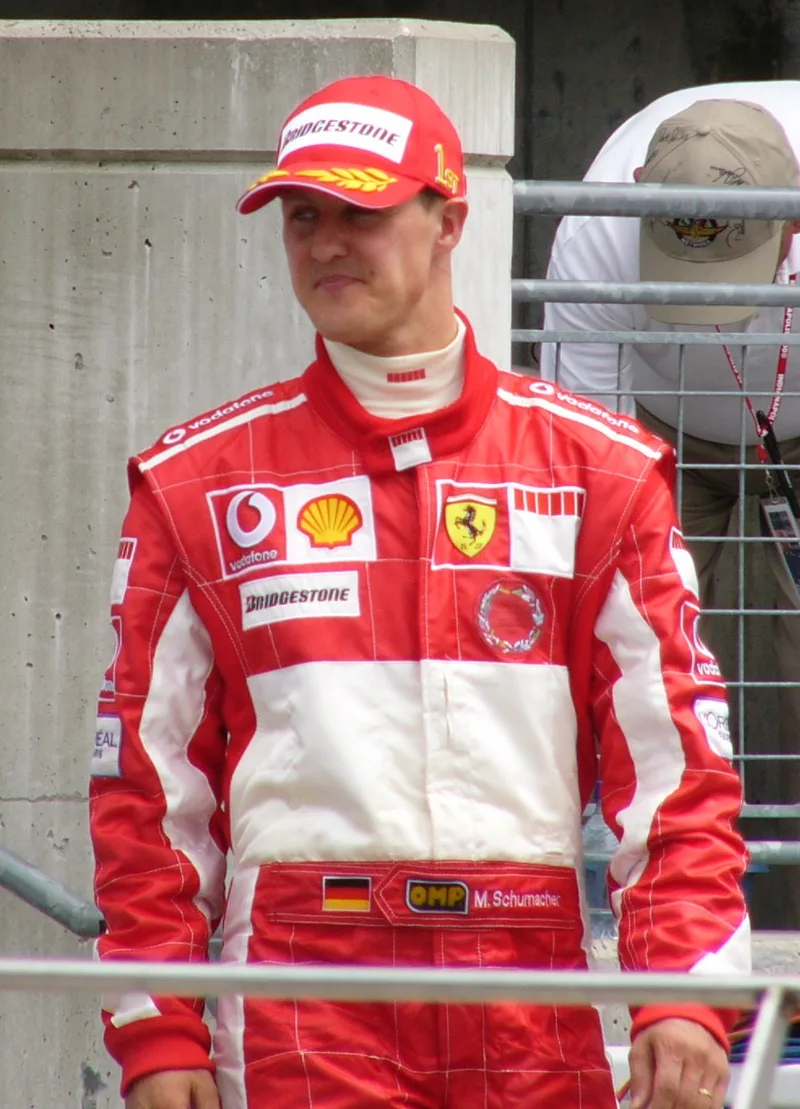
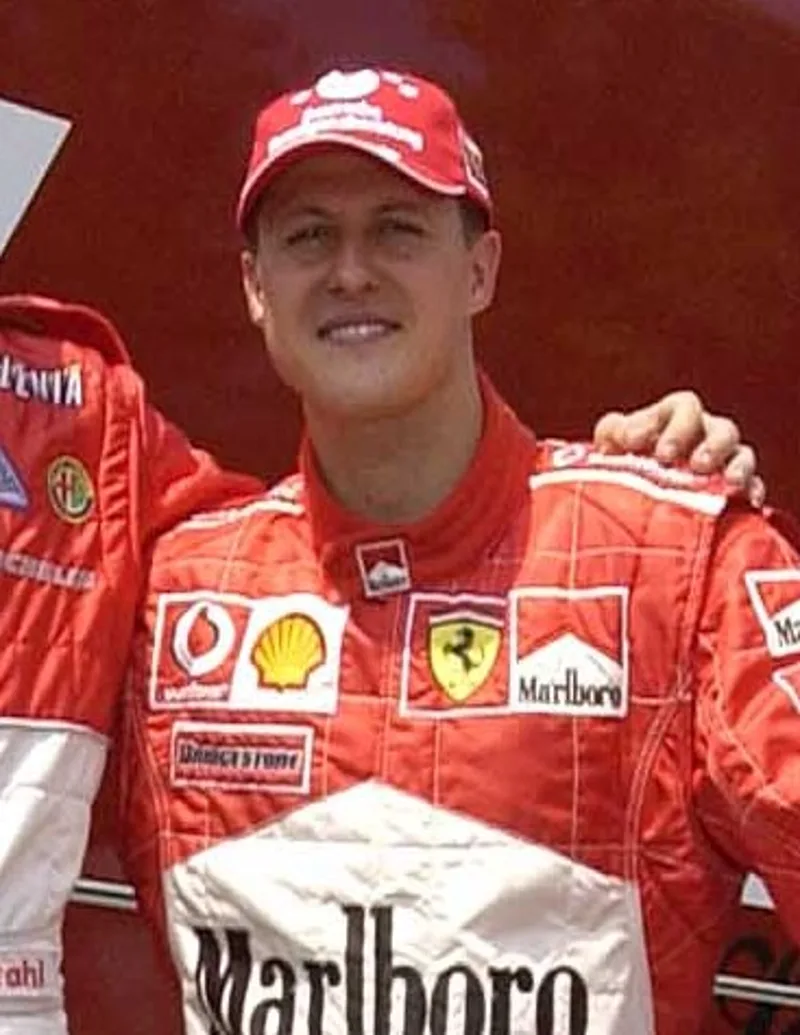
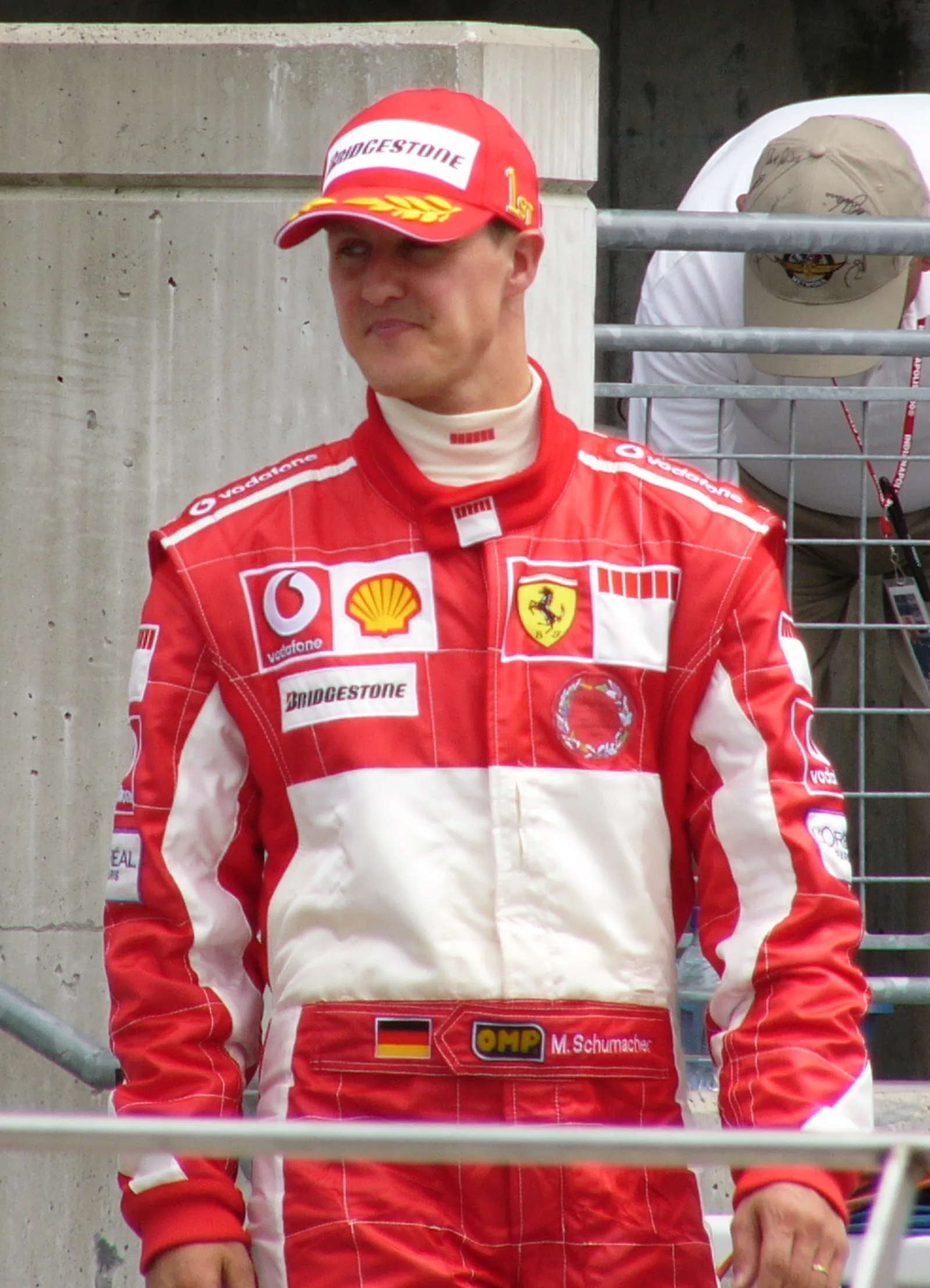
Ferrari had its weakest season for some years. Its Bridgestone tyres could not match the Michelin-shod rivals under a rule that banned tyre changes during races, and Schumacher finished third in the drivers' standings. The team ended the year with only one win, and its constructors' position reflected that.
That single victory came at Indianapolis, in a race that Michelin had effectively removed from the competition. After its runners declared the tyres unsafe for the banked corner, only the six Bridgestone cars started, and Schumacher took the win.
Schumacher's usual edge had disappeared, and attention moved to Renault and McLaren as the two cars to beat. The result underlined how much the tyre rules had reshaped the balance of power. The rule had been intended to improve safety by reducing cornering speeds, and it changed the balance of the whole field. Teams had to plan around one set of tyres for the entire race, and the team with the better compound had a clear edge over the rest of the field.
What rule changes shaped the cars and tyres?
The biggest change was a ban on tyre changes during pit stops, which meant one set had to last from qualifying through the race. Engines also had to last two race weekends, and a driver who needed a new unit took a ten-place grid penalty. The rule was also a cost measure, since fewer engines meant lower bills.
Tyre changes were allowed only for punctures and for wet weather, and the FIA could declare a change in conditions to permit them. A single tyre change was later allowed without penalty after Raikkonen's accident at the Nurburgring, where a flat-spotted tyre damaged his suspension.
Aerodynamic rules were revised to help cars follow each other. Front wings were lifted by 50 mm, rear wings moved forward by 150 mm, and the aim was to reduce downforce by roughly one-quarter. The tyre rules were meant to encourage harder compounds with less grip, which would also slow the corners for safety reasons.
2005 was the last year of the 3.0-litre V10. The 2.4-litre V8 arrived in 2006, although budget-constrained teams could run a rev-limited V10, and Toro Rosso used a Cosworth unit under that exemption.
How did qualifying and restarts change during the year?
Qualifying changed once during the year. Early rounds used two single-lap runs, with the aggregate time setting the grid, before a single one-lap session returned from the European round on 29 May. The change followed a request from the team bosses.
The aggregate system had weaknesses, because weather could distort the result when the two runs took place at different times. A single lap on race fuel and race tyres was seen as a fairer test of pace. Teams then had to balance one fast lap against the fuel and tyre plan for the race.
Race starts and restarts also changed. A car that stalled on the grid forced a fresh warm-up lap for the others, and a red-flagged race would restart behind the safety car rather than from a standing start. The safety car could also use the pit lane when needed.
Which teams and drivers moved in 2005?
Red Bull Racing was formed when the company took over Jaguar, racing with Cosworth engines. David Coulthard left McLaren to lead the team, partnered by Christian Klien. The arrival of the new squad meant that ten teams started the season, which removed the risk that some would have to run three cars.
Midland Group bought the Toyota-powered Jordan team, although the squad kept the Jordan name until 2006. Sauber moved from Bridgestone to Michelin, and BMW took majority control of the team after the United States race. Williams brought in Mark Webber and Nick Heidfeld, while Montoya left for McLaren and Ralf Schumacher joined Toyota. Shortly after the United States race, the majority stake in Sauber changed hands, with BMW taking control, and the team prepared to run as BMW's factory outfit in 2006.
BAR was banned from the Spanish and Monaco Grands Prix after both of its cars were found underweight at San Marino. Penalties of that kind pushed the team down the order, and the squad fell out of the top five by the end of the year.
Who stepped in during the season?
Several teams used stand-in drivers when a regular driver was injured or unavailable, and the changes often came with little warning. Pedro de la Rosa and Anthony Davidson were among the replacements, and Nick Heidfeld's withdrawal before the Italian race gave Antonio Pizzonia a chance at Williams.
- Red Bull Racing: Vitantonio Liuzzi shared Klien's seat for four races, at San Marino, Spain, Monaco and Europe.
- Jordan: Robert Doornbos filled a third-driver role for most of the first half of the year, before Franck Montagny and Nicolas Kiesa stepped in.
- Minardi: Chanoch Nissany became the first Israeli to take part in a race weekend, at Hungary.
- Williams: Ricardo Zonta replaced Ralf Schumacher at the United States race after a concussion from a practice crash.
How did the season unfold race by race?
Renault started strongly, and Fisichella took the opening round in Australia for Renault. Alonso then took three consecutive wins in Malaysia, Bahrain and San Marino. He won three of the first four races, and that lead gave him the platform for the rest of the year.
Renault's early advantage turned the rest of the year into a chase for the leaders. Raikkonen and Montoya became more competitive as the season went on, and by the late rounds McLaren had the quicker package. Technical failures stopped either driver from converting that speed into a title push, and Montoya's three wins across the year were not enough to challenge Alonso.
Track conditions also made the year memorable. Malaysia and Bahrain were among the hottest races of the era, with track temperatures of 51 C and 56 C. Nine different drivers took pole across the year, a new record that beat the eight recorded in 1968.
Points went to the top eight finishers, and every team scored at least once across the season. Minardi managed rare points in its final year, thanks to its run at Indianapolis.
What did the calendar changes mean?
The calendar gained one new event, the Turkish Grand Prix, held at a newly built circuit in Istanbul. Turkey was added after Hungary, a decision reached on 21 August. It joined Bahrain and China, which were 2004 newcomers, in widening the global reach of the championship.
Since Brazil was pushed back to late September, China closed the year as the finale. Brazil therefore had the title decided before the closing round in China.
Key results at a glance
| Grand Prix | Winner | Key point |
|---|---|---|
| Australian | Giancarlo Fisichella | Renault's season opener |
| Malaysian | Fernando Alonso | First of three straight wins for Alonso |
| Bahrain | Fernando Alonso | Second win of the early run |
| San Marino | Fernando Alonso | Third of the first four races |
| Japanese | Kimi Raikkonen | Won from near the back of the grid |
| United States | Michael Schumacher | Ferrari's only win, six cars only |