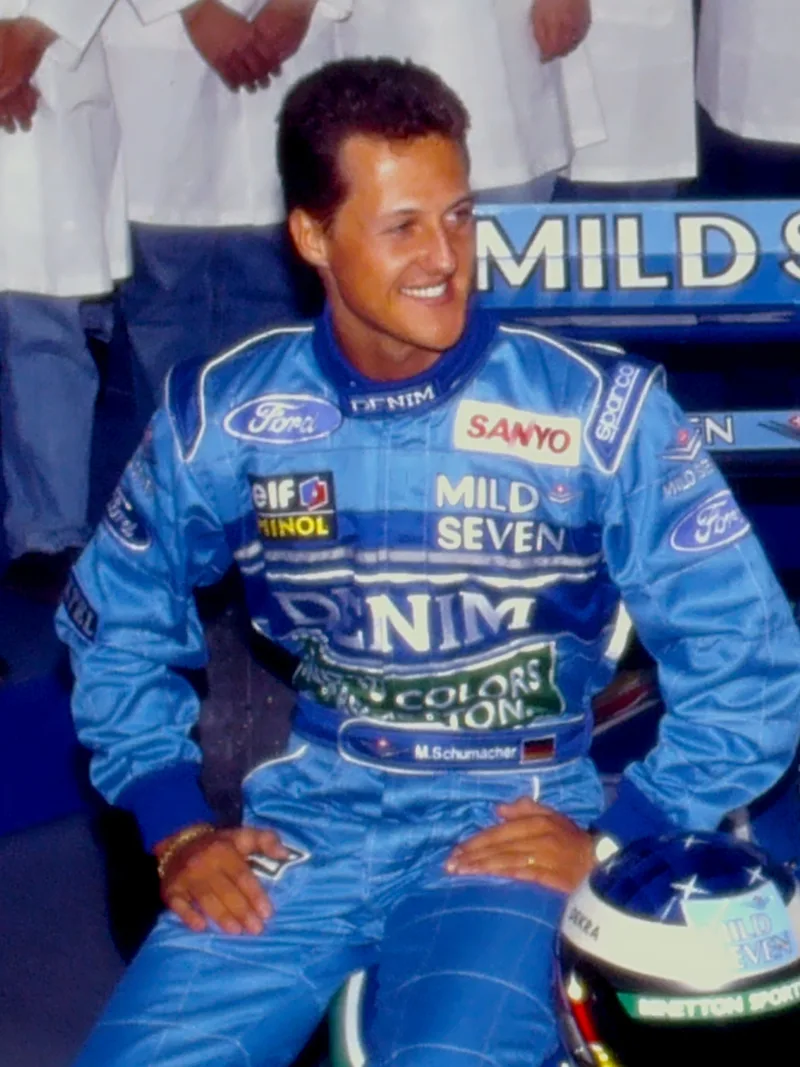
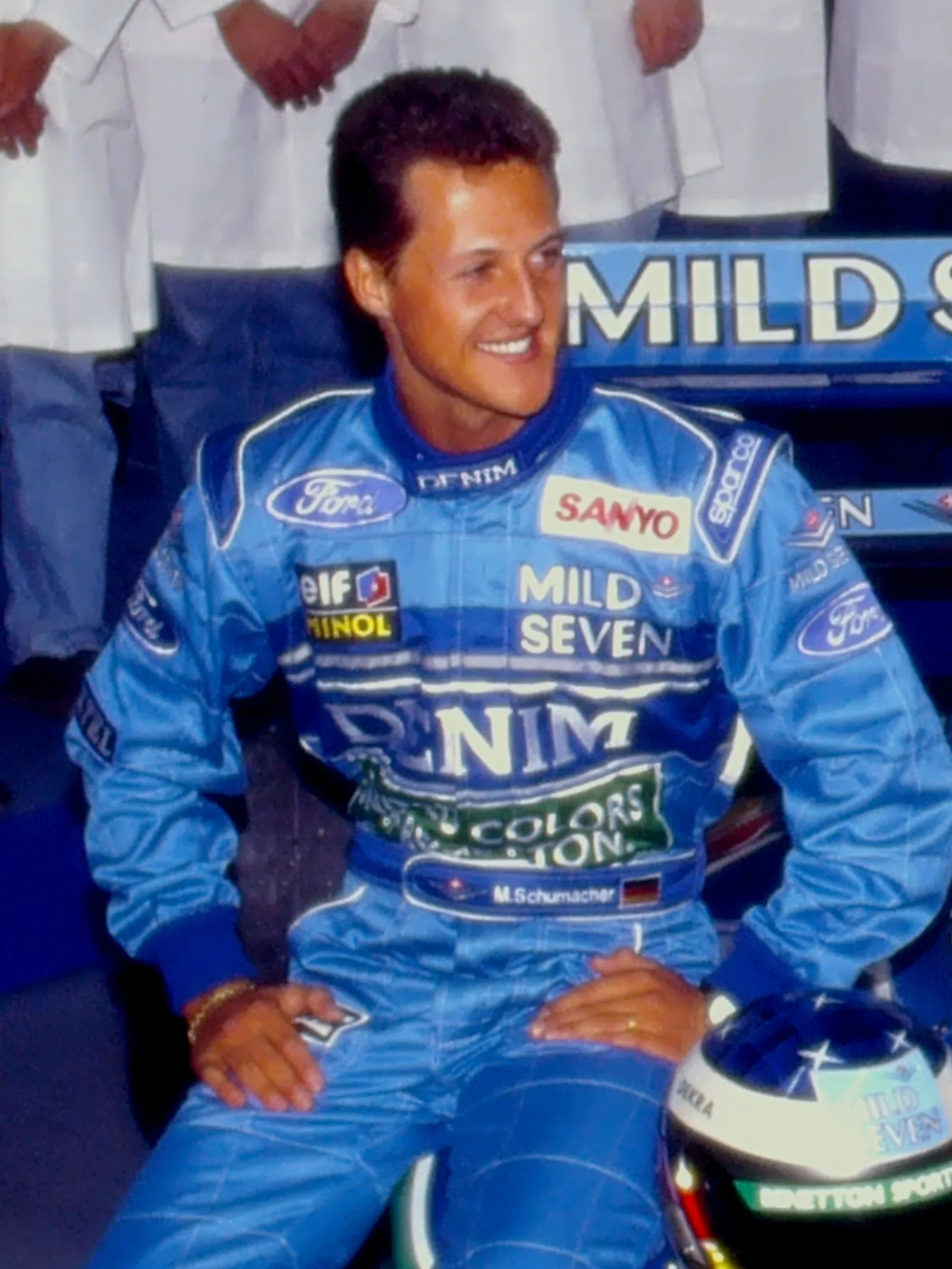
Michael Schumacher won from third on the grid at the first Formula One race at the Nurburgring since 1985, and needed only three more points for the title.
Michael Schumacher won the 1995 European Grand Prix on 1 October 1995 at the Nurburgring, starting from third for Benetton. Jean Alesi was second in a Ferrari and David Coulthard third for Williams, leaving Schumacher 27 points clear of Damon Hill in the title race.
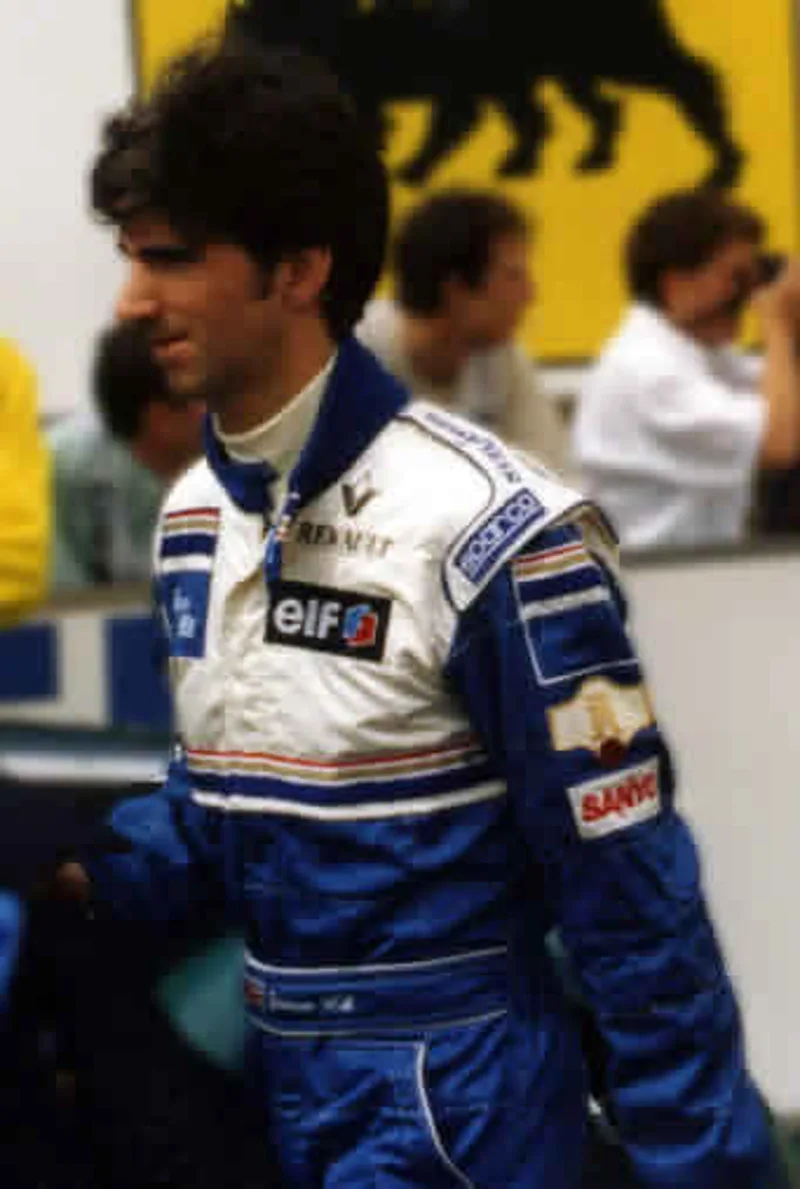
Michael Schumacher won the 1995 European Grand Prix at the Nurburgring from third on the grid, leaving him three points from the drivers' title with three rounds still to run. Jean Alesi led for most of the race and was still in front when he lost five seconds at the Veedol chicane and traffic slowed him in the closing laps. Damon Hill's afternoon ended in a spin on lap 58, after he had lost his front wing in a collision earlier in the race.
Why did the Nurburgring return to Formula One?
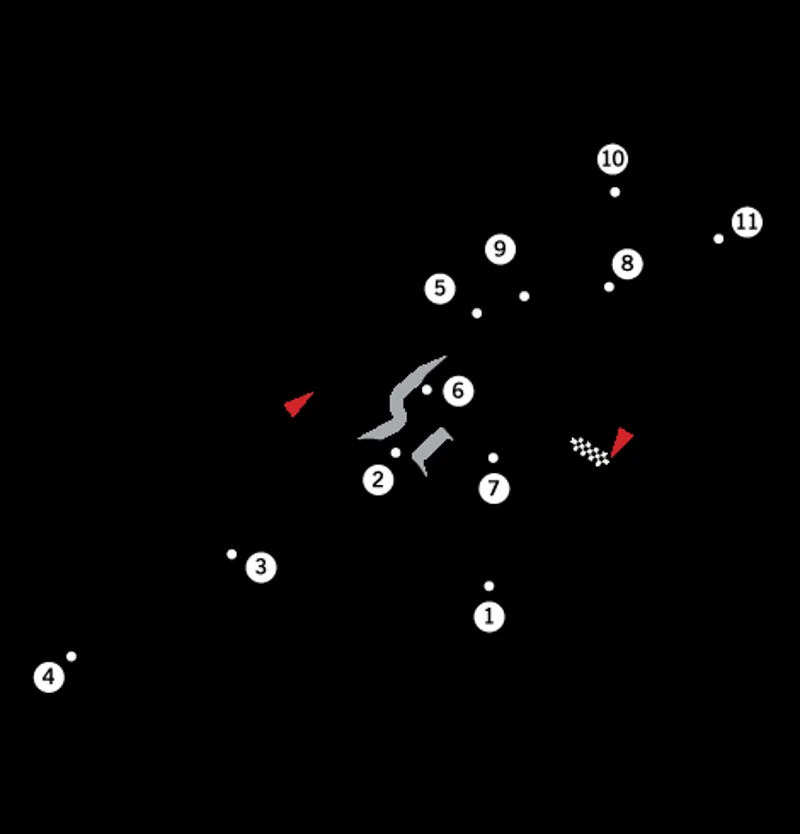
The Nurburgring had been missing from the calendar since 1985 because of commercial disputes involving its promoters. A surge of German enthusiasm after Schumacher's 1994 title helped bring the grand prix back. The track used its short GP-Strecke layout instead of the Nordschleife, which had been used until 1976 and runs almost 23 km.
The previous European Grand Prix had been held at Jerez in Spain, as a late stand-in for the cancelled Argentine round. The Nurburgring event was only the third time Formula One had used the short layout.
About 90,000 spectators attended the circuit on race day, a strong turnout for a return that had been a long time coming.
A circuit the drivers found dull still delivered a race that put Michael Schumacher within three points of the title.
How did the drivers rate the Nurburgring?
The drivers were not impressed by the track itself. Schumacher described the circuit as dull and easy to learn, and Coulthard predicted a processional race with little overtaking. Both views were formed during a familiarisation session held before the usual practice, in which Schumacher set the early benchmark at 1:20.418.
The familiarisation session put Hill second behind Schumacher, with Coulthard, Hakkinen, Frentzen and Berger close behind. The times suggested a tightly matched front of the field, and the race that followed had plenty of passing for a track the drivers had written off.
What changed in the driver market before the race?
Coulthard confirmed before the weekend that he would join McLaren for 1996, having signed with the team in October 1994. Ferrari then bought out Irvine's contract to partner Schumacher the following season, and Martin Brundle moved from Ligier to partner Barrichello at Jordan.
Coulthard's McLaren contract had been signed before his full-time Williams drive for 1995 was confirmed. His one-year Williams deal was not renegotiated because of the McLaren commitment, and the move was officially announced on the day of the race itself.
The shuffle left a few drivers out in the cold. McLaren kept Mika Hakkinen as race driver and Jan Magnussen as test driver, which left Mark Blundell without a team for 1996. Jacques Villeneuve, confirmed as Hill's teammate for the following year, had recently tested a Williams at Monza for two days.
Several teams brought upgrades to the race. Williams used the B version of its FW17 for the second time, McLaren combined the B and C versions of its troublesome MP4/10, and Ferrari fitted a revised rear wing and sidepods to its 412T2. Both Ferrari drivers agreed the new parts were an improvement.
How did qualifying settle the grid?
David Coulthard took pole for Williams at 1:18.738, his third consecutive pole. Damon Hill lined up alongside him, two-tenths of a second slower, and Michael Schumacher was third, four-tenths behind. Coulthard had beaten Hill in qualifying for the fourth time in a row, and rain interrupted both one-hour sessions.
Media attention focused on Coulthard beating Hill again, and on whether Williams should use team orders to hand Hill pole. Coulthard said he was tired of questions about team orders, and that spectators wanted to see a motor race.
Friday practice had been dry, and Hill set the pace at 1:19.343, three-hundredths of a second faster than Coulthard. Saturday brought rain and a different picture. Hill was fastest again at 1:34.906, with Frentzen third in the Sauber, two seconds slower.
Behind them the Ferraris were fourth and fifth, Berger ahead of Alesi, and Schumacher and Herbert took sixth and seventh. Panis and Salo finished the top ten, both three and a half seconds off Hill's wet-weather pace.
Behind the Williams and Benetton cars, Berger was fourth for Ferrari, Irvine fifth in the Jordan and Alesi sixth. Herbert took seventh and Frentzen eighth, while Hakkinen and Blundell, despite McLaren's upgrades, could only manage ninth and tenth.
Schumacher was quickest in the second part of qualifying, but that effort was still slower than the earlier times set by Coulthard and Hill, so he stayed third on the grid.
Qualifying also brought incidents. Panis crashed when his throttle stuck, and the damage forced him into the team's spare monocoque. Tarquini qualified nineteenth and admitted he felt out of practice by Formula One standards. Seventeen of the 24 drivers set their fastest times in the first session, when conditions were generally faster.
Off the track, Barrichello and Papis both expected to fail routine drugs tests after taking decongestants that contained ephedrine. The team principals also agreed that qualifying would become a single one-hour session for 1996, and that the calendar would shrink from seventeen Grands Prix to sixteen.
How did the race unfold?
Coulthard led from pole, but Schumacher and Alesi were the drivers who shaped the afternoon. Schumacher overtook Hill early, Alesi climbed to fourth and then to the front, and a lead of 45 seconds opened before Hill and Schumacher began their fight for the places behind.
The warm-up was delayed from 09:30 CET to 10:05 CET by fog and heavy rain, and several drivers ran off the track in the wet. Coulthard was fastest at 1:38.378, with Hill third in the other Williams and Berger splitting them.
The start was delayed before it began. Papis stalled on the grid, the planned 14:00 CET start was aborted, and the race began at 14:05 CET. Most teams had wet-weather tyres on the grid, but Ferrari and McLaren chose dry slicks, and the Ferrari mechanics raised ride height and added downforce for Alesi and Berger.
Coulthard led into the first corner, but Schumacher went past Hill on the run down to it. Frentzen was judged to have jumped the start, and Papis took his normal grid place rather than starting from the back after his stall. Both drivers received ten-second stop-and-go penalties, and Taki Inoue never got away because of an electronic failure.
The McLarens and Berger's Ferrari slid down the order in the early wet laps. The McLaren handled badly in the rain, and the Mercedes engine's throttle response was too abrupt to use well in those conditions. Alesi moved up to fourth, passing Herbert on lap 5 and Irvine on lap 8.
By the end of lap 17 most drivers had switched to slick tyres, and Alesi led Coulthard, Schumacher, Hill, Berger and Irvine. Panis and Blundell had both spun off on lap 15, and Frentzen's race was over on the following lap after he collided with Diniz's Forti while trying to lap him.
Hill then began to close on Schumacher and eventually got past him. He ran wide at the final corner, and Schumacher was back in front. Coulthard's car developed heavy oversteer, and Schumacher and Hill passed him on laps 21 and 23 respectively.
Alesi's lead grew to 45 seconds, and his only pit stop came on lap 34. Schumacher made the second of three scheduled visits, while Alesi had needed only the one stop. Alesi rejoined just ahead of Hill. On lap 40 Hill tried to pass him on the lap before his own stop was due, the two cars made contact, and Hill lost his front wing. He pitted to replace it and rejoined behind Coulthard in fourth.
On the same lap Gerhard Berger retired with terminal engine trouble. Hill pushed hard in an attempt to catch Coulthard, but he spun out of the race on lap 58. The impact with the tyre barrier was enough to crack a bone in his leg, though he escaped serious injury.
Schumacher made his final stop on lap 52 and came out behind Alesi. He then set the fastest lap of the race, 1:21.180 on lap 58, almost 1.7 seconds quicker than Alesi's best. Alesi lost five seconds at the Veedol chicane when he ran wide onto the gravel, and lapped traffic made his closing laps harder still.
Schumacher passed Alesi on the outside of the chicane on lap 65 and opened a gap of two and a half seconds. He crossed the line after 67 laps in 1:39:59.044, his seventh win of the season. Hill watched from the side of the track and applauded, and Schumacher tried to stop his car to give him a lift back to the pit lane, but a slipping clutch made that impossible.
Final classification
| Finish | Driver | Team | Notes |
|---|---|---|---|
| First | Michael Schumacher | Benetton | Started third; seventh win of the season |
| Second | Jean Alesi | Ferrari | Led for most of the race; lost five seconds at the Veedol chicane |
| Third | David Coulthard | Williams | Started from pole; 35 seconds behind the winner |
| Fourth | Rubens Barrichello | Jordan | Ahead of Herbert and Irvine |
| Fifth | Johnny Herbert | Benetton | Collided with Irvine on lap 31 |
| Sixth | Eddie Irvine | Jordan | Spun while trying to lap Papis |
| Seventh | Martin Brundle | Ligier | Ahead of Hakkinen |
| Eighth | Mika Hakkinen | McLaren | Two laps down on the winner |
| Ninth | Pedro Lamy | Minardi | Teammate of Badoer |
| Tenth | Mika Salo | Tyrrell | Punctured tyre after colliding with Boullion |
| Eleventh | Luca Badoer | Minardi | Minardi teammate of Lamy |
Herbert and Irvine had spent much of the afternoon fighting each other. They collided on lap 31, which dropped both behind Barrichello and sent Herbert in for a new front wing. Later Irvine spun while trying to lap Papis, and Herbert was back in front.
Brundle finished seventh for Ligier, ahead of Hakkinen, whose eighth place two laps down was a major disappointment for Mercedes in its home country. Lamy and Badoer took ninth and eleventh for Minardi, while Salo's tenth place followed an unscheduled stop to change a punctured tyre. The Sauber driver, Boullion, retired from the same collision.
What did the result mean for the championship?
Schumacher finished 27 points ahead of Hill at the top of the Drivers' Championship, with three races remaining. He needed only three more points to take the title. Benetton's Constructors' lead over Williams grew to 20 points after the race. Before the weekend Benetton had led Williams 100 to 88 in the Constructors' standings, so the win widened Benetton's lead considerably.
Heading into the weekend, Schumacher led the drivers' standings on 72 points, ahead of Hill on 55. Coulthard had 39, Herbert 38 and Alesi 34, so the win pushed the title race decisively in one direction.
Hill was mathematically the only driver who could still challenge Schumacher for the title, so his retirement was a heavy blow for Williams. With Hill out of the running for the win, Schumacher's position at the top looked increasingly secure.
The race was also the last Formula One start for Massimiliano Papis, Gabriele Tarquini and Jean-Denis Deletraz. It was the last Formula One race for each of them.