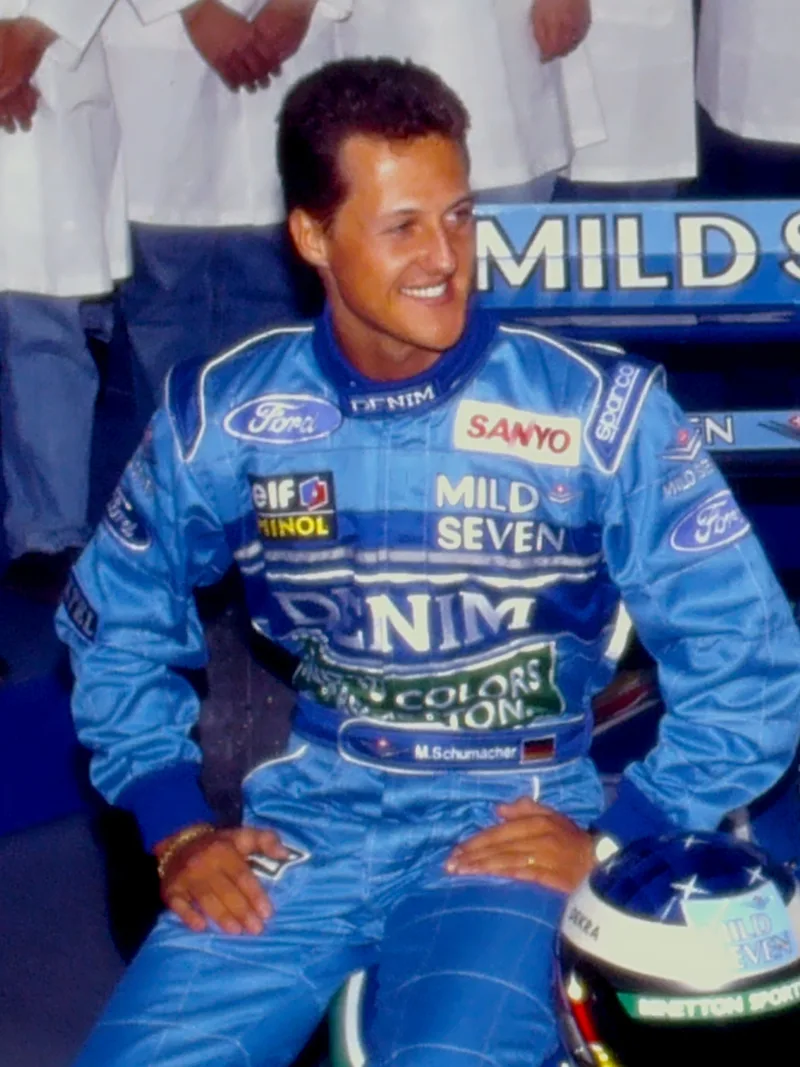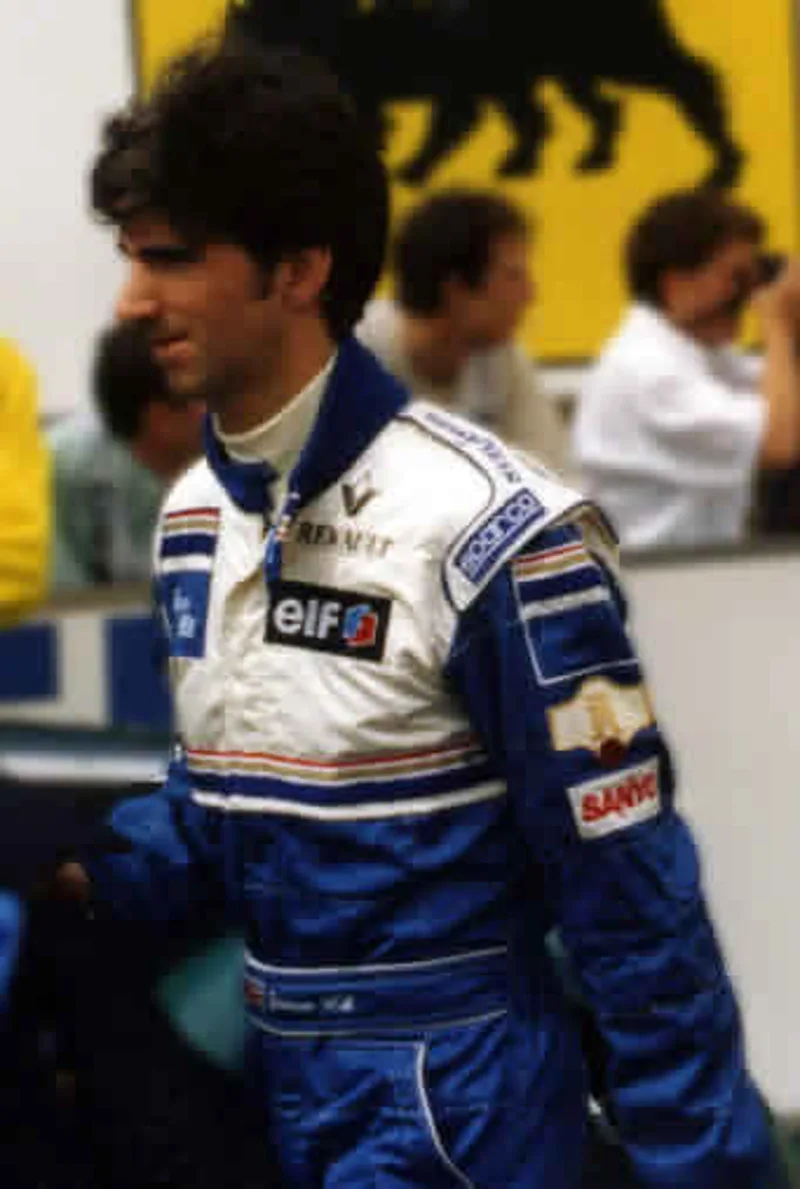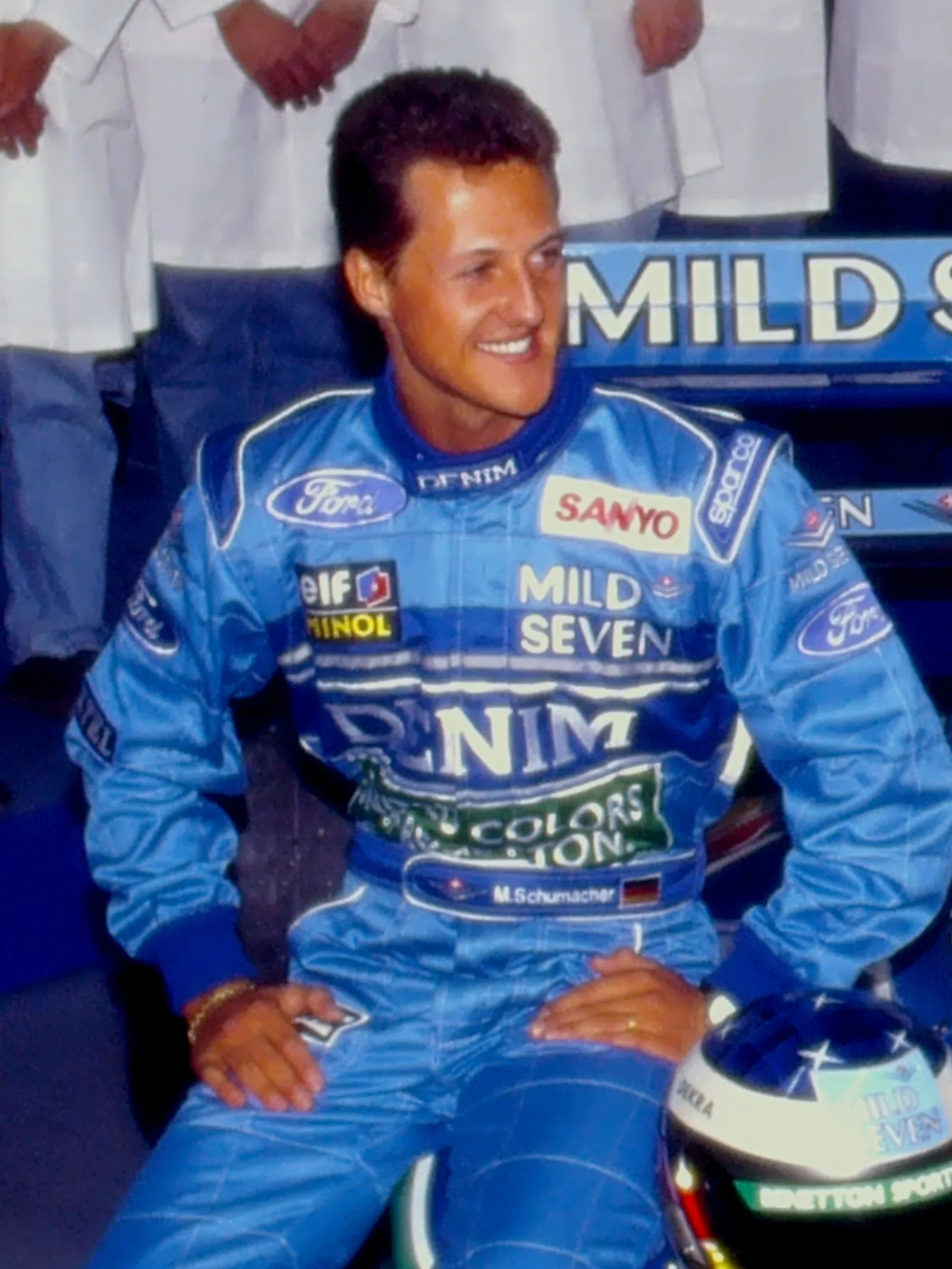
Johnny Herbert took his first Formula One win at Silverstone after the title rivals Schumacher and Hill collided, giving Benetton its fifth win of the season.
The 1995 British Grand Prix went to Benetton's Johnny Herbert, who started fifth on the grid after Michael Schumacher and Damon Hill collided and retired. Jean Alesi was second for Ferrari and David Coulthard third for Williams in the 61-lap race at Silverstone.
Johnny Herbert won the 1995 British Grand Prix at Silverstone from fifth on the grid, the first Formula One victory of his career and Benetton's fifth of the season. The race was decided by a collision between the two title protagonists, Michael Schumacher and Damon Hill, which took both of them out and pushed Herbert and David Coulthard into the fight for the lead. Jean Alesi finished second for Ferrari, with Coulthard third for Williams.
Why did the 1995 British Grand Prix matter for the title?
The race turned on the title fight between Schumacher and Hill, which ended when the pair collided and both retired. Herbert, who had started fifth, was in the thick of the lead battle by then and went on to win the first Formula One race of his career.
Silverstone was the eighth round of the 1995 season, and the standings before it were tight at the top. Schumacher led the drivers' championship on 46 points, Hill had 35, and the Ferrari pair of Alesi and Berger were on 26 and 17. The Constructors' table was even closer, with Benetton on 48, ahead of Ferrari on 43 and Williams on 42.
Schumacher had won three of the previous four Grands Prix and arrived as the man to beat. Hill, though, had won the 1994 British Grand Prix and wanted to repeat the result in front of his home crowd, so the rivalry carried a personal edge into the weekend.
A title fight that ended in a collision handed Johnny Herbert his first Formula One win at Silverstone.
Who was fastest in pre-event testing?
In the final week of June, Hill posted the quickest time in the Silverstone test sessions, almost a second ahead of his teammate Coulthard and 0.2 seconds clear of Schumacher. McLaren, Jordan, Footwork and Pacific also ran in those sessions.
That form made Hill a real threat, and he had every reason to feel confident about the circuit after his 1994 win there. Schumacher was only 0.2 seconds slower in the same running, so the rivalry was finely balanced before the race began.
The paddock was also looking ahead to 1996. Schumacher was rumoured to be heading to Ferrari to replace Berger, who was himself considering a move to Williams. Hill's own future was uncertain, as was Coulthard's, because McLaren held an option on his services for that season. Frentzen was linked with a possible Williams seat too.
Benetton had a more pressing problem. Johnny Herbert was reportedly in danger of losing his seat to test driver Jos Verstappen, who had become available after the Simtek team collapsed following the Monaco Grand Prix. Verstappen was contractually owed race drives by team principal Flavio Briatore.
What changes did teams bring to Silverstone?
Several teams arrived with changes. Ferrari revised the sidepods of its 412T2 and went back to an earlier diffuser design, while McLaren reworked the suspension geometry of its MP4/10B. Ligier fitted Martin Brundle's car with power steering for the first time, and he chose to use it in the race.
Mika Hakkinen's car received a more powerful version of the Mercedes V10 for the Sunday warm-up and the race. Team principal Ron Dennis also brought back designer Steve Nichols, who had worked for McLaren during the 1980s, in the week before the event.
Footwork arrived with revised suspension, and Jordan ran brake disc sensors on its car. Footwork's lead driver had changed too: Massimiliano Papis replaced Gianni Morbidelli, bringing sponsorship from Altea, a tie manufacturer, to a team that was short of money. Morbidelli stayed on as test driver and returned to racing later in the year at the Pacific Grand Prix. Further down the field, Forti introduced a revised FG01 for Roberto Moreno, with a higher nose and new sidepods. Pedro Diniz had first driven that specification at the French Grand Prix.
The loudest talking point was the resemblance between the Benetton B195 and the Ligier JS41. Adrian Newey, Williams' chief designer, revived the argument in the week before the race, saying the two cars were identical in suspension geometry and aerodynamics and describing the situation as very dangerous. The FIA had earlier declared the JS41 legal. Hill, for his part, tested an FW17 fitted with steel brakes instead of carbon fibre, and he was reportedly impressed.
How did Friday practice and qualifying unfold?
Friday practice was dry, and Schumacher set the early pace at 1:29.238, with Hill less than four hundredths of a second behind. Qualifying that afternoon was dry but blustery, and Hill took provisional pole at 1:28.124 in the final ten minutes after a set-up change.
Each practice session ran from 09:30 to 11:15 local time, and each driver was limited to 23 laps of free practice per day. Qualifying was split into two one-hour sessions, run from 13:00 to 14:00 local time on Friday and Saturday afternoons, and each driver was allowed twelve laps per session.
Schumacher was not happy with his car. He reported more understeer than he had seen in testing, and when he added downforce to cure it he lost too much straight-line speed. His best time was 1:28.387 after an opening 1:29.151, but he was demoted to second once Hill improved late in the session.
Coulthard was more than 0.8 seconds slower than Hill and blamed the crosswinds, which left his car unstable at the rear. Berger and Alesi were fourth and sixth for Ferrari, both short of straight-line speed. Ferrari had not been allowed to take part in pre-event testing at the circuit under FIA rules, and Jean Todt called that a feeble excuse for the team's loss of form.
Herbert split the Ferrari drivers in fifth, in the second Benetton. Irvine was seventh and Hakkinen eighth, while Barrichello and Blundell were ninth and tenth. Brundle qualified eleventh, Frentzen twelfth and Panis thirteenth, and Katayama was fourteenth for Tyrrell. A crowd of 37,000 watched the Friday session.
Friday practice had a clear pecking order at the front. Schumacher was followed by Hill, Alesi, Coulthard, Herbert and Berger, so the drivers from the top three teams in the Constructors' Championship filled the top six places. Papis, making his first Formula One qualifying appearance, set the 17th fastest time on the day.
Why was Saturday's wet qualifying controversial?
Rain fell through Saturday's qualifying, and none of the top 24 drivers could improve on their Friday times. Hill's pole was confirmed, but the slow conditions left many teams running only limited laps, and the crowd and drivers alike were frustrated. Spectators were estimated at 40,000.
Saturday's morning practice was mixed, starting dry before a rain shower dampened the track. Schumacher set the fastest time at 1:31.390 and said his car handled far better than it had on Friday. Hill had a harder session. He spun in the difficult conditions, broke his transmission while trying to restart, and was left 22nd.
Alesi's practice was more controversial. He set a fast time under yellow flags for Hill's spin, and later tangled with Gachot's Pacific. He then reached the pit entry at speed and had to spin his car to avoid marshals who were pushing the other Pacific back to its garage. The stewards mistakenly called up his teammate Berger, and once the right driver had been identified Alesi was not penalised.
Schumacher was disappointed by the weather but optimistic. He believed his Benetton was fully competitive whether the track was dry or wet, and the Saturday qualifying result suggested he was not far wrong.
Coulthard set the quickest time of the Saturday session at 1:29.752, ahead of Schumacher, Alesi and Salo. Hill, Barrichello, Brundle, Badoer, Irvine and Frentzen completed the top ten. Hill admitted the session was a let-down, though he was delighted with the grid position it gave him.
Several drivers did little. Hakkinen, Inoue and Gachot set no time at all, and Blundell, Diniz and Martini completed only exploratory laps. Salo's times were excluded after he failed to stop at the pit-lane weighbridge despite a red light. Montermini did not run at all after his brake master cylinder failed, and the underfunded Pacific team had no spare car to bring.
Benetton had a busy session as well. Schumacher slid off at Stowe and rejoined using part of the old circuit. Herbert lost control in standing water at Copse, speared into the tyre barriers and was uninjured, and the mechanics repaired the B195's monocoque.
The wet running caused friction across the paddock. Dennis argued that spare cars should be allowed in wet weather, and Pacific designer Frank Coppuck proposed a points system alongside aggregating the times over both days. FIA President Max Mosley confirmed a review, and one-day qualifying was introduced from the 1996 Australian Grand Prix.
How did the race unfold?
Hill led from pole, and Schumacher, alongside him on the grid, lost out to Alesi in the run to the first corner. Schumacher's one-stop strategy then moved him ahead of Hill around lap 41, and four laps later the two collided, ending both races.
Sunday's warm-up was held in dry weather at 09:30 local time and lasted 30 minutes. Hakkinen was fastest with 1:29.685 on brand-new tyres, using the uprated Mercedes engine for the first time. Hill, Coulthard, Alesi, Berger and Schumacher followed, and the time gave McLaren an encouraging boost after a troubled season.
Hill held the lead through the opening stages. Schumacher, however, spent time stuck behind the slower Ferrari until it pitted. He then used a one-stop strategy to move ahead of Hill, who had made two pit stops for fuel and tyres.
Four laps after Schumacher's move, Hill attempted to pass him and the two cars collided. Both drivers were forced to retire, which promoted Herbert and Coulthard, who had been battling for third, into the fight for the lead.
Coulthard passed Herbert for the lead but then picked up a stop-go penalty for speeding in the pit lane, which dropped him behind Alesi. Herbert had been in the thick of the battle throughout, and he came through the afternoon as the winner.
Final classification
| Finish | Driver | Team | Grid |
|---|---|---|---|
| First | Johnny Herbert | Benetton | Fifth |
| Second | Jean Alesi | Ferrari | Sixth |
| Third | David Coulthard | Williams | Third |
| Retired | Damon Hill | Williams | First |
| Retired | Michael Schumacher | Benetton | Second |
Panis for Ligier, Blundell for McLaren and Frentzen for Sauber filled the remaining points positions. The two championship protagonists were the men who went out of the race together, and neither left Silverstone with a point.
What did the win mean for Herbert and Benetton?
Herbert's victory was his first in Formula One, and it gave Benetton its fifth win of the season. It also came on a day when both of the title's leading drivers left the race with nothing.
Herbert had rarely been close to Schumacher's pace, despite a podium earlier in the year, and his seat had been under threat before the weekend. A win at Silverstone changed that conversation, at least for the afternoon.
For Hill, the retirement was a bitter end to a weekend that had begun with pole position and raised hopes of repeating his 1994 win at the same circuit.