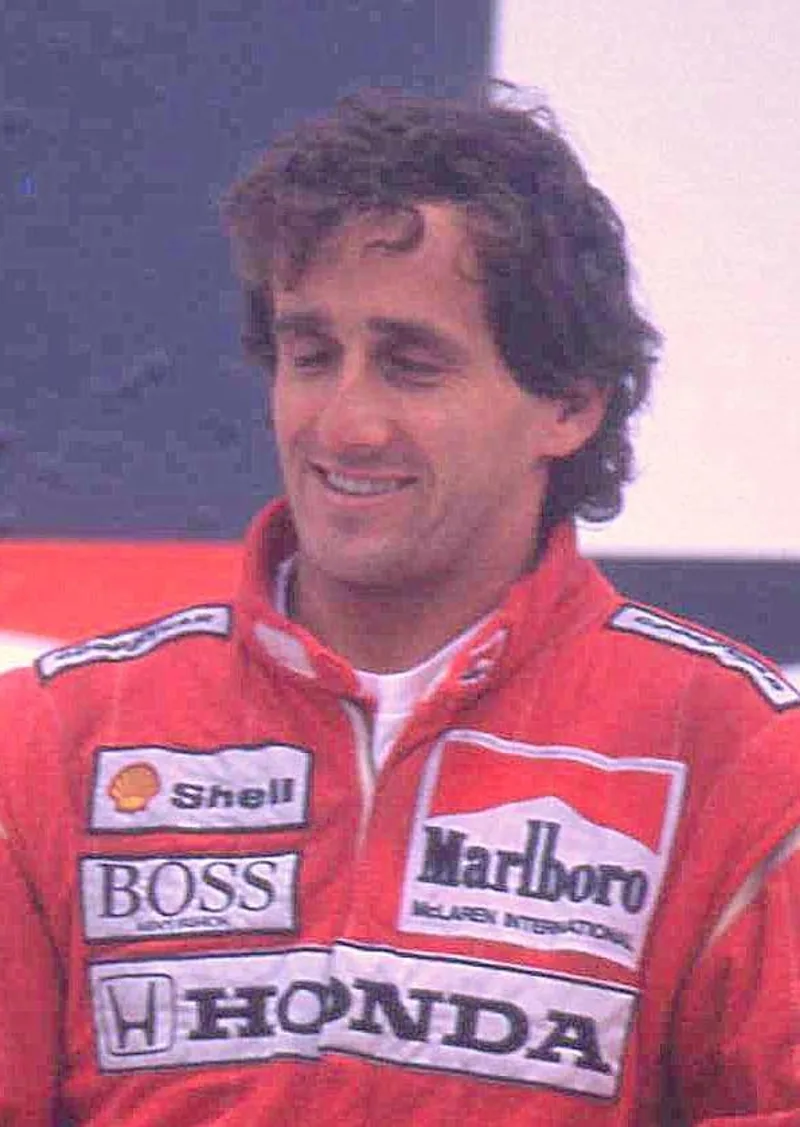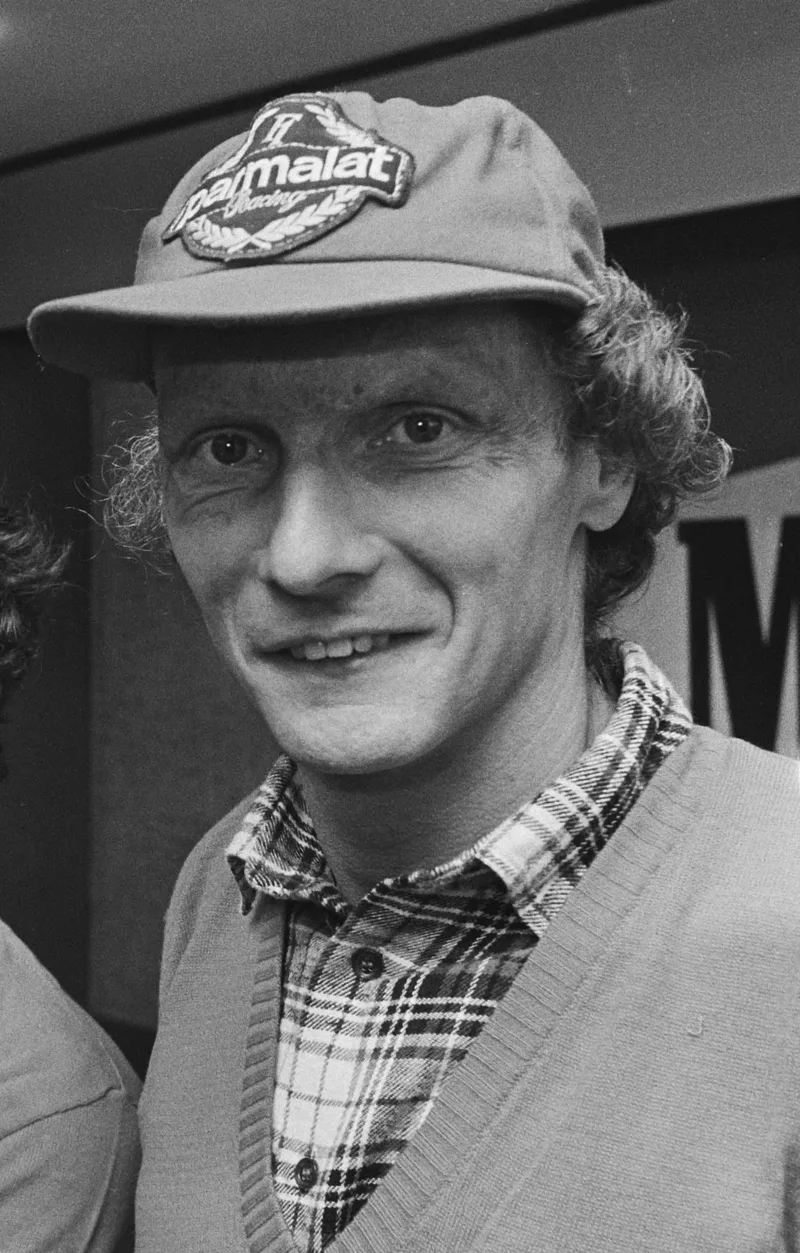
Ayrton Senna was disqualified after rejoining the track following his clash with Alain Prost at the chicane, handing Alessandro Nannini a win and Prost the championship.
Benetton's Nannini took the 1989 race at Suzuka on 22 October from sixth on the grid. Ayrton Senna was disqualified after rejoining illegally following his collision with Alain Prost, which made Prost the 1989 world champion. The disqualification also ended Senna's mathematical chance of catching Prost on points.
Alessandro Nannini won the 1989 Japanese Grand Prix at Suzuka after Ayrton Senna was disqualified, and the result handed Alain Prost the world championship. Senna and Prost had collided at the chicane while disputing the lead, and Senna then rejoined the track illegally to finish first. The race is one of the most famous in Formula One history, and it closed the two-year rivalry between the McLaren teammates.
What was the championship position before Suzuka?
Prost led the drivers' championship by 16 points, 76 to 60, going into the race. Senna had won six races to Prost's four, including the previous race in Spain, but he had finished in the points only once outside his wins. Prost, by contrast, had finished out of the points only once all season.
Senna therefore needed to win both this race and the final round in Australia to keep his title hopes alive. With the dropped-scores system in place, a double win would have made him champion regardless of where Prost finished in those two races.
Before the race Prost had told McLaren boss Ron Dennis that he had previously left the door open for Senna when the Brazilian challenged, so that both team cars were not taken out. He said he would not leave the door open on this day. McLaren had been dominant through 1989, as it had been in 1988.
A chicane collision, a disqualification and a win for Benetton gave Prost his title and left Suzuka one of the most debated races in history.
How did pre-qualifying shape the field?
Larini was quickest in Friday morning pre-qualifying for the second race running, and Bernd Schneider's Zakspeed was third, the first time he had got through pre-qualifying since the season opener in Brazil. Michele Alboreto was fourth in the other Lola.
Piercarlo Ghinzani missed out in fifth, while Roberto Moreno was sixth in a Coloni. Onyx did not get either car into the main sessions, which had not happened since Monaco. Johansson managed only seventh after a fuel pump problem. Aguri Suzuki reached eighth, extending his run of failures at this stage to fifteen in a row.
Oscar Larrauri was ninth in the EuroBrun, ahead of the second Onyx of JJ Lehto. AGS had done three days of testing in France beforehand, yet it was well off the pace. Only Enrico Bertaggia's Coloni sat behind it, because the Italian never managed a time.
How did qualifying settle the front of the grid?
The two McLarens dominated qualifying, and Senna was over a second and a half faster than Prost. Berger and Mansell filled the second row for Ferrari, Patrese was fifth for Williams, and Nannini was sixth in a Benetton-Ford running the development HBA4 V8.
Prost had set his car up for the race rather than for the single lap. He knew he could qualify on the front row alongside Senna, but his race set-up was better suited to the demands of the race, and he expected to gain an advantage at the start if he could beat the Brazilian away from the line.
Nelson Piquet was eleventh in his Lotus-Judd, and Jonathan Palmer's Tyrrell took the final grid slot in twenty-sixth. Rene Arnoux and Michele Alboreto both failed to qualify, which was a surprise because between them they had won a dozen Grands Prix. Schneider qualified 21st, 4.851 seconds slower than Senna, in only the second race of his season.
How did the start and early laps unfold?
Prost got away much faster than Senna at the start, and the Brazilian's pole advantage disappeared immediately. Senna's start was so poor that Berger was able to draw alongside him from third, but Senna held the inside line into the first corner and kept the Ferrari behind him.
Prost had removed his Gurney flap before the race without telling Senna, a change that the journalist Maurice Hamilton later revealed. The modification gave Prost more straight-line speed, and over the first half of the race he built a lead of almost six seconds.
Senna then lost about two seconds in a slow pit stop. Once he had fresh tyres, the balance of power shifted, and he began to reel his teammate in. Berger's gearbox failed on lap 34, and Mansell's engine failed nine laps later, which left the two McLarens as the only real contenders.
Nannini ran third on the more reliable HBA1 engine, while his teammate Pirro used the development V8 to climb from 22nd to tenth. Pirro's race ended on lap 33 after he collided with de Cesaris at the hairpin.
What led to the collision at the chicane?
Senna caught Prost on lap 40, and for the next five laps the two drivers stayed within about a second of one another. Prost had the greater top speed, while Senna's high-downforce set-up gave him an advantage through the corners.
On lap 47 Senna stayed close through the double-apex Spoon Corner, where he was in Prost's aerodynamic tow. Through 130R he moved within two car lengths of his teammate, and then he went for the inside at the chicane, the second-slowest corner on the circuit.
Senna's front wheels stayed just behind Prost's as Prost braked and turned towards the apex on the racing line. The two cars made contact, and both stalled with their wheels locked at the mouth of the escape road, having missed the chicane entry altogether.
Prost unbuckled and left his car in neutral for the marshals to remove. Senna signalled for the marshals to push him down the escape road, restarted his engine when the car moved, and accelerated away, weaving between the temporary bollards. His front wing had been damaged, so he completed almost a full lap before pitting for a new nosecone.
Senna rejoined only five seconds behind the new leader, Nannini. He passed the Benetton two laps later, at the same spot where he had come together with Prost, and the Italian put up little resistance because his car and engine were different.
How did the race finish?
Senna crossed the line first after the restart, but the result was overturned after the race. Nannini finished second on track, with the two Williams-Renaults of Patrese and Boutsen behind him. Nelson Piquet was fourth on track, almost a lap down, after starting eleventh.
Only eleven of the twenty-six starters were still running at the end. Martin Brundle was sixth, and Derek Warwick finished seventh after starting from twenty-fifth. Warwick had taken the unusual step of removing most of the downforce from his car before the race, in the hope that extra straight-line speed would help him.
Patrese and Boutsen had driven in tandem and were off the pace throughout the race. Behind the podium places, Piquet's finish was far better than his grid position, largely because of the high attrition rate.
| Driver | Result |
|---|---|
| Alessandro Nannini (Benetton-Ford) | Winner after the disqualification, from sixth on the grid |
| Riccardo Patrese (Williams-Renault) | Second after the disqualification |
| Thierry Boutsen (Williams-Renault) | Third after the disqualification |
| Nelson Piquet (Lotus-Judd) | Fourth on track, a lap down |
| Martin Brundle | Sixth on track |
| Derek Warwick (Arrows) | Seventh on track, from twenty-fifth on the grid |
| Ayrton Senna (McLaren-Honda) | Disqualified for rejoining the track illegally |
What happened after the race?
Senna was disqualified by the stewards immediately after the race for missing the chicane and rejoining the circuit illegally. Nannini was awarded the victory and took the podium with Patrese and Boutsen. The disqualification made it mathematically impossible for Senna to overhaul Prost's points total, so the 1989 championship went to the Frenchman.
Senna believed the decision had been made to hand the title to his countryman, and he alleged that FISA President Jean-Marie Balestre had influenced it. The stewards and Balestre both denied that the FISA boss had been present when Senna was disqualified, so the question was never settled.
McLaren and Senna appealed. Ron Dennis explained that the appeal had nothing to do with stopping Prost, who was leaving McLaren for Ferrari. The team felt a win had been taken from it by an incorrect ruling, and that the loss had cost it prize money and bonus sponsorship.
At the FISA hearing in Paris later that week the disqualification was upheld. Senna was also fined US$100,000 and given a suspended six-month ban, and FISA labelled him a dangerous driver. Senna had gained no advantage from missing the chicane, but the hearing did not accept that argument.
Nannini's victory was his only Formula One win. His career was cut short almost exactly a year later by a helicopter crash that severed his right forearm. The race has since been debated for decades, with commentators asking whether Prost had intended the contact, whether Senna had been over-ambitious, or whether it was simply a racing incident between two embittered teammates.
Why does the race still matter?
The race closed the rivalry between two McLaren drivers who had been teammates for two years and who had repeatedly collided on and off the track. Its outcome decided a championship at the penultimate round of the season, with one race still to run in Australia, which is why it is still discussed as one of the most famous races in the sport.
Senna's disqualification meant the title was settled after the flag rather than on the track, a point that has been raised often since. The episode also set the tone for how stewards, teams and drivers would handle disputes in the following years. Disqualifications for missing a chicane were rare, and the Suzuka ruling remained a reference point for later debates about racing incidents.