The Type A swapped parts with the Chevrolet it copied. The SZ family went another way, with offset crankshafts, 3 mm cast-iron walls and, in the 3SZ, very long connecting rods.
Toyota's Type A, built from 1935 to 1947, was its first production engine: a 3,389 cc straight-six copied from a Chevrolet, with interchangeable parts. The SZ family is a later line of small four-cylinders, from 998 cc to 1,495 cc, developed with Daihatsu and used in the Yaris.
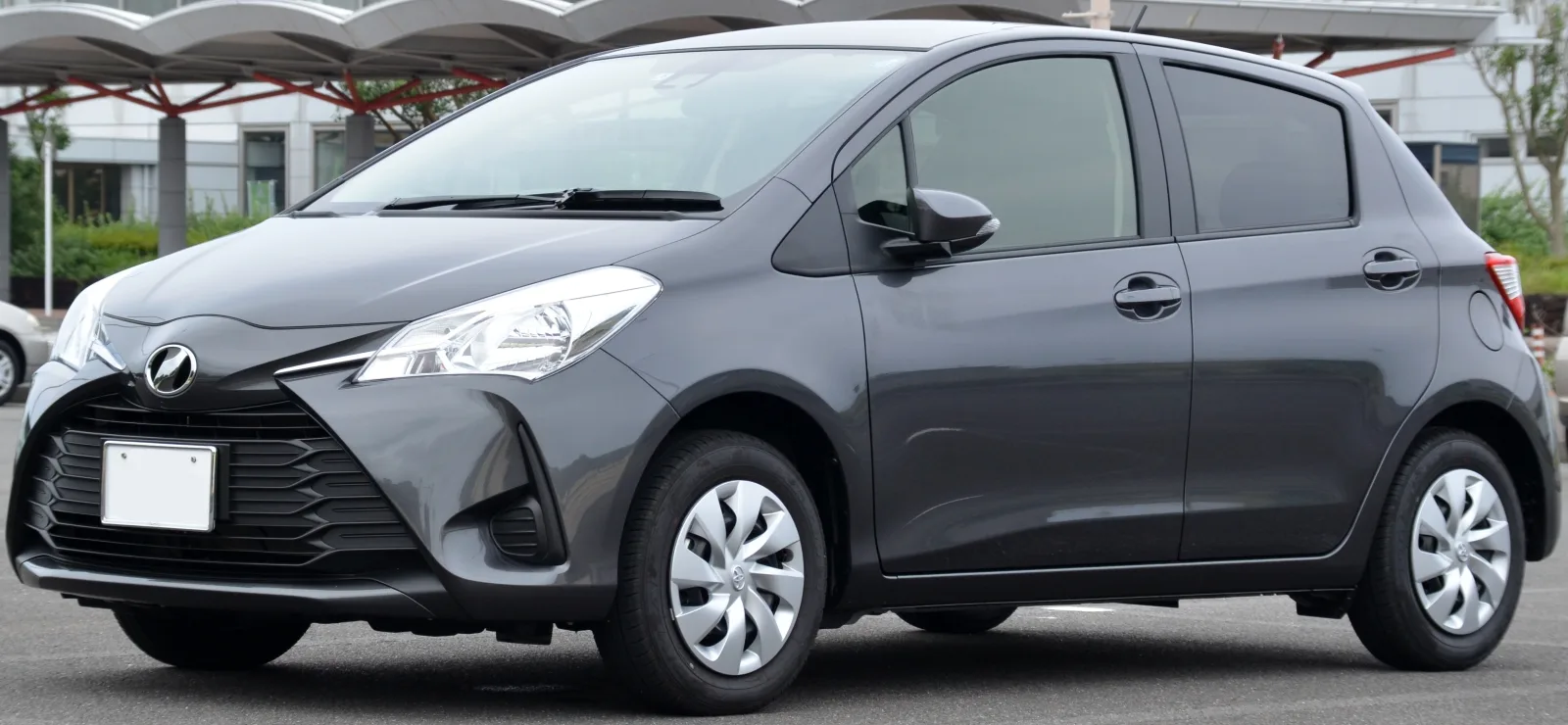
Pistons, connecting rods and valves could be swapped between a Toyota engine of the 1930s and the Chevrolet it was copied from, and there are recorded cases of a part meant for one engine being used to repair the other. That is how close Toyota's first production engine, the Type A, stood to its American model. Decades later, Toyota and Daihatsu together produced the SZ family, a set of small four-cylinder engines that ended up under the bonnet of the Toyota Yaris.
Toyota's first engine: the Type A, a Chevrolet in Japanese clothes
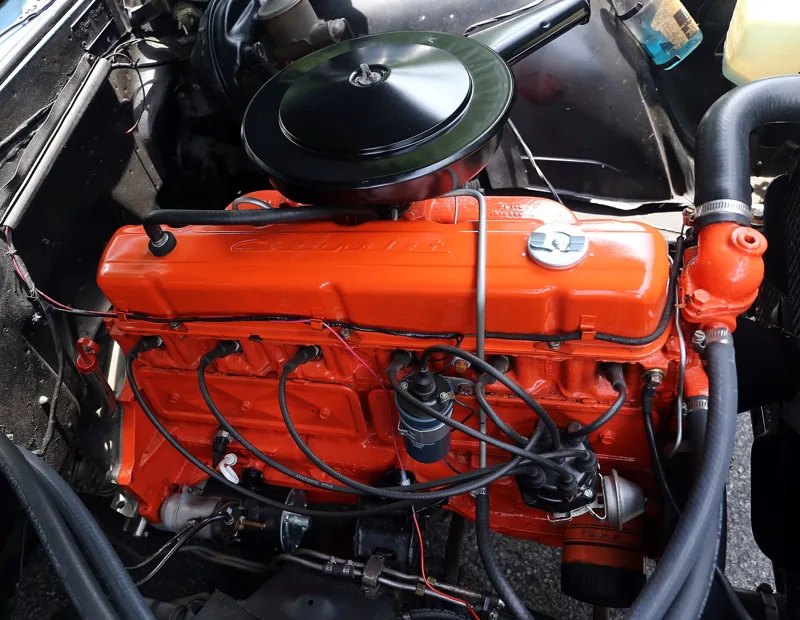
The Toyota Type A engine was a straight-six built from 1935 through 1947. It displaced 3,389 cc (3.4 litres), used pushrods to work overhead valves, and ran its crankshaft on three bearings. The design came from the Chevrolet Stovebolt six, with the Toyota engine described as a copy of the 1933 Stovebolt 207.
Toyota did not choose Chevrolet first. The company looked hard at the Ford flathead V8, simply as the engine most widely used in Japan then. Ford had been building cars in the country since March 1925 with the Model T, then added the Model A in 1927, and both used a flathead engine. The V8 fell at the cost hurdle: machining two separate banks of cylinders would have pushed production cost too high. A straight-six has one bank and one head, so the Chevrolet was the cheaper thing to learn from.
Why parts could be swapped
Part of the reason lay in the supply chain. General Motors had used local Japanese suppliers for the smaller components, carburettors among them, while its Osaka Assembly plant stayed open, until the Imperial Japanese Government appropriated it. Toyota could draw on those same firms. Between the matching design and the shared vendors, the parts were close enough that pistons, rods and valves fitted either engine.
Did the copy out-pull the original?
On paper, yes. A modified intake manifold gave the Type A 62 PS (46 kW), against 60 PS (44 kW) for the Chevrolet. Power figures from this era are slippery, though. Other references to the Chevrolet quote different numbers, because manufacturers measured in different ways, for example with or without the generator or alternator connected, engines varied from year to year, and some makers simply stretched the truth. Toyota ran back-to-back comparisons using one method for both engines, so it is likely that its engine did make slightly more power. The Chevrolet it was measured against was probably a year or two old.
The Type A went into the A1 prototype car, the AA sedan, the AB cabriolet, and the G1 and GA trucks.
Parts meant for the Chevrolet could repair the Toyota, and the other way round.
The Type B and the rest of the early Toyota engines
The Type B, at 3,386 cc (3.4 litres), was the technically more advanced version of the same idea. Production started in November 1938, the month Toyota's Koromo plant opened. It was built under licence from the Chevrolet 207 design but with metric dimensions and minor changes to suit the local market. Like the Chevrolet, it had a four-bearing crankshaft and rocker arms carried on a shaft. It stayed in production until 1956 at least.
Output crept up over the years. The Type B started at 75 PS (55 kW) at 3000 rpm, rose to 78 PS (57 kW) at the same speed in January 1940, and reached 82 PS (60 kW) when the BM truck arrived in March 1947. A 1944 prototype for a big passenger car, the Toyota Large B, took a B-series engine with a compression ratio of 6.9:1 and 85 PS (63 kW), the same output later given to the revised engine in two trucks: the 4-ton BA, which ran until February 1956, and the 2.5-ton BC, which ran until July of that year.
The B found work in a wide range of vehicles: the AC sedan, the GB, HB, KB and KC/KCY trucks, the BM truck and BL bus, and the BX and BZ trucks of 1951 to 1955 with 82 PS. It also powered the BJ Jeep, the predecessor of the Land Cruiser, and the BQ three-quarter-ton four-wheel-drive truck reserved for security and police forces. Other fitments were the BH26 police patrol car, which used a modified Toyopet Crown RS body, and the BH28 ambulance. In 1944 and 1945 the engine was also fitted to the Shinyo, a suicide motorboat.
The branches that stopped
The Type C was the Type A with two cylinders removed. It was a 2,259 cc (2.3L) straight-four made from 1939 through 1941 for the AE sedan and the AK four-wheel-drive. Pistons, valves and rods were shared across the A, B and C engines, and also with the first-generation Chevrolet Stovebolt of the 1930s.
The Type D was a 4,052 cc (4.1 litre) engine developed in early 1944 from the B, with a larger bore and the same stroke. It answered a national order of 1940 ordering Toyota to build a more powerful engine from the B. It made 100 PS (74 kW) but never entered series production. After the war Toyota turned to the somewhat smaller Type F instead. That 3.9 litre engine appeared in 1951 and followed the same pattern as the A and B, only now the model was the larger overhead-valve GMC straight-six built from 1939 until 1963.
Not every Toyota engine of the time came from a Chevrolet. The Type E was a 585 cc (0.6 litre) two-stroke copied from the engine in the DKW F7, and it was built only in 1938 for the prototype EA sedan, a front-wheel-drive copy of that DKW, and the rear-drive EB. The Type S, a 995 cc (1.0L) straight-four built from 1947 through 1959, was a reverse-engineered version of the engine from a 1930s Adler Trumpf Junior. It was unrelated to the earlier overhead-valve engines and used the simpler flathead layout, which had only a short life. It took over from the A, B and C in the company's passenger cars and went into the SA, SC, SD and SF sedans, the SB and SG light trucks, the Toyopet SH Custom and the Toyoace light truck, and also the ST10 Corona and ST16 Corona Van.
| Engine | Layout | Capacity | Years | Origin |
|---|---|---|---|---|
| Type A | Straight-six, overhead valve | 3,389 cc | 1935-1947 | Chevrolet Stovebolt |
| Type B | Straight-six, four bearings | 3,386 cc | From November 1938, until 1956 at least | Chevrolet 207 |
| Type C | Straight-four | 2,259 cc | 1939-1941 | Type A less two cylinders |
| Type D | Larger-bore version of the B | 4,052 cc | 1944, not produced | Type B |
| Type E | Two-stroke | 585 cc | 1938 | DKW F7 |
| Type S | Straight-four, flathead | 995 cc | 1947-1959 | Adler Trumpf Junior |
The Toyota SZ engine begins with Daihatsu
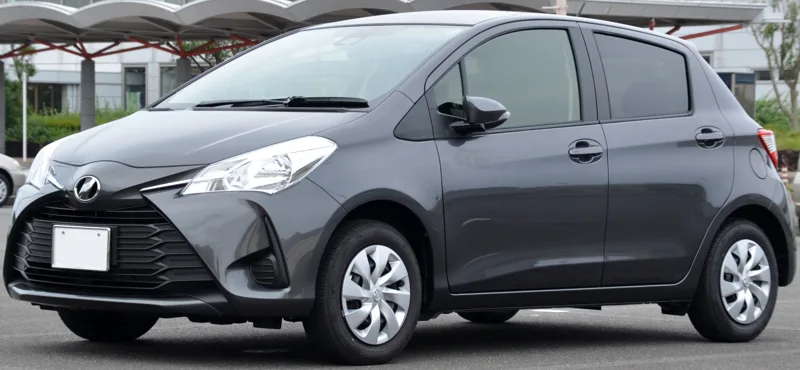
The SZ engine story starts with a partnership. Daihatsu and its part-owner Toyota began cooperating on development and manufacturing in 1998, when Toyota started selling the Daihatsu Storia under its own badge as the Toyota Duet. In 1999 Daihatsu fitted Toyota's VVT-i variable valve timing to its 1.0L EJ-VE three-cylinder for the Storia and Duet. That same year Daihatsu, with Toyota's support, developed the 1SZ-FE and began building it solely for Toyota, for the Vitz, Yaris, Platz and Echo.
From the 1SZ-FE came two 1.3L branches, the 2SZ-FE and the K3-VE. They share a crankshaft but have a different cylinder block and a very different cylinder head. Daihatsu altered the valve timing system slightly and called it DVVT, using it on the K3 engines apart from the K3-DE. The K3-VE then spawned the K3-DE, a simplified version with 88ps at 6,000rpm, the K3-VE2 with 110ps at 7,000rpm and the turbocharged K3-VET with 140ps at 6,400rpm. A long-stroke 1.5L, the 3SZ-VE, and a short-stroke turbocharged 0.9L called the KJ-VET followed. The KJ-VET, at 936.4cc and 133ps at 7,200rpm, was built for the Boon X4, a four-wheel-drive special created for rally homologation.
What the SZ engines do differently
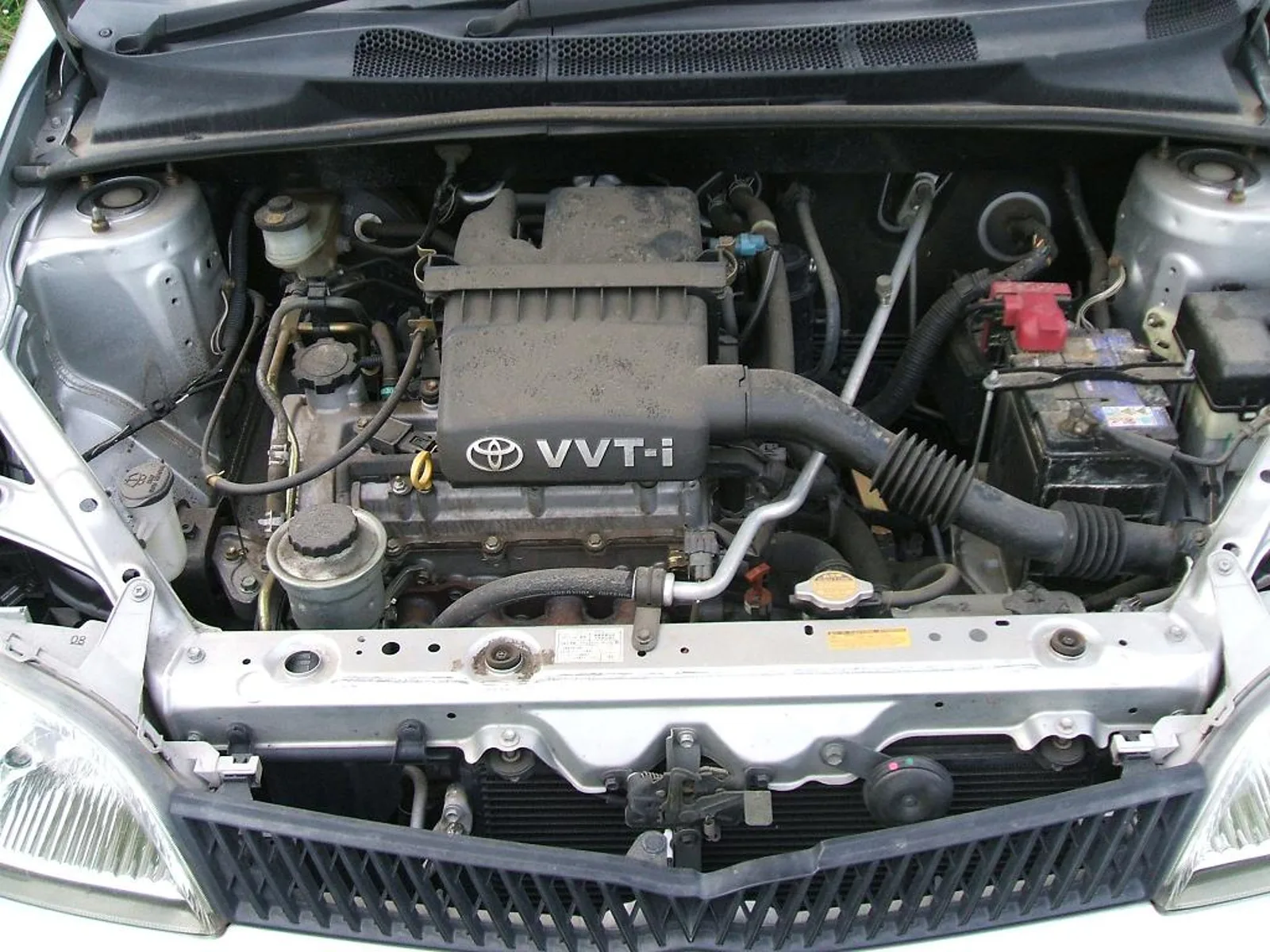
A few features run through the whole family. The crankshaft is offset from the centre line of the cylinders, an arrangement called Desaxe. The block is thin-walled cast iron. A single-row chain drives twin overhead camshafts and four valves per cylinder. The variable valve timing lets the engine run a Miller cycle under partial throttle. The 1.3 and 1.5L versions can be mounted across the car or along it, and the larger ones can lie almost on their sides, canted nearly 90 degrees to the left with the exhaust side down, so they fit under a seat.
The offset crankshaft, explained
When a piston is pushed down by burning fuel, the connecting rod below it is usually tilted, and a tilted rod shoves the piston sideways into the cylinder wall, much as you lean on a trolley instead of pushing it straight. Shifting the crankshaft slightly to one side of the cylinder line lets the rod stand more upright during the power stroke. Toyota's engineers say the offset enlarges the intake and expansion strokes and cuts the sideways load on the piston during expansion, which improves both thermal and mechanical efficiency.
A block thin enough to worry about
The 1SZ-FE weighs 68 kg (150 lb) bare and 83 kg (183 lb) with its ancillaries. Much of that saving comes from the cast-iron block, which is made by a method called Cold Box and has walls only 3mm thick. Thin castings tend to warp as they cool, so the block sits in a chamber filled with catalytic gas for the final cooling stage, which prevents the distortion.
Toyota 1SZ-FE: the 1.0L Yaris engine
The 1SZ-FE is a 998 cc inline four with a 69.0 mm bore and 66.7 mm stroke (2.72 by 2.63 in), 10.0:1 compression and electronic port injection. Toyota and Daihatsu developed it jointly. There were two versions. The Japanese one, with Denso electronics and JIS 91 octane fuel, made 70 ps (51.5 kW) at 6,000rpm and 95 Nm (70 lbf ft) at 4,000rpm. The one for the rest of the world, using 95 octane petrol and Bosch ancillaries, made 68 ps (50.0 kW) at 6,000rpm and 90 Nm (66 lbf ft) at 4,100rpm. The Japanese cars were the Vitz and Platz, the rest of the world got the Yaris and Echo.
Narrow-angle valves, set only 18.6 degrees apart, are opened by roller followers, and the timing change affects the intake camshaft only, over a range of 60 degrees of crankshaft rotation. The crankshaft carries four counterweights.
Toyota 2SZ-FE and the Daihatsu K3-VE
The 2SZ-FE is a 1,298 cc four-cylinder measuring 72.0mm across the bore and 79.7mm in stroke (2.83 by 3.14 in). Export engines run at 10.0:1 compression, and Japanese ones at 11.0:1, with a slightly different capacity of 1,296 cc and a stroke of 79.6 mm. Both versions make 87 PS (64 kW; 86 hp) at 6,000rpm. Torque is 122 Nm (90 lbf ft) for export, peaking at 4,200rpm, and 116 Nm (86 lbf ft) in Japan, peaking at 4,000rpm. In China the export engine usually goes by the name 4A13.
The Japanese engine has a good deal more to it. It has eight crankshaft counterweights where the export engine has four, extra spacers inside the water jacket to help cooling, polymer coating on the piston skirts and a different cam profile with a 45 degree adjustment range. The 2SZ-FE as a whole went into the Yaris and Vitz, the Belta and the Ractis.
The K3-VE belongs to Daihatsu, and is not a Toyota product, although it shares the 2SZ-FE's crankshaft. Its block is different, built for longitudinal mounting, and its cylinder head has a wider valve angle of 29.7 degrees, with the valves pushed directly under the camshafts instead of through follower arms. The engine has no valve clearance adjuster. When the clearance needs correcting, the cap on the end of the valve stem is replaced with one of a different thickness, as in the old Coventry Climax FWA. It makes 90 PS (66 kW; 89 hp) at 6,000rpm and 123 Nm at 4,000rpm. The K3-VE2 raises compression to 11.0:1 for 110 PS (81 kW; 108 hp), and the K3-VET, at 8.5:1, makes 140 PS (103 kW; 138 hp) and 177 Nm at 3,200rpm. A liquefied natural gas version also exists.
It turned up in a long list of cars: the Daihatsu YRV, Storia and Toyota Duet, Boon and Sirion, Toyota Passo, Perodua Myvi, Copen for Europe from 2006 to 2011, the Terios, Toyota Cami, Perodua Kembara, and the Toyota Avanza.
The Toyota 3SZ-VE and its very long connecting rods
The 3SZ-VE, introduced in October 2005 on the second-generation Daihatsu Terios, is the most unusual of the family. It displaces 1,495 cc from a bore of 72.0mm and a stroke of 91.8mm (2.83 by 3.61 in), at 10.0:1 compression. The Japanese market gets 109 PS (80 kW; 108 hp) and the rest of the world 107 PS (79 kW; 106 hp), both at 6,000rpm, with 141 Nm (104 lbf ft) at 4,400rpm. A commercial version for the Luxio and Gran Max gives 97 PS (71 kW; 96 hp) and 134 Nm (99 lbf ft) and has no VVT-i.
The problem with a long-stroke engine is vibration at high revs, caused by secondary imbalance, and a longer connecting rod reduces it. Compared with the 2SZ-FE, the 3SZ-VE has a stroke 12.2mm longer and rods 18.5mm longer, so the rods gained more than 50% more length than the stroke increase alone would normally call for. Fitting them meant raising the deck height, the distance from the crankshaft centre to the top of the block, by 25.5mm, which made the engine taller. The approach is similar to what racing engines do, and to the 2.0L Volvo B5204 five-cylinder, which shares a deck height with the 2.3L engine in its modular family. The payoff was a 6,500rpm redline, the same as the 1.0 and 1.3L engines, despite a quite different ratio of bore to stroke.
Bigger valves came with the extra air: the intake valve grew from 26.1mm to 27.8mm and the exhaust from 22.6mm to 23.4mm, which forced the use of small 12mm spark plugs. The throttle body went from 45mm to 50mm, the pistons gained polymer skirt coating, and cam duration rose from 220 to 230 degrees, with intake lift of 8.0mm against 7.2mm before.
| Engine | Capacity | Bore x stroke | Output |
|---|---|---|---|
| 1SZ-FE | 998 cc | 69.0 x 66.7 mm | 70 ps (Japan), 68 ps (export) |
| 2SZ-FE | 1,298 cc | 72.0 x 79.7mm | 87 PS |
| K3-VE | 1,298 cc | 72.0 x 79.7mm | 90 PS |
| 3SZ-VE | 1,495 cc | 72.0 x 91.8mm | 109 PS (Japan), 107 PS (export) |
Where Toyota SZ engines are built and what runs on them
Yaris engines from the SZ family come out of Toyota's UK operation at Deeside. In China all three types are made in Tianjin, at the Xiqing District plant of the Tianjin FAW Toyota engine company. Daihatsu's partner in Indonesia, PT Astra Daihatsu Motor, also builds the 2SZ-FE and 3SZ-VE, at Karawang.
The 3SZ-VE turned up in the Daihatsu Sirion, Materia and Coo, Toyota bB and Passo Sette, Perodua Alza from 2009 to 2022 and Myvi SE and Advance from 2011 to 2017, and the Toyota Vios in China. Mounted upright and lengthways, it went into the Toyota Rush, the 1.5L Avanza, the Daihatsu Terios and Be-go and the Perodua Nautica. Lying on its side, it sits in the Gran Max, the Luxio and the Toyota TownAce and LiteAce built from 2008 to 2020.