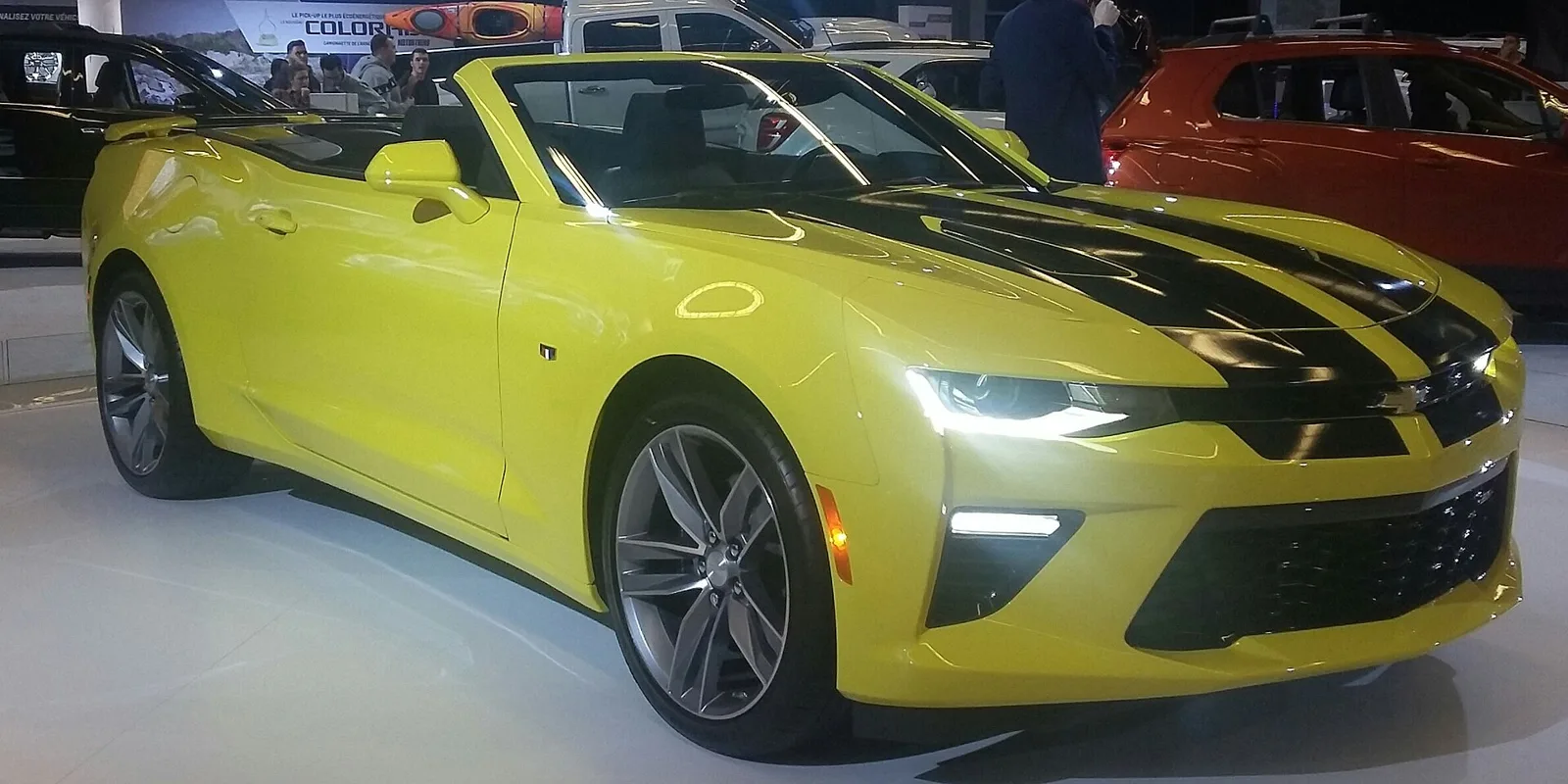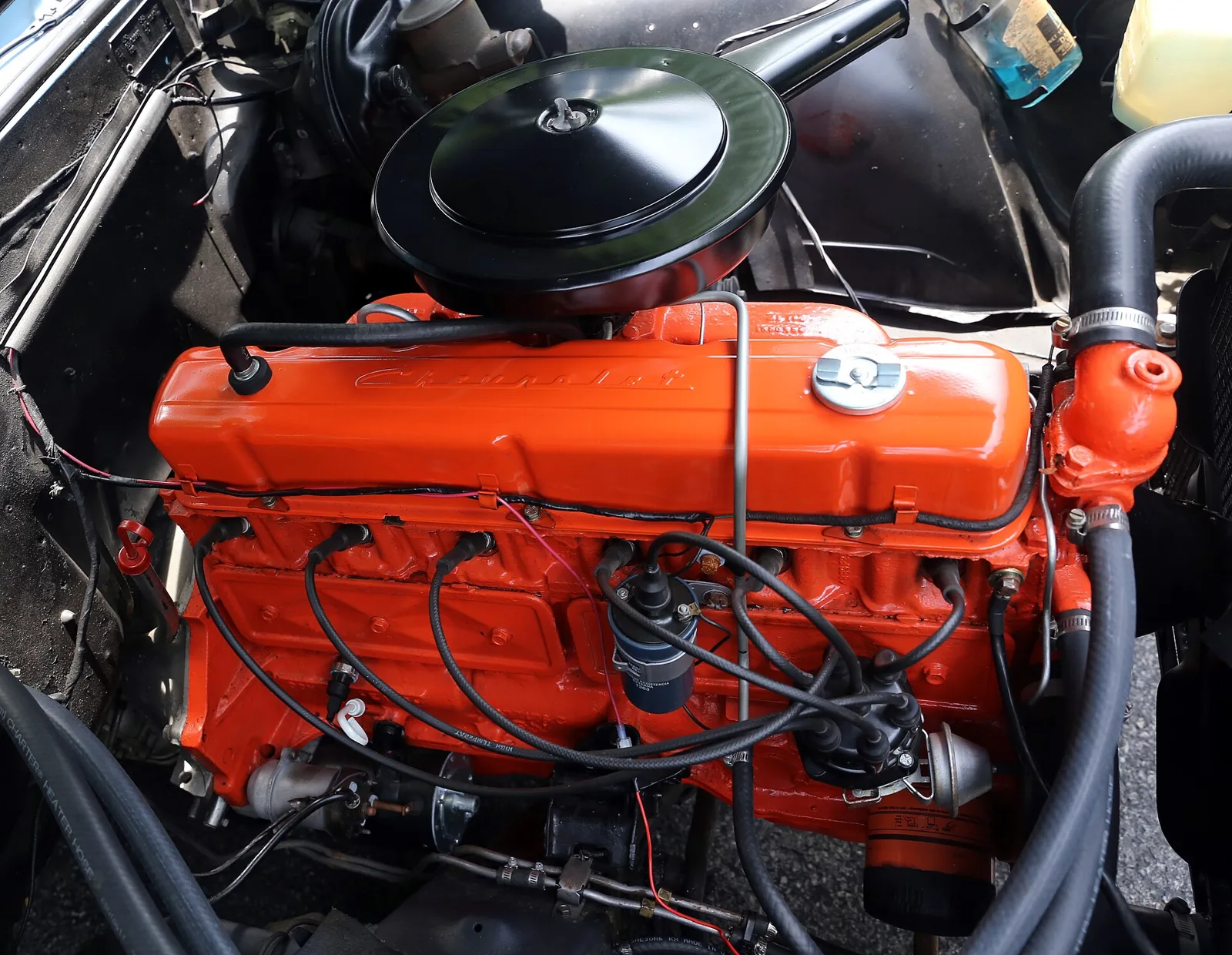
Toyota copied it, Austin borrowed it and the Corvette used it: the Chevrolet straight-six from 1929 to 2001.
The Chevrolet Stovebolt was a straight-six built from 1929 to 1962 that replaced Chevrolet's four-cylinder, advertised as a six for the price of a four. The Turbo-Thrift replaced it from 1962, with seven main bearings, and lasted until 2001.
Toyota's very first engine was a copy of a Chevrolet. The Type A, built from 1935 to 1947, reverse-engineered the 207 straight-six and made 62 hp (46 kW), with 94 percent of the original's compression ratio. The engine it copied had started life as an insult: the "Stovebolt" six was mocked in 1929 for its old-fashioned looks. It went on to power the Corvette and inspire Austin's lorry engines.
What is the Chevrolet Stovebolt engine?
The Stovebolt is a straight-six that Chevrolet made in two versions between 1929 and 1962. It replaced the company's 171-cubic-inch (2.8-litre) inline-four, and was the only engine Chevrolet offered from 1929 through 1954. When the small-block V8 arrived in 1955 the six became the base option. North America had phased it out by 1962, yet GM carried on making it in Brazil until 1979, and the Turbo-Thrift took over.
A mocked nickname turned into one of Chevrolet's most durable engines.
Why did Chevrolet move from four cylinders to six?
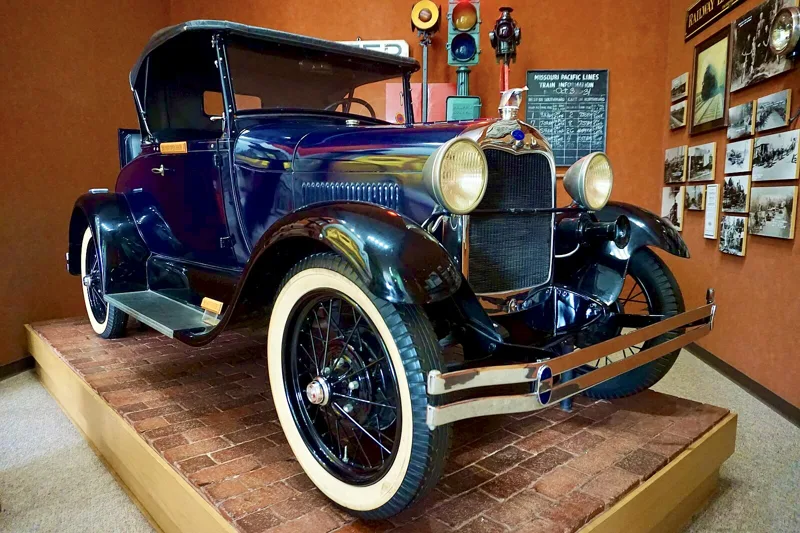
Because Ford had changed the game. The 1927 Chevrolet Series AA Capitol had sold more than a million cars, against about 400,000 Model Ts. Then Ford launched the Model A in autumn 1927 with a 40 hp (30 kW) four, while the Chevrolet Capitol made only 27 hp (20 kW), and by 1929 the Ford was outselling it. Chevrolet had been weighing a six since 1925, and the Model A forced the move.
Two executives, General Manager William S. Knudsen and Richard Grant from marketing, demanded that the new engine keep overhead valves, as the earlier four had. People mocked the seemingly dated result as the "Cast-Iron Wonder" and the "Stovebolt Six". The advertising turned it round, promising six cylinders at four-cylinder money. Chevrolet priced the car only $100 above the Model A, and took back the sales lead from Ford in 1931.
What were the first-generation Stovebolts?
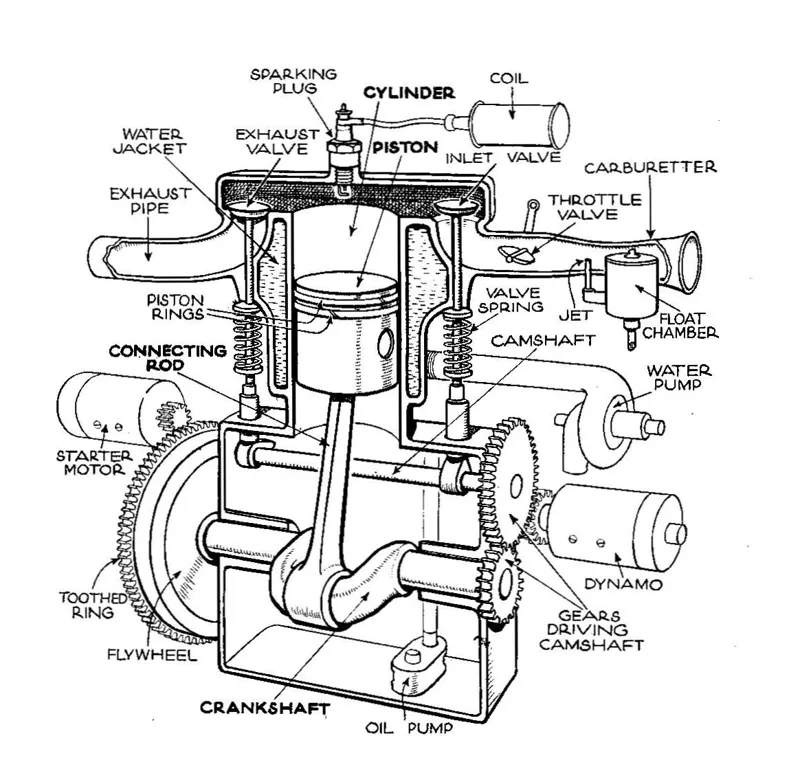
The first, the 194, was 193.9 cubic inches (3.2 litres) and made 46 hp (34 kW) at launch. Inside were cast-iron pistons and a forged steel crankshaft running in three main bearings, and the bore and stroke were 84 by 95 mm. A balanced crankshaft arrived for 1932, along with a higher 5.2:1 compression ratio that lifted output to 60 hp (45 kW). It powered every Chevrolet passenger car from 1929 through 1932.
In 1933 the stroke grew to 4 inches (101.6 mm), creating the 207: 206.8 cubic inches (3.4 litres), initially in the Series CA Eagle with 65 hp (48 kW). It remained until 1936, with compression between 5.2:1 and 6:1. Power rose year by year: 80 hp (60 kW) in the 1934 Master and 1935 Master, then 79 hp (59 kW) in 1936 passenger cars and 72 hp (54 kW) in trucks. Commercial versions were detuned to between 56 hp (42 kW) and 68.5 hp (51 kW).
A 181-cubic-inch (3.0-litre) version, with an 84.14 by 88.90 mm bore and stroke, appeared in 1933 for the cheaper Series CC Standard and again in 1934. It made 60 hp (45 kW) at 2300 rpm and ended after 1934, when the Standard moved to the 206.8.
What changed in the 1937 second-generation Stovebolt?
For 1937 Chevrolet re-engineered the engine. The most visible change was a redesigned crankcase with four main bearings instead of three. People often call this later engine the "Blue Flame", though that name was officially applied only from 1953, and only to the 235 coupled to the Powerglide automatic, including the Corvette's.
The 216
The 216 displaced 216.48 cubic inches (3.5 litres), with a bore and stroke of 88.90 by 95.25 mm. A four-bearing crankshaft and 6.5:1 pistons gave 85 hp (63 kW). A new head in 1941 raised that to 90 hp (67 kW), and 6.6:1 compression gave 92 hp (69 kW) in 1949.
The oiling was not fully pressurised. An "oil trough" in the sump had spray nozzles that squirted oil at "dippers" on the connecting rods. Rod bearings were babbitt cast straight into the rod, with copper shims between cap and rod to adjust clearance, and a worn bearing meant replacing rod and bearing together, usually at the dealer.
The engine also went into Britain's Bedford trucks. Austin, wanting a share of the 2-3 ton lorry market in the late 1930s, based a crash-programme engine on the Stovebolt's architecture but added shell bearings and pressurised lubrication. That became the post-war Austin D-Series six, which drove the Sheerline and Princess as well as the Jensen Interceptor and 541. Austin also cut two cylinders off it to make the BS1 four, which drove the Austin 16, the A70 Hampshire and Hereford, the A90 Atlantic, the Austin-Healey 100-4, the Gipsy, commercial vans and London's FX3 and FX4 black taxis.
What was the Chevy 235 Stovebolt?
The 235 was introduced in 1941 at 235.5 cubic inches (3,859 cc) for large trucks, with a larger 90.5 by 100.0 mm bore and stroke than the 216 and the same dipper oiling. It reached Chevrolet passenger cars in 1950 with the new Powerglide automatic and a 3.55:1 rear axle, adding hydraulic lifters, 7.5:1 compression and bigger intake valves. The pushrod cover no longer crossed the cylinder head, which cured oil leaks.
By 1953 the 235 was standard in every Chevrolet passenger car except the sedan delivery, which kept the 216 until 1954. With the three-speed manual it was called Thrift-King and had solid lifters and 7.1:1 compression for 108 hp (81 kW), against 115 hp (86 kW) with Powerglide. Only the Powerglide cars, the Blue Flame, got fully pressurised lubrication, shell main bearings and aluminium pistons. The supposed benefits of a blue rather than yellow flame had appeared in Chevrolet advertising since 1934.
The 1953 Corvette used a special 235 with mechanical lifters, the higher-lift cam from the 261 truck engine and three single-barrel Carter YH side-draft carburettors, for 150 hp (112 kW). From 1956 to 1962 every 235 in a car had hydraulic lifters. The 235 earned a reputation as a great Chevrolet engine for power and durability, and the third-generation 230 replaced it in 1962. Canadian GMC trucks used the 216 from 1947 to 1953 and the 235 in 1954.
What was the Chevrolet 261?
The 261, of 260.9 cubic inches (4.3 litres), arrived in 1954 as the Jobmaster option for heavy-duty trucks. It was close to the 235 but had a bigger 95.25 mm bore, two extra coolant holes between the paired cylinders and a higher-lift camshaft, with mechanical lifters. From 1960 it was sold alongside the GMC V6 until it was dropped in 1963, though US availability ended in 1962.
Canadian Pontiacs carried a standard 261 with hydraulic lifters from 1955 to 1962, and Brazil fitted it to light trucks and the Chevrolet Veraneio between 1958 and 1979, producing 148 hp.
What is the Chevrolet Turbo-Thrift engine?
The Turbo-Thrift is the Stovebolt's successor, a straight-six produced from 1962 to 2001. The series took its name from the 230-cubic-inch version, which debuted in 1963. It had seven main bearings instead of four, and was smaller and approximately 100 lb lighter.
Its bore spacing matches the small-block V8's 4.4 inches, and the 194 and 230 share their 82.6 mm stroke with the 327 small-block and the 348 big-block V8s. It has wedge-type closed-chamber heads with a squish area, and stamped ball-pivot rocker arms ratioed at 1.75:1 in place of the old shaft-mounted 1.477:1 type.
The 194 Hi-Thrift came first, in the 1962 Chevy II. In 1963 Chevrolet passenger cars took the 230 across the range. Studebaker and Checker used it from 1965, Pontiac in 1964 and 1965, and Chevrolet and GMC trucks, which had used the Stovebolt and GMC V6, switched from 1963 through 1988. A 153-cubic-inch four-cylinder version, the Super-Thrift, stayed in the Chevy II and Nova through 1970.
The 194, 215 and 230
The 194 had a 90 by 83 mm bore and stroke (3,185 cc) and made 120 hp (89 kW) gross and 240 Nm. North American production ended after 1967, but GM's Argentine arm kept it until the mid-1970s and built a 1,797 cc four called the Chevrolet 110 for the Opel K 180.
Pontiac's 215 of 1964 and 1965 used a smaller 95.25 mm bore than the Chevrolet 230 and, oddly, the Pontiac V8 bolt pattern on its crankshaft. The 230 (3,768 cc, 98 by 83 mm) made 140 hp (104 kW) at 4,400 rpm and 298 Nm at 1,600 rpm, and ceased in North America in 1970, though South Africa kept building it until at least 1982.
How did the Chevy 250 inline six develop?
The 250 appeared in 1966 with the same 3.875-inch (98.4 mm) bore as the 230 and a longer 3.53-inch (90 mm) stroke, for 249.8 cubic inches (4.1 litres; 4,093 cc). From 1975 to 1984 it was made with the intake manifold cast into the cylinder head, said to improve low-end torque, economy and refinement. One-barrel intakes were used through 1978, and from 1979 trucks and vans got a two-barrel Rochester Varajet. The L22 was the passenger version until 1979, the LD4 the truck version until 1978, and the LE3 followed until 1984.
Sales had been sliding. Just 3,900 straight-sixes were sold in the 1972 model year, and Chevrolet dropped the six from its full-size cars for 1973, the first time since 1928 that they were not available with one. When the B-body was downsized in 1977, the six returned, costing about US$334 less than a V8 and weighing 188 lb (85 kg) less. In the late 1970s the Chevrolet 200, 229 and Buick 231 V6 engines replaced it in cars, and use ended after the 1979 model year. Trucks kept the 250 to 1984, when the 4.3-litre V6 replaced it.
Brazil was the engine's long home. The Chevrolet Opala used it from 1969 (the 230) to 1992 (the 250), and passenger cars kept it until 1998, with the Brazilian Silverado using it until 2001. Brazilian sixes of that era had multipoint injection while US ones kept the Rochester Monojet. Argentina and South Africa also built it. Marine builders Mercruiser and Volvo Penta converted these sixes, and Clark forklifts used them.
The Brazilian 250-S
When long-distance racing resumed in Brazil in 1973, the Chevrolet Opala and Ford Maverick led the field, though the Maverick's engine was nearly a litre larger. Bob Sharp and Jan Balder finished second in the 24 Hours of Interlagos that August in an Opala and pushed GM do Brasil to field something stronger. By coincidence, Roberto B. Beccardi, the engine development manager, had begun work on a performance engine without factory backing.
In July 1974 GM offered the 250-S as an option on the Opala 4100. The Opala now outpaced the standard two-barrel Maverick GT, and Ford responded in 1974 with a performance option using an imported Holley four-barrel carburettor, officially called the "Quadrijet" in Brazil, which restored parity.
What was the Chevrolet 292 six?
The 292, of 292 cubic inches (4.8 litres), was a High Torque truck engine, used in Chevrolet and GMC trucks from 1963, Step-Vans from 1964 and as the standard engine in the G20 and G30 vans from 1975 to 1978. Its block deck is 1.75 inches (44.5 mm) taller than the 194, 230 and 250, and the passenger-side engine mount was moved. Though larger than the 261 Stovebolt it replaced, it was about 2 inches (51 mm) shorter.
Production shifted to Mexico in 1980, and later engines carried the name High Torque 4.8 L and the code L25. Unlike the 250, it kept a separate intake and exhaust manifold, with a Rochester Monojet carburettor. Availability was cut back from the late 1970s and ended in 1989, when the 4.3-litre V6 replaced it. By 1987 it was an option only on three-quarter-ton and one-ton trucks and the base unit in the P20 and P30 Step-Vans.
How do the Stovebolt and Turbo-Thrift sixes compare?
| Engine | Introduced | Displacement | Notes |
|---|---|---|---|
| Stovebolt 194 | 1929 | 193.9 cu in (3.2 L) | 46 hp, three main bearings |
| Stovebolt 207 | 1933 | 206.8 cu in (3.4 L) | 65 hp, copied by Toyota |
| Stovebolt 216 | 1937 | 216.48 cu in (3.5 L) | Four main bearings, 85 hp |
| Stovebolt 235 | 1941 trucks, 1950 cars | 235.5 cu in (3,859 cc) | 150 hp in the 1953 Corvette |
| Turbo-Thrift 230 | 1963 | 230 cu in (3,768 cc) | Seven main bearings, 140 hp |
| Turbo-Thrift 250 | 1966 | 249.8 cu in (4.1 L) | Integrated head 1975 to 1984 |
| Turbo-Thrift 292 | 1963 trucks | 292 cu in (4.8 L) | Taller block deck |
How the Chevrolet six ended
The Turbo-Thrift went out of production with the Brazilian Silverado in 2001. GM then built no straight-six in North America until the Atlas engine arrived in late 2001.