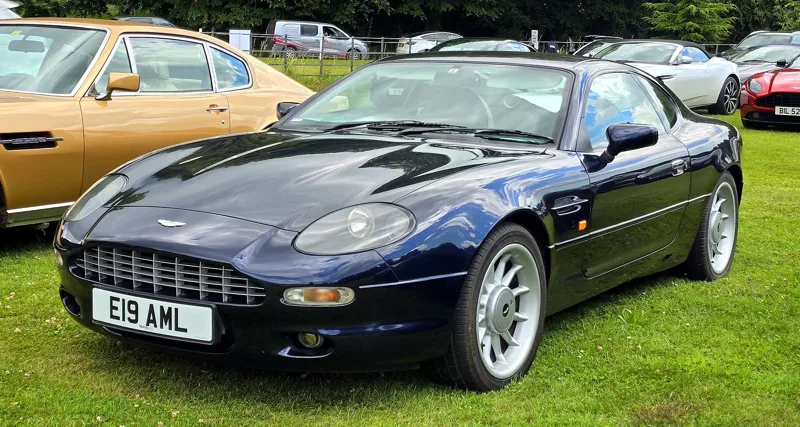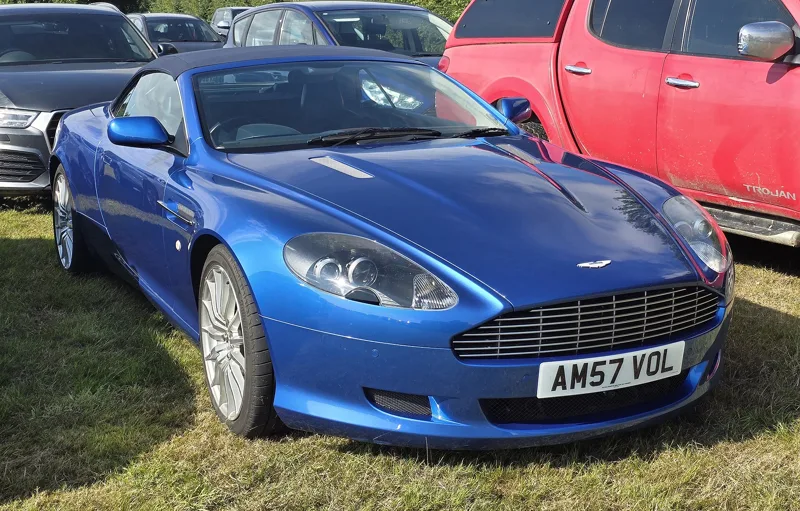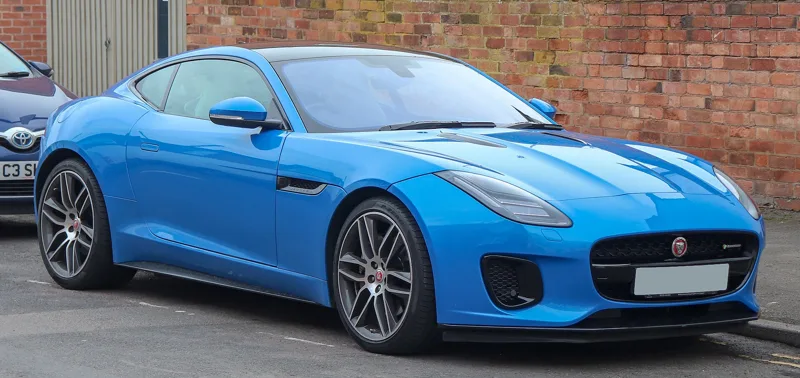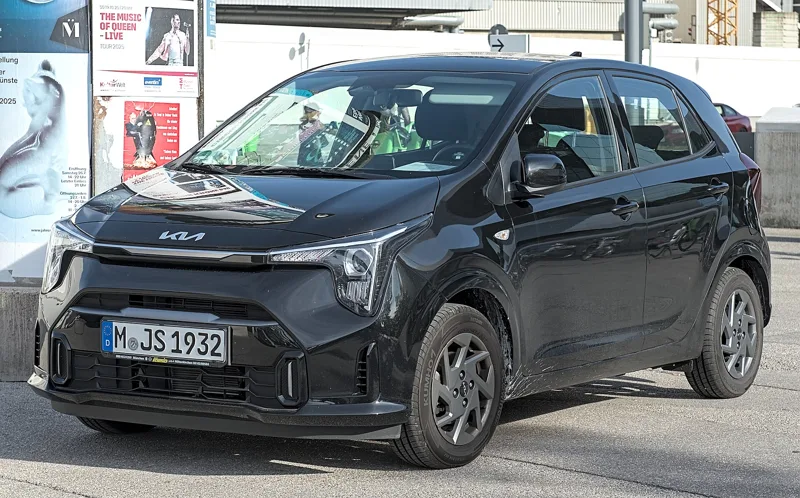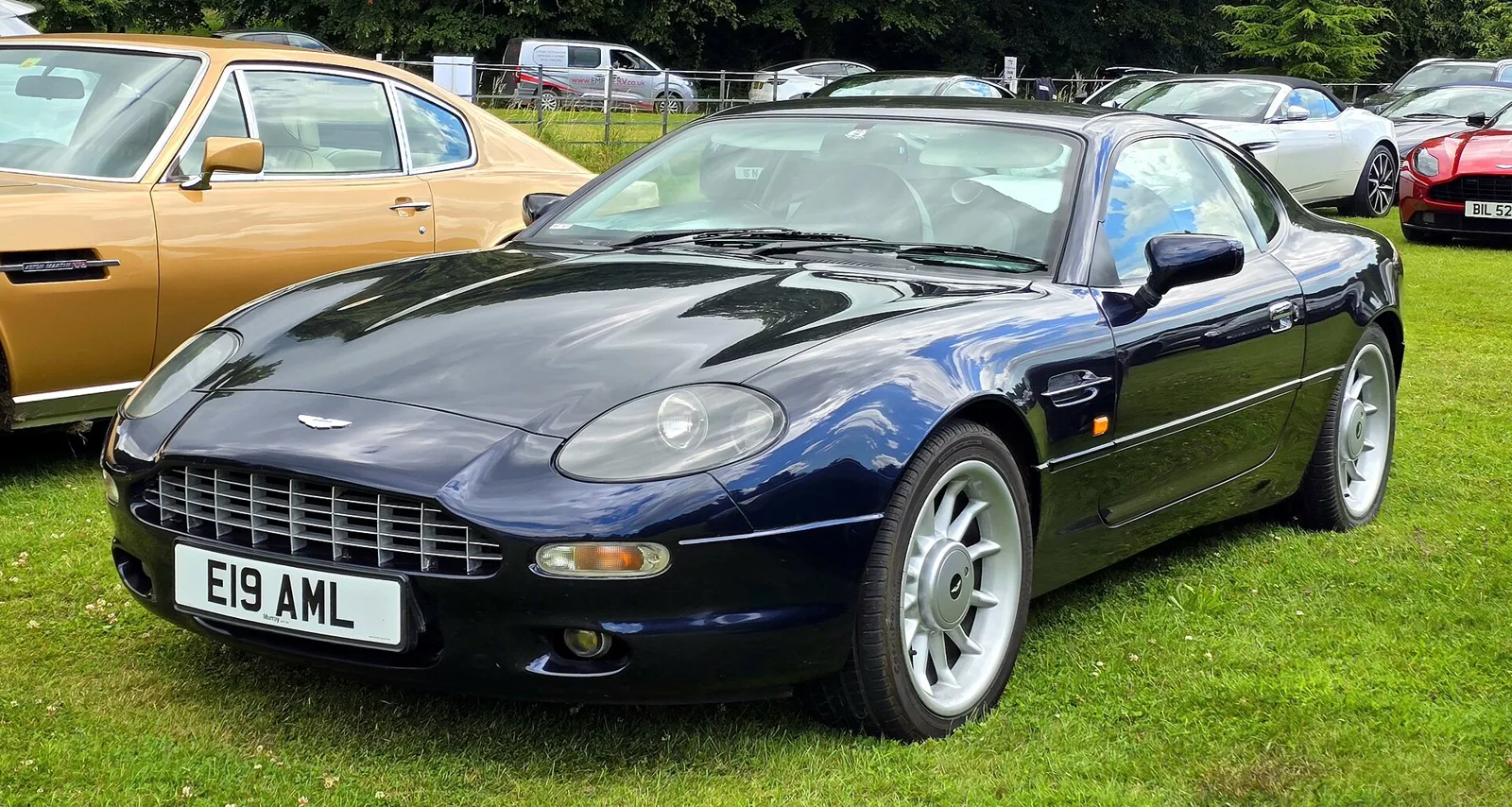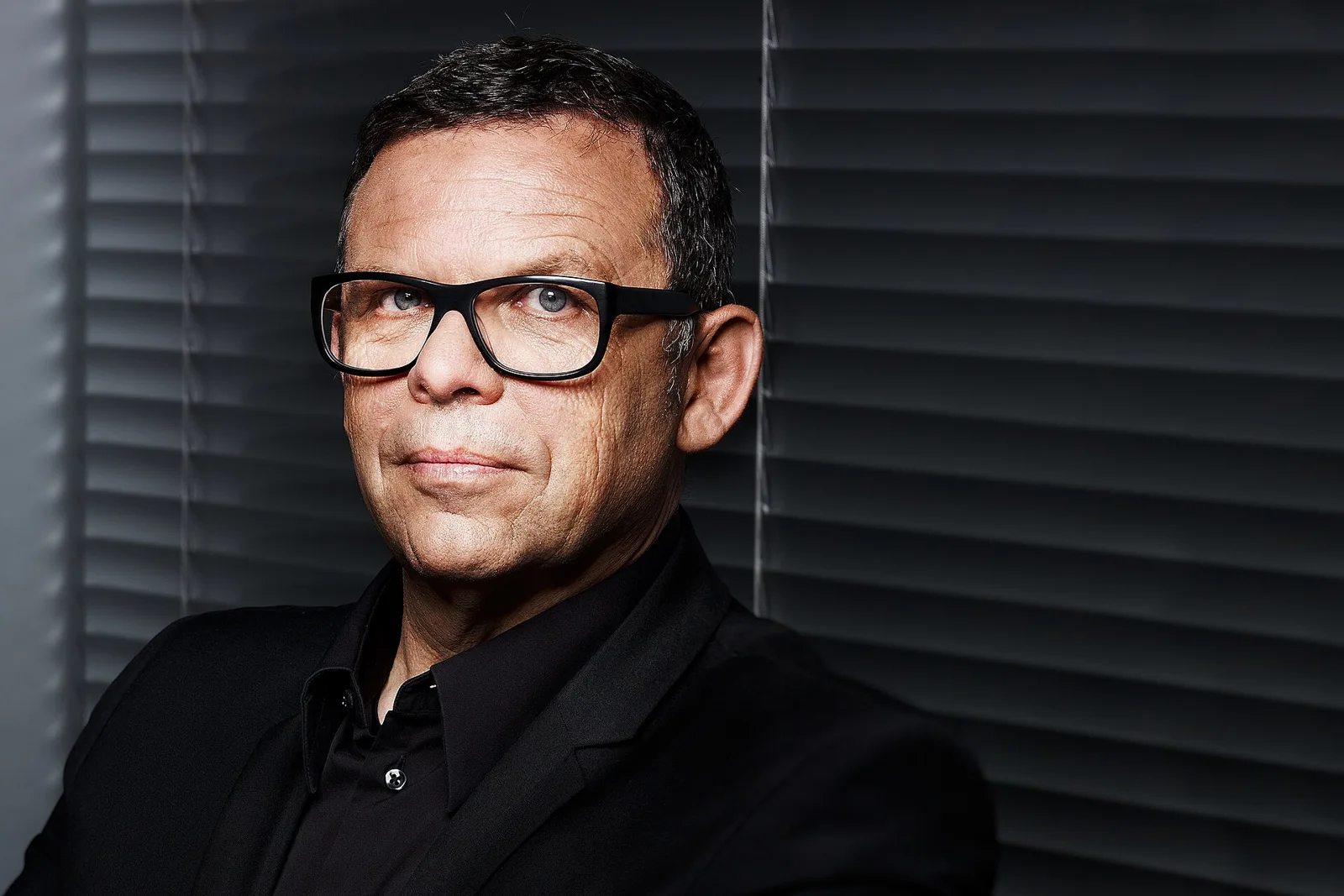
A teenager who sent a design to Jaguar, a German in black who gave Kia its tiger nose, and a Casablanca-born designer who rebuilt the Mini.
Peter Schreyer designed the Audi TT and, as Kia's chief design officer from 2006 to 2018, gave the brand its Tiger Nose grille. Ian Callum led Jaguar design from 1999 to 2018 after the Aston Martin DB7. Frank Stephenson created the new Mini Cooper of 2000, then led design at Ferrari-Maserati, Fiat, Alfa Romeo and McLaren.
In 1968 a fourteen-year-old from Dumfries sent a car design to Jaguar, hoping it might land him a job. In 1999 Ian Callum became the company's director of design.
Callum is one of three designers who spent careers giving whole brands a new look. Peter Schreyer drew the Audi TT and then gave Kia a face that people recognise from across a street. Callum steered Jaguar away from retro styling towards the XF and I-Pace. Frank Stephenson reinvented the Mini, then moved through Ferrari, Maserati, Fiat, Alfa Romeo and McLaren.
Peter Schreyer, the Audi TT designer
Bad Reichenhall in Bavaria was where Peter Schreyer was born, in 1953. Study began in Munich in 1975, at the University of Applied Sciences, and he spent a stint at Audi as a student in 1978 before taking his industrial design degree in 1979. An Audi scholarship then sent him to London's Royal College of Art, where he spent a year on transportation design.
Audi hired him in 1980 for exterior, interior and concept work. A spell in the company's California studio began in 1991; by 1992 he was back in Germany at the Audi Design Concept Studio, and the following year he switched to Volkswagen's exterior design department.
Heading the design effort, with Freeman Thomas and the rest of the Audi team, he shaped the Audi TT. The first public showing was a concept at the 1995 Frankfurt motor show, and series production followed, with sales opening in 1998. Auto Europe named it best new car of the year in 1999, and Car Design News put it among the most influential designs of recent times in 2006.
He is known for dressing in black and for his glasses, which Philippe Starck designed.
A car needs a face, said Schreyer, and Kia's grille was built to be recognised from a distance.
How did Peter Schreyer change Kia?
Europe became Kia's focus from 2005, and the company saw design as the engine of that push. In 2006 it brought in Schreyer as chief design officer. Studios in Frankfurt, Irvine and Tokyo, plus the Namyang Design Center in Korea, answered to him, and he drove a complete restyle of the line-up and of where the brand sat in the market.
His diagnosis was blunt. A 2010 interview had him describing a neutral image, a Kia that could pass for Korean or Japanese, and insisting that people should know one on sight.
The cure was a grille. At the 2007 Frankfurt show the Kee concept carried a fresh corporate nose, soon known as the Tiger Nose. Schreyer called for a powerful signal, a seal that identified the car even from a distance. In 2009 he remarked that tigers combine power with a certain friendliness, and he described a nose with real depth, more like a face than a flat panel with a mouth sketched on, destined for every Kia.
Late in 2012, on 28 December, he became one of Kia's three presidents. Luc Donckerwolke took over his chief design officer role at Hyundai-Kia in November 2018, and Schreyer's new title was group president overseeing design management at Hyundai Motor Group, charged with the long-range design vision. By the close of 2023 his full-time career had ended, though he still backs the group's links with schools, including the Royal College of Art, plus the Hyundai-Kia Student Awards.
Among his honours is a 2007 honorary doctorate awarded by the Royal College of Art, which made him only the third car designer so honoured after Sergio Pininfarina and Giorgetto Giugiaro. He also received the Goldene Ehrenlenkrad in 2013 and the Grand Prix du Design in 2014.
Ian Callum, the Jaguar designer from Dumfries
Ian Stuart Callum arrived in Dumfries, Scotland, on 30 July 1954. After the letter to Jaguar at fourteen he went to Coventry's Lanchester Polytechnic, then to Aberdeen Art College and finally to the Glasgow School of Art, where his degree was in industrial design. A postgraduate master's in vehicle design at the Royal College of Art followed. Moray, his younger brother, held the Ford vice presidency for design until 2021.
Ford and Ghia
Callum worked for Ford from 1979 to 1990, moving between Dunton, Japan, Italy and Australia. Much of it, by his own description, was fragments of cars, steering wheels above all. Everyday Fiestas and Mondeos filled the days, but there were image builders too, the RS200 and the Escort RS Cosworth. He is especially proud of the Cosworth, a project he shared with fellow Royal College graduate Peter Horbury. Next he was made design manager of the Ghia studio in Turin where the Via, Zig and Zag show cars were his projects.
TWR and the DB7
Eleven years of corporate life ended in 1990, when he left to team up with Peter Stevens and Tom Walkinshaw in founding TWR Design. The new base was a tin shed in Kidlington, which struck his Ford friends as madness; he was delighted with it. A year later he was its chief designer and general manager. His hand was partly on the Aston Martin DB7, probably his best-known work, and on the Vanquish, the V12 DB7 Vantage and the Project Vantage concept. TWR also had Volvo, Mazda and HSV as clients, which gave him the 1996 Volvo C70 coupe and the 1998 Nissan R390. In 1995 the Jim Clark Memorial Award recognised his DB7 styling.
What did Ian Callum do at Jaguar?
Geoff Lawson died in 1999 and Callum took his place at Jaguar, which was then part of Ford and is now owned by Tata. For a time he ran design at Jaguar and at Aston Martin together. He has said that most of the DB9 and V8 Vantage came from his team in this period, even though both were officially credited to Henrik Fisker, who later led design at Aston Martin. Car and Driver put the question to him in 2010: the DB9, he said, was pretty much 100 percent his, interior included but perhaps not colour, trim and wood finishes, and the V8 Vantage a good 80 percent.
Lawson's 2001 X-Type and 2002 XJ were far along by then, so Callum's first influence at Jaguar showed in concept cars, the 2001 R-Coupe and the 2003 R-D6. The earliest production car to carry it was the 2004 S-Type facelift, then the 2004 X-Type Estate, where he supervised the tailgate.
After that he steered Jaguar away from the retro flavour of the Lawson years, which had given the X-Type, S-Type and XJ their traditional looks. The turn started with the 2006 XK and went on through the 2008 XF, foreshadowed by the C-XF concept, and the 2010 XJ. His team also delivered the 2010 C-X75 concept, a 2012 XF refresh with a Sportbrake, the 2013 F-Type, the 2015 XE, the 2015 second-generation XF, the 2016 F-Pace and the 2018 I-Pace. For him, a Jaguar should be seen as a cool car, the kind that draws interesting people.
Callum after Jaguar
Callum held the Jaguar post until mid 2018. In early June 2019 he announced that he was stepping down from the company but would stay on as a design consultant, and soon afterwards he founded an independent design agency named Callum, in Warwick, with a focus on one-off and limited-run products. Its first limited-edition car was the Aston Martin CALLUM Vanquish 25. In 2026 the 355 by Evoluto appeared as a Callum design: a reimagined Ferrari F355 stripped of plastics and screens inside, built in a run of just 55.
The 2019 Birthday Honours made him a CBE, GQ named him its Car Designer of the Year in 2021, and he became a Royal Designer for Industry in 2006. He shared the Jim Clark Memorial Trophy with his brother Moray.
Frank Stephenson, who rebuilt the Mini
Casablanca, Morocco, was Frank Stephenson's birthplace, on 3 October 1959; his father was Norwegian and his mother Spanish. The family relocated to Istanbul when he was 11 and then spent two years in Madrid. Six years as a professional motocross rider followed school. After that he studied car design at Pasadena's ArtCenter College of Design, between 1982 and 1986.
Ford's Cologne studio gave him his first job, and a request to suggest distinctive details for the Escort RS Cosworth. Steve Harper drew most of that car, but Stephenson proposed a third functional spoiler that never went into production. BMW came next, for 11 years, ending with the post of chief designer. His new Mini Cooper made its debut at the 2000 Paris Motor Show and revived the brand and opened a new generation of Minis. In 2003 it was the first European car to take North American Car of the Year. He also drew the BMW X5, the first SUV from BMW.
Ferrari, Maserati, Fiat and Alfa Romeo
July 2002 brought an appointment as the first director of concept design and development across Ferrari and Maserati, working in Maranello and Modena. Under him came the Maserati GranSport and MC12, the Ferrari FXX and the F430. Those results led, in 2006, to his promotion to head of styling for Fiat and Lancia, and of the commercial vehicle styling centre, in Turin, with the task of rebuilding a struggling Fiat brand. He directed the Punto and Bravo and turned Roberto Giolito's 2004 Trepiuno concept into the production 500. Alfa Romeo's Centro Stile became his in 2007.
McLaren and beyond
In April 2008 he quit the Italian group for McLaren Automotive as design director. There he created a new design language and supervised the MP4-12C, the P1, the 675LT, the 570S and the 720S. A sailfish he spotted on a Miami holiday gave him part of the idea for the P1.
McLaren lost him in 2017 and he set up his own studio. Stories that he would go back to run Mini design at BMW turned out to be wrong. Between May 2018 and November 2019 he headed product design at the aviation firm Lilium, and he also serves as a Design Master at Suning. A documentary on his career, Chasing Perfect, went out worldwide in 2019.
Nature feeds his work, an approach called biomimicry, and he is always sketching. His process starts on paper, moves to computer graphics, then goes to clay and ends in prototype models. He likes clay because designers can see and feel surfaces in three dimensions.
Three designers compared
| Detail | Peter Schreyer | Ian Callum | Frank Stephenson |
|---|---|---|---|
| Born | 1953, Bad Reichenhall | 1954, Dumfries | 1959, Casablanca |
| Studied | Munich, then Royal College of Art | Coventry, Aberdeen, Glasgow, then Royal College of Art | ArtCenter, Pasadena |
| Brand role | Kia chief design officer, 2006 to 2018 | Jaguar director of design, 1999 to 2018 | Design director at Mini, Ferrari, Maserati, Fiat, Lancia, Alfa Romeo, McLaren |
| Defining design | Audi TT, Kia Tiger Nose | Aston Martin DB7, Jaguar XF and I-Pace | Mini Cooper, McLaren P1 |
Where the three designers go next
Stephenson's studio, Frank Stephenson Design, was announced on 21 September 2026, in an email to reservation holders, as the designer of the Runabout pickup truck and SUV for Reo Motors, and the news was later put on the Reo website. Callum's agency continues to make limited-edition products, and Schreyer remains attached to Hyundai Motor Group's design education partnerships.