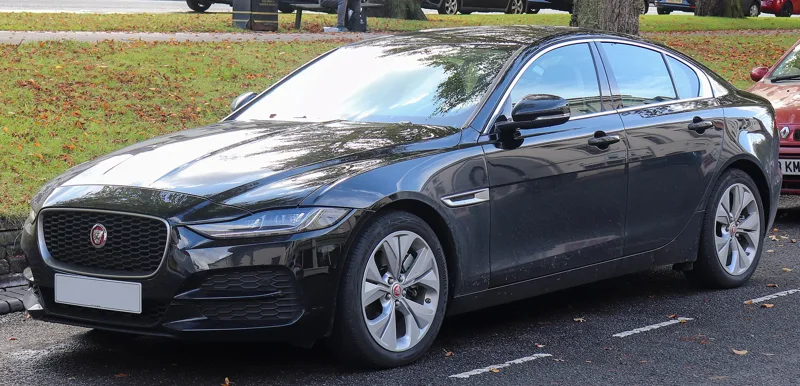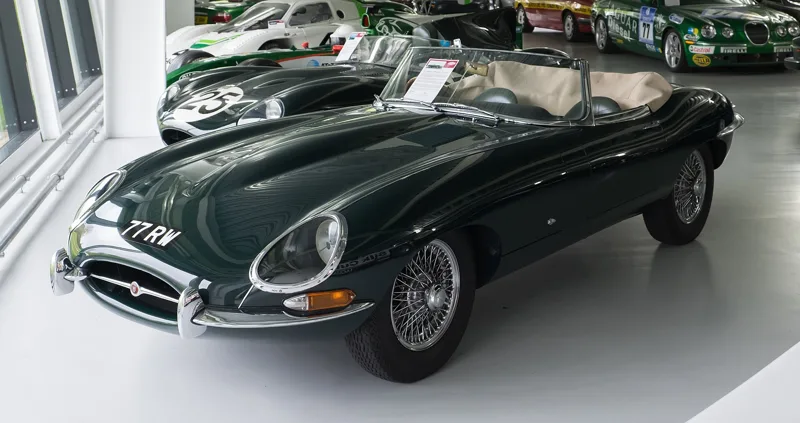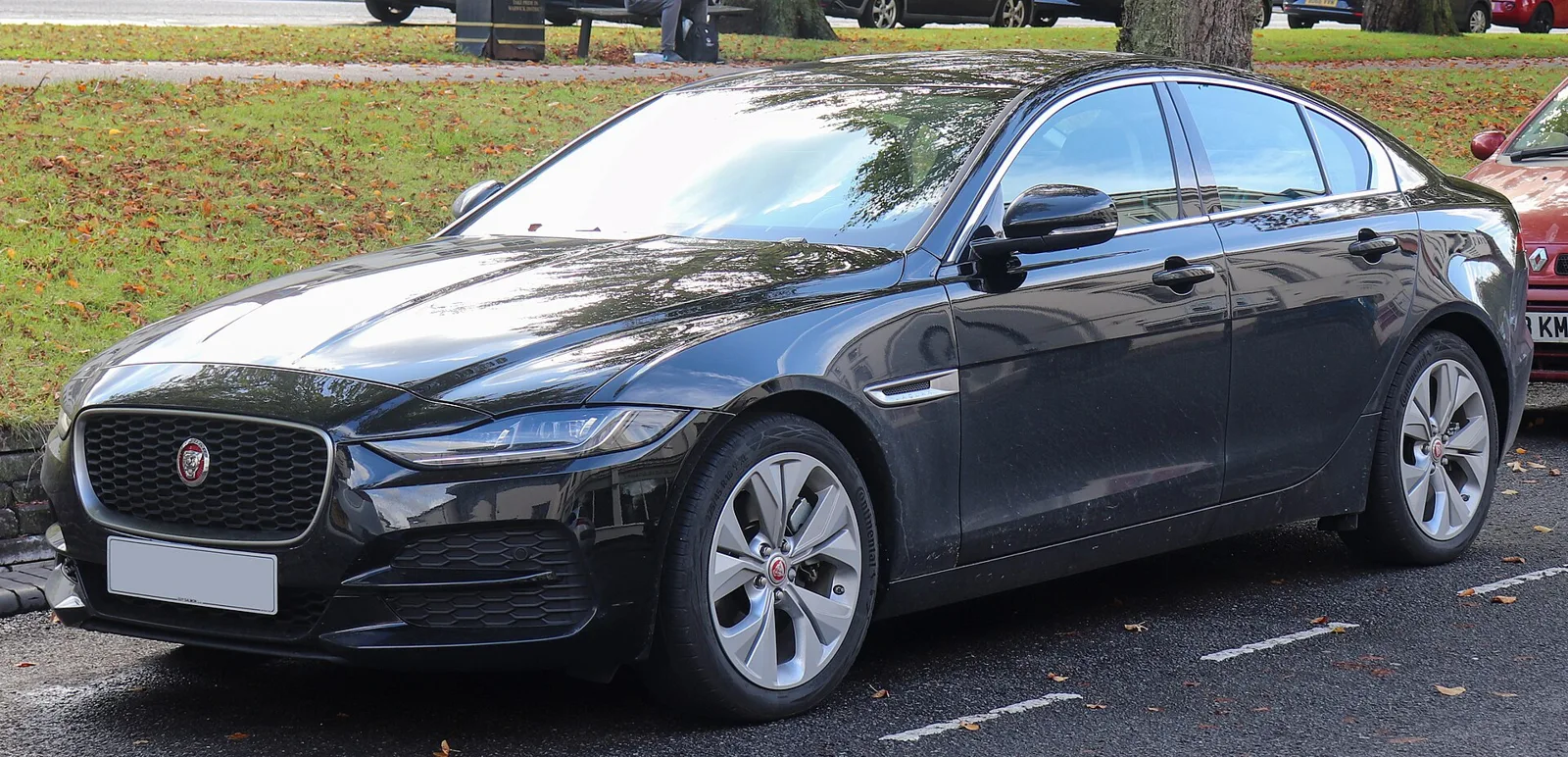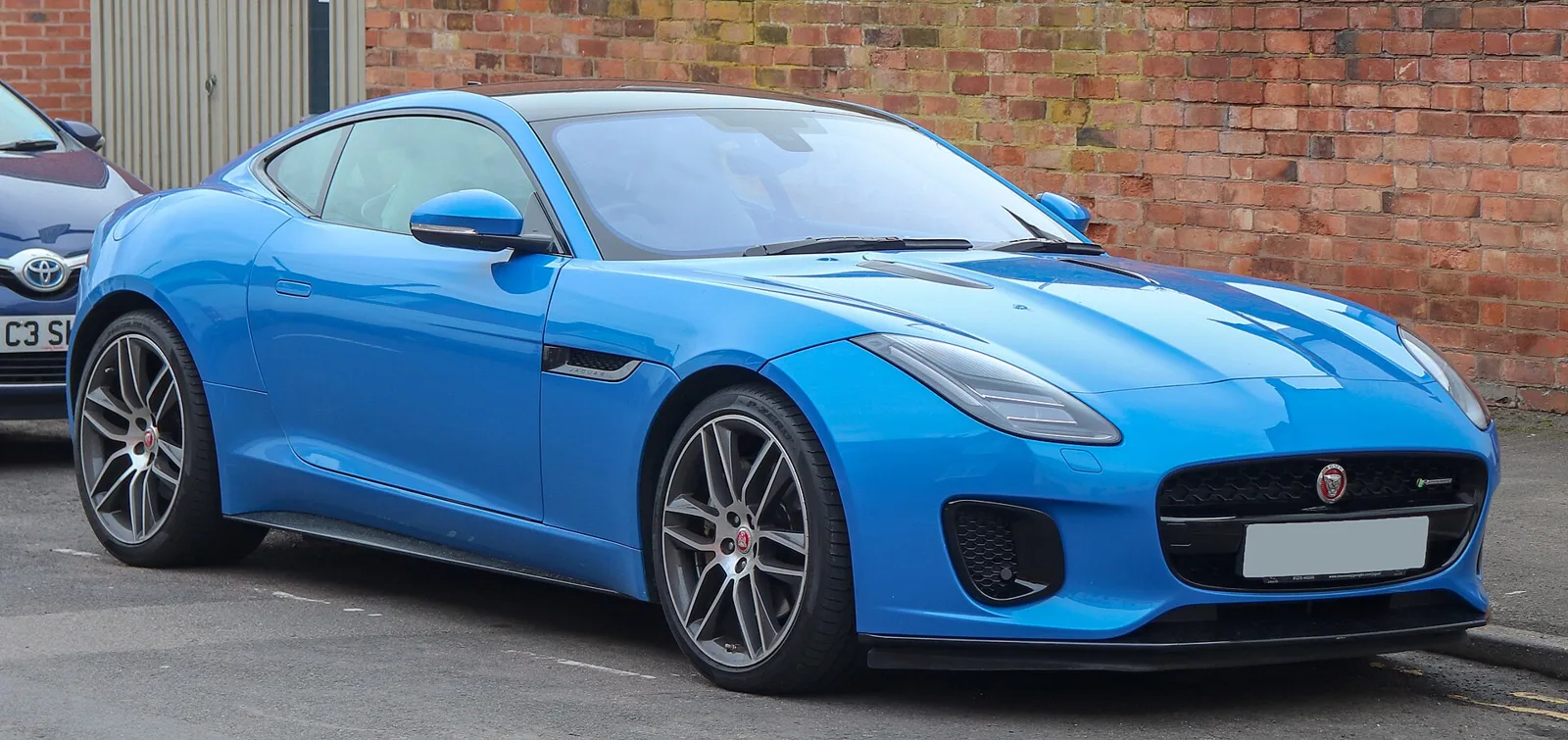
A sports car revived after a 2002 cancellation, a compact SUV that outsold every other Jaguar in 2016, and a 2018 battery-electric hatchback.
Jaguar's F-Type sports car, F-Pace SUV and I-Pace electric hatchback arrived between 2012 and 2018 and widened the range beyond saloons. The F-Pace was the first Jaguar SUV and the best seller of 2016, while the I-Pace won European and World Car of the Year in 2019.
Jaguar cancelled the F-Type in 2002, after Ford cut budgets and Jaguar chose to pursue Formula One. Ten years later a production car with the same name began leaving Castle Bromwich, and by the time it finished in June 2024 87,731 had been built. Alongside it came a first SUV and an electric hatchback, and together the three changed what a Jaguar dealer had to sell.
Jaguar F-Type history: the sports car that was cancelled twice
The first attempt, known as the XJ41 and XJ42, began in 1980 as a modern interpretation of the E-Type. It was cancelled in March 1990 when management concluded it would slip further, into the 1995 model year, and collide with the upcoming X300 saloon.
The second came in 2000. A two-seat speedster concept with a 3.0-litre V6 from the S-Type was aimed at lightweight rivals like the Porsche Boxster. Geoff Lawson, who led design at Jaguar, had worked on it with Keith Helfet, Adam Hatton and Pasi Pennanen, but he died suddenly in 1999. Ian Callum, his successor, took over and showed the finished concept at the 2000 Detroit show, where its retro styling, recalling Jaguars of the 1950s and 60s, was well received. Budget cuts by Ford, the parent company, ended it by 2002 when it failed to meet production feasibility.
The route to production ran through the C-X16 concept at the 2011 Frankfurt show. Jaguar called it its smallest car since the 1954 XK120, at 4,445 mm long, 2,048 mm wide and 1,297 mm high. It borrowed the grille shape and wrap-around rear lights of the 2010 C-X75 hybrid concept and a side-hinged rear window recalling the 1961 E-Type fastback. The road car it previewed went by the project code X152.
Cancelled in 2002, the F-Type still went on to build 87,731 cars.
Jaguar F-Type generations: convertible, coupe and facelift
The F-Type was built from December 2012 on a cut-down XK platform, billed as the spiritual successor to the E-Type. It launched as a soft-top convertible, shown first at Sundance in London and then at the 2012 Paris Motor Show, with a fastback coupe added in 2013. The coupe was unveiled at the 2013 Los Angeles show, F-Type R production began on 13 November 2013 and sales opened in spring 2014.
The chassis is all-aluminium and unitary, assembled with flush rivets and glue. The electrically operated fabric roof lowers or raises in 12 seconds at speeds up to 48 km/h (30 mph), and Jaguar says avoiding a metal roof keeps the centre of gravity low. Suspension is double-wishbone at both ends with adaptive dampers and 25 different driving modes. The car debuted stop-start, which Jaguar claims improves economy by 5 percent, and an active exhaust opens valves over 3,000 rpm.
The facelift was unveiled in December 2019 for the 2021 model year. Pixel LED headlamps, slender tail-lamps, 20-inch wheels, a 12.3-inch digital instrument cluster and a 10-inch Touch Pro screen arrived, making 2020 the last year of Callum's original design. The V6 survived only in North America, and the SVR was dropped.
Jaguar F-Type R, SVR and the engines
Inside, the two-seat cabin has leather upholstery and aluminium-finished controls, a touchscreen in the centre console and a second display between the dials, with a flat-bottom or Alcantara steering wheel. Meridian audio came in two forms, 380 W across ten speakers or 770 W across twelve.
At launch the entry car used a new 3.0-litre supercharged V6 with 340 PS (250 kW; 335 hp), good for 0-97 km/h (60 mph) in 5.1 seconds and 259 km/h (161 mph). The V6 S took the same engine to 380 PS (279 kW; 375 hp), 4.8 seconds and 275 km/h (171 mph). The F-Type R used the 5.0-litre supercharged V8 at 550 PS (405 kW; 542 hp), reaching 299 km/h (186 mph) and 97 km/h in 4.0 seconds. A ZF six-speed manual became an option on the V6 models in 2015, and an eight-speed automatic with paddles was standard otherwise.
The SVR, unveiled at Geneva in March 2016, raised the V8 to 575 PS (423 kW; 567 hp) with 700 N m of torque, standard all-wheel drive, 3.5 seconds to 100 km/h and 322 km/h (200 mph). No Jaguar road car had reached that figure since the XJ220, and 1,875 were built before it was dropped in 2020.
| F-Type model | Output | 0-97 km/h | Top speed |
|---|---|---|---|
| P300 (2.0 L four) | 300 PS (221 kW; 296 hp) | 5.7 s | 250 km/h (155 mph) |
| P450 (5.0 L V8) | 450 PS (331 kW; 444 hp) | 4.4 s | 285 km/h (177 mph) |
| R P575 (5.0 L V8) | 575 PS (423 kW; 567 hp) | 3.5 s | 300 km/h (186 mph), limited |
The 2018 addition of a 2.0 L turbocharged four was Jaguar's first four-cylinder sports car, and it is the most powerful per cylinder of any Jaguar sports car.
F-Type special editions: 400 Sport, Project 7 and ZP
The 400 Sport was a one-year special with an upgraded V6 making 400 PS (294 kW; 395 hp), bigger brakes with 380 mm front discs, unique 20-inch wheels and a Configurable Dynamics system for throttle, transmission, steering and dampers.
The Project 7, based on the convertible, used the SVR's V8 at 575 PS (423 kW), had an aluminium body inspired by the D-Type Le Mans winner and an "Aero Haunch" behind the driver, and was built in a run of up to 250. It reached 0-97 km/h in a claimed 3.8 seconds and 299 km/h (186 mph). The design was a skunkworks idea by the Italian-Brazilian designer Cesar Pieri, discovered when he accidentally showed it to Ian Callum.
The ZP Edition, launched in late 2024 on the F-Type R P575, comprised 150 coupes and convertibles in colours such as Oulton Blue and Crystal Grey, and it signalled the close of combustion power at Jaguar.
How Jaguar sold the F-Type
Jaguar named the American singer Lana Del Rey as the face of the car in August 2012, a month before its Paris premiere, and it took a Car of the Year prize at the Middle East Motor Awards in 2013. A short film called Desire, directed by Adam Smith of Ridley Scott Associates and starring Damian Lewis, Jordi Molla and Shannyn Sossamon, launched at the 2013 Sundance Film Festival. For the UK convertible launch Jaguar ran a #YourTurnBritain social media campaign offering four F-Type driving experiences as prizes, while Union Jack liveried cars toured the country.
The coupe's US launch used a 60-second commercial called Rendezvous, premiered in the fourth quarter of Super Bowl XLVIII and backed by a dozen New York City subway trains wrapped in F-Type advertising. In China, David Beckham joined as brand ambassador.
Jaguar F-Pace: the first SUV
The F-Pace (X761) was the first Jaguar SUV, a compact luxury crossover announced at the 2015 Detroit show, with sales starting in 2016 after its Frankfurt unveiling. The design grew from the C-X17 concept shown at Frankfurt on 9 September 2013. It was built at Solihull alongside the Range Rover Velar.
The publicity was theatrical. A production prototype led out Team Sky as the 2015 Tour de France began in Utrecht on 4 July, and before Frankfurt stunt driver Terry Grant drove an F-Pace through a world-record 360-degree loop-the-loop. Deliveries began in April 2016 in Europe and May in the United States. Despite selling for only part of 2016, it became that year's best-selling Jaguar.
How the F-Pace is built and what powers it
Ian Callum designed the exterior. The body is 80 per cent aluminium, with a composite tailgate and magnesium for the cross-car beam. It was the third model on JLR's modular iQ-Al (D7a) architecture, after the XE and the second-generation XF, and the platform also carries the Velar. Front suspension is double-wishbone, similar to the F-Type, while a new subframe-mounted multi-link rear called Integral Link cost more to build but allowed finer tuning of ride and handling.
Engines began with 2.0-litre Ingenium turbo diesels and petrol, plus 3.0-litre diesel (not in the US) and supercharged petrol, in rear- or all-wheel drive. The SVR used the 5.0-litre AJ133 supercharged V8, rated at 550 PS (405 kW; 542 hp) and 680 N m. The facelift of late 2020 brought a 2.0-litre plug-in hybrid and 3.0-litre inline-six mild hybrids using a 48-volt system and an electric supercharger. Transmission was a ZF eight-speed automatic.
Inside, a rotary gear selector rises when the car starts, and a 10.2 in (25.9 cm) touch screen and 12.3-inch virtual cluster were available. The F-Pace was the first Jaguar with the Activity Key, a waterproof wristband that unlocks the car so the main keys can be left inside.
Jaguar I-Pace: the electric hatchback
The I-Pace, a five-door battery-electric hatchback, was designed by Ian Callum and announced in March 2018. The concept was shown at the 2016 Los Angeles show, and the production version was revealed in Graz, Austria, on 1 March 2018, where contract manufacturer Magna Steyr builds it. European deliveries began in June 2018 and North American in October. Euro NCAP classes it as an executive car, while the Australasian programme calls it a medium SUV. Some drive technology came from the I-Type Formula E programme.
Two motors, one on each axle, give all-wheel drive. Each delivers 147 kW (197 hp) and 350 N m, for a total of 295 kW (395 hp) and 700 N m, and the 0-100 km/h time is 4.8 seconds with the top speed limited to 200 km/h (124 mph). The battery is a 90 kWh liquid-cooled lithium-ion pack from LG Chem with 432 pouch cells.
Jaguar I-Pace range and charging
At launch the I-Pace was rated for 470 km (292 miles) on the WLTP cycle and 377 km (234 miles) by the EPA, and in December 2019 software changes lifted the EPA figure to 396 km (246 miles). It can ford water 500 mm (20 in) deep, carries 656 litres in the boot plus 28 litres at the front and has a drag coefficient of 0.29.
On a 50 kW DC charger it goes from 0 to 80 per cent in 85 minutes, or 45 minutes on a 100 kW charger. A 7 kW home wall box takes 10 hours, adding around 30 km of range per hour of charging, and later 2021 cars could take 11 kW AC. A Jaguar Remote app locates the car, reports on locking, alarm and charging, and starts battery preconditioning or cabin heating and cooling.
It has won 62 international awards. In March 2019 it became the first Jaguar to be European Car of the Year, and in April it was named 2019 World Car of the Year, taking Best Design and Best Green Car awards too. Euro NCAP gave it five stars in December 2018.
Racing and robotaxis
Jaguar announced the single-make I-Pace eTrophy racing series in September 2017, using a race version prepared by Special Vehicle Operations. On 24 August 2018 an I-Pace took the electric-car lap record at Laguna Seca in California. In 2018 Waymo chose the I-Pace for its autonomous ride-hailing service, ordering up to 20,000. In June 2020 Jaguar supported a wireless-charging taxi trial in Oslo by giving 25 cars to the company Cabonline.
Where this goes next
The F-Type ended in June 2024 after the 2024 model year, and the I-Pace was discontinued in 2024 after sales slowed and the company's vision changed. In May 2025 Waymo said it had 1,500 autonomous vehicles, mainly I-Paces, running in four American cities, and that it would equip more than 2,000 further I-Paces with its self-driving hardware.