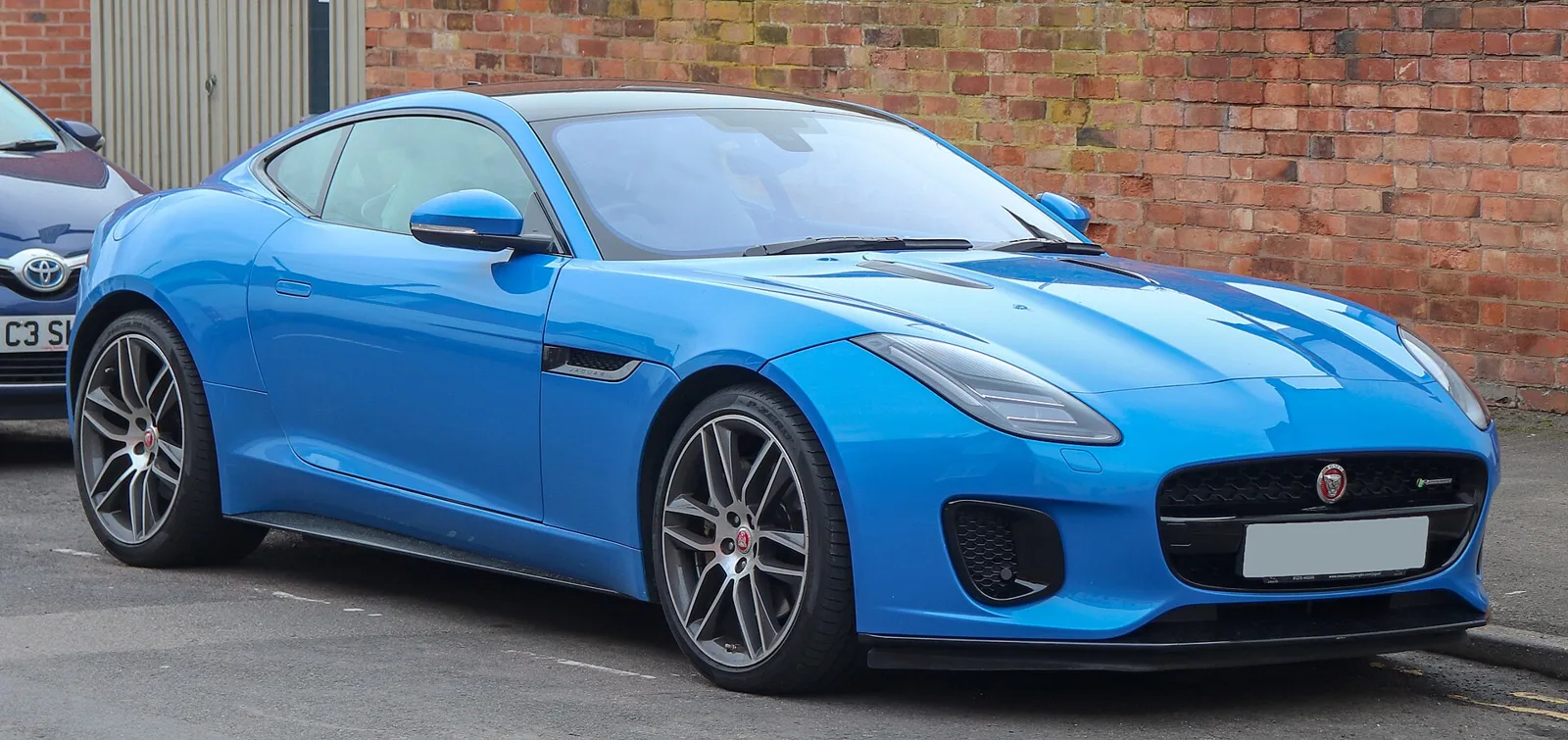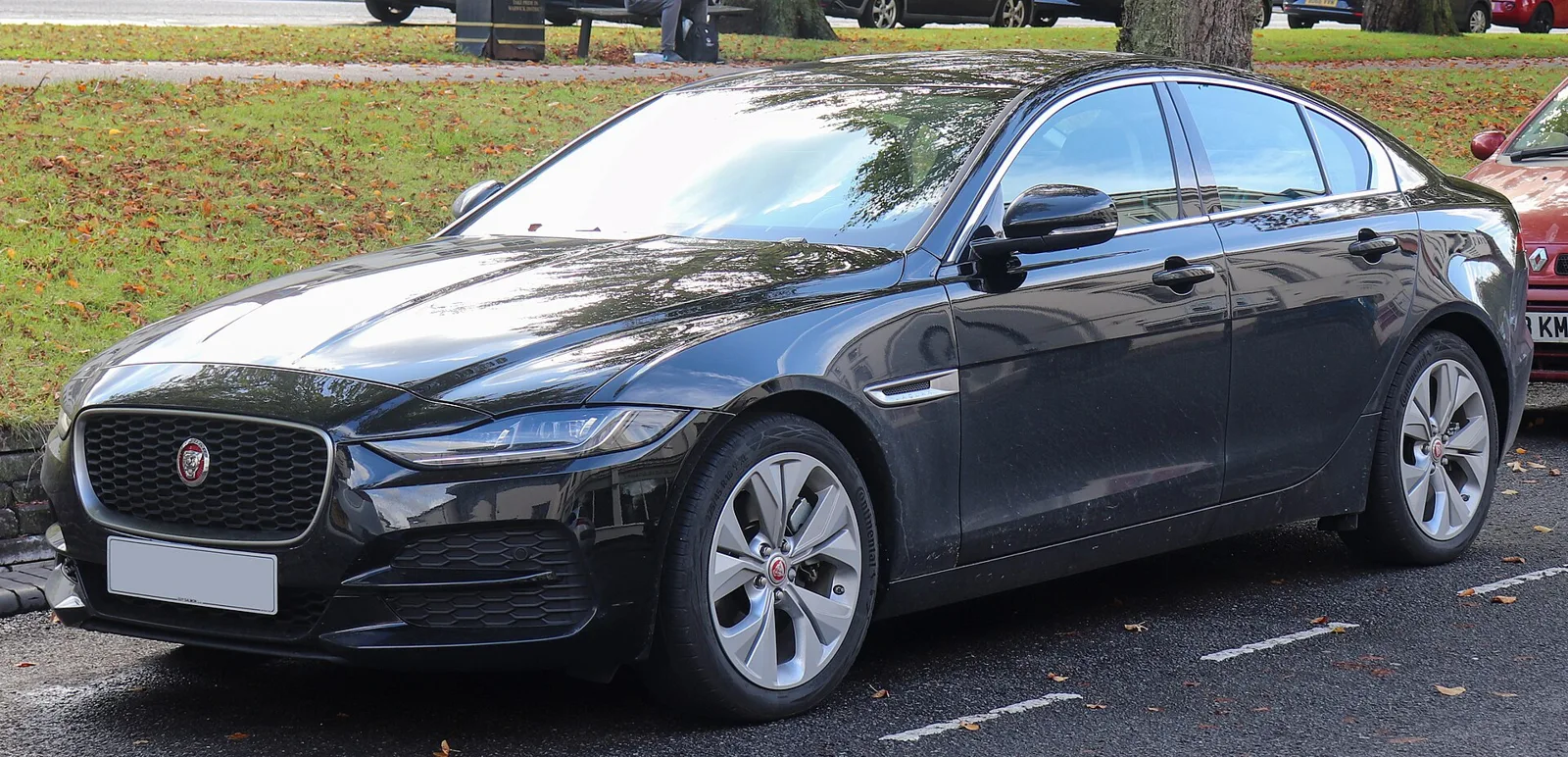
A Bonneville record, an all-aluminium platform and a Chinese long-wheelbase chauffeur car: the XE, the X250 XF and the X260 XF compared.
The Jaguar XE was a compact aluminium executive saloon sold from 2015 to mid-2024, while the XF was the larger saloon in two generations: the 2007 X250 and the aluminium X260 of 2015. Both XE and X260 XF production ended in mid-2024.
On 7 November 2008 a modified Jaguar XFR reached 225.675 mph (363.189 km/h) on the Bonneville Salt Flats. That was a new Jaguar record and it beat the XJ220's 217.1 mph (349.4 km/h), set in 1992. A four-door saloon had just out-run the XJ220.
The XFR was the high-performance version of the XF, the executive saloon that replaced the S-Type. The smaller XE arrived later to cover the compact end of the range, and when production of both stopped in 2024 the XE had run for a single generation and the XF for two.
Jaguar XF X250: the first of the new-styled Jaguars
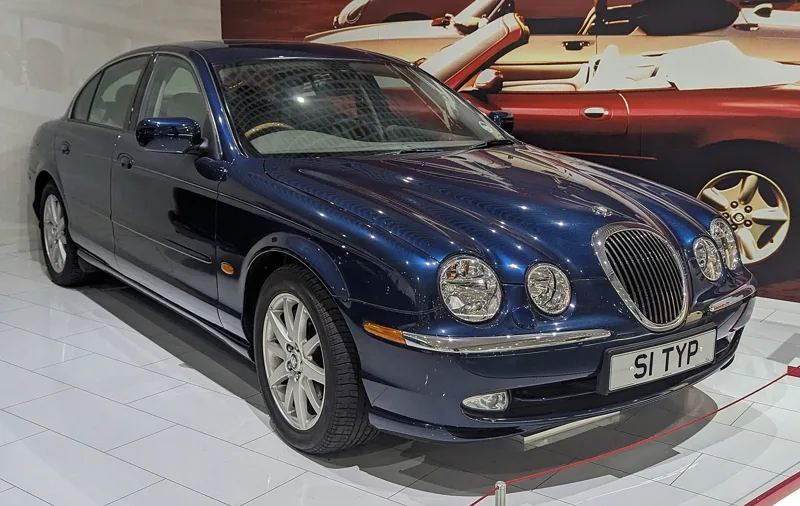
Jaguar launched the XF in autumn 2007 to replace the S-Type, and its internal code was X250. It came as a four-door saloon and, later, as a five-door estate called the Sportbrake. It was the first of Jaguar's newly styled cars. Development took place at Whitley in Coventry, and the cars were built at Castle Bromwich in Birmingham.
The plan had been to build it on an all-aluminium platform. The board's tight deadline made that impossible, so the X250 instead uses a heavily modified Ford DEW98 platform. The C-XF concept had been shown at the Detroit show in January 2007 and the production car appeared at the 2007 Frankfurt show, with deliveries beginning in March 2008 with V6 and V8 engines.
Design and cabin
Ian Callum drew the exterior. An oval mesh grille echoes the original XJ of 1968, and the boot lid kept the S-Type's chrome blade. Inside, Jaguar broke with tradition. Air vents sit flush in the dash and rotate open when the engine starts, and a rotary gear dial called the JaguarDrive Selector rises from the centre console. The instruments and switches glow pale blue, the interior lights respond to touch, and the glove box opens at a touch. There is no cloth option: every trim level uses leather, with wood, aluminium, carbon fibre or piano black lacquer inserts.
Trim names varied by country and ran from SE or Sport through Luxury, Premium Luxury and Portfolio to the supercharged versions. British company-car buyers got Executive Edition and SE Business models with lower-tuned diesels.
Engines and gearboxes
Every X250 XF was an automatic. The first cars used a six-speed ZF 6HP26, with eight-speed ZF 8HP70 gearboxes replacing it across the range in 2012 and 2013. The driver could pick gears with the rising dial or with paddles behind the wheel. In 2008 the 4.2-litre supercharged V8 gave way to a 5.0-litre supercharged V8 rated at 470 PS (346 kW; 464 hp), with Adaptive Dynamics for continuously variable damping and an electronically controlled rear differential. In 2009 the 2.7-litre V6 diesel was replaced by a 3.0-litre V6 diesel, the same unit used in the Land Rover Discovery 4. Europe lost the naturally aspirated 3.0-litre petrol V6 in 2010, but it stayed on sale elsewhere.
XFR, XFR-S and the speed record
The XFR was announced at the Detroit show in January 2009 with the 5.0-litre supercharged AJ-V8 Gen III rated at 510 PS (375 kW; 503 hp), a new front bumper and spoiler and 20-inch wheels. The record car of November 2008 had the same 510 PS, achieved with a remapped engine computer, a modified air intake and exhaust, revised supercharger settings and a low-mounted rear spoiler. Paul Gentilozzi of Rocketsports drove it.
An even hotter XFR-S was confirmed in 2012, using the 5.0-litre supercharged V8 from the XKR-S. It makes 550 PS (542 hp; 405 kW) at 6,500 rpm and 680 Nm (502 lb ft) at 5,500 rpm, reaches 0-60 mph (0-97 km/h) in 4.4 seconds and tops out at 186 mph (299 km/h). Bespoke 20-inch wheels, wider front grilles, carbon fibre, a large rear wing and a diffuser set it apart.
2011 facelift and Sportbrake
Jaguar revealed the facelift at the New York show in April 2011, with production starting that July. It drew its front and rear styling from the original C-XF concept and added adaptive cruise control. The new four-cylinder 2.2-litre diesel makes 187 hp (139 kW; 190 PS) and 450 Nm (332 lb ft), emits 149 g/km of CO2 and returns 52.3 mpg-imp (5.40 L/100 km).
The Sportbrake was introduced in March 2012 and went on sale that October. Boot space is 550 litres (19 cubic feet) with the rear seats in place and 1,675 litres (59.2 cubic feet) once they are folded, a maximum figure ahead of the BMW 5 Series Touring, Cadillac's second-generation CTS Sport Wagon and the Mercedes-Benz CLS Shooting Brake of the time. The extended roofline adds 48 mm (1.9 in) of rear headroom, and the load area measures 1,970 mm (78 in) long and 1,064 mm (41.9 in) wide.
Safety and recognition
Euro NCAP gave the XF four stars in 2010, a result some magazines saw as disappointing, though scores improved on a retest in 2011. ANCAP awarded 32.38 points out of 37, a rating of four out of five. On the awards side, What Diesel? named it Car of the Year and Best Executive Car in 2008 and 2009. What Car? gave it Best Executive Car again in 2009, 2010 and 2011, the fourth year in a row by then, and Auto Express called it Car of the Decade in August 2011. The XF added Best Saloon at the Golden Steering Wheel Awards in November 2016. For British police forces Jaguar announced a special XF Diesel S in 2009, with first orders in 2010 and a roof light bar made up of 3,600 light elements.
A four-door executive saloon beat the XJ220's Jaguar speed record on the Bonneville Salt Flats.
Jaguar XE history: the compact saloon on a new aluminium platform
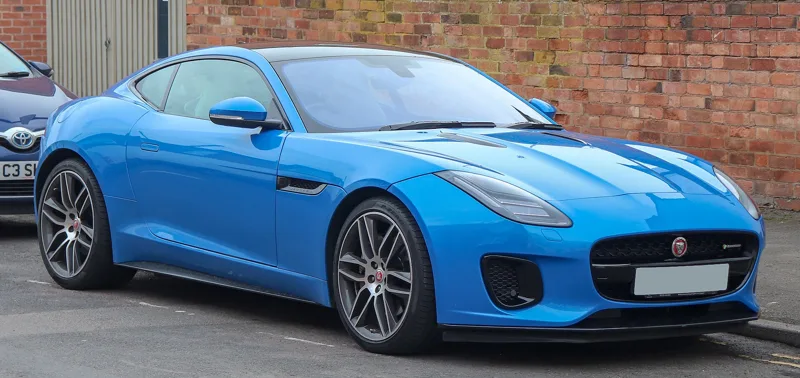
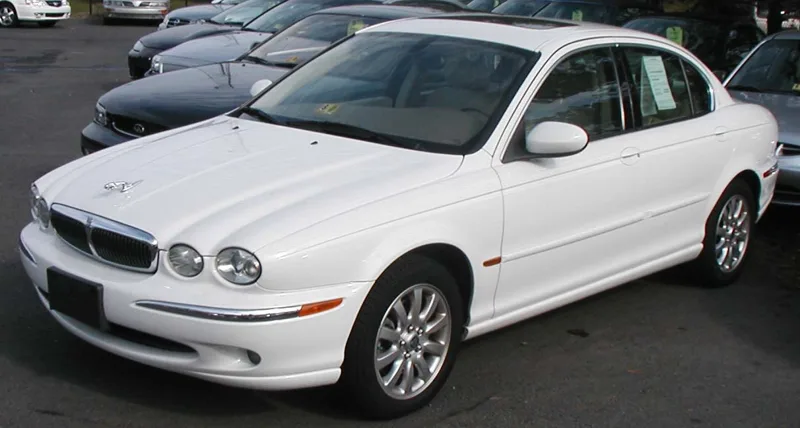
The XE (X760) was a compact executive saloon sold from April 2015 until mid-2024. It succeeded the X-Type, was designed by Ian Callum and debuted in London on 8 September 2014, before appearing at the Paris Motor Show that October. Production formally began on 13 April 2015 at Solihull, with sales in the United States following in 2016. It was the first Jaguar built at the Solihull plant, which was dedicated to aluminium vehicles for both Jaguar and Land Rover. Demand was high enough that Jaguar added a line at Castle Bromwich, and in 2017 production moved there completely in a refit costing 100 million pounds. A long-wheelbase XEL, built only for China, started at the Changshu plant in 2015.
Platform and structure
The XE was the first car on the iQ[Al] (D7a) platform, which later underpinned the second-generation XF, the F-Pace and the Range Rover Velar. Its body is a bonded-and-riveted aluminium monocoque, a technique Jaguar developed on the third-generation XJ (X350) from 2002, with aluminium suspension too. Bolt-on front and rear crash structures and bolt-on key panels simplify repairs and bring insurance costs down. If the car hits a pedestrian, the bonnet pops up to give extra protection, and the drag coefficient is 0.26.
The front suspension uses double wishbones, similar to the XF and F-Type. The rear has a new subframe-mounted multi-link design that Jaguar calls Integral Link, which costs more to build but allows finer tuning. The battery sits in the boot, where the spare wheel would normally go, to give a 50:50 weight balance. Rear-wheel drive came first and all-wheel drive followed in November 2015. A traction aid called All Surface Progress Control, developed from Land Rover's Terrain Response, helps in snow and ice.
Engines, gearboxes and the end of the line
The XE was the first car to use Jaguar Land Rover's 2.0-litre turbocharged Ingenium four-cylinder, in petrol and diesel form. The 163 PS (120 kW; 161 hp) diesel could return less than 4.10 L/100 km (68.9 mpg-imp) with CO2 emissions of 99 g/km, which put the cleanest models in Britain in the bracket that pays no annual Vehicle Excise Duty. Petrol fours came from Ford's EcoBoost family until 2017, with Ingenium petrol engines taking over from the 2018 model year. A petrol V6 was available until 2019. Mild hybrid versions with a 48 volt starter-generator were announced in late 2020.
Automatic XEs used a ZF 8HP45 or 8HP70 eight-speed, and a six-speed manual could be had on diesels. The cabin features a rotary gear selector that rises when the engine starts, an 8-inch or 10.2-inch touchscreen and a laser head-up display as an option. The 2017 revisions brought InControl Touch Pro, and the 2019 facelift introduced Touch Pro Duo and replaced the rising knob with a conventional Sport Shift Selector. Euro NCAP awarded five stars in 2015.
SV Project 8
Jaguar Land Rover's Special Vehicle Operations team built the SV Project 8, shown at the 2017 Goodwood Festival of Speed. It has carbon fibre panels, a front splitter and rear wing, 400 mm carbon ceramic front discs with six-piston calipers, 20-inch wheels on Michelin Sport Cup 2 rubber, and a 592 hp engine, the 5.0-litre AJ-V8 with a supercharger and intercooler. Four leather-trimmed bucket seats are standard, with a track package in some markets that swaps the rear seats for a harness hoop. Production was limited to 300 cars worldwide.
Jaguar XF X260: the aluminium second generation
The X260 ran from 2015 to 2024 and debuted at the 2015 New York show. Where the X250 had a steel body, the second-generation XF is mostly aluminium, with a bodyside panel pressed from a single piece. It evolves the J-Blade design of the original, and 83 percent of its parts are new. It is 7 millimetres (0.3 inches) shorter than the car it replaced. The suspension is fully independent, with selectable modes on the S model.
In the United States the standard car had a P250 Ingenium engine of 247 HP, with a 296 HP P300 turbo four and, for the S, a 380 HP supercharged V6. Diesels sold elsewhere were not offered there. The Sportbrake reached the US in 2018 only in S form, with the supercharged V6 and all-wheel drive, and it could reach 60 mph (97 km/h) in 4.9 seconds. For the first time in an XF, a manual gearbox was offered. Mild hybrid versions followed in late 2020, the same year as a facelift that mostly improved the interior. By 2022 the Sportbrake had been shifted to compete in the D-segment while keeping its E-segment dimensions, and production ended in mid-2024.
The XF X260 in China and India
At the 2016 Beijing show Jaguar revealed a long-wheelbase XF. Its wheelbase grows by 140 mm (5.5 in), so rear passengers gain 157 mm (6.2 in) of legroom and 116 mm (4.6 in) of kneeroom, and the car weighs 200 kg (441 lb) more than the standard one. Because it is meant for chauffeur use, the equipment list includes folding tables, massaging seats, electric blinds and 8-inch rear screens. It was the first aluminium-bodied car made in China, and it carries Clear Exit Detection to warn passengers about traffic approaching from behind when a door is opened. Engines range from the 2.0-litre four at 197 to 236 hp (147 to 176 kW; 200 to 239 PS) to a supercharged 3.0-litre V6 at 335 hp (250 kW; 340 PS), and all versions have four-wheel drive.
India got the XF on 22 September 2016 from Rs. 4,750,000, with 2.0-litre Ingenium petrol and diesel engines and complete knock-down kits assembled locally alongside the XE and F-Pace.
Jaguar XE vs XF compared
| Model | Years | Body styles | Platform | Performance flagship |
|---|---|---|---|---|
| XE (X760) | 2015-2024 | Saloon | iQ[Al] (D7a), aluminium monocoque | SV Project 8, 592 hp, 300 built |
| XF (X250) | 2007-2015 | Saloon, Sportbrake estate | Heavily modified Ford DEW98 | XFR-S, 550 PS |
| XF (X260) | 2015-2024 | Saloon, Sportbrake estate | iQ[Al] (D7a), aluminium | P380 supercharged V6 in S trim, 380 HP |
Jaguar XE discontinued: where the range ends
Both the XE and the X260 XF ended production in mid-2024. For someone looking at used cars the differences are plain: the XE is the compact aluminium design with the Ingenium engines, the X250 is the steel-bodied car with the supercharged V8s, and the X260 shares the XE's platform with more space and a wider range of body and engine choices.