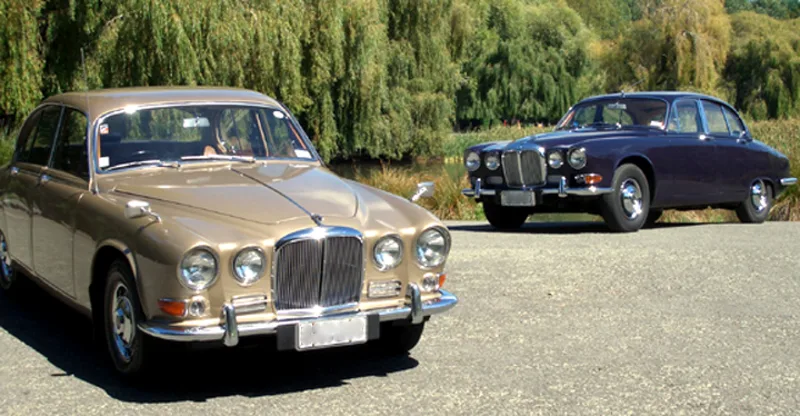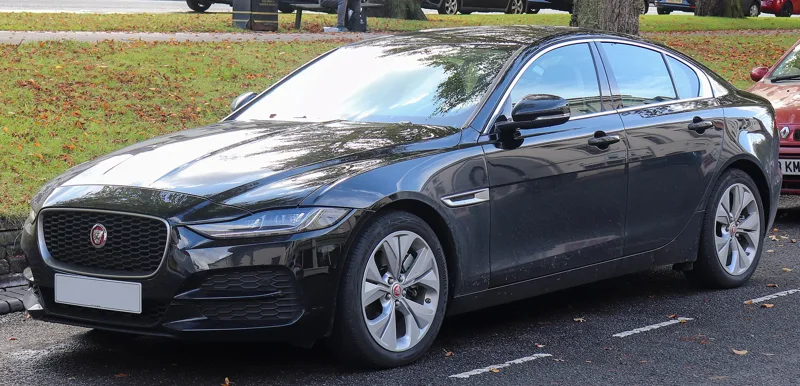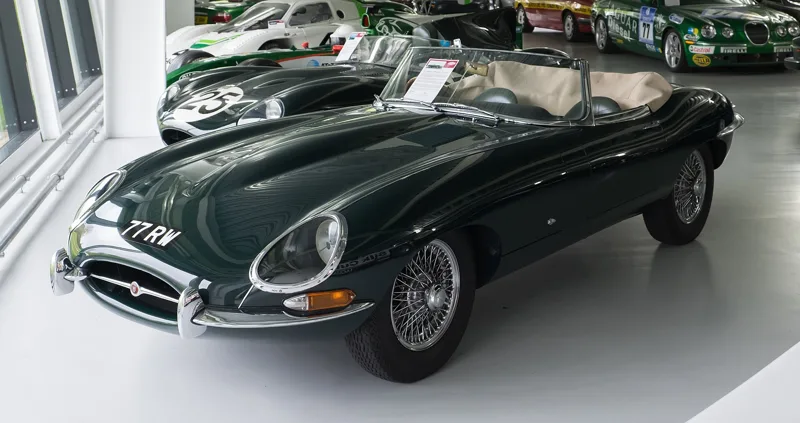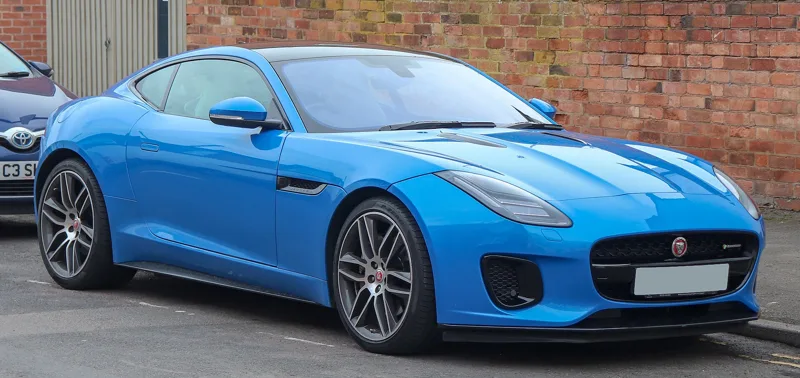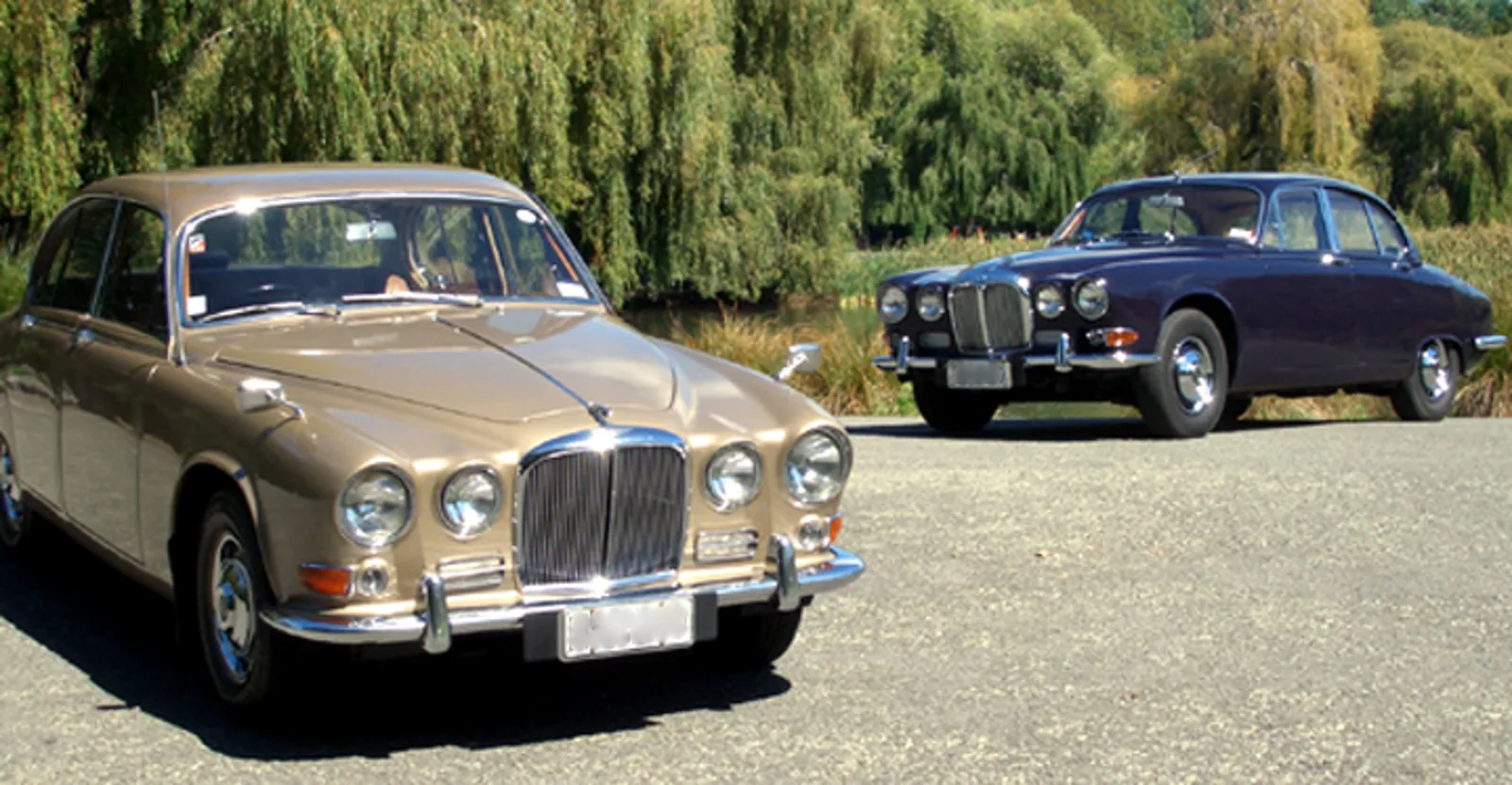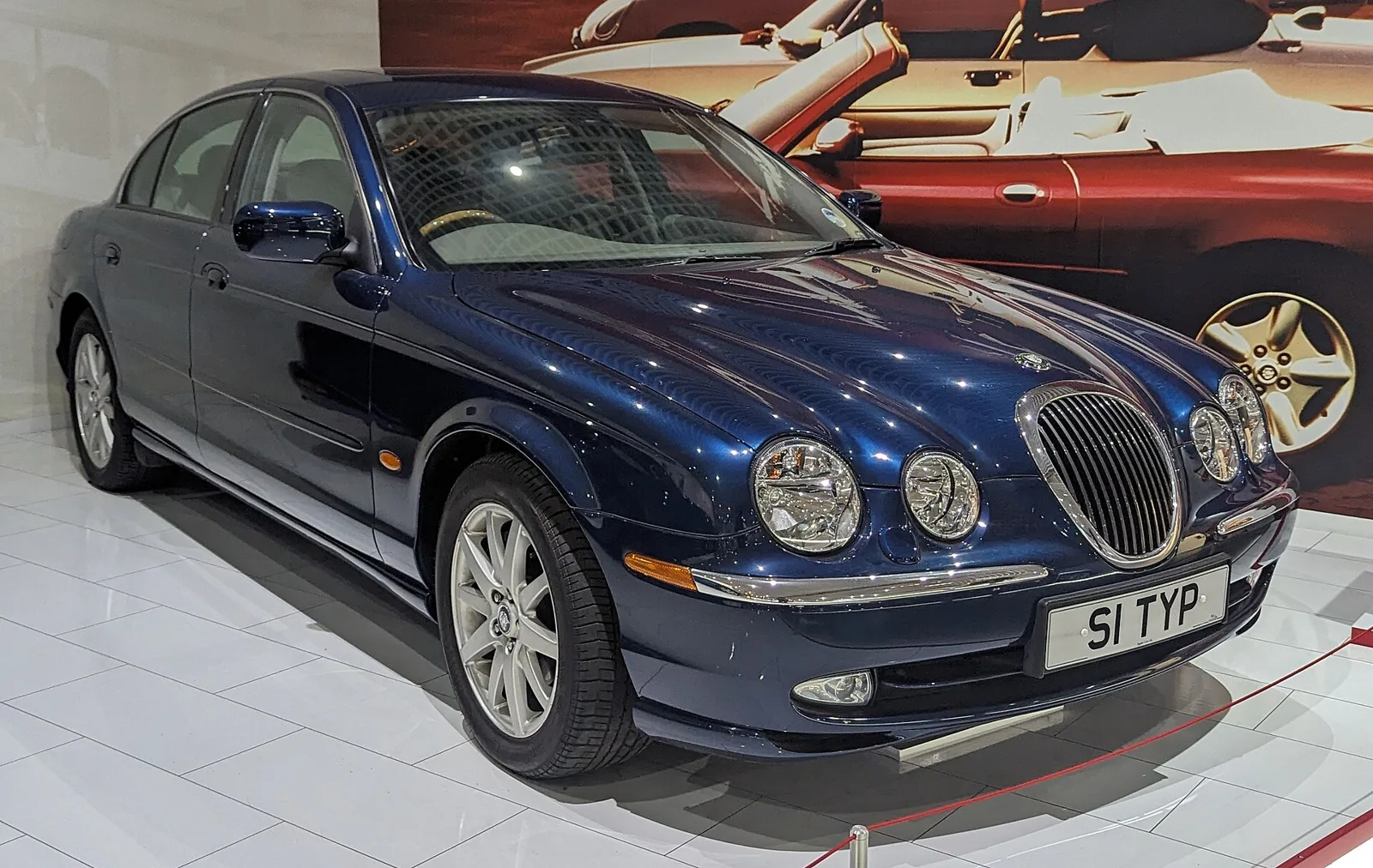
The four-headlamp saloon that set Jaguar's look, the Mark 2 development that followed it, the Ford-era S-Type and the all-aluminium XK that closed the line.
Jaguar's Mark X (1961-1970) was a wide luxury saloon later renamed 420G. The 1963 S-Type was a refined Mark 2, the 1999 S-Type a Ford-era executive saloon, and the X150 XK an aluminium grand tourer built from 2005 to 2014.
Jaguar's famous four-headlamp face was born on a 1961 saloon that never sold as well as the company hoped. The Mark X introduced the upright, slightly forward-leaning nose, and Jaguar saloons wore variations of it for almost half a century, right up to 2009. The cars that followed it, two different S-Types and the last XK, show how the company moved between its big saloons and its grand tourers.
What was the Jaguar Mark X?
The Jaguar Mark X, pronounced Mark Ten, was a large luxury saloon built from 1961 to 1970. It succeeded the Mark IX as the top of Jaguar's range and was renamed the 420G in 1966. It broke radically with older Jaguars in both styling and engineering.
Introduced within a year of the E-Type, it borrowed much of that sports car's technology: a unitary body, then the largest in Britain, four-wheel disc brakes and independent rear suspension with inboard brakes, something unheard of on early 1960s British luxury cars. The 3.8-litre triple-carburettor engine came from the E-Type as well. The result could reach 193 km/h (120 mph) for less than half the price of a contemporary Rolls-Royce Silver Cloud.
Jaguar hoped for heads of state, diplomats and film stars, and above all the large American market. It never reached its sales targets despite acclaim on both sides of the Atlantic. The rarest version is the 4.2-litre car, of which only 5,137 were built.
The Mark X never hit its sales targets, yet its face stayed on Jaguar saloons until 2009.
Why did the Mark X matter to Jaguar's design?
It set the look. The Mark X's four headlamps sat in rounded front wings derived from the Daimler DK400, behind a vaned grille on an upright nose. When Jaguar replaced its whole saloon range with a single, more compact XJ6 in 1968, the Mark X served as the template. The same front-end style defined nearly every Jaguar saloon until 2009, the last year of both the third-generation XJ and the X-Type.
The structure was as new as the face. Instead of a separate chassis, the Mark X had a unitary shell codenamed Zenith, and its floorpan, stretched, lived on beneath the Daimler DS420 limousine until 1992. Inside, it was Jaguar's last car with abundant standard woodwork: the dashboard, window trim, a pair of bookmatched fold-out picnic tables for the rear seats and a pull-out table for the front. Air conditioning and a soundproof glass division joined the options later. The huge doors needed helical torsion springs in the pillars so they could be opened from inside without much effort.
From its launch in mid-October 1961 until the XJ220 of 1992, the Mark X was one of the widest production Jaguars ever built. Asked in 1972, chairman William Lyons agreed it had grown too large, calling the then-new XJ6 an ideal size. Jaguar did not build another car as large until the long-wheelbase XJ of 2003.
What was under the Mark X?
The Mark X was the first Jaguar saloon with independent rear suspension, designed by Technical Director and Chief Engineer William Heynes. It was a wider-track version of the unit first seen on the E-Type, and Jaguar used it until X308 production ended in 2003. The wheels were 14 inch, not the usual 15, and the front suspension used double wishbones, coil springs and telescopic dampers.
Power came from the 3781 cc XK straight-six, with 186 kW (250 bhp) or 198 kW (265 bhp) depending on whether the compression ratio was 8:1 or the standard 9:1. For the London Motor Show in October 1964 an enlarged 4,235 cc engine took over, though the 3.8 could still be ordered until October 1965. Three SU carburettors fed it, drawing air through a filter ahead of the right front wheel.
Buyers chose a manual, a manual with overdrive or an automatic. The 4.2 brought an all-synchromesh four-speed gearbox, replacing one that had synchromesh only on the top three ratios, and automatics switched from a Borg Warner DG unit to the Type 8. Many home-market cars and almost all North American cars had the automatic. A Thornton Powr-Lok limited-slip differential, power-assisted discs with the rear pair mounted inboard, and power steering were fitted. The later 4.2 cars had variable-ratio Marles Varamatic steering designed by the Australian Arthur Bishop.
What was the Jaguar 420G?
At the London Motor Show of October 1966 the Mark X was renamed the 420G. Changes were modest: a vertical bar splitting the grille, side indicator repeaters on the front wings and a chrome strip along the flanks, although two-tone paint omitted the strip. Seats gained perforated leather panels, the dashboard was padded for safety, the clock moved to the centre and air conditioning became an option. A limousine version had a fixed one-piece seat back with a sliding glass partition.
Despite running for the same five years as the Mark X, the 420G sold in fewer than a third of the numbers. With the smaller XJ6 growing in production, it was run out in 1970.
The platform had a long afterlife. In 1968 British Leyland stopped building the Daimler DR450 and the Vanden Plas Princess limousines and offered instead an extra-long 420G on a 3,600 mm (141 in) wheelbase with an eight-seat Vanden Plas body. This was the Daimler DS420, announced in June 1968, nearly nineteen feet long and six feet six inches wide, with six people on the rear seats and three fold-away occasional seats. Lyons noted it was less than half the price of its rivals. Built until 1992, it was used by many countries for official duties and by funeral homes to carry mourners or as a hearse.
The Mark X sold well in miniature too. Corgi Toys released its number 238 model a year after launch, and from 1962 to 1967 sold over 1.1 million, in almost as many colours as any other Corgi.
What was the 1963 Jaguar S-Type?
The 1963 Jaguar S-Type was a luxury saloon built until 1968, announced on 30 September 1963 as a more sophisticated development of the Mark 2. It gave buyers a more luxurious alternative that avoided the size and cost of the Mark X.
The Mark 2 of 1959 had a live rear axle and the XK six in 2.4, 3.4 and 3.8-litre sizes. When Jaguar launched the Mark X and the E-Type in 1961, Lyons expected the Mark 2 would need similar upgrades to stay in the market. Work on the S-Type, codenamed Utah Mk III, started as soon as the Mark X was finished. It used a mid-scale version of the Mark X's independent rear suspension, longer rear bodywork and other changes.
Plans did not go as expected. By 1963 the Mark 2 was still selling strongly, while the Mark X was weaker than hoped, especially in the United States. Lyons therefore kept all three. The Mark X became the 420G in 1966 alongside a new 4.2-litre 420, which was meant to replace the S-Type, but some demand remained, and all four saloons stayed on sale until the XJ6 arrived in 1968 and replaced all but the 420G.
How was the 1963 S-Type different from the Mark 2?
The engines were carried over. The first S-Type used the twin-carburettor 3.8-litre XK engine, the only one sold in the United States, and the 3.4 followed a few months later. Both were twin-carburettor only because the triple setup would not fit the Mark 2 engine bay. The 3.8 outsold the 3.4 by three to two, even though it was discontinued a couple of months earlier, in mid-1968.
The weight was 152 kg (335 lb) more than a Mark 2, yet Jaguar kept the same Dunlop four-wheel discs. The Burman power steering was higher-geared, at 3.5 turns from lock to lock in place of 4.3, and a torsion spring improved feel. The heating and ventilation system was new, and could direct warm air to rear passengers through an outlet on the tunnel cover.
The suspension was the main prize. Jaguar's independent rear design, essentially a double wishbone with the driveshaft as the upper arm, held drive, brakes and dampers in one fabricated steel crossbridge. The S-Type needed a new crossbridge for a 54-inch (140 cm) track, between the 58 inches (150 cm) of the Mark X and the 50 inches (130 cm) of the E-Type.
Limited time and money meant the styling effort went into the back. The tail was extended with Mark X-style details, which gave a much bigger boot, but the front remained rounded and mismatched it. The roofline was flattened and the rear window enlarged and made more upright. Cyril Crouch, assistant chief body engineer at Browns Lane, recalled that his team knew it looked ugly. The sales suggest not everyone agreed, but the 420 later added a squarer four-headlamp front. The B-pillar sat about 1 inch (25 mm) lower, the fuel tank was replaced by two 7 imp gal (32 L; 8 US gal) tanks in the rear wings, and inside there was burled Belgian walnut and widened front seats.
How fast was the Jaguar S-Type of 1963?
Autosport judged the 3.8 S slower than the 3.8-litre Mark 2 on paper but quicker cross-country, since the independent rear suspension let it corner faster, with better traction and a smoother ride. Some enthusiasts missed the Mark 2's driftability and noted more body roll. Car and Driver called the 3.8S a convenient family car and a grand tourer.
| Version | 0-60 mph | Top speed |
|---|---|---|
| 3.4S automatic | 10.0 s | 190 km/h (118 mph) |
| 3.4S manual with overdrive | 13.9 s | 185 km/h (115 mph) |
| 3.8S manual with overdrive | 10.2 s | 196 km/h (122 mph) |
| 3.8S automatic | 11.5 s | 187 km/h (116 mph) |
Improvements came during production. In June 1964 Dunlop SP41 radials replaced the original RS5 cross-ply tyres, ending their squeal in corners. In October 1964 the brakes gained a bigger servo, and Jaguar's own all-synchromesh four-speed box replaced the Moss unit, along with a more compact Laycock A-type overdrive.
What was the 1999 Jaguar S-Type?
It was an executive saloon made from 1999 to 2007, facelifted in 2004. The S-Type debuted at the Birmingham Motor Show on 20 October 1998 and revived the nameplate Jaguar had used from 1963 until 1968. Built while Ford owned Jaguar, it shared the DEW98 platform with the Lincoln LS and the eleventh-generation Ford Thunderbird, and the XF replaced it on a modified version.
Jaguar had been developing a smaller saloon to sit beside the XJ6 after being privatised in 1984, but the plan was scrapped after Ford's takeover in 1989, then resurfaced. Geoff Lawson styled the car in 1995, and it was built at Castle Bromwich, Birmingham. Production reached 291,386.
The first S-Types, coded X200, had a U-shaped centre console, and an optional breakaway leaping-jaguar bonnet mascot approved under US and EU rules. In Australia the leaper did not become available until 2004.
What was the Jaguar S-Type R?
The supercharged S-Type R joined the range in 2002 to rival BMW's M5 and the Mercedes E55 AMG. It used a hand-built 4.2-litre AJ V8 with an Eaton M112 supercharger producing 298 kW (406 PS; 400 hp), enough for 0 to 60 mph (97 km/h) in 5.3 seconds, or 0 to 100 km/h in 5.6, with top speed limited to 155 mph. It had 18-inch wheels, a wire-mesh grille, body-kit aprons and a rear spoiler. Reviewers praised its speed and proper rear-drive Jag handling, but criticised the lack of a limited-slip differential and the whine from the supercharger.
Other S-Types changed in 2003, with an electronic parking brake, a six-speed ZF 6HP26 automatic and a revised 3.0-litre V6 making 175 kW (235 hp) in US trim against 179 kW (240 hp) before. The 2004 facelift brought new aprons, an aluminium bonnet and a 2.7-litre V6 diesel with 154 kW (207 hp), which European magazines praised for refinement and economy. The petrol V6 had started life as a Porsche idea for a 944 replacement before Ford developed it as the Duratec, and Jaguar gave its 3.0 version new heads and variable valve timing. The 2.5-litre V6 did not go to the United States or Canada. The Honest John website called the 3.0 Sport manual the spiritual successor to the Mark 2.
What was the Jaguar XK X150?
The Jaguar XK X150 was the second and final generation of the XK 2+2 grand tourer. The coupe debuted at the 2005 Frankfurt Motor Show, with the convertible following at the 2006 North American International Auto Show. Styled by Ian Callum, it was noted for its all-aluminium construction and for details recalling earlier Jaguars: the nose echoed the XP/11 racing prototype of 1953 that carried over to the D-type, and the grille badge recalled the E-type. Production ended in July 2014 with no replacement.
The design was finished in 2002, and the car was previewed by the Advanced Lightweight Coupe. Callum had also designed the Aston Martin DB7 and Vanquish. The X150 used a bonded and riveted aluminium monocoque shared with the XJ, built at the newly acquired Castle Bromwich plant, and was 61.0 mm (2.4 in) wider and 162.6 mm (6.4 in) longer than the X100 yet 91 kg (200 lb) lighter. The 4.2-litre V8 carried over with a ZF six-speed automatic and steering-column shift paddles. A supercharged XKR followed in 2007, with four-way dual exhausts and R badges, and the convertible's cloth top took 18 seconds to operate.
How did the XK change after 2009?
The 2009 facelift brought a 5.0-litre V8 for the naturally aspirated XK and the supercharged XKR, with an XF-style rotary gear selector and a new ZF six-speed. In 2010 came the Speed Pack, with a body kit and a top speed raised to 280 km/h (174 mph), and a Black Pack. A second facelift followed in 2011, shown in New York.
That year at Geneva Jaguar unveiled the XKR-S. Its supercharged 5.0 made 405 kW (550 PS; 542 hp) and 680 N m (502 lb ft), and Jaguar claimed it was the fastest production Jaguar of its time, at 300 km/h (186 mph) and 0 to 97 km/h (60 mph) in 4.2 seconds. The XKR-S GT of 2013 was limited to 45 cars worldwide, with carbon ceramic brakes and revised suspension. To end the line in 2014, Jaguar sold a Final Fifty, all in the United States, split between 25 coupes and 25 convertibles, each with a plaque signed by Callum.
Special models filled the years between: the 2008 XKR Portfolio, a 200-car 2009 XKR-S with the 4.2 V8, the XK60 for the 60th anniversary of the XK120, the 2009 Goodwood Special, the 75-car XKR 75 Goodwood LE, the XKR 175 with 175 cars for the United States and 15 for Canada, and an E-Type 50th Anniversary Edition in Black Cherry.