From Britain's 1910 RAC formula to Hong Kong's five engine bands today, road tax by engine size shaped cylinders, model ranges and what people buy.
Tax horsepower was a formula based on cylinder dimensions that set road tax in Britain, France and elsewhere. Britain's RAC version, from 1910, counted only bore, so designers built long-stroke engines. Japan, Hong Kong and Belgium still tax engine size, while Germany and Ireland moved to CO2.
By 1935 a typical British family saloon, the Standard Flying Twelve, made 44 bhp (45 PS; 33 kW) from its 1.6-litre (98 cu in) engine, nearly four times the power its official tax rating implied. The gap was not an accident of engineering. It was the result of a tax formula that looked at the width of a cylinder and ignored almost everything else, and designers learned to build engines around that blind spot.
The same idea spread through Britain, continental Europe, Australia and parts of America, and its descendants still decide what a car costs to register in places such as Japan, Hong Kong and Belgium. Road tax by engine size is older than the motorway, and it left a mark on how engines were shaped.
What was tax horsepower?
Tax horsepower, also called fiscal horsepower, was an early way of working out road tax. It was used in the UK, Germany, France, Belgium and Italy, and some US states, Illinois among them, charged plate fees on the same basis. The figure was never measured on a dynamometer. A formula built from cylinder dimensions produced it, and every country wrote its own version.
In the early twentieth century the answer came out reasonably close to what an engine really delivered. As engines improved, real output pulled away from the nominal rating by a factor of up to ten or more. A number meant to describe power had become a number that described tax.
A number meant to describe power had become a number that described tax.
How did the British RAC formula work?
The Royal Automobile Club devised its rating in 1910 at the invitation of the British government. The sum was simple: take the cylinder bore in inches, square it, multiply by the number of cylinders, and divide by 2.5. Piston surface area was the only thing that counted. The 2.5 divisor reflected what engines of the time typically did, a mean effective pressure of 90 psi (620 kPa) and a top piston speed of 1,000 feet per minute (5.1 m/s).
The scheme taxed expensive cars more heavily than cheap ones, which gave it a progressive flavour. It also had a second job. It was meant to shield British manufacturers from imports, and the target was the Ford Model T. Henry Ford's mass production made the Model T as cheap as British cars despite being larger, tougher and more powerful. Ford even opened a factory in Manchester in 1912 to get round the import tariffs. Under the RAC formula the Model T counted as a 22 tax horsepower car, which made it dearer to run than British-built rivals selling at the same price.
How did tax horsepower change engine design?
A formula that counts only bore rewards one trick: keep the bore small and make up the capacity with a longer stroke. British designers did exactly that, and long-stroke, narrow-bore engines became the national habit.
The result was a ladder of models, Sevens, Eights, Nines, Tens, Elevens, Twelves, Fourteens and Sixteens, each cut to fit a tax class. A smaller number of larger, more lightly stressed engines might have been just as economical to run and cheaper to build, but the tax system kept the range fragmented.
It also held back a better layout. Overhead valve engines offered benefits in economy, refinement and performance, but they generally needed larger bores. The older sidevalve design could live happily with a very narrow bore, so an overhead valve engine of identical power landed in a higher tax class. Owning the more advanced engine cost more.
Manufacturers started putting both numbers in the model name. The Wolseley 14/60 and the Alvis 12/70 of 1938 each carried a tax figure and a power figure, and the Austin Seven showed how far the two could drift. Named for its 7 hp rating, its 747 cc (45.6 cu in) engine made 10.5 brake horsepower (7.8 kW) by 1924, 50 percent more than the label claimed.
What did long strokes do to British cars abroad?
Long strokes gave strong low and mid-range pull for the size of the engine, which suited the winding roads of the pre-motorway era. They also meant low maximum speeds. Piston speeds climbed and the big end bearings took a heavy load whenever power rose.
That weakness surfaced when the cars went to America. The Austin A40, the Morris Minor and the Hillman Minx all sold well at first in the late 1940s, until owners found that engines asked to run at 60 mph (97 km/h) or more for hours had short lives. The Volkswagen Beetle, from a country with different tax rules and a network of fast roads, proved more reliable and sold better.
Britain dropped the system on 1 January 1947. A tax on cubic capacity replaced it at first, and a flat tax followed from 1 January 1948. Long, narrow cylinders did not vanish overnight, though. Through the 1950s and 1960s many new British models wore new bodies over engines carried over from earlier generations, because investment was limited.
How did Australia and the United States handle it?
Australia had no single system. Each state set its own rules, and several leaned on the RAC formula, even though its flaws were well known as early as 1909. The alternative was the Dendy-Marshall formula, which multiplied the squared bore by the stroke and the number of cylinders and divided by 12. Because it counted stroke, it did not reward the long-stroke trick in the same way. The Automobile Club of Australia used identical sums for its A.C.A. formula, and the Union of South Africa also relied on Dendy-Marshall, at least in the 1920s.
Western Australia went back to the RAC rating in 1957. Some states also added vehicle weight to the power figure to produce a combined power-weight unit. The Australian Bureau of Statistics kept using RAC horsepower in its new vehicle registration statistics until that publication ended in June 1976.
In the United States the same sum went by several names: NACC horsepower, ALAM horsepower or SAE horsepower, none of them to be confused with later SAE power ratings. Missouri still uses it for passenger vehicle fees, and by statute puts electric vehicles in the 12-23 horsepower bracket.
What did France do with the cheval fiscal?
France turned the idea into an administrative unit, the cheval fiscal, abbreviated CV after the old term chevaux-vapeur, or steam horses. It sat on French registration certificates, the cartes grises, from 1 January 1913. The Citroen 2CV, two tax horsepower, kept the label longer than any other car.
The first French formula multiplied the cylinder count, the squared bore, the stroke and the maximum engine speed, then applied a coefficient that fell as cylinder numbers rose: 0.00020 for a single, 0.00017 for two, 0.00015 for four and 0.00013 for six or more. A circular of 28 December 1956 reworked it. A commission then reduced it to engine capacity in litres times a constant, 5.7294 for petrol and 4.0106 for diesel, with a factor of 0.7 for four-stroke diesels.
The 1978 revision added gearing to the mix. Its coefficient depended on the speed a car would reach at 1000 rpm in each gear, so the rating moved with the transmission as well as the engine. From 1998 until January 2020 the French fiscal tax rested on carbon dioxide emissions in grams per kilometre and maximum power in kilowatts.
Which countries have taxed by engine size, and which still do?
| Place | Basis | Detail |
|---|---|---|
| Britain | RAC formula from 1910 | Dropped 1 January 1947, flat tax from 1 January 1948 |
| France | Cheval fiscal from 1913 | CO2 and kW from 1998 until January 2020 |
| Germany | Displacement and emission class | CO2 alone for cars registered after 30 June 2009 |
| Ireland | Engine size before 2008 | CO2 bands, 120 to 2,350 euros, after July 2008 |
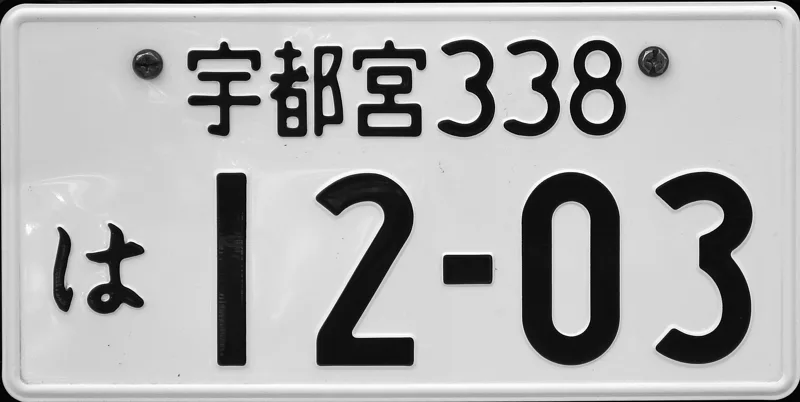
| Japan | Displacement brackets | Paid every May, from below 1,000 cc to 6,000 cc and above |
| Hong Kong | Engine size bands | Five bands, HK$3,929 to HK$11,329 |
| Belgium | Displacement class | Fiscal class 4 below 800 cc, one class higher per 200 cc |
Germany shows the usual drift. Its annual motor vehicle tax charges 5 to 25 euros per 100 cc for petrol engines and 13 to 37 euros for diesels, but cars first registered after 30 June 2009 are taxed on CO2 output alone, at up to 4 euros per gram. Ireland made a similar move. Before 2008 the annual levy climbed from 199 euros for engines under 1,000 cc to 1,809 euros above 3,001 cc. Cars registered after July 2008 pay by CO2 band instead, from 120 euros at 0-80 g/km to 2,350 euros above 225 g/km.
Belgium still starts from displacement. Engines below 800 cc sit in fiscal class 4, and every extra 200 cc above 800 cc lifts the class by one. Carbon dioxide rules mean diesels above 2,000 cc come out better than large petrol engines, and LPG or CNG cars pay a supplement of 84, 148 or 208 euros depending on size, to make up for the fuel duty the state does not collect at the pump.
What does engine size tax do to the cars people buy?
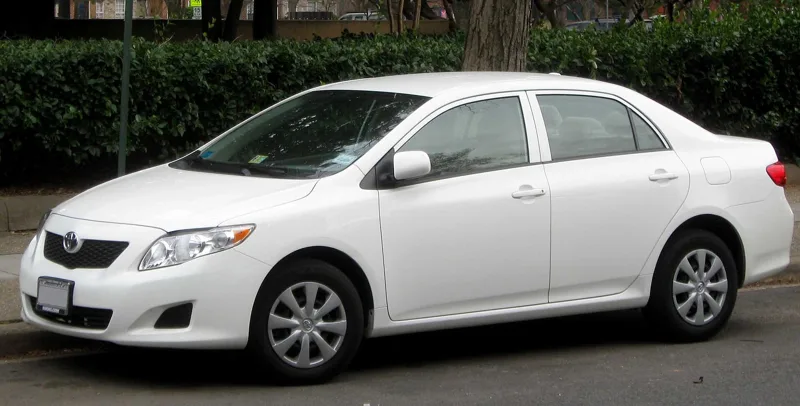
Hong Kong gives the clearest modern example. Private car licence fees rise at 1500 cc, 2500 cc, 3500 cc and 4500 cc, from HK$3,929 to HK$11,329 in the top band. Models of 1600 to 1800 cc sell poorly there. Most people prefer 1500 cc, and some makers offer only that engine in the territory: the Toyota Corolla and Nissan Tiida are both sold in Hong Kong with a 1500 cc unit alone.
Japan taxes displacement every May. The brackets start below 1,000 cc and climb in 500 cc steps to 6,000 cc and above. Personal vehicles pay more than business ones, and certified low-emission cars get a reduction. Kei cars, with 660 cc engines and compact dimensions, pay about a quarter of the tax on a 1,000 cc car. Japan also charges an Automobile Weight Tax alongside, introduced on 31 May 1971 and modified on 1 April 2010.
India shows the cost can arrive at the showroom. At purchase, GST of 28% applies, with an extra cess that depends on engine capacity: 1% for cars under 1200 cc, 3% between 1200 and 1500 cc and 15% above 1500 cc. Electric cars are charged a lower 5%. Annual road tax is set by each state, using engine capacity, seating, unladen weight and cost price.
Other markets mix measures. Queensland charges registration by the number of cylinders or rotors, while New South Wales uses tare weight. Latvia adds together separate rates for weight, engine volume and maximum power. Italy classifies road taxes by tax horsepower and European emission standards, as of 2023. The Netherlands taxes by weight and fuel type and exempts electric vehicles and classics over forty years old.
Where this goes next
Emissions are doing to engine size what engine size once did to the RAC formula. Estonia brought in an annual motor vehicle tax in 2025: a basic 50 euros a year, plus charges for newer vehicles based on CO2 at 3, 3.50 or 4 euros per gram depending on the band, and 0.40 euros for each kilogram over 2000 kg of weight, up to 400 euros. Vehicles at least 20 years old pay only the basic rate.
India has a proposal for uniform rules and tariffs across the country in line with the government's One Nation-One Tax initiative, and the Vahan portal already handles online road tax payment. Costa Rica's yearly Marchamo, which can reach 3.5% of a car's fiscal value, has prompted calls for reform. Nothing in these plans is settled, but the direction is plain: the old question of how big the cylinders are has been joined by how much carbon the car produces and how much it weighs.