From South Dakota's age of 14 to Germany's instructor-only lessons, how learner's permits, graduated licences and minimum driving ages differ around the world.
In the United States a person generally needs to be 15 to apply for a non-commercial licence, and novices face graduated limits. A permit lets them practise before a full licence. Most jurisdictions set 18 as the minimum age for driving a car, while South Dakota allows supervised driving at 14.
The lowest minimum driving age anywhere in the world belongs to South Dakota, where a fourteen-year-old can drive under adult supervision and a fourteen-and-a-half-year-old can hold a licence and drive alone, with restrictions. In most of the rest of the world the legal age for driving a car is 18, and the path from the first lesson to a full licence runs through a maze of permits, logbooks, plates and curfews.
American drivers get their licences from states, not from Washington, and the details change at every border. Each state sets its own ages and stages, and a dozen other countries show how different the road to a first licence can be.
How do driver's licences work in the United States?
Licences are issued by each state, each territory and the District of Columbia, and drivers are normally expected to hold one from their state of residence. States recognise one another's licences, and Canada recognises them for similar purposes. Generally the minimum age to apply for a non-commercial licence is 15, and 18 for a commercial one.
The licence does double duty. The United States has no official national identification card, so a driver's licence is the primary form of ID. According to the Department of Transportation, there were about 233 million licensed drivers in 2023, out of a population of 332 million.
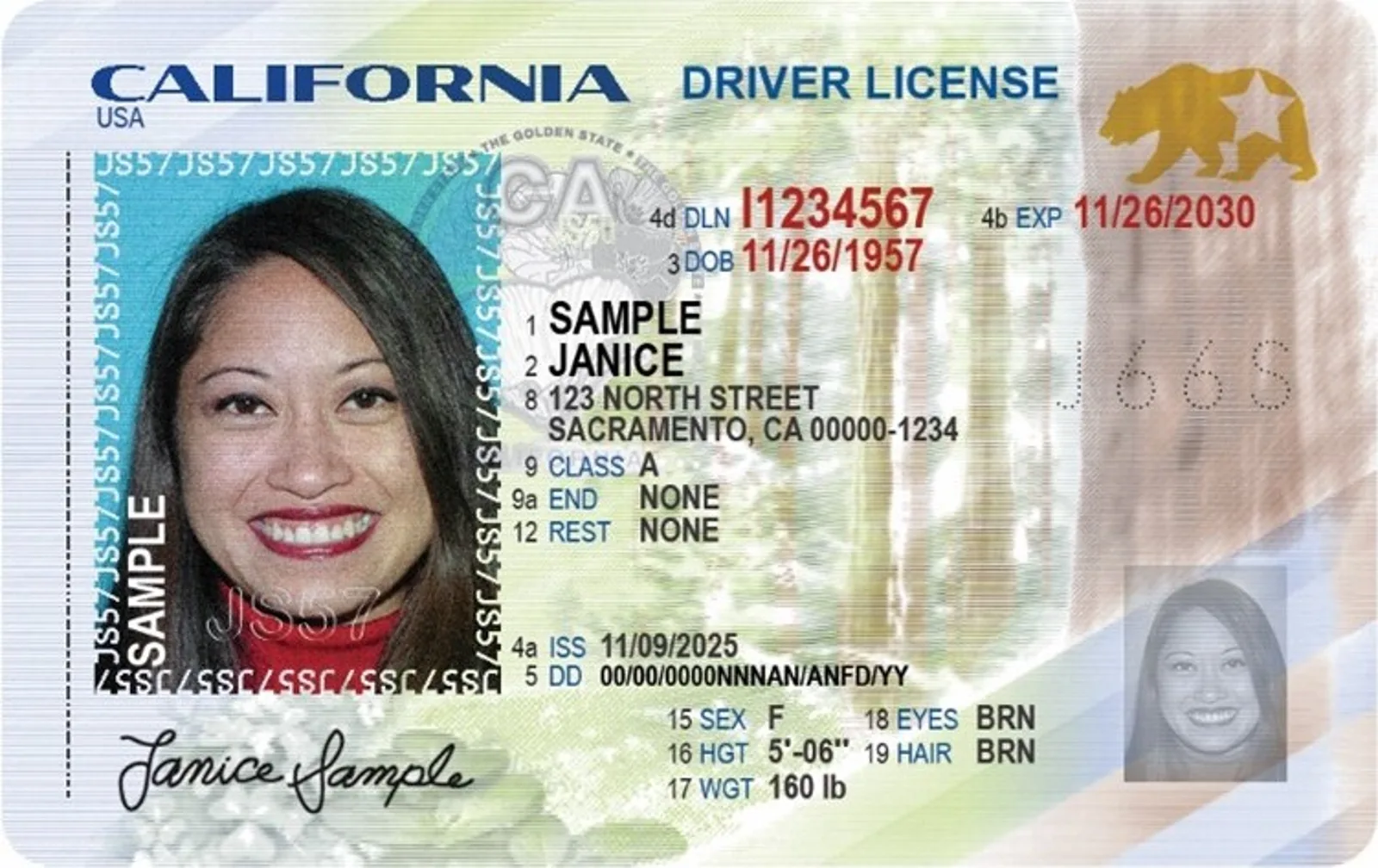
The look of the card is largely shared. The American Association of Motor Vehicle Administrators sets a design standard for its member jurisdictions, which include all 50 states, the District of Columbia and the Canadian provinces and territories, and the newest edition is the 2025 standard. The small digits next to each data field on many permits and ID cards come from it, and many states have adopted it. It follows the ISO card standard, which in turn matches the Geneva and Vienna road traffic conventions.
In most of the world the legal age for driving a car is 18.
How did American licensing begin?
Registration came before testing. New York was the first state to register automobiles, in 1901, and by 1918 every state required licence plates. Licensing the person at the wheel moved more slowly. Massachusetts and Missouri became the first states to require a driver's licence in 1903, but with no test. In 1908, the year the Model T arrived, Rhode Island became the first to require both a licence and an exam. Massachusetts started requiring tests for all other drivers in 1920, having introduced a chauffeur exam in 1907.
By 1935 only 39 states issued licences at all, and few of them demanded a test, despite concern about incompetent drivers. Early motorists were taught by car salesmen, family, friends or groups such as the YMCA, and by the 1930s many high schools had added driver education. Henry Ford himself got his first licence at 56, in 1919, when Michigan began issuing them. Maryland licences carried no photograph until the 1980s.
What is a learner's permit?
A learner's permit is a restricted licence for someone who is learning to drive and has not yet met the requirements for a full one. Most places expect the permit to be held for a set period before the full licence application, alongside driver's education and a road test. To get one, an applicant typically has to pass a written permit test, a basic competency test in the vehicle, or both. The names vary: driver's permit, student permit, learner's licence or provisional licence all describe versions of the same stage.
What licences come before a full licence in America?
Many states run graduated programmes. A hardship licence lets a minor aged 14 to 15, in some states up to 18, drive to and from home and school when serious hardship, such as a family's money or medical problems, leaves no practical alternative. A provisional licence works like a normal one but is typically given to new drivers under 18, in the range 14 to 17. Almost all states have some form of graduated licensing, and the restrictions and their length vary widely.
Two restrictions come up again and again. The first is a night curfew, typically 11 pm in Pennsylvania and Michigan and 12 am in Wisconsin, and as early as 9 pm in some states such as North Carolina. New York makes exceptions for the drive home from work or a school event, for collecting relatives and for medical visits; Massachusetts does not. The second is a limit on passengers. In California, a minor may not carry anyone under 20 during the first 12 months of licensure, unless the passenger is family or is 21 or has held a licence for a year or more.
Other licence types sit beside these. Chauffeur licences let the holder drive a taxi or limousine and are usually called Class E. Enhanced licences, issued in Washington, Vermont, Michigan, Minnesota and New York, also prove citizenship and are accepted when re-entering the country by land or sea from Canada, Mexico or the Caribbean. Commercial licences cover large and heavy vehicles, and the minimum age is generally 18, although federal law requires drivers to be 21 for interstate commerce. On 14 May 2022 New York lowered its Class A age from 21 to 18, leaving Hawaii as the only state with 21. A federal infrastructure law also authorised a pilot letting 18 to 20-year-olds with a commercial licence work interstate, to ease a shortage of truck drivers.
How do minimum driving ages compare around the world?
| Place | Learner stage begins | Notable condition |
|---|---|---|
| United States | 15 generally; 14 in South Dakota | Graduated licensing in almost all states |
| Australia | 16; 15 years 9 months in the ACT | 50 to 120 logged hours, depending on state |
| Belgium | 15 | Theory exam, then accompanied driving |
| Canada | 14 in Alberta; 16 elsewhere; 15 in the territories | Written test; zero blood alcohol in Ontario |
| France | 15 | Accompanied driving up to 17 and a half |
| Germany | 17 for accompanied driving | No learner permit; instructor only |
| Hong Kong | 18 | Approved instructor must supervise |
| India | 18 (motorcycles and scooters) | Theory test, then L-plates front and rear |
| Ireland | 16 | Six months before the practical test |
| Italy | 14 to apply; 18 for category B | Foglio rosa, twelve months to take the test |
| New Zealand | 16 | At least 6 months before the restricted licence test |
| Norway | Over 16 | Basic course in road rules and first aid |
| Singapore | 18 | Basic Theory Test, then provisional licence |
Across jurisdictions, the minimum age for driving a car is usually 18, and many places let younger people drive under supervision. Motorcycles often have a lower threshold than cars.
What does a learner have to do in other countries?
Australia sets a logbook as the heart of the process. Learners record 50 to 120 hours, depending on the state, including 5 to 20 of them after dark, supervised by any full licence holder who signs the book. They display an L plate and must have a 0% blood alcohol level. Passing the practical test brings a provisional licence and a P plate, with restrictions lasting 2 to 3 years.
Ireland starts with a theory test at 16. The learner permit that follows allows driving only with a fully licensed driver of more than two years' standing, bans motorways and requires L plates. Learners must hold the permit for at least six months before a practical test, a requirement called the six-month rule. In Italy the theory test, with two attempts, leads to the foglio rosa, a "pink sheet" named for its colour. The supervising driver needs at least ten years behind the wheel, learners may use motorways and display P stickers, and the practical test must be passed within twelve months.
New Zealand's learner licence needs a supervisor with a full licence of at least two years. After six months at least, a practical test earns a restricted licence that allows driving between 5 am and 10 pm. Completing an approved defensive driving course cuts the wait for the full licence from 18 months to 12. Norway asks learners to complete a short course covering traffic rules and first aid, with a supervisor aged 25 or over who has held a licence for more than five years.
Singapore issues a provisional licence from 18 for S$25.00 after the Basic Theory Test. Its validity was 6 months for licences obtained before 1 December 2017 and has been 2 years since that date. After the practical test the Qualified Driving Licence costs S$50.00, and new holders display an orange triangle on a yellow background for their first year. In Hong Kong, a learner is supervised by an approved instructor rather than an ordinary licensed driver, and motorcycle learners must pass an approved course before riding on road.
How do Canada, France and Germany handle young drivers?
Ontario issues a G1 licence at 16 after a written test. Holders keep blood alcohol at zero, may not drive between midnight and 5 am, are barred from certain highways unless with an instructor, and must have a fully licensed driver beside them with at least 4 years' experience. Alberta begins even earlier, with a Class 7 licence at 14 after a knowledge test and eye exam. After a year, a driver aged 16 or over can take a road test for a Class 5 GDL, and at 18 with two years of holding it moves to a full licence without another road test. Nova Scotia's beginner permit starts at 16 and bars extra passengers.
France runs graduated licensing from 15 to 17 and a half with a qualified driver in the car. After the full licence arrives, the permis probatoire applies for two or three years, with motorway speeds capped at 110 km/h instead of 130, rural roads at 80 instead of 90, and six points instead of the regular 12. Germany allows no learner's permit at all and lessons only with a licensed instructor. A Class B licence comes at 18, though a 17-year-old who has finished full training and passed both tests can drive under the accompanied-driving scheme known as BF17.
Are fewer young Americans getting licensed?
They are. In 2018, 61% of 18-year-olds and 25% of 16-year-olds in the United States had licences, down from 80% and 46% in 1983. The Los Angeles Times reported in 2004 that 43% of 15-to-17-year-olds were licensed in 2002, compared with 52% in 1982. Explanations offered include lower enthusiasm for driving amid environmental and road safety worries, the cost of driver's education and insurance, stricter licensing standards, and the rise of ridesharing services such as Uber and Lyft.
Where this goes next
The newest card design standard is the 2025 edition, and the federal pilot for 18 to 20-year-old commercial drivers remains an authorised experiment rather than a settled rule. Singapore changed the validity of its provisional licence from 1 December 2017, and New York lowered its Class A age in 2022. For a learner, though, the practical pattern has stayed steady: a theory step, supervised hours, and graduated limits on night driving and passengers before the full licence arrives.