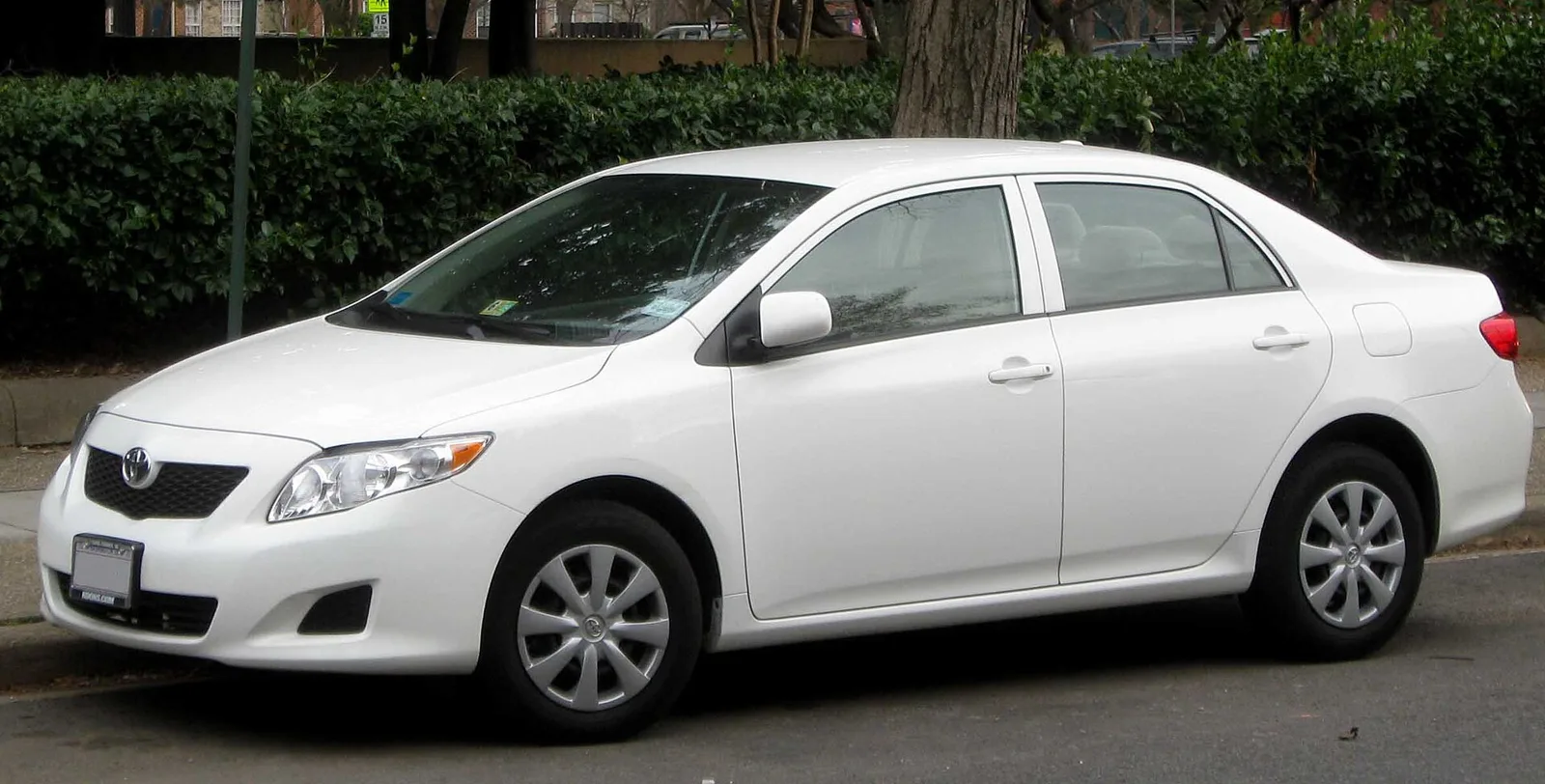
A working party inside a UN commission sets the technical rules that car makers must meet across much of the world, and the United States and Canada remain the biggest exceptions.
WP.29, the World Forum for Harmonization of Vehicle Regulations, is a working party of the UNECE Inland Transport Committee. It manages multilateral agreements that set technical rules for vehicles and their parts, covering safety, environmental protection, energy efficiency and theft resistance.
Few international bodies shape the cars people drive as quietly as the forum known as WP.29. Its rules decide how headlamps, brakes, emissions and crash protection are approved for much of the world, and they also decide which cars can be sold in which markets. The United States and Canada remain the most significant exceptions.
How did WP.29 begin?
WP.29 traces back to June 1952, when it was created as a body of experts on the technical requirements for vehicles. Its original scope was largely European, but since 2000 it has had a global reach. Its current name was adopted that year.
Today countries on every continent take part, with the notable exception of the United States and Canada, which developed incompatible standards. The forum's work matters beyond the committee room, because its rules affect vehicle design directly and make international trade easier.
A car approved in one country can be sold in many others, but only because a shared rulebook makes that possible.
What does the forum manage?
The forum oversees three multilateral agreements dating from 1958, 1997 and 1998. They cover the technical construction and approval of wheeled vehicles, their periodic technical inspection, and the development of UN Regulations and UN Global Technical Regulations. A further category, UN Rules, also sits within the framework.
Its concerns range from crash protection and emissions to fuel use and resistance to theft. Those subjects are handled through specialist groups, which the next section describes.
How is the forum's work divided?
The forum's work is split among six permanent working parties. Each one is a subsidiary body of experts with a specific area of focus, from noise and tyres to passive safety. Each group is made up of people with specialist expertise. The table lists each group and its remit.
| Working party | Remit |
|---|---|
| GRBP | Noise and tyres |
| GRE | Lighting and light signalling |
| GRPE | Pollution and energy |
| GRVA | Automated and connected vehicles |
| GRSG | General safety provisions |
| GRSP | Passive safety |
Because the groups are staffed by specialists, the forum can handle topics as different as tyre noise and automated driving. The regulations for heavy vehicles, motorcycles and tractors are grouped separately from those for passenger cars. Each group feeds its findings into the forum, which then adopts or amends the regulations.
How does the 1958 Agreement work?
The 1958 Agreement is the forum's core framework. Participating countries agree common technical prescriptions for vehicles and components, and every party recognises the type approvals granted by the others. Each individual design from each manufacturer counts as one type, so each approval is tied to a specific design.
The regulations were once known as ECE Regulations, after the Economic Commission for Europe. Because many non-European countries now take part, they are officially called UN Regulations. Over 170 of them existed as of 2026, and most cover a single vehicle component or technology.
Approved items carry an E mark: a capital E in a circle shows that a UN Regulation has been met, while a small e in a box points to an EU directive. The number that follows identifies the country that granted the approval.
Approvals are not all equally rigorous. Authorities apply the regulations with different degrees of strictness, and some countries add stricter national standards on top. In the parts industry a German E1 approval is treated as a sign of quality.
Which countries take part in the 1958 Agreement?
The 1958 Agreement began with five signatories and has grown to include the European Union and many countries outside Europe. Its membership now includes Japan, Australia, South Korea, South Africa and New Zealand, which shows how far the UN approach has spread.
The original five signed by the end of June 1958: Italy, the Netherlands, West Germany, France and Hungary. Sweden and Belgium joined soon afterwards. Each contracting party has a Distinguishing Number, which historically reflected the order in which it joined.
Originally only ECE member countries could take part. The 1995 revision opened the agreement to non-ECE members. Countries from outside the EU but within UNECE, including Norway, Russia, Ukraine, Serbia and Turkey, are now included, along with distant participants such as Thailand and Malaysia.
Why do the United States and Canada stay outside?
The United States does not recognise UN type approvals, because it runs its own Federal Motor Vehicle Safety Standards. Canada has its own regulations, which are broadly similar, although it accepts many UN parts. Both countries rely on self-certification rather than government approval, so UN-only vehicles cannot be imported without modification.
In practice Canada accepts most of the main ECE standards, with 14 of 17 allowed as alternatives. The three outstanding groups involve motorcycle controls and displays, motorcycle mirrors, and stability control for cars. A trade agreement with the European Union could lead Canada to accept more UN Regulations.
Self-certification puts the burden on the maker. A manufacturer or importer asserts that a vehicle complies with the federal or Canadian standards, and no prior approval is needed. If authorities later find the certification was false, they can test the vehicle and order a recall or other penalties. Makers may appeal such penalties, although that route is difficult. Minor breaches with little bearing on road safety can be the subject of a petition to waive recall duties for cars already built.
A grey market offered an alternative for individuals between 1976 and the late 1980s. Vehicles built to global safety and emissions rules could be brought in and altered to meet US design rules. By 1985 the grey market had brought in 66,900 vehicles through individual imports. Vehicles such as the Lamborghini Countach, the Mercedes-Benz 500 SEL and the Range Rover were officially barred from Americans, yet the grey market served them for years. Personal imports of recent models are now largely closed off, and even Bill Gates could not bring in his Porsche 959 that way.
What is the 1998 Agreement?
The 1998 Agreement creates global technical regulations without the type approval procedures of the 1958 Agreement. Contracting parties adopt UN Global Technical Regulations by consensus, and each country then turns them into national law. As of October 2024 the agreement had 40 contracting parties and 24 GTRs in the UN Global Registry.
Each GTR carries long notes on how it was built, covering its rationale, the research behind it and the data consulted. Manufacturers and suppliers cannot apply a GTR directly, because it must first be written into national or regional law.
The agreement was made possible because the UNECE resolved two obstacles that had kept non-signatories out of the 1958 system: the administrative approach to type approval, and mutual recognition of approvals.
How has the forum shaped the car market?
WP.29 sets rules that shape vehicle design, from headlamp performance to safety and emissions. Those rules also shape which models a manufacturer can offer in each country. Its work also supports trade by reducing the need for each country to test each design separately.
Headlamps show the gap in practice. The Citroen DS of the 1940 to 1983 era illustrates the difference, because US rules required sealed beam headlamps that many European countries prohibited. A similar split applied to US mandatory side marker lights.
The newer Regulation 0, the International Whole Vehicle Type Approval, is meant to define compliance with a set of regulations in one step. It sits alongside the existing UN Regulations rather than replacing them. The OICA publishes working documents from UN expert groups, including the forum's.
The forum's influence was also tested in trade talks. In 2013 the Transatlantic Trade and Investment Partnership negotiations examined how divergent standards in the US and EU might be narrowed, potentially cutting costs and encouraging trade in vehicles.