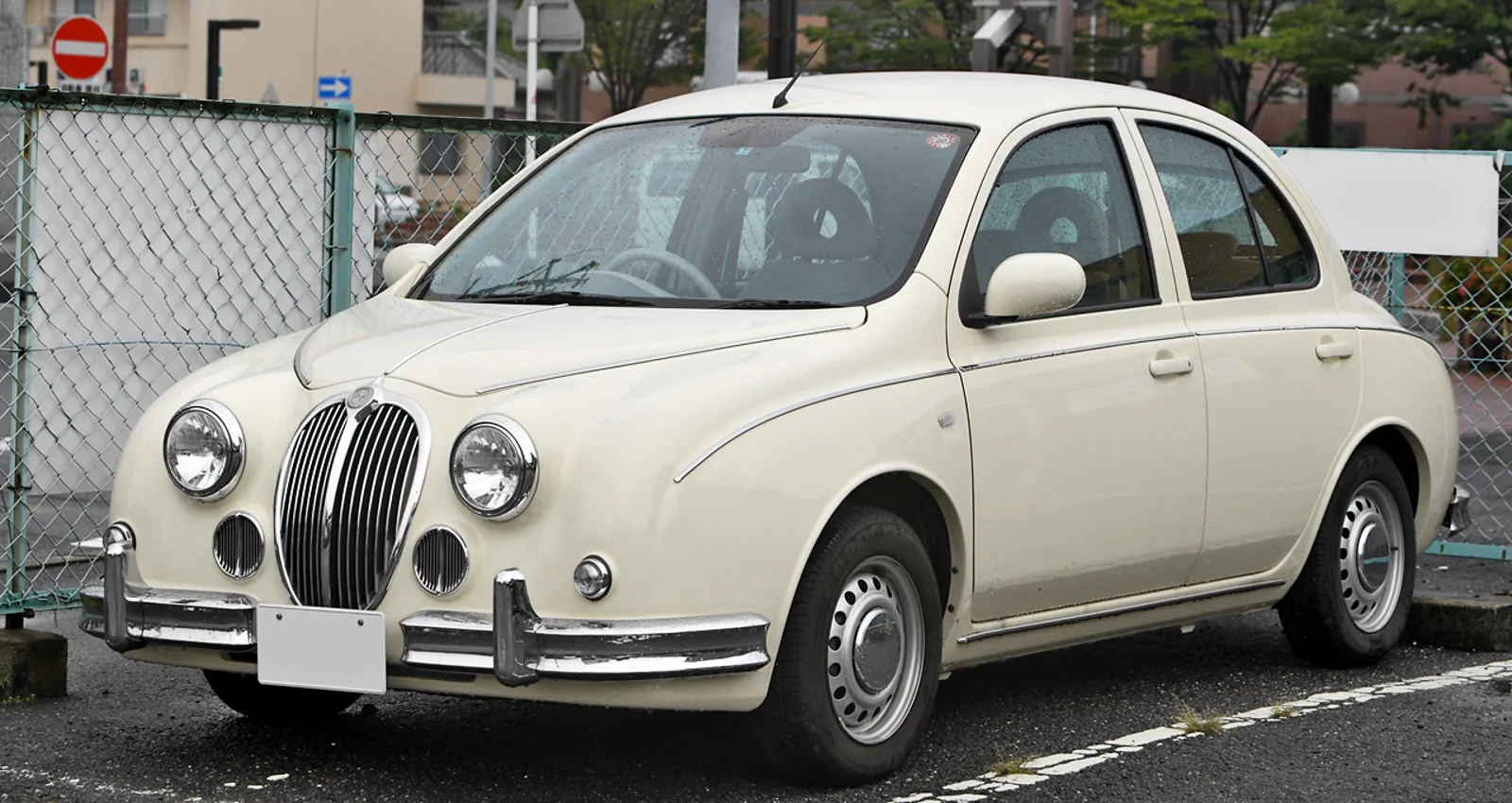
A hand-built Jaguar lookalike from Toyama, a truck-classified hatchback from Chrysler and a front-engined Beetle: three ways to sell a car on nostalgia.
Makers build retro style cars to sell the look and emotion of an older model on modern engineering. The Mitsuoka Viewt rebuilds Nissan and Toyota donor cars to resemble a 1963 Jaguar, the Chrysler PT Cruiser recalled the 1930s, and the Volkswagen New Beetle copied the shape of the original Beetle.
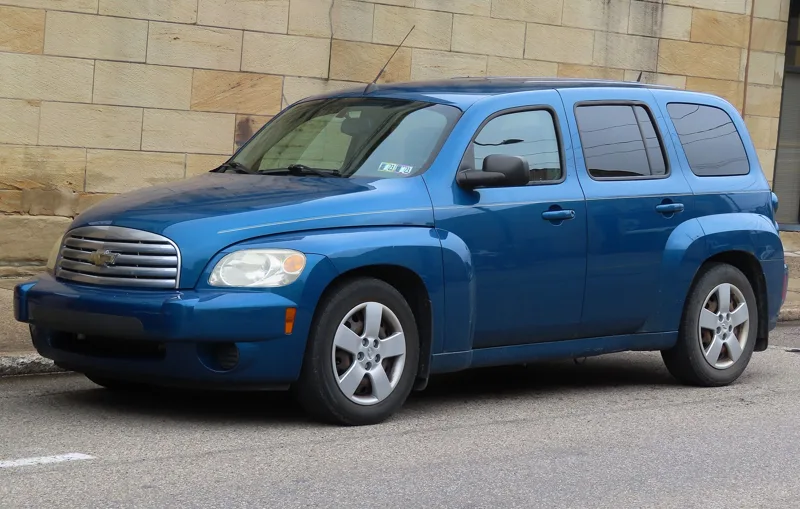
Chrysler designed the PT Cruiser to count as a light truck. That was not a styling choice. By classifying a front-drive, five-passenger car under the US truck criteria, the company could lift the average fuel economy of its truck fleet, and the 1930s-flavoured hatchback went on to reach a worldwide production run of 1.35 million. It is a neat example of how a nostalgic shape can hide very modern thinking.
Retro-style cars are built around a simple promise: the look of an older model with the engineering of a new one. The Mitsuoka Viewt, the Chrysler PT Cruiser and the Volkswagen New Beetle take that promise in three directions, from a hand-finished conversion to a mass-produced hatchback to a car that shares almost nothing mechanically with the one it imitates.
What counts as a retro style car
A retro-style automobile is styled to look like cars from earlier decades while often using modern technology and production methods. The trend has run since at least the 1960s, when neoclassic cars appeared, but it became a mainstream idea in the early 1990s, when major makers began releasing models that referred to the 1950s and 1960s.
It helps to separate three ideas. Revival cars are reproductions of classic models, made by firms including Lister, Allard, Alvis, Aston Martin and Jaguar. A neoclassic is a modern car shaped to resemble one from the 1920s or 1930s. A retro car borrows cues from an older design but can differ greatly from the model it references underneath.
The first big American example was in 1961, when designer Virgil Exner gave the Chrysler Imperial free-standing headlights and a chrome strip that mimicked curved fenders. The 1980 Cadillac Seville picked up the bustle-back tail of earlier decades, and the 1983 Lincoln Mark VII carried a faint spare-wheel bulge shaped into its boot lid.
The look can mislead: the New Beetle has the front engine and Golf underpinnings of a modern hatchback.
How retro design cars took off in the 1990s
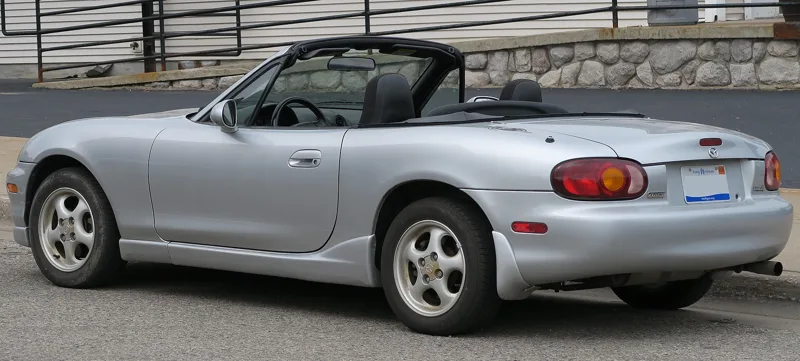
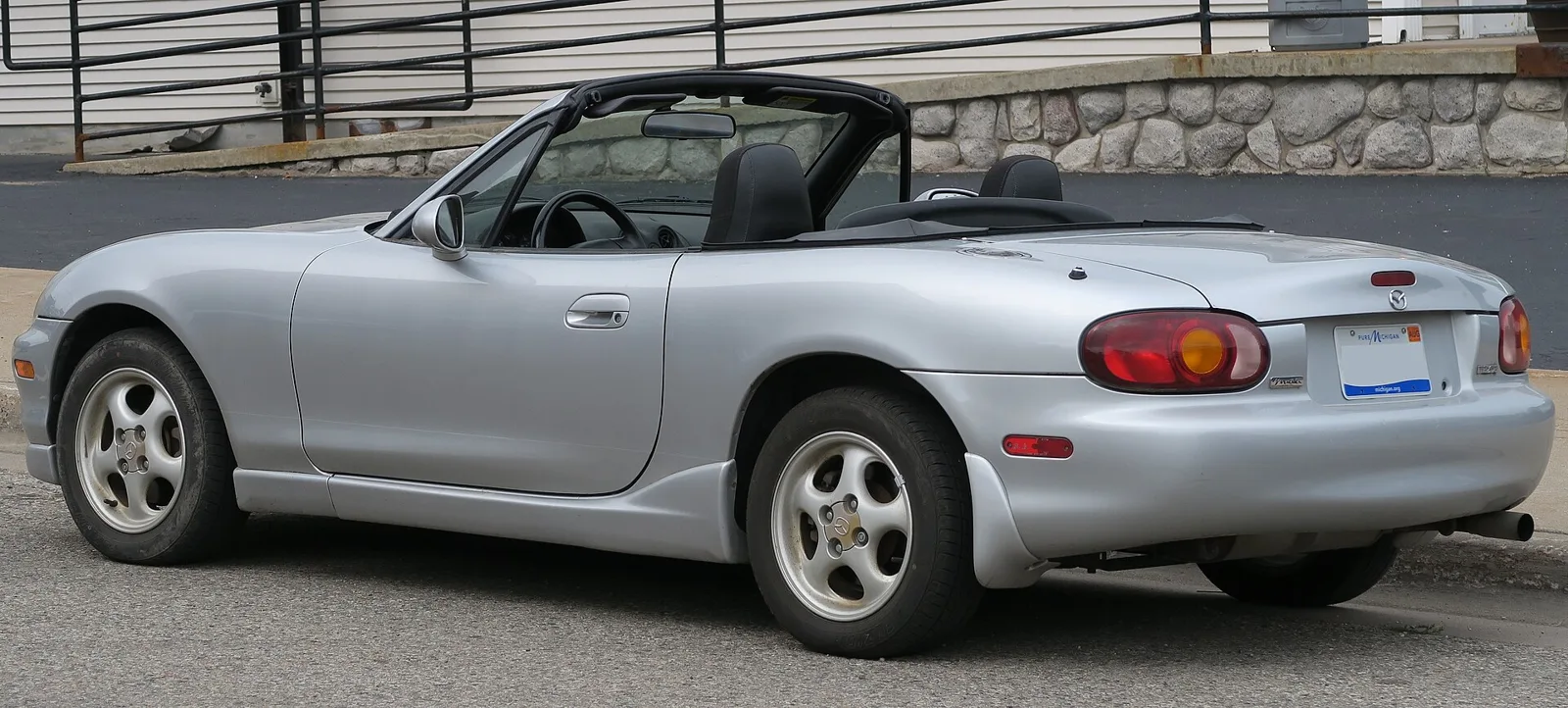
The first peak came with the Mazda MX-5, which from 1989 to 1998 referenced the 1962 Lotus Elan and was the first newly designed roadster in decades. In the same years, from 1989 to 1991, Nissan built limited runs of the Be-1, Pao, Figaro and S-Cargo, the so-called Pike Cars, and these are frequently named the pioneers of the trend. Japan took to the idea enthusiastically, with retro packages for small cars such as the Daihatsu Mira and Subaru Vivio. The Japanese taste for cuteness, known as kawaii, is part of the reason it worked there.
In America, the story begins with Bob Lutz, who wanted to build a modern take on the Shelby Cobra. That became the Dodge Viper, and its success improved the public's opinion of Chrysler, which encouraged Lutz to try more. The 1994 Dodge Ram drew on old Kenworth and Peterbilt trucks, the 1995 Chrysler Atlantic on art-deco cars of the 1930s, and later came the hot-rod-styled Plymouth Prowler, the PT Cruiser and the 2003 Ford Thunderbird.
Europe dates its retro wave to the Volkswagen New Beetle. After it came the Jaguar S-Type (dated 1999 or 2000 depending on the listing), the Mini, the Fiat 500 in 2007 and the Mercedes-Benz SLS AMG in 2009. Experts say retro design brought emotion back into car design, and by the start of the 2000s it had developed into new classic design, in which a car such as the Lancia Thesis mixes old and modern cues without quoting one particular model.
| Model | Year | Looked back to |
|---|---|---|
| Mitsuoka Viewt | 1993 | 1963 Jaguar Mark 2 |
| Volkswagen New Beetle | 1998 | 1938 Volkswagen Type 1 |
| Chrysler PT Cruiser | 2001 | Chevrolet Advance Design and Chrysler Airflow |
| Mini | 2001 | 1959 BMC Mini |
| Ford Mustang | 2005 | 1965 Mustang |
| Fiat 500 | 2007 | 1957 Fiat 500 |
| Dodge Challenger | 2008 | 1970 Challenger |
| Chevrolet Camaro | 2010 | 1967 Camaro |
| Honda e | 2020 | 1972 Honda Civic |
| Ford Bronco | 2021 | 1966 Bronco |
| Renault 5 E-Tech | 2024 | 1974 Renault 5 |
The Mitsuoka Viewt, a Jaguar from a Nissan
The Mitsuoka Viewt is a series of retro subcompacts from the Japanese maker Mitsuoka, meant to resemble the 1963 Jaguar Mark 2, and it is the company's best seller. It launched in January 1993 and, over thirty years of Nissan-based production, around 13,000 were sold. Together with Mitsuoka's later Galue, it encouraged larger Japanese makers to produce retro versions of their own cars.
The method is unusual. Mitsuoka takes a completed Nissan March, or now a Toyota Yaris, strips the cabin and outer panels and rebuilds the body by hand at Toyama. On the first generation, the K11 of 1993 to 2003, the March hatchback gave way to a fixed rear window with a rounded boot, and the front grille and headlamps closely resembled the Jaguar's. The interior stayed close to the March's, though leather and wood were optional extras. Engines were the March's 1.0 and 1.3 litre units, with manual or automatic gearboxes, and in November 2001 the larger engine grew from 1,275 to 1,348 cc to follow changes in the March. After the March convertible arrived in 1997, Mitsuoka built a Viewt convertible with a unique built-out rear, and 3- and 5-door hatchbacks followed.
The second generation, based on the K12 March, first appeared in September 2005 with a rounder cabin and the same Jaguar-style front and rear. Then regulation intervened. New safety rules for 2009 meant Mitsuoka could no longer use donor cars built from 1 January 2009 onwards, so Mitsuoka kept converting 2008 cars and briefly halted production. Output resumed in October 2009 with enclosed taillights and without bumper overriders, and the revised car was shown at the 2009 Tokyo Motor Show. New K12-based Viewts ended in the latter half of 2010, although conversions of used cars continued until at least 2013. The company also offered the Mitsuoka Cute between March 2009 and 2013, a similar conversion on any certified used K12 March, priced by age and mileage.
The third generation used the Thai-built K13 March. It appeared in March 2012 at the Bangkok Motor Show and went on sale on 23 May 2012 with a CVT on every grade (12LX, 12DX, 12ST and 12ST Premium). A hatchback called the Viewt Nadeshiko followed on 15 July 2015. It used the March's own tail lamps, was 15 cm narrower and cost significantly less, and it came only with front-wheel drive. When Nissan discontinued the March in Japan, Mitsuoka announced the end of the Viewt in January 2023, though it carried on converting suitable used Nissans.
The fourth generation is the Viewt Story, based on the Toyota Yaris (XP210) hatchback, introduced in February 2023 and on sale from September 2023. It is offered as 1.5 litre petrol, 1.0 litre petrol and 1.5 litre hybrid in LX and DX forms. A 6-speed manual is available for the 1.5, and four-wheel drive is optional on the 1.5 and hybrid, using E-four on the hybrid. The 1.0 litre makes 51 kW (69 PS; 68 hp), the 1.5 makes 88 to 92 kW (120 to 125 PS; 118 to 123 hp), and the hybrid combines a 67 kW (91 PS; 90 hp) engine into a system output of 85 kW (116 PS; 114 hp). The smallest engine, the 1.0 litre, was discontinued in May 2026.
Chrysler PT Cruiser and the nostalgia wave
The PT Cruiser was built by Chrysler from 2001 to 2010 as a compact five-door hatchback wagon, with a two-door convertible added from 2005 to 2008. It began as a Plymouth, then was sold as a Chrysler when Plymouth was discontinued. The exterior was designed by Bryan Nesbitt, with Lutz and the consultant Clotaire Rapaille, and it was meant to invoke the 1930s and 1940s, drawing on the Chrysler Airflow. Part of the rear styling echoed the Chrysler CCV, a compact that recalled the Citroen 2CV. The PT stands for Personal Transport.
It was a clever package. A high roof, high seating and a multi-level cargo shelf with seats that could be folded, tumbled or removed made the cabin flexible. It was built in Toluca, Mexico, and, for some markets, in Graz, Austria. DaimlerChrysler announced the millionth PT Cruiser on 8 March 2006, the final car was built on 9 July 2010, and 1,050,281 were marketed in the United States.
Public reaction was divided, but the car won a solid following. Motor Trend named it Car of the Year for 2001, Car and Driver listed it among its Ten Best, and it was North American Car of the Year. Car and Driver called the styling highly distinctive and characteristically American. At launch it was described as a market segment-buster, and Dieter Zetsche of Daimler presented it as another example of innovation for new segments.
The range grew quickly. A turbocharged GT arrived for 2003 with 215 hp (160 kW), later 230 hp (172 kW), and a governor-limited top speed of 125 mph (201 km/h). Factory extras included a flame package from 2002, a Woodie package from 2002 to 2004 and a Route 66 edition in 2006. In Japan the car replaced the Neon in July 2000, sold over 10,000, and between 2002 and 2007 ten of them worked as taxis near Tokyo Disneyland because of their fun, retro look. In Australia, where it arrived in mid-2000, total sales between 2000 and 2009 were about 7,000, and its reputation for lackluster performance sent buyers elsewhere.
Updating the design proved the hard part. The 2006 changes, with scalloped headlights, a revised grille and new front fascia, reduced the retro feel that some customers liked and exposed what one commentary called retro design's biggest trap, the problem of updating something old A complete redesign planned for 2007 was pushed back while Chrysler sorted out powertrains, styling and even positioning. The convertible and High Output engine were dropped for 2008, and for 2010, the final year, a single Classic trim offered a 2.4 litre engine with 150 hp (112 kW).
Safety is part of the record. Euro NCAP gave the PT Cruiser three stars out of five in 2002, with only 6 of 16 points in the frontal test but the maximum 16 in the side test. In 2008 the Insurance Institute for Highway Safety rated it Good for frontal crashes and Poor for side crashes, and it was the only small car in that test not to offer electronic stability control.
Volkswagen New Beetle and the front-engined Beetle
The New Beetle took the opposite route to the original. It put its engine up front, driving the front wheels, with luggage at the back, and it was related to the old car only in name and appearance. The story began in 1994, when Volkswagen showed the Concept One at the Detroit show (the North American International Auto Show). J Mays and Freeman Thomas created it at the company's California studio on a Polo platform. A red cabriolet followed at Geneva the same year.
Strong public reaction convinced Volkswagen to build it. Design approval came in mid-1995, with 22 months of development after the design freeze, and the Concept Two appeared in Tokyo that October. The production car launched in 1997 for the 1998 model year on the fourth-generation Golf platform. It borrowed the original's separate fenders, vestigial running boards, sloping headlamps, large round taillights and high rounded roofline, and it was assembled at Puebla in Mexico.
The figures: it measured 4,081 to 4,129 mm (160.7 to 162.6 in) long on a 2,515 mm (99.0 in) wheelbase and weighed 1,230 kg (2,712 lb). Luggage space was 339.8 litres (12 cu ft), growing to 767.4 litres (27.1 cu ft) with the rear seat folded. Top speed ran from 161 to 225 km/h (110 to 140 mph), and the 0-100 km/h time ranged from 6.7 to 14.6 seconds depending on engine.
The US range began with a 115 hp (86 kW) 2.0 litre, a 100 hp (75 kW) 1.9 litre TDI diesel that was dropped after 2006 because of tougher emissions rules, and a 150 hp (112 kW) 1.8 litre turbo. Volkswagen introduced the 1.8T in June 1999, the first turbocharged petrol New Beetle. A convertible arrived for 2003, replacing the Cabrio. The Turbo S of 2002 to 2004 raised output to 180 hp (134 kW) with a six-speed manual, and in 2006 a 2.5 litre five-cylinder with 150 hp (112 kW) became the sole engine.
The RSi, built in a run of 250 from 2001 to 2003, carried a 3.2 litre VR6 rated at 224 PS (165 kW; 221 hp), six-speed gearbox and 4motion four-wheel drive, with suspension tuned in-house at VW Individual despite rumours of Porsche involvement. A 2008 Anniversary Edition for Mexico and Australia sold 310 units, the 2009 Blush convertible 1,500, and the 2010 Final Edition marked the end of production. A Motor Trend Import Car of the Year award came in 1999. The Euro NCAP rating improved from four stars in 2000 to five in 2011, though the IIHS rated side impact protection as Poor.
The New Beetle was replaced by the Beetle (A5) for the 2012 model year, and Beetles continued to be built in Puebla until the final car left the line on 10 July 2019.
Where this goes next
Retro design lost popularity but has come back in the early 2020s, with cars such as the Renault 5 EV and Alpine A290 and the Ford Bronco, and with retro-flavoured models and body kits still coming from Jeep, Mitsuoka and Songsan. Recent entries on the list of retro-styled production cars include the Volkswagen ID. Buzz (2022), the Renault 5 E-Tech (2024), the Renault 4 E-Tech (2025), and for 2026 the Renault Twingo E-Tech and the McLaren McL 6GT.
Mitsuoka keeps going on its own path: the Viewt Story remains on sale, with the 1.0 litre version discontinued in May 2026.
What retro means for a buyer
The lesson across these three is that the look can mislead. The New Beetle has the front engine and Golf underpinnings of a modern hatchback. The Viewt is a rebuilt Nissan or Toyota, so its mechanical parts come from the donor car, and the 2009 safety rules limited which donor cars could be converted. The PT Cruiser's practical cabin and truck classification were its real design brief. Anyone shopping for a retro car should read the donor, platform and safety ratings rather than the shape alone.