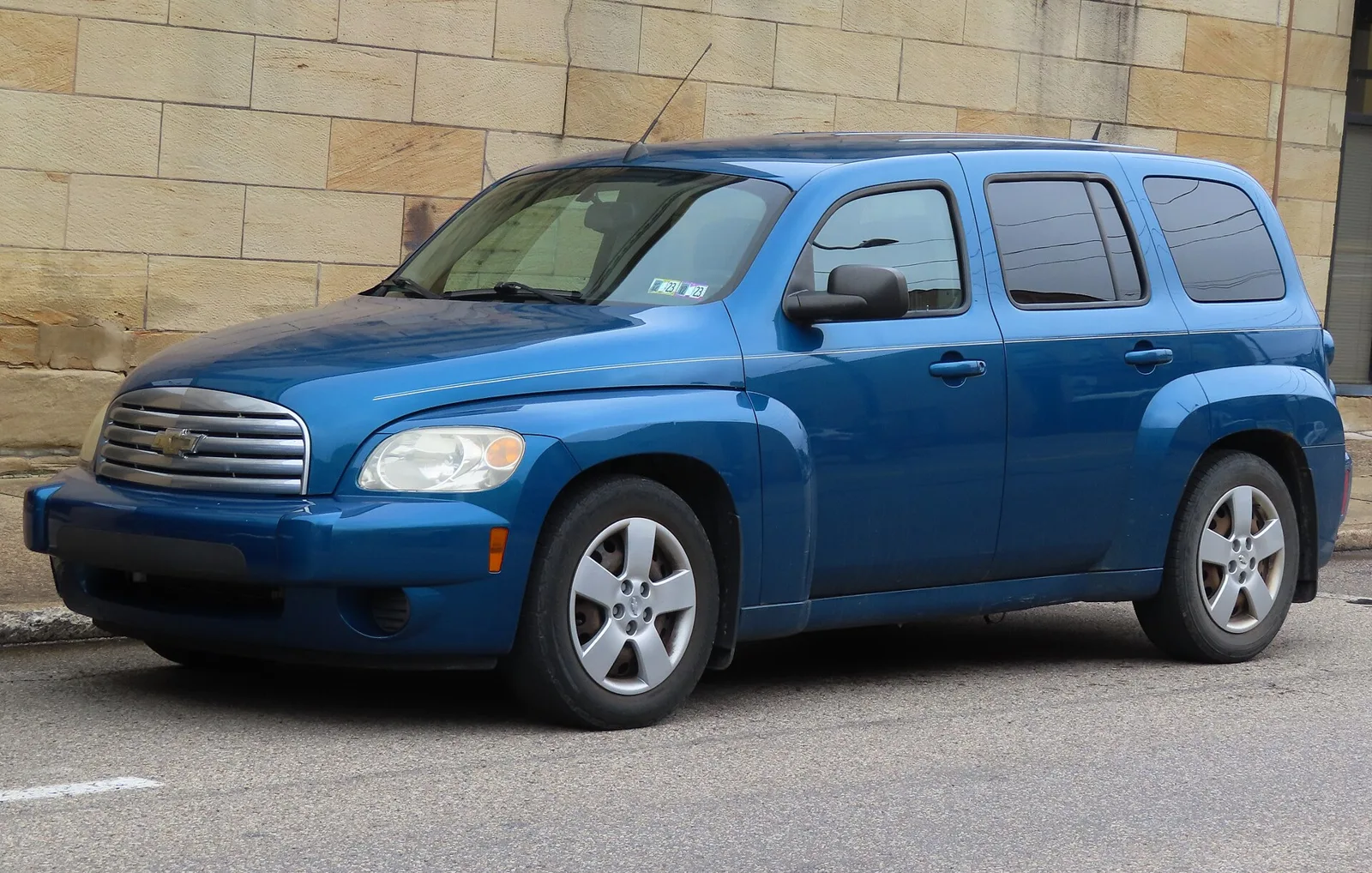
A PT Cruiser designer's retro wagon and the front-drive 260 hp Cobalt SS Turbo shared one platform and one turbo four.
The Chevrolet HHR is a retro-styled front-drive wagon launched in 2006 and built until May 2011. The Cobalt SS was the Chevrolet sport compact, sold as supercharged, naturally aspirated and 260 hp turbocharged versions. Both used GM's Delta platform, and the HHR SS shared the Cobalt's turbo engine.
John Neff of Autoblog called the reworked 2008 Cobalt SS the most impressive performance car then on sale with a bow-tie badge, and called the 2009 version the best value below $30,000. It was a front-wheel-drive compact with a 260 hp turbocharged four, and it shared its basic underpinnings with a retro-styled wagon that looked nothing like it.
That wagon was the Chevrolet HHR. Both cars were built on GM's Delta platform, and both ended up with a performance version carrying the same engine.
What is the Chevrolet HHR?
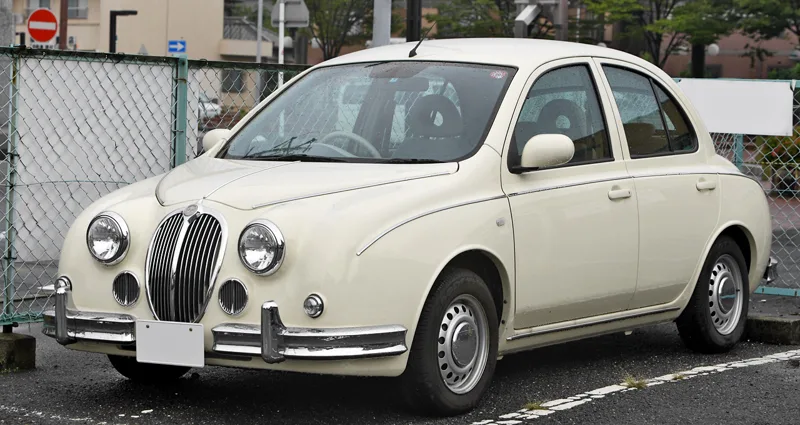
HHR stands for Heritage High Roof. The Chevrolet HHR is a retro-styled, five-door, five-passenger, front-wheel-drive wagon with a tall roof, designed by Bryan Nesbitt and launched at the 2005 Los Angeles Auto Show as a 2006 model. Nesbitt came to General Motors from Chrysler, where he had led the design of the PT Cruiser, and later served for a time as chief designer of the Chevrolet brand.
The styling looks back to late-1940s and early-1950s Chevrolet cars and trucks, in particular the 1947 Suburban and the Advance Design pickups, with big square fender flares and a hemispherical grille. Inside, the cargo capacity was 62.7 cubic feet (1.78 m3). Every model had a flat load floor and a fold-flat front passenger seat, and passenger versions had a 60/40 split rear bench. For 2007 the HHR came in four trims, LS, LT, 2LT and Special Edition.
It shared the Delta platform with the Chevrolet Cobalt, Pontiac G5 and Saturn Ion. GM built it in Ramos Arizpe, Mexico, and sold it throughout North America. Production ended in May 2011.
Equipment
Every HHR had power windows and door locks, dual front airbags, a Driver Information Center, a stereo with a CD/MP3 player and an auxiliary input, a tilt steering wheel, keyless entry, air conditioning, cloth seats and a five-speed manual gearbox. Higher trims added cruise control, alloy wheels, a power moonroof, OnStar, front side-mounted airbags, XM satellite radio, Bluetooth and ABS. Remote start came only with the four-speed automatic. Options included a power driver's seat, a seven-speaker Pioneer system with a cargo-area subwoofer, heated leather seats, fog lamps, heated power mirrors and a six-disc in-dash changer with USB.
HHR Panel
From 2007 to 2011 Chevrolet also sold a four-door van, the HHR Panel, in LS, 1LT and 2LT trims with a 2.2-litre or 2.4-litre EcoTec four-cylinder and a five-speed manual. A cargo management system replaced the rear bench, the rear seatbelts and side airbags were deleted, the cargo floor was plastic, and plastic panels filled the rear door and quarter windows. The outside rear door handles were removed, though the doors still opened from inside. A "PANEL" badge on the left of the tailgate identified it. A "Half Panel" rear quarter window delete option, code AA5, ran from 2008 to 2010.
Sales and safety
First-year sales exceeded 93,000 through June 2006. The HHR was also exported to Japan through Mitsui's motor vehicles unit, partly sold in Europe, and replaced there by the Chevrolet Orlando. In early 2009 it was dropped from the Mexican range after poor sales.
The Insurance Institute for Highway Safety gave the HHR a "Good" overall score in the frontal offset test and "Acceptable" in side impacts on cars with side curtain airbags. Those became standard for 2008 models, but side torso airbags were never offered.
Year by year
In 2007 the Panel arrived, the 2.4-litre LE5 was retuned for more power with the same fuel economy, and the 2.2-litre L61 got a stronger block, revised cylinder head and camshaft and coil-on-plug ignition under a new 32-bit engine computer. In 2008 the SS arrived, tyre pressure monitoring became standard (except in Canada), OnStar went on every model, and stability control became an option. Flex-fuel E85 came to the 2.2 and 2.4 in 2009, the first four-cylinder flex-fuel engines GM sold in North America, and the 2.2 gained variable valve timing. Side curtain airbags and stability control became standard on all but Canadian cars. In 2010 GM dropped its badges from the front doors partway through the year, and the colour range shrank from 10 to 8. The SS did not survive to 2011.
Both cars were built on GM's Delta platform, and both ended up with a performance version carrying the same engine.
What was the Chevrolet HHR SS Turbocharged?
In October 2006 Cheryl Catton, director of car marketing and retail integration for Chevrolet, confirmed a high-performance HHR would be built, using the turbocharged Ecotec LNF engine found in the Pontiac Solstice GXP and Saturn Sky Red Line. Chevrolet revealed the 2008 HHR SS Turbocharged on 16 August 2007 at the Woodward Dream Cruise in Birmingham, Michigan, and GM's Performance Division developed it.
The 2.0-litre (120 cu in) turbo four with an intercooler made 260 bhp (194 kW), or 235 bhp (175 kW) with the optional four-speed automatic. The rest of the package included race-tuned suspension, a five-speed manual with a short-throw shifter, four-wheel ABS disc brakes, ground effects with unique front and rear fascias, a black cross-mesh grille, a tailgate spoiler, a titanium-faced boost gauge on the A-pillar and polished 18 in (460 mm) alloy wheels. A stage 2 performance package with electronic changes and a 3-bar MAP sensor lifted output to 290 hp (216 kW), with torque of 315 lb ft (427 N m).
Chevrolet showed an HHR SS Panel Concept at the SEMA Show on 30 October 2007, and it became a production model for 2009, for one model year only. The SS left the market after the 2010 model year when GM's Performance Division, also known as the High Performance Vehicle Operations group, was closed. In the fourth quarter of 2010 Chevrolet announced the HHR would end after 2011. Dealers received the last cars from late January or early February, and fleet orders continued until May 2011.
What was the Chevrolet Cobalt SS?
The Chevrolet Cobalt SS was three sport compact versions of the Cobalt, built on the Delta platform at Lordstown Assembly in Ohio. Two used forced-induction Ecotec four-cylinder engines and a third was naturally aspirated and later called the Cobalt Sport. SS stands for Super Sport, a Chevrolet performance tag.
It was GM's first step into the tuner market. The first car arrived in late 2004 as a supercharged 2.0-litre coupe with 205 hp (153 kW; 208 PS), paired only with a five-speed manual. A naturally aspirated 1SS followed a year later, with GM's new 2.4-litre engine making 171 hp (128 kW; 173 PS) in both coupe and sedan, with a choice of manual or automatic. The supercharged coupe ran until 2007. After a break, the SS came back in the second quarter of 2008 with a more efficient 260 hp (194 kW; 264 PS) turbocharged 2.0-litre. Cobalt production ended in 2010.
The Cobalt SS got generally good reviews, especially the supercharged and turbocharged cars, and the supercharged model became the best known. In 2013 journalist Patrick George called it the best compact car GM had made and a possible future classic. At launch in 2004 it drew criticism for interior quality and styling, both seen as too close to the Cavalier it replaced. In May 2009 reports said GM planned to kill the Cobalt SS as early as December 2009, but they proved untrue. The Cruze replaced the Cobalt, and no performance version matching the SS was built before the Cruze left the North American market in 2019.
Cobalt SS Supercharged, 2005 to 2007
The coupe-only SS Supercharged used the 2.0-litre LSJ Ecotec with an Eaton M62 Roots-type supercharger, essentially a belt-driven air pump, and an air-to-liquid intercooler. Output was 205 hp (153 kW), reached at 5600 rpm, while the 200 lb ft (271 N m) peak came at 4,400 rpm. Standard wheels were 18 inch with P215/45R18 Pirelli summer tyres. An optional G85 performance package added Recaro seats and a limited-slip differential. The car became known for a tall spoiler that was standard in 2005 and became optional from 2008.
GM sold dealer-fitted "stage kits" that kept the factory warranty. Stage 1 meant new injectors and an engine computer reprogram for up to 30 hp (22 kW). Stage 2 added a smaller supercharger belt and pulley for 36 hp (27 kW), plus 18 lb ft (24 N m) of torque, and both raised the redline to 7,000 rpm. Stage 3 used a 76 mm (3.0 in) pulley, an intercooler end plate and a customisable engine computer, producing 248 hp (185 kW) on 93-octane fuel or 260 hp (194 kW) on 100 octane, and much more with nitrous. It was track only, and the air conditioning was disabled to underline that.
Front-wheel drive and plenty of torque brought wheel hop and wheelspin. Better engine and transmission mounts helped. GM's Performance Division later tried to cure it in the turbo car with wider, stickier tyres and stronger axles.
Cobalt SS naturally aspirated, 2006 to 2008
The naturally aspirated Cobalt went on sale in autumn 2005 as a 2006 model, in coupe and sedan forms. Its 2.4-litre LE5 had variable valve timing and made 171 hp (128 kW), peaking at 5,600 rpm, with 163 lb ft (221 N m) of torque at 5,000 rpm, later improved to 167 lb ft (226 N m) at 4,500 rpm. It came with a five-speed manual or an optional four-speed automatic. It was called SS or 1SS for 2006 and 2007, then Cobalt Sport for 2008 as the turbo SS was expected. The manual was a Getrag F23, with different ratios from the F35 in the boosted cars.
The Sport had 17 inch wheels with P205/50R17 Pirelli all-season tyres, the low spoiler, and the FE3 suspension, which was sportier than a base Cobalt but less refined than the FE5 on the boosted cars. Apart from exterior styling and some interior trim, it was the same as the Pontiac G5 GT.
Cobalt SS Turbocharged, 2008 to 2010
The LSJ engine failed 2008 emissions rules and GM's contract with Eaton had run out, so for 2008 there was no SS until a new turbo model was announced in autumn 2007 for the second quarter of 2008. The 2.0-litre LNF turbo had direct injection and variable valve timing, giving peak power of 260 hp (194 kW) at 5300 rpm, plus a 260 lb ft (353 N m) peak at 2,000 rpm. It kept the F35 five-speed manual. The engine had debuted in the rear-drive Kappa platform cars, the Saturn Sky, Pontiac Solstice and Opel GT.
New for the 2008 SS were embroidered sport seats with suede-like inserts, new colours, and forged 18 in (460 mm) split-spoke wheels with P225/40R18 Continental tyres, styled like those on the Corvette C6. Brembo brakes were an upgrade, and the electronics added "no-lift-shift". With it, the driver presses the clutch to change up but keeps the throttle wide open, so the turbo keeps its boost through the shift. Launch control feathered the throttle at around 4,800 rpm until the clutch engaged. Pressing the traction control button twice switched traction control off and put the car in Competitive Mode, ready for launch control. The figures are 0 to 60 mph (97 km/h) in 5.5 seconds and a quarter mile in 13.9 seconds at 102.5 mph (165.0 km/h). GM had sold front-drive turbo fours before, in the 1986 to 1990 Pontiac Sunbird GT and the 1986 to 1988 Buick Skyhawk T-Type.
The 2009 model added a four-door sedan and a $295 "reconfigurable performance display" for coupes only. It replaced the boost gauge and showed information such as torque, horsepower, g-force, boost and air-fuel ratio, and let the driver adjust traction control, stability control and shift points. For 2010 the display and a power sunroof became standard, but two interior colours and the turbo sedan were dropped, after fewer than 500 sedans were built. A stage 1 kit that took output to 290 hp (216 kW), torque rising to 340 lb ft (461 N m), was released in October 2009 after delays. Owners could fit it, but a GM dealer had to finish the engine computer change.
Which performance engines did the Delta cars use?
| Model | Years | Engine | Output | Torque |
|---|---|---|---|---|
| Cobalt SS Supercharged | 2005 to 2007 | 2.0-litre LSJ supercharged | 205 hp (153 kW) | 200 lb ft (271 N m) |
| Cobalt SS or Sport, naturally aspirated | 2006 to 2008 | 2.4-litre LE5 | 171 hp (128 kW) | 163 lb ft (221 N m) |
| Cobalt SS Turbocharged | 2008 to 2010 | 2.0-litre LNF turbo | 260 hp (194 kW) | 260 lb ft (353 N m) |
| HHR SS Turbocharged | 2008 to 2010 | 2.0-litre LNF turbo | 260 bhp (194 kW) | n/a |
What reviewers said and what it cost
Reviews of the supercharged car noted it as an improvement on the badly reviewed Cavalier and a worthy debut in the tuner market. But fit and finish were poor, and power did not match rivals. Thom Blackett wrote that next to cars such as the Dodge Neon SRT-4 and Subaru WRX, the SS badge lost its shine. Critics also placed the F35 gearbox below the one in the latest Honda Civic Si, and disliked heavy wheels that hurt the handling. The tall wing blocked the view to the rear, with writer Alexandra Straub complaining that it sat right in her line of sight, and John Neff of Autoblog found it obnoxious. Some SS owners swapped spoilers or whole boot lids with owners of cheaper Cobalt LS cars. The naturally aspirated car was seen as a modest improvement on the base models but clearly weaker than the supercharged one.
The 2008 turbo drew rave reviews for its powertrain. Neff said the GM Performance Division had reworked the car and tuned it on the Nurburgring. Reviewers liked the value. Ron Kiino of Motor Trend said that at $22,995 the SS could stand for Super Steal, and the MSRP rose to $24,095 for the 2009 model year. The Nurburgring-tuned suspension gave it some of the best handling of any GM front-drive car, according to reviewers, and it was stiffer and more refined than the supercharged car's. The interior stayed much the same apart from the seats, so the old complaints remained. Car and Driver said the turbo sedan's cabin used plastics cheap enough to be refused by a toy factory.