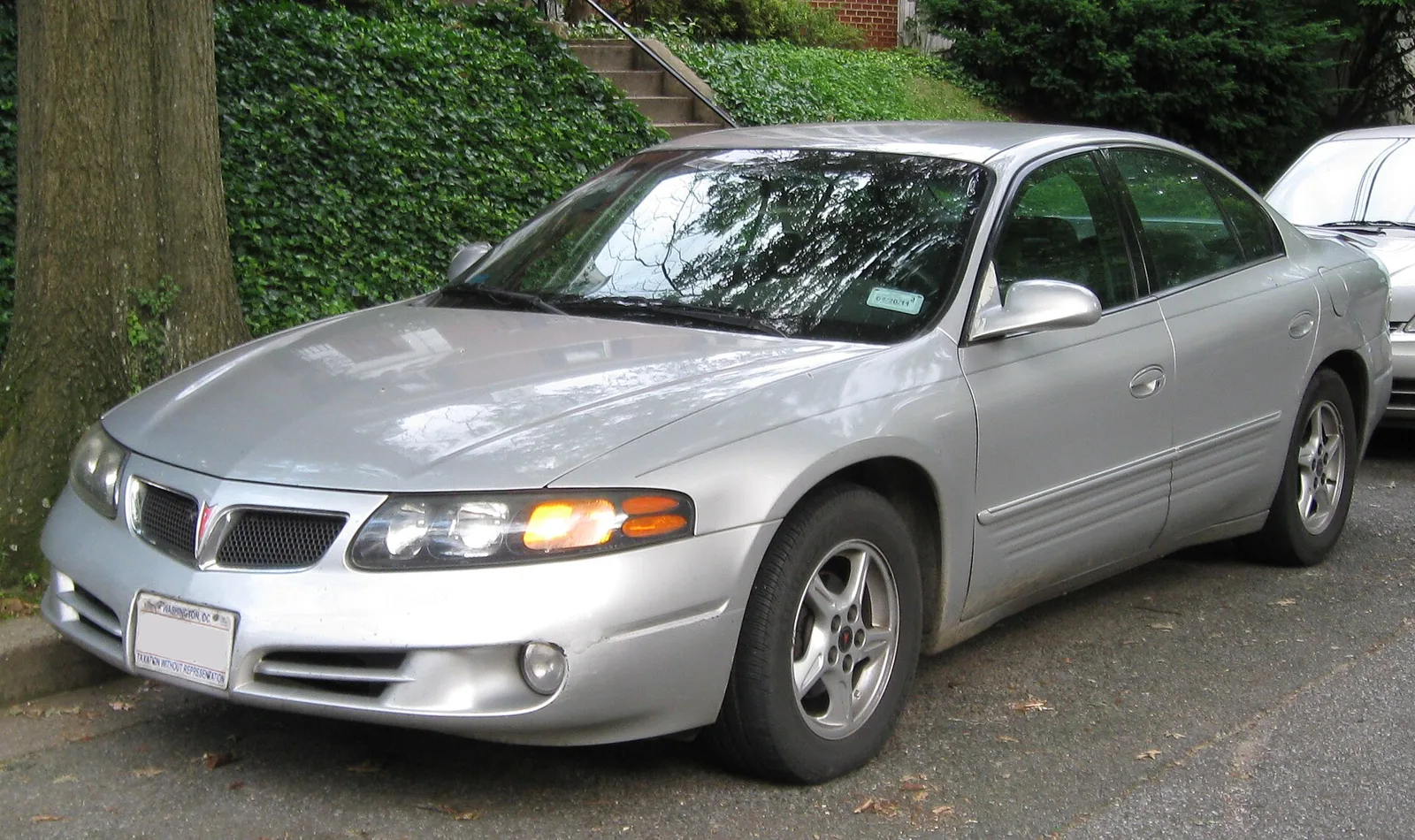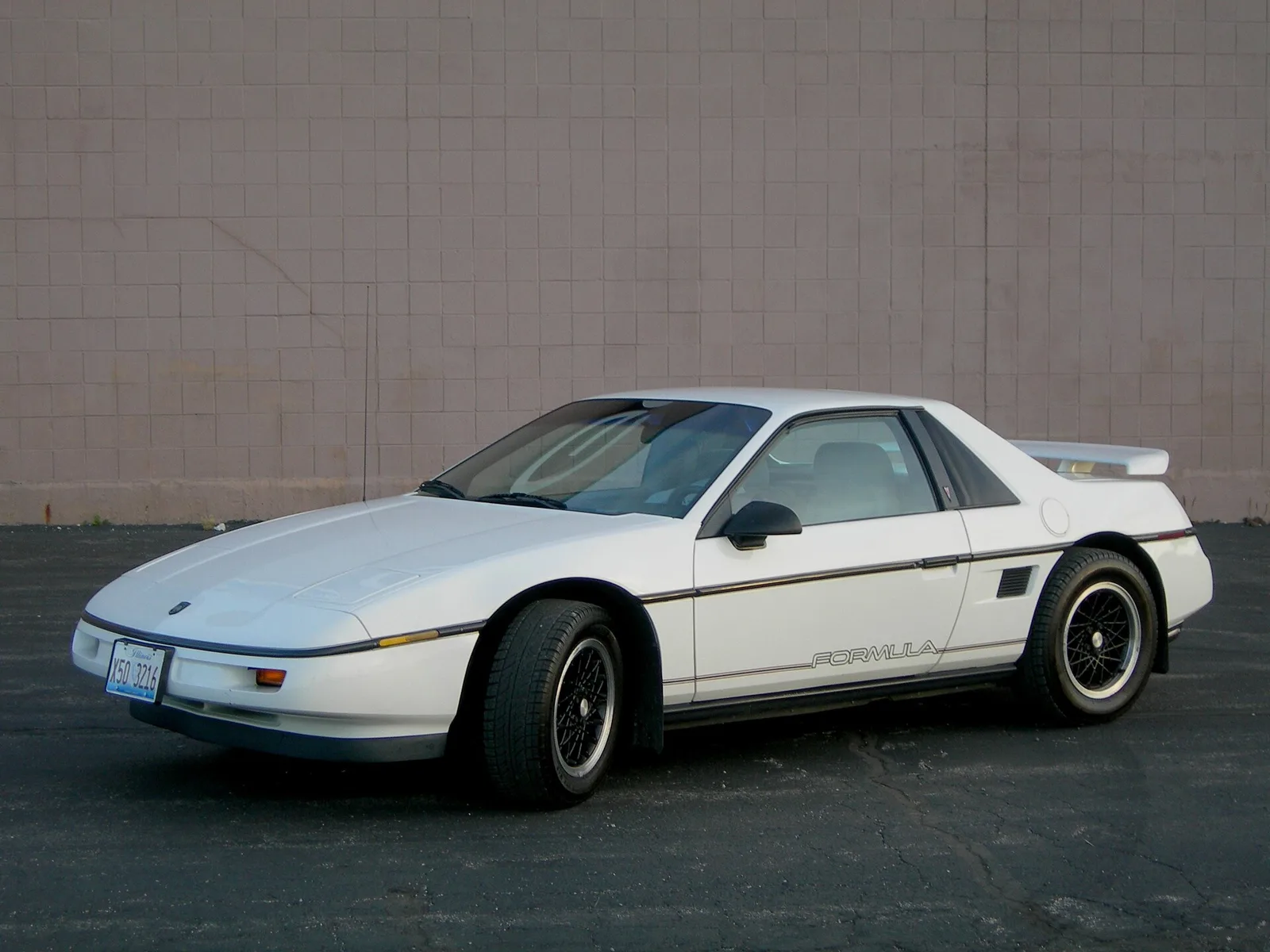
The Fiero, Solstice, G8 and Aztek each tried to change what Pontiac stood for, and each ran into a different obstacle before GM closed the brand.
Pontiac's Fiero, Solstice, G8 and Aztek were attempts to give the brand excitement: a mid-engined commuter, a retro roadster, a rebadged Holden V8 sedan and an adventure crossover. GM discontinued Pontiac after the 2009 model year following its bailout and bankruptcy.
General Motors management did not want a two-seater that could compete with the Corvette, so in 1978 a group of young Pontiac engineers sold the idea as a frugal four-cylinder commuter car that merely happened to seat two. That small piece of salesmanship produced the Fiero, the first mass-produced American rear mid-engined car.
Four cars show what the brand tried before General Motors closed it: the Fiero, the Solstice, the G8 and the Aztek. Each was a bold attempt to change Pontiac's image, and each ran into a different problem, from budget compromises to a recession to a design that critics found hard to forgive.
What did the Pontiac Fiero, Solstice, G8 and Aztek say about the brand?
They show a brand repeatedly reaching for excitement. The Fiero was a mid-engined two-seater, the Solstice a retro roadster, the G8 a rear-drive V8 sedan imported from Australia and the Aztek an adventure crossover. Pontiac itself was discontinued by GM after the 2009 model year.
| Model | Built | Layout | Engines | What happened |
|---|---|---|---|---|
| Fiero | 1984 to 1988 | Mid-engined two-seater | 2.5-litre four, 2.8-litre V6 | 370,168 built, discontinued as sales fell |
| Solstice | 2005 to 2010 | Front-engined roadster | 2.4-litre four, 2.0-litre turbo four | Over 64,000 convertibles and 1,266 coupes built |
| G8 | 2008 to 2009 | Rear-drive full-size sedan | 3.6-litre V6, 6.0 and 6.2-litre V8 | Almost 30,700 sold by July 2009 |
| Aztek | 2001 to 2005 | Front-drive or all-wheel-drive crossover | V6 | Best year was 27,793 sales in 2002 |
Young Pontiac engineers sold the Fiero as a commuter car that just happened to have two seats.
Pontiac Fiero: the commuter car that wanted to be a sports car
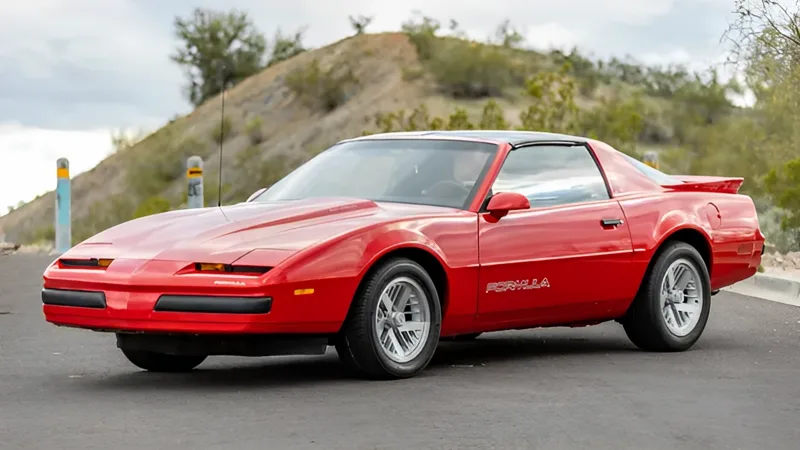
The Fiero was a rear mid-engined light economy car sold for the 1984 to 1988 model years. It was Pontiac's first two-seater since its coupes of 1926 to 1938, and the first mass-produced mid-engined car from any American manufacturer. Its chassis used non-load-bearing composite body panels, which kept it light, and its four- and six-cylinder engines helped Pontiac meet fuel economy rules.
After the engineers built a running prototype in less than six months, the project got its green light. General Motors saw the oil crisis as an opening for a fuel-efficient sporty commuter, and the car was redesigned around the existing 2.5-litre Iron Duke four-cylinder, which with economy gearing could manage 7.6 L/100 km (31 mpg-US) in the city and 4.7 L/100 km (50 mpg-US) on the highway.
A project run on a shoestring
Pontiac handed the job to Hulki Aldikacti, a Turkish-born executive with two decades behind him. The whole programme, from design through retooling the plant, cost 400 million dollars, a fraction of a normal GM budget. GM split its engineers into those who drew cars and those who worked out how to build them, and blueprints bounced between the two groups until Aldikacti seated the teams next to each other.
Money shaped the car at every step. Aldikacti, long interested in plastic body panels, accepted metal body pieces for some parts because their dies cost far less. His dream of a high-performance aluminium-block V6 died because a new engine would more than double the cost of the entire car. Instead he took the heavy-block Iron Duke four.
He was told three times by counterparts in other divisions that the project had been cancelled. It survived because of William Hoglund, who took over as Pontiac's division chief in 1980, with the brand's popularity sliding. Hoglund wanted Pontiac to rebrand itself with cars that were exciting and different, negotiated the reopening of a shuttered plant in Pontiac, Michigan and let the hourly workers pick the name. They chose Fiero, which means proud or fierce in Italian. The alternatives included Sprint, Pegasus, Fiamma, Sunfire and Firebird XP.
Mid-engined, but built from the parts bin
Engineers chose the mid-engine layout to cut drag and weight and to help handling, traction and braking. Cost cutting undid some of the promise. The original brake and suspension designs were replaced by existing parts from GM's X and T platforms, and the rear suspension and powertrain ended up nearly identical to the Pontiac Phoenix, with the front suspension components of the Phoenix used at the back. The result handled no better than other small coupes of the time.
Motor Trend praised the handling and criticised the performance. Even so, the Fiero sold so well that three factory shifts in 1984 could not meet demand. It was named to Car and Driver's Ten Best list for 1984 and was the official pace car of that year's Indianapolis 500.
Pontiac Fiero years: from 1984 to the end
Production began in August 1983. The 1984 Fiero Coupe, nicknamed the Fuel Economy Leader, started at $7,999. The Sport Coupe cost $8,499 and the SE, with the WS6 handling package, $9,599. Only four colours were available at launch because the paint shop could handle no more at one time, and the lack of power steering made the car tiring for some drivers.
Marketing leaned hard on music. Pontiac sponsored the Daryl Hall and John Oates tour from November 1984, with Fiero banners above the stage and new cars on display at each venue.
Indy pace cars
About 2,000 Indy Pace Car editions were sold, with aero body cladding that would reappear on the 1985 GT. The three genuine pace cars were different: a periscope-style inlet over the roof fed a 2.7-litre Super Duty engine rated at 173 kW (232 hp). The Fiero became the first four-cylinder car to pace the Indy 500 since a Stoddard-Dayton in 1914. Pontiac beat its first-year goal of 80,000 cars, making more two-seaters than any US manufacturer had at that time.
The V6 arrives, then the end
Critics wanted more power, and the GT of January 1985 answered with a 2.8-litre V6 making 104 kW (140 hp), 43 hp more than the base four, plus better suspension tuning and wider tyres. The fastback roofline arrived on the 1986 GT on 3 January 1986. When the fastback roof was first unveiled at GM's Arizona test track in February 1984, onlookers took it for a new Corvette.
In 1988 the GT finally received the redesigned suspension, parts of the space frame and upgraded brakes that were part of the original design. Planned turbochargers and newer DOHC engines never arrived. By then sales had declined, and GM ended production after 370,168 cars over five years.
Pontiac Solstice and Saturn Sky: a roadster for 20,000 dollars
The Solstice is a front-engined two-passenger convertible built from 2005 to 2010 at Wilmington, Delaware. It was the first Pontiac two-seater since the Fiero was dropped in 1988, and it uses GM's Kappa platform, shared with the Saturn Sky, Opel GT and Daewoo G2X.
The Solstice first appeared as a 2002 concept, planned with a supercharged 2.2L Ecotec making 180 kW (240 hp) and a Corvette six-speed. Its retro look drew comparisons with the Dodge Viper and Plymouth Prowler, and GM's Bob Lutz had empowered designers to lead. Lutz also provided the spark for the Kappa platform, hoping to make an affordable sports car with a target price of $20,000.
Demand, delays and the GXP
The car arrived at the 2004 North American International Auto Show, but the Wilmington plant, which GM had planned to close, built only seven cars an hour in mid-2005. Demand surprised GM: 13,000 orders had been placed against 7,000 cars projected for 2005. The Solstice was a finalist for 2006 North American Car of the Year and enjoyed success in SCCA racing.
The base engine was a 2.4-litre Ecotec with 132 kW (177 hp) and 225 Nm (166 lb ft). The GXP shown at the Los Angeles show in January 2006 used a turbocharged 2.0-litre producing 194 kW (260 hp) and 353 Nm (260 lb ft), the highest specific output of any GM North American engine at 2.1 hp per cubic inch. Car and Driver measured 0 to 60 mph in 5.2 seconds for the targa GXP and 5.6 for the soft top.
The Saturn Sky and the coupe
The Saturn Sky was a rebadged, softer Solstice with styling by Franz von Holzhausen. It never sold as well, peaking at 11,263 cars in 2007. The Sky Red Line used the same 260 hp turbo engine and managed 0 to 60 mph in 5.2 seconds with a drag-limited top speed of 227 km/h (141 mph). From 2008 a dealer upgrade lifted GXP and Red Line output to 216 kW (290 hp).
A targa-style Solstice coupe was unveiled in 2008 and went on sale in early 2009. Only 1,266 were built before the Wilmington line shut, against over 64,000 convertibles, which makes the coupe rare.
Flaws that went with the looks
The Solstice and Sky were impractical for daily use because the folded soft top ate the whole boot and the targa panel could not be stowed safely. Both were part of a GM airbag sensor recall, and had a reputation for unreliable water pumps and low-grade materials in places. Interior space was meagre. The Wilmington plant closed in July 2009 as GM wound down Pontiac and Saturn, and Fisker Automotive acquired it after plans for a DeLorean-badged Solstice were shelved.
Pontiac G8: the Australian V8 sedan
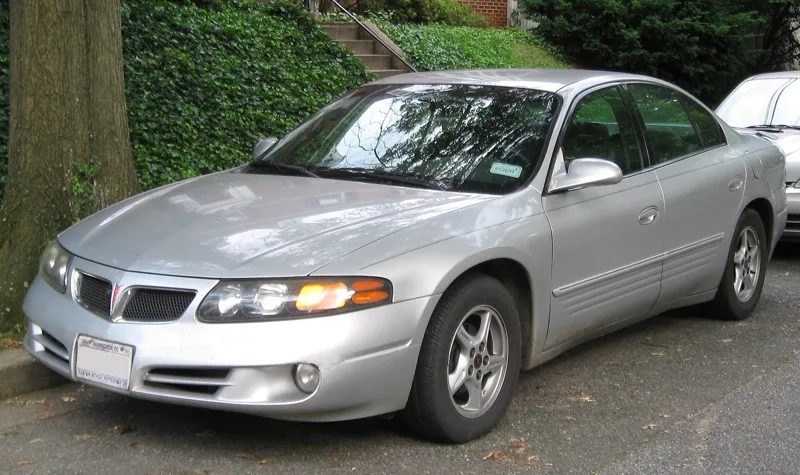
The G8 was a full-size sedan built by Holden in Australia and sold in the United States by Pontiac. It was a rebadged Holden Commodore on GM's Zeta platform, and it took the place of the Bonneville, which ended after 2005, and the Grand Prix, which ended after 2008. Bob Lutz confirmed the import plan at the Detroit show in January 2007. The first prototypes rolled out of the Elizabeth plant on 4 July 2007 and general production started on 18 December 2007.
No four-door Pontiac with rear-wheel drive had been offered since the 1986 Bonneville and Parisienne. The base car had a 3.6-litre V6 with 191 kW (256 hp) and a five-speed automatic. The GT carried a 6.0-litre V8 with 269 kW (361 hp), reaching 60 mph in 5.2 seconds, with a quarter mile in as little as 13.4 seconds.
The G8 GXP
The top G8 GXP used a 6.2-litre LS3 V8 with 309 kW (415 hp) and 563 Nm (415 lb ft), a six-speed automatic or Tremec manual, Brembo brakes and a suspension tuned at the Nurburgring. It reached 60 mph in 4.5 seconds, ran the quarter mile in 13.0 seconds at 109.6 mph (176.4 km/h) and pulled 0.90g on the skidpad. Only 1,829 were sold. In 2014 Chevrolet released the SS, based on the newer Commodore and using the same 415 hp LS3, which was effectively the next-generation G8 GXP.
The sales problem
Deliveries started in March 2008. May 2008 sales were 1,832, against 12,230 for the Grand Prix in May 2007. By December 2008 the rear-drive G8 had not replaced the front-drive models as expected, with 11,000 unsold and 13,000 sold, and prices had dropped by $3,000 to $5,000 below the sticker. By July 2009 there were 5,000 unsold and almost 30,700 sold. Production stopped in mid-2009.
Lutz said in July 2009 that the G8 would return as a Chevrolet Caprice, then retracted it. GM did announce a Caprice police vehicle in 2009 that Car and Driver described as a successor to the G8, and the Chevrolet SS later filled the gap. A G8 ST coupe utility, shown in March 2008 after a naming contest drew more than 18,000 suggestions, was cancelled in January 2009 because of budget cuts. Holden planned a limited run of 1,500 Commodore SS V models with the G8 front end.
Pontiac Aztek: bold by design
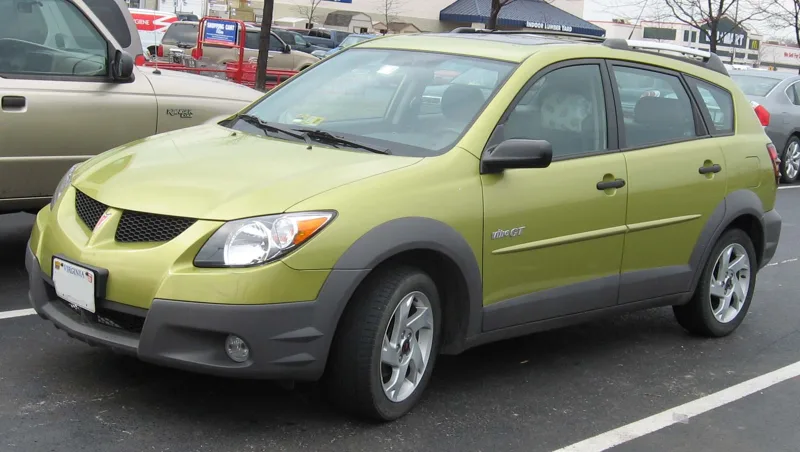
The Aztek was a mid-size crossover introduced in 2000 for the 2001 to 2005 model years. Pontiac called it a sport recreational vehicle. It used a shortened version of GM's minivan platform, shared with the Pontiac Montana, and offered 94 cubic feet of cargo room with the rear seats removed. The concept shown in 1999 was well received. It was aimed at Generation X buyers and launched with a tagline billing it as possibly the most versatile vehicle on the planet, alongside the reality show Survivor.
Tom Peters, who later designed the C7 Corvette, led the styling. He said the idea was a bold, in-your-face vehicle that was not for everybody. BusinessWeek called it the first awkward step toward innovation by a company that had avoided that path, and the verdict from critics was harsh. Dan Neil listed it among the 50 worst cars of all time but added that, under the ugliness, it was a useful and competent crossover. A Daily Telegraph poll in August 2008 placed it first among the 100 ugliest cars, and Edmunds put it first on its list of the 100 worst.
What was actually in it
It was built at Ramos Arizpe in Mexico alongside the Buick Rendezvous and was the first Pontiac-badged SUV sold in the United States and Mexico. A full-time all-wheel-drive system called Versatrak, supplied by Steyr-Daimler-Puch under licence from McLaren Traction Technologies, arrived later in the 2001 model year and came with an independent rear suspension.
The Aztek could carry a 4-by-8-foot sheet of plywood. Options included a pull-out cargo tray that held up to 180 kg (400 pounds), a removable cooler in the front console, a tent and inflatable mattress package with a built-in compressor, and a two-piece tailgate with cupholders and seat contours. It was one of the first cars designed entirely with computerised rapid-prototyping tools.
Sales and afterlife
GM forecast up to 75,000 sales a year and needed to build 30,000 to break even. The best year was 2002 with just 27,793. Pricing was too high for the intended young audience, so after the 2001 model year GM dropped the GT, cut prices and offered generous rebates. Even so, the Aztek scored highly for customer satisfaction and won J.D. Power's Most Appealing Entry Sport Utility Vehicle award in 2001. The IIHS gave it a Marginal score in the frontal offset test.
The Aztek ended after the 2005 model year, replaced by the Pontiac Torrent, and the last one rolled off the line in December 2004. Ramos Arizpe was retooled for the Chevrolet HHR. Its reputation then changed: Walter White drives an Aztek in the series Breaking Bad, and in 2015 Edmunds ranked it sixth among used cars for buyers aged 18 to 34, crediting what it called the Breaking Bad Effect.
Why did GM kill Pontiac?
After the 2008 recession GM discontinued Pontiac and Saturn in compliance with its bailout deal with the US government. Lutz harshly opposed killing Pontiac, but the closure became a matter of pragmatism, with poor buyer enthusiasm and long-running unprofitability given as the reasons.
The 2009 model year marked the end of all Pontiacs, a result of GM's Chapter 11 bankruptcy.
What this means if you are looking at one today
For a collector, the numbers are the guide. The Fiero was built in the hundreds of thousands, the Solstice convertible in tens of thousands and the Solstice coupe and G8 GXP in the low thousands, with 1,266 and 1,829 built respectively. Each has known weak points to check: the Fiero's parts-bin handling and lack of power steering on early cars, the Solstice's cramped boot and water pumps, and the Aztek's marginal frontal offset result.
What happened to the cars after Pontiac closed
GM announced in April 2009 that Pontiac would end by the close of 2010, and CEO Fritz Henderson said the Solstice would not continue under another GM brand. DeLorean's plans for a 2011 Solstice were shelved. The G8's idea lived on in the Chevrolet SS of 2014, with the same 415 hp LS3.