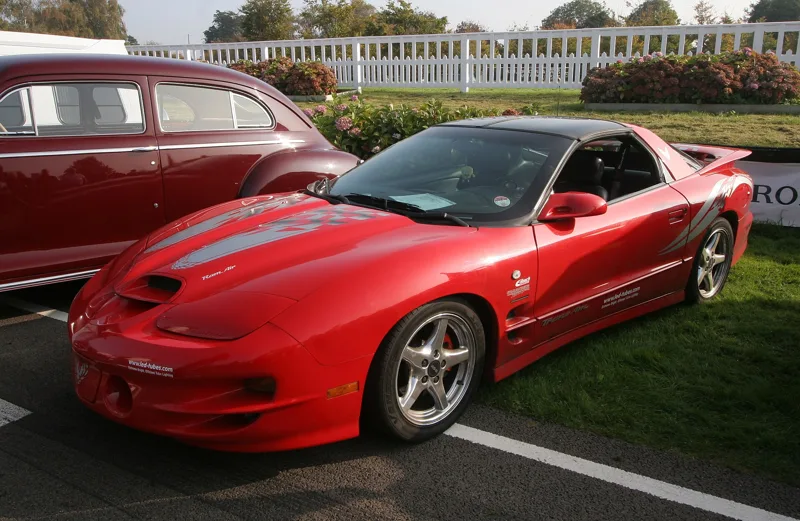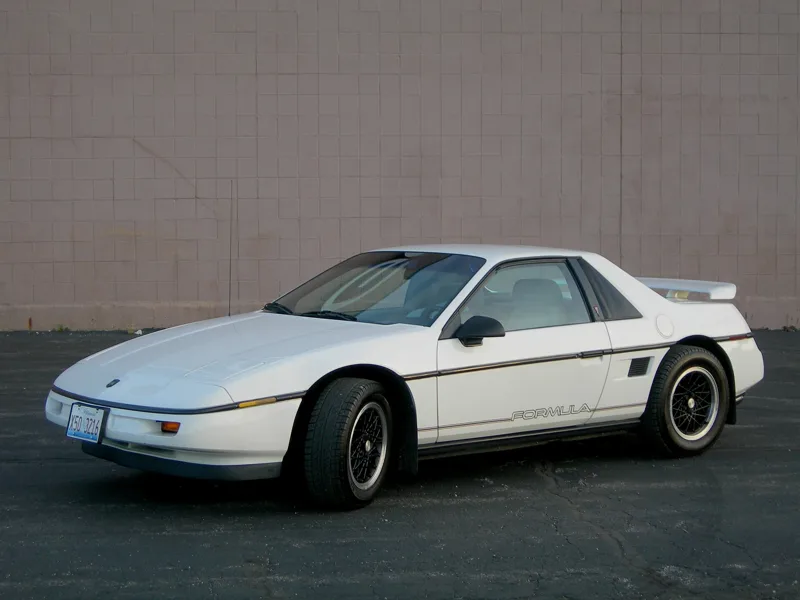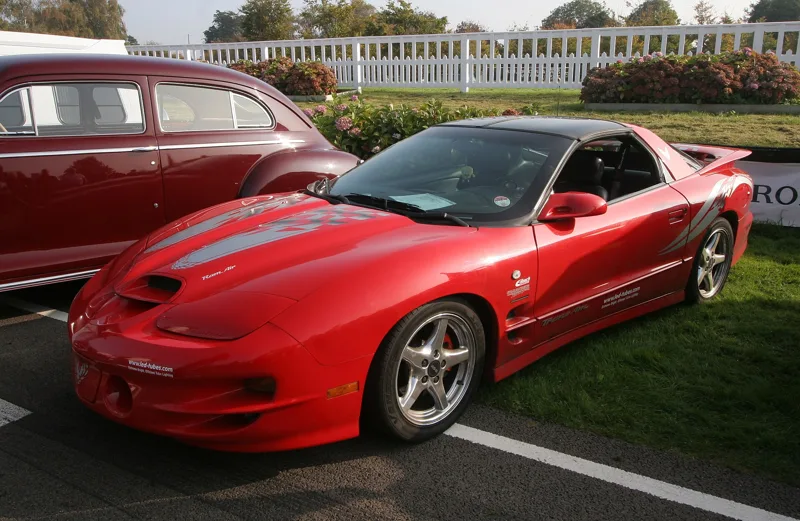
A restyled, hatchback-bodied Firebird with hidden headlamps, fuel injection and a run of turbo, GTA and Formula cars that ended with the 1992 model year.
The third-generation Pontiac Firebird was introduced for 1982 alongside the Chevrolet Camaro, with a hatchback body, fuel injection and hidden headlamps. It ran as the base Firebird, the S/E and the Trans Am until 1992, and produced special models including the Turbo Trans Am and Firehawk.
The third-generation Pontiac Firebird was introduced in late 1981 for the 1982 model year, alongside its corporate cousin, the Chevrolet Camaro. It was the first Firebird with factory fuel injection, four-speed automatic and five-speed manual gearboxes, four-cylinder engines, 16-inch wheels and a hatchback body. The car ran in three versions, the base Firebird, the luxury S/E and the high-performance Trans Am, until 1992.
When did the third-generation Firebird arrive?
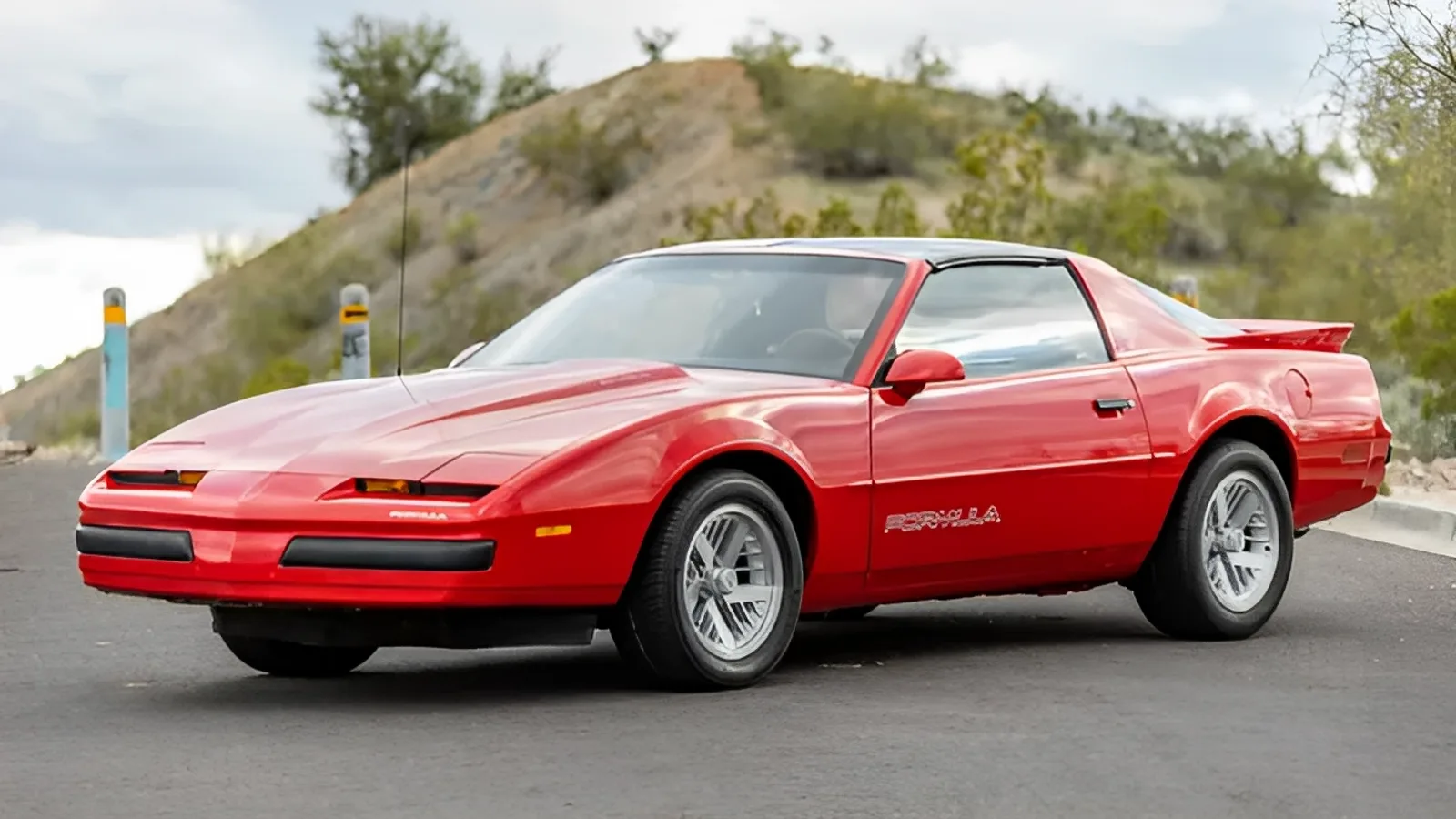
The third-generation Firebird went on sale for the 1982 model year, a restyle that made the car more modern and aerodynamic. Pontiac lowered the windshield slope to 62 degrees, about three degrees less steep than anything General Motors had tried before. The side glass sat flush, and the car had a large glass hatchback for the first time.
The Firebird was also the closest of any generation in size to the original 1967 car. Its wheelbase shrank to 101 inches, and the car lost more than eight inches of length and about an inch of width. It was close to 500 lb (227 kg) lighter than the car it replaced in 1981.
A hatchback with hidden headlamps and fuel injection that ended its run as a Trans Am, GTA or Formula in 1992.
How did the 1982 design differ from earlier Firebirds?
The design was shaped in wind tunnels. The base Firebird had a drag coefficient of 0.33, and the Trans Am brought it to 0.32. By 1985 the Trans Am reached 0.29, which made it the most aerodynamic vehicle General Motors had released to that date.
Details reflected that brief. The split grilles fed the radiator and a front air dam, the side mirror housings were nearly cone shaped with their points facing the wind, and the wipers were hidden under the hood. The electronically controlled headlamps rose from the leading edge of the hood, and they stayed hidden until production ended in 2002.
Chassis changes were just as significant. MacPherson struts with inboard coil springs took the front, and the rear used coil springs, shocks and twin trailing links with a torsion bar. A large torque arm ran from the transmission tailshaft to the rear axle centre to limit axle twist. The 10.5-inch (270 mm) power disc brakes were standard on every car.
The hatchback's cargo bay measured 30.9 cu ft (0.87 m3) with the seats folded flat, and its glass decklid carried no disturbing feature into the airflow. Pontiac had hoped to drop the Trans Am name to save royalties paid to the SCCA, but early promotional cars used T/A instead, and the full name stayed.
Which engines were offered in 1982?
The standard engine was the fuel-injected 2.5-litre Pontiac Iron Duke four, rated at 90 hp. It was the first four-cylinder ever offered in a Firebird and the last true Pontiac engine in the car. It delivered almost the same power as the V6, and with the five-speed manual it returned between 31 and 34 mpg on the highway.
A carbureted 2.8-litre V6 produced 102 hp. The LG4 5.0-litre used GM's Computer Command Control system and a computer-assisted carburettor, and it made 145 hp with 240 lb ft of torque. The LU5 used a twin throttle body fuel injection system like the 1982 Corvette, and it produced 165 hp.
Wheel packages varied. Base cars ran 14-inch steel wheels, while the S/E and Trans Am used 14-inch turbo cast aluminium wheels with plastic hubcaps. The WS6 performance package added four-wheel disc brakes, 15-inch Goodyear Eagle GT radials, stiffer springs, larger sway bars and a 12.7:1 quick-ratio steering box, while the WS7 variant used rear drums because of a shortage of disc components.
What were the special Trans Ams of 1982?
The Limited Edition Trans Am S/E Recaro came in black with gold trim and charcoal cloth Recaro seats. It recalled the black and gold Trans Am that Burt Reynolds and Jackie Gleason drove in Smokey and the Bandit, and it added about 25 percent to the price of a Trans Am.
The 1982 Daytona 500 Pace Car Edition was painted bright red with NASCAR decals and 15-inch aero rims with black bowling ball hubcaps. Surviving examples are rare, and the build count and option mix remain uncertain.
Where did the Firebird appear on screen?
A modified 1982 black Trans Am was cast as KITT in the NBC series Knight Rider, which ran from 1982 to 1986. It was voiced by William Daniels. The same car also served as its evil double, KARR, with Peter Cullen providing the voice at first and Paul Frees later on.
The reunion film Knight Rider 2000 gave KITT a makeover that echoed the Pontiac Banshee concept, but it was actually built on a Dodge Stealth rather than a Firebird. A red 1982 Trans Am also starred in Data East's 1985 interactive movie game Road Blaster.
How did the car change between 1983 and 1986?
The 1983 model was broadly unchanged. Automatic cars received a T-handle shifter, and the L69 high-output 305-cubic-inch engine arrived midyear. It was carbureted, rated at 190 hp, and virtually identical to the Camaro Z28's L69, though the Trans Am used a functional cold-air intake to suit the bulged hood.
For 1985 Pontiac restyled the nose with black bumperettes, and the carburettor V6 gave way to a multi-port fuel-injected 2.8-litre V6 rated at 135 hp. The LB9 Tuned Port Injection 305 arrived for the Trans Am, producing 210 hp, although it was offered only with an automatic. The turbo bulge hood was replaced by a flat hood with functional nostrils.
The 1986 cars received centre high-mounted stop lamps to meet federal rules, and the 2.5-litre four was dropped in favour of the multi-port V6 as standard. The S/E was discontinued at the end of that year, and the rubber and vinyl rear wing became standard on the Trans Am.
Why did the 1984 model year sell best?
The 1984 Firebird became the best-selling year of the third generation, with 128,304 units. The base Firebird accounted for 62,621 of those cars, the S/E for 10,309 and the Trans Am for 55,374. Those figures came with few interior changes, just a revised dashpad and a new pin-mounted T-top arrangement.
Trans Am buyers could have the optional W62 ground effects package, and a new high-tech 15-inch wheel with a black plastic centre cap. Pontiac also released a white and blue 15th Anniversary Trans Am for $3,499 above the base $10,699, limited to 1,500 units and fitted with 16-inch Aero-Tech wheels, the first 16-inch wheels on any F-body.
What made the 1987 Trans Am GTA special?
The 1987 model year brought the Trans Am GTA, or Gran Turismo Americano. It used a 5.7-litre tuned port injection V8 that produced 215 hp and was available only with an automatic. The GTA came standard with the TH-700R4 automatic, air conditioning, new seats with inflatable side bolsters and the WS6 handling package.
The Formula returned for 1987 with a choice of V8s, convex 16-inch wheels and the turbo bulge hood. Fibreglass replaced the older wrap-around wing, which came standard on the Trans Am and Formula. Trans Am GTA production in 1988 was 9,765 in the United States and 1,261 in Canada.
The GTA had its own quirks. A notchback hatch became an $800 option in 1988, and the fibreglass trunk lid blistered over time. Owners who stuck with it often called it the Ferrari Back, though it was a fibreglass rear end rather than an exotic one.
What was the Turbo Trans Am?
The 1989 Turbo Trans Am, or TTA, was built for the 73rd Indianapolis 500, where it paced the field for the final time as a Pontiac pace car. Prototype Automotive Services, an engineering firm, reworked the turbocharged Buick 3.8-litre V6 that had first been developed for the Regal Grand National, making it more powerful.
A total of 1,555 TTA replicas were built, rated at 250 hp. Car and Driver logged a 0 to 60 mph run in 4.6 seconds and a quarter mile in 13.4 seconds at 101 mph. Car and Driver said the 250 hp figure was exceedingly modest and estimated output closer to 300 hp. Motor Trend recorded 162 mph, the fastest for a production car in its test.
Modified test cars reached 181 mph with a ZF six-speed fitted, and a set of simple upgrades could produce 12.5-second quarter miles without a trailer. That made the TTA a favourite with amateur racers. Every production TTA came with an automatic, the TH200-4R, and most had T-tops and leather trim.
Rarity matters to collectors. Only 40 hardtops were made, and three convertibles came from ASC, with records showing only two still known to exist. Five test cars were pulled from the line without regard to colour, so a few non-white examples survive.
How did the Formula become a sleeper?
From 1989 the N10 dual catalytic converter exhaust freed up more power, lifting the LB9 to 225 hp and the L98 to 235 hp. The N10 could only be paired with a five-speed manual and a limited-slip differential with a 3.45 performance axle ratio, which made a limited number of Formulas into sleepers.
Car and Driver reported that these Formulas could beat the heavier Trans Am GTA while costing about 30 percent less. Their 0 to 60 mph times were under seven seconds, and their top speed exceeded 135 mph. Only about 50 were built each year, because most LB9 Formulas came with an automatic, which disqualified them from the N10 package.
What was the Firehawk?
From 1991 Street Legal Performance modified a factory Formula into what it called the Firehawk. The option was limited to cars ordered through the SLP programme, and no two were alike. SLP had planned 250 cars, but only 27 were ordered, and 25 were built.
The standard Firehawk cost $39,995, with a 350 hp modified 350 engine and a ZF six-speed with a carbon fibre clutch. The Competition package added $9,995 worth of racing equipment, including Brembo brakes, a roll cage and a Simpson-harnessed Recaro seat. Motor Trend measured the car at 4.9 seconds to 60 mph and a 13.4-second quarter mile.
How did the Firebird end its run in 1992?
The 1992 model year was the last for the third-generation platform. The fourth generation was imminent, and Pontiac made few changes, adding new exterior colours such as Jamaica Yellow and changing one interior colour to a greyish beige. Extra bonding agents stiffened the structure to reduce squeaks and rattles.
It was also the final year for the GTA, the concealed wipers and the aerodynamic long-hood body. The GTA had 226 US and 48 Canadian sales in the last year, and few Trans Ams, GTAs and Formulas were produced as most buyers waited for the next generation.
Third-generation Firebird specifications at a glance
| Specification | Detail |
|---|---|
| Introduced | Late 1981, for the 1982 model year |
| Wheelbase | 101 inches |
| Drag coefficient | 0.33 base, 0.32 Trans Am, 0.29 by 1985 |
| Iron Duke four | 90 hp fuel-injected 2.5 L |
| LU5 V8 | 5.0 L Crossfire injection, 165 hp |
| 1989 TTA | Turbo V6, 250 hp rated, 1,555 built |
| 1991 Firehawk | 350 hp SLP-modified V8, $39,995 standard |
| 1984 sales | 128,304 units, the best-selling year |