How a Nordschleife lap is timed, what the rules say is a production car, and how the Porsche 918 Spyder and Mercedes-AMG One took the record.
The fastest road-legal production car lap of the Nurburgring Nordschleife is the Mercedes-AMG One's 6:29.09 from September 2024. Official laps cover the full 20,832 m with a flying start under notary supervision, but definitions of production car vary, which fuels dispute.
In 1961 Phil Hill became the first man to lap the Nurburgring Nordschleife in under nine minutes, in a Formula One car. In September 2024 a road-legal Mercedes-AMG One lapped it in 6:29.09.
What is the Nordschleife, and why do carmakers chase its lap record?
The Nordschleife is the old north loop of the Nurburgring, 20.830 km (12.943 mi) of public toll road and race track through the Eifel mountains, with more than 300 metres (1,000 feet) of elevation change. Manufacturers and magazines use it as a testing ground, and lap times are the headline result.
The loop dates from the 1920s and was completed in the spring of 1927. Jackie Stewart nicknamed it the Green Hell after winning the 1968 German Grand Prix in rain and fog. Before 1971 it had 174 bends. Formula One left it after the 1976 race, the last ever on a circuit of 10 km or more, and a separate Grand Prix track, built around the old pit area, opened in 1984. The Nordschleife stayed open for racing, testing and public use.
Why would a car company bother? Car and Driver has described Nordschleife record runs as a universally accepted, objective measure of performance, and says shaving seconds gives automakers reasons to grab headlines. Popular Science is blunter: for a sports car company, beating the Ring on camera is close to the best marketing there is, even for a maker building only a double-digit number of cars.
Because lap lengths vary, not every Nordschleife time is comparable.
How are Nordschleife lap times measured?
As of 2019 the track operators have official rules for certified laps: the track's whole length, with a flying start, with timekeeping supervised by a notary and the car inspected to confirm it is in series-production state. Not every published time follows them.
The problem is length. A full lap of the Nordschleife, bypassing the modern Grand Prix track, is 20,832 m (12.944 mi). Most laps are timed over about 200 metres (656 ft) less for safety, and the magazine sport auto uses a 20,600 m configuration. Only closed sessions and race events allow a full, uninterrupted flying lap. During public tourist sessions the main straight cannot be used at speed, so laps are timed from a bridge at Antoniusbuche to a gantry on Dottinger Hohe, a distance of 19.1 km (11.9 mi). Motorcycle tests carried out that way come out about 22 seconds shorter than a full lap. Because lap lengths vary, not every time is comparable.
Four groups produce times. The track operators set the official standard. Media outlets publish them for comparison, and sport auto runs its Supertest, usually driven by editor-in-chief Horst von Saurma, as well as a challenge for the fastest car that is road legal and registered in Germany, on road-legal tyres. Manufacturers run their own tests and publish the results for promotion. A fourth category is private drivers, some of whom claim times set in tourist sessions, where racing is forbidden and speed limits apply at Breidscheid and on Dottinger Hohe.
What counts as a production car at the Nurburgring?
There is no single definition. A production vehicle is generally one put into mass production, built in large numbers and offered to the public, and the United Kingdom approval authority describes it as a make, model and type mass-produced by its manufacturer. Beyond that, the thresholds differ.
Guinness World Records has been reported to require a minimum of 30 cars, while other lists require at least 25 road-legal cars built. One published list of Nordschleife lap times treats a car as street legal if it holds road registration in at least one EU country, since the Nurburgring is a public toll road and German and EU rules apply. New entries on that list need a manufacturer press release or an article from an independent publication, an uncut on-board video of the whole lap with the timing visible from start to finish, and a statement that road-legal original-equipment tyres were used.
Who holds the fastest Nurburgring lap for a production car?
| Date | Car and driver | Time | Notes |
|---|---|---|---|
| 5 August 1961 | Phil Hill, Ferrari 156 Formula One car | 8:55.2 (153.4 km/h) | First lap under nine minutes |
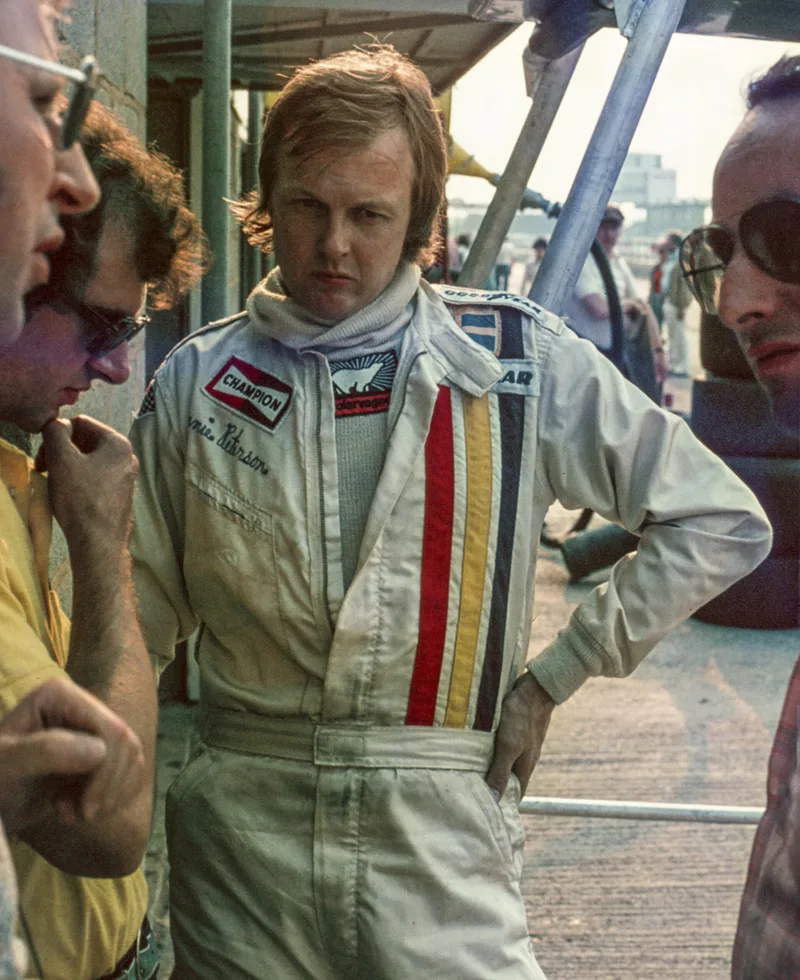
| 1975 | Niki Lauda | 6:58.6 | Only driver under seven minutes on the full 22.835 km lap |
| 1983 | Stefan Bellof, Porsche 956 | 6:11.13 (199.8 km/h) | Qualifying lap on 20.832 km; stood 35 years |
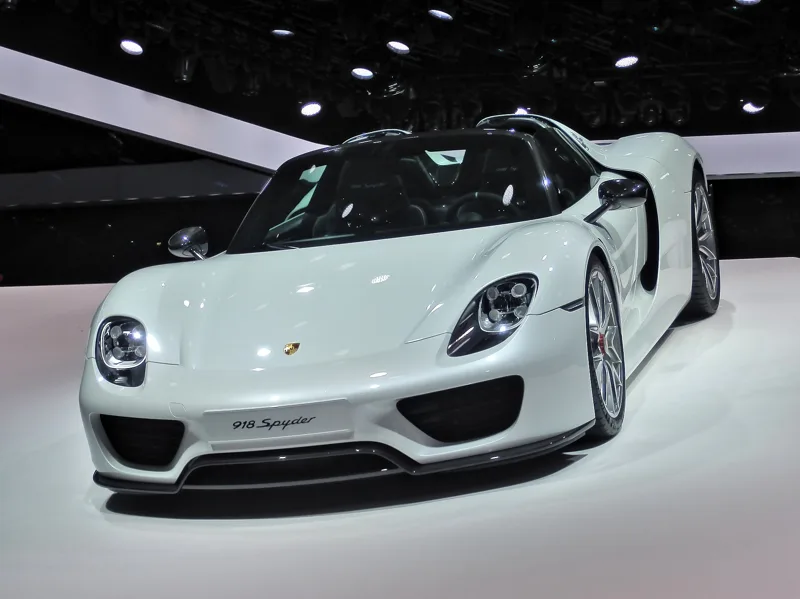
| September 2013 | Porsche 918 Spyder with Weissach Package | 6:57 | 20.6 km course; first street-legal production car under seven minutes |
| 29 June 2018 | Timo Bernhard, Porsche 919 Hybrid Evo | 5:19.546 (233.8 km/h) | Beat Bellof's all-time mark; slightly longer version of the circuit |
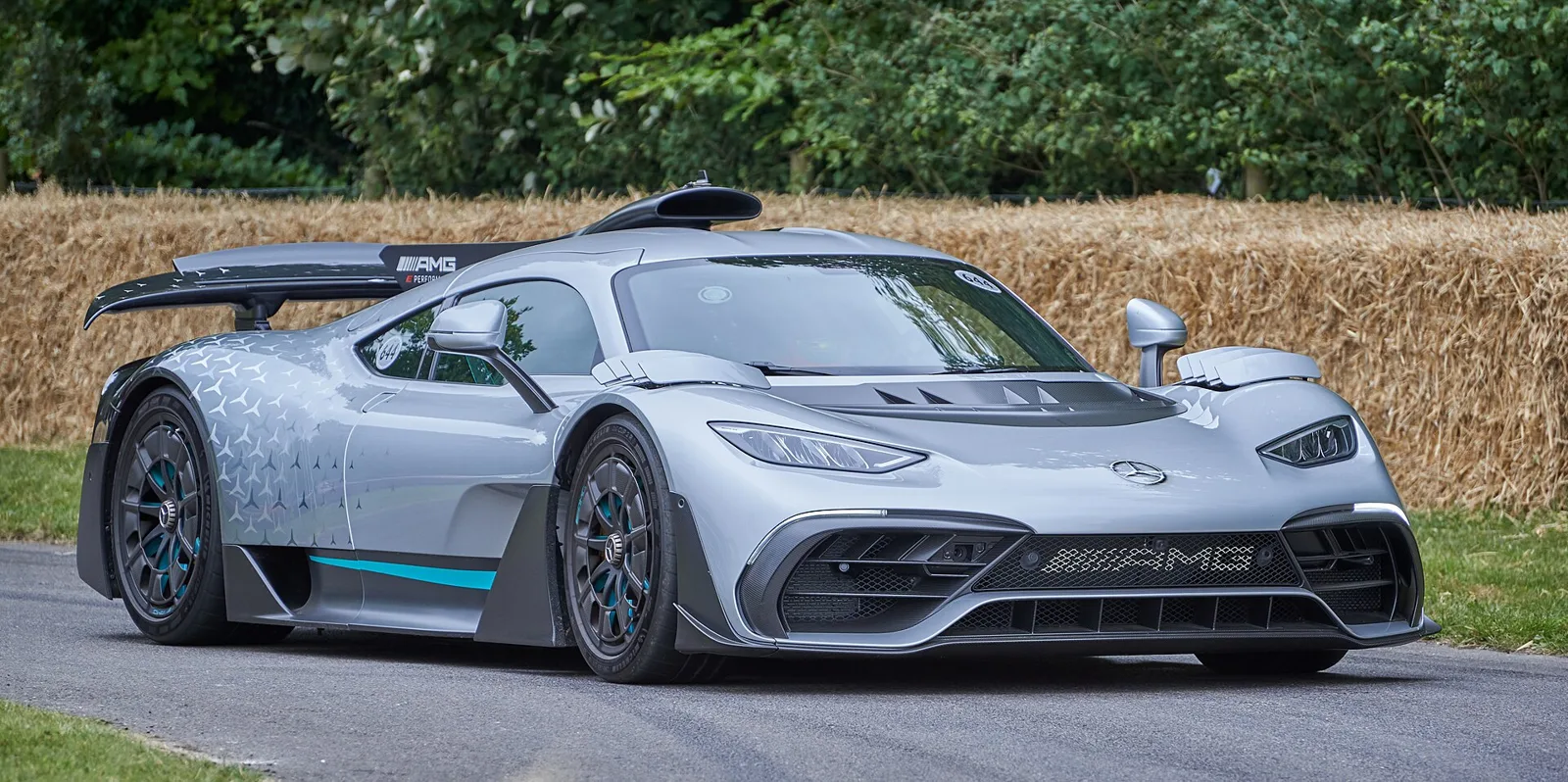
| November 2022 | Maro Engel, Mercedes-AMG One | 6:35.183 | 20.832 km course; fastest road-legal production car at the time |
| September 2024 | Mercedes-AMG One | 6:29.09 | First road-legal production car under 6:30 |
How fast was the Nordschleife before road cars arrived?
Phil Hill's 8:55.2 in a Ferrari 156 Formula One car on 5 August 1961, an average of 153.4 km/h (95.3 mph), was the first lap under nine minutes. Niki Lauda later became the only driver to lap the full 22.835 km (14.189 mi) circuit in under seven minutes, with a 6:58.6 in 1975.
The old circuit's last Formula One race was Lauda's crash year, 1976, when a new magnesium rear suspension component on his Ferrari, lighter and more fragile than the aluminium used until then, failed. The crash also showed the circuit's distances were too long for regular fire engines and ambulances. When a new Grand Prix track was built in the early 1980s, a bypass shortened the Nordschleife to 20.832 km, the length still used for full laps, and in 1983 Stefan Bellof set 6:11.13 in a Porsche 956 during qualifying for the 1000 km race, an average of 199.8 km/h (124.1 mph). Because no major racing has taken place on the circuit since 1984, the lap stood as the all-time record for 35 years. Timo Bernhard beat it in a Porsche 919 Hybrid Evo on 29 June 2018 with 5:19.546, an average of 233.8 km/h (145.3 mph), on a slightly longer version of the circuit.
The original full circuit, the 28.265 km Gesamtstrecke, had its own benchmark: Louis Chiron's average of 112.31 km/h (69.79 mph) in a Bugatti.
How did the Porsche 918 Spyder break seven minutes?
In September 2013 a Porsche 918 Spyder fitted with the Weissach Package lapped the 20.6 km (12.8 mi) road course in 6:57. That cut the previous record by 14 seconds and made it the first street-legal production car under seven minutes.
The 918 was a mid-engined plug-in hybrid. A 4.6 litre (4,593 cc) naturally aspirated V8 made 447 kW (608 PS; 599 hp) at 8,700 rpm, and two electric motors added 210 kW (286 PS; 282 hp), for a combined 652 kW (875 hp) and 1,280 N.m of torque. Porsche limited it to 918 cars at a starting price of EUR 781,000. Production began on 18 September 2013, the car sold out in December 2014 and production ended in June 2015.
The Weissach Package was an $84,000 factory option in the US. It brought magnesium wheels made by BBS, an extended rear diffuser, Alcantara in place of leather, and carbon fibre for the roof, windscreen frame, rear wings and mirrors. The roof was reinforced for safety on the record car, and sport auto observed the run.
How did the Mercedes-AMG One take the Nurburgring record?
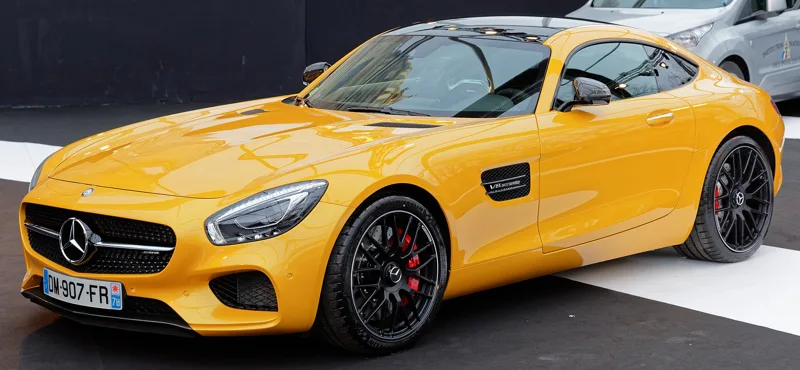
The Mercedes-AMG One uses Formula One hardware: a modified 1.6 litre turbocharged 90-degree V6 and four electric motors give 782 kW (1,063 PS; 1,049 hp). In November 2022 Maro Engel lapped the Nordschleife in 6:35.183, beating the Mercedes-AMG GT Black Series by over 13 seconds.
The V6 is a modified version of the engine from the Mercedes-AMG F1 W06 car, with a redline of 11,000 rpm. The electric side has a motor generator unit-kinetic of 120 kW on the crankshaft, a motor generator unit-heat of 90 kW on the turbocharger, and two 120 kW motors driving the front wheels. A seven-speed single-clutch automated manual with a four-disc carbon racing clutch delivers drive to the rear; Mercedes-AMG chose it over a dual-clutch design to save weight and out of concern for the high-revving engine. The body is entirely carbon fibre, and kerb weight is 1,695 kg (3,737 lb). The maker quotes 0 to 100 km/h in 2.9 seconds and a top speed of 352 km/h (219 mph).
Engel said the track was not in ideal condition, with damp patches that made him lift off the throttle in places. Mercedes-AMG claimed the car could easily have gone under 6:30 in better conditions, and it tested that claim in September 2024, lapping in 6:29.09, another 6 seconds faster, to become the first road-legal production car under 6:30. The company has also reported records on the Nurburgring Grand Prix circuit (1:56.096), the Hockenheimring (1:38.563) and the Red Bull Ring (1:26.846), and a production car lap record at Monza of 1:43.902 in April 2023.
Only 275 One cars were planned, hand built at US$2.72 million each, and all had been sold when the production version appeared on 1 June 2022. Mercedes-AMG received orders for more than four times that number and refused to raise the limit, to keep the car exclusive. The engine lasts 50,000 km (31,000 mi) before owners have to return the car for a refurbishment.
Why is the Nurburgring record controversial?
Because "production car" means different things to different people, and some of the claims behind the headlines have not survived scrutiny. The 2013 Porsche record and a Nissan claim two months later show why.
Porsche said its 918 Spyder set a Nurburgring record for a street-legal automobile, yet on that list it came third, behind two Radical SR8 cars. Car and Driver and the wider industry accepted the 918 as the record holder, because the SR8 had not met full type-approval and held only British single-vehicle approval. Two months later Nissan claimed a ring record for its GT-R Nismo as the world's fastest volume production car. Its engineers later admitted the car had been tuned specifically for the Nurburgring, with significant changes from the standard model, among them parts that were not road legal.
There is also the question of what the chase does to the cars themselves. Top Gear used the Nordschleife for its challenges, often with Sabine Schmitz, yet its presenter James May was critical. He argued that lap timing corrupts performance when car makers use it to develop new models, and that a track open to everyone encourages a pointless scramble for comparative times.
What do Nurburgring lap records mean for someone buying a car?
The record holders are not showroom staples. The Porsche 918 was capped at 918 cars from EUR 781,000, and the AMG One at 275 cars at US$2.72 million, and the AMG One's engine needs a refurbishment after 50,000 km (31,000 mi).
For ordinary buyers, the lesson in the dispute is how to read a lap time. Check which lap length was used, because a bridge-to-gantry or 20.6 km lap is shorter than a full 20,832 m one. Check whether the car is registered for road use, whether it came with road-legal tyres, and who timed it. A manufacturer press release is not the same as a notary-supervised run, and the Nissan episode shows that changes to a car for the Ring may never reach the showroom version.
Where does the record chase go next?
Porsche presented the Mission X in June 2023 as the replacement for the 918, with production slated for 2025. Mercedes-AMG, for its part, followed its Nordschleife lap with figures from the Nurburgring Grand Prix circuit, the Hockenheimring, the Red Bull Ring and Monza, so its record chase has already moved beyond the Eifel.