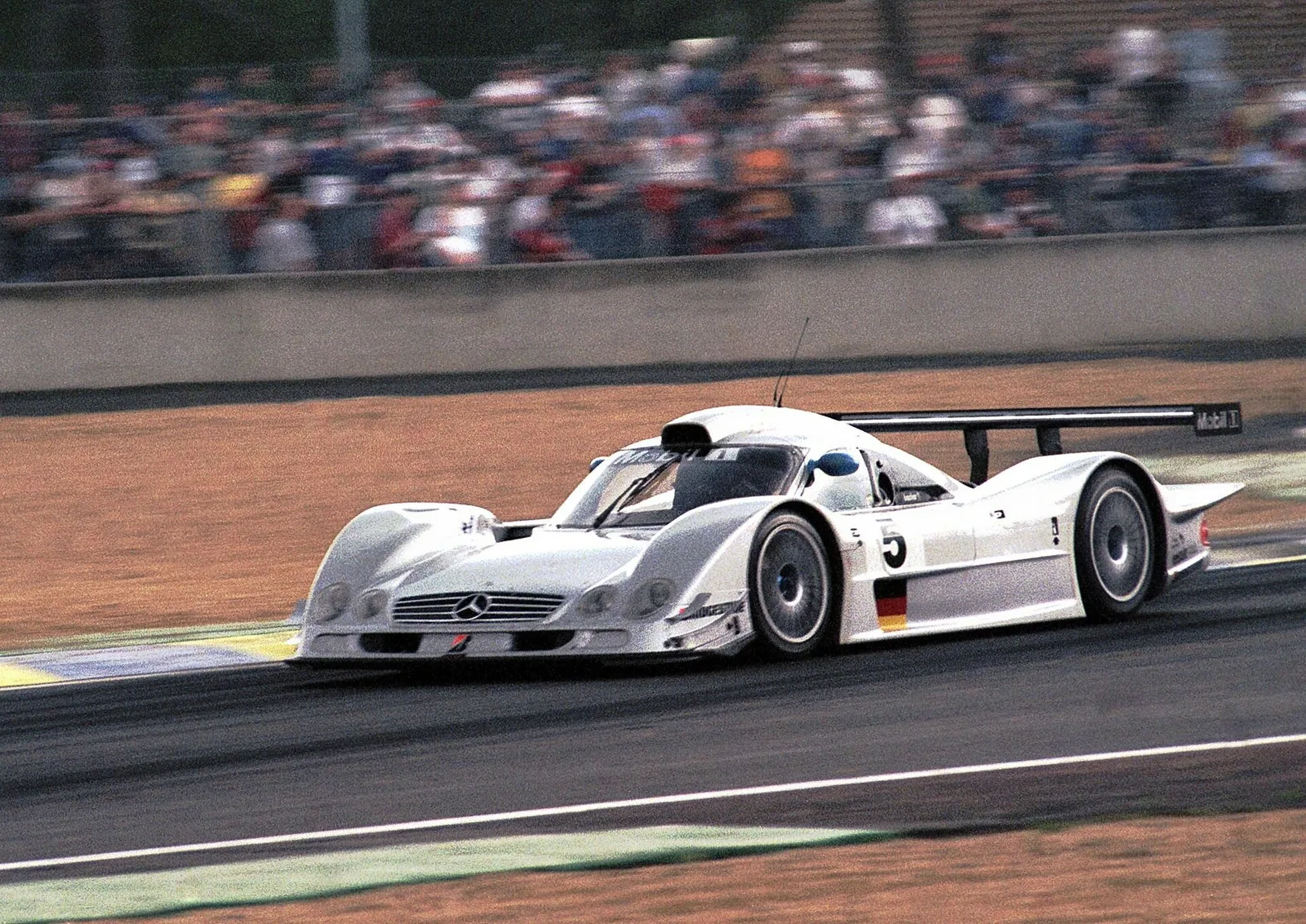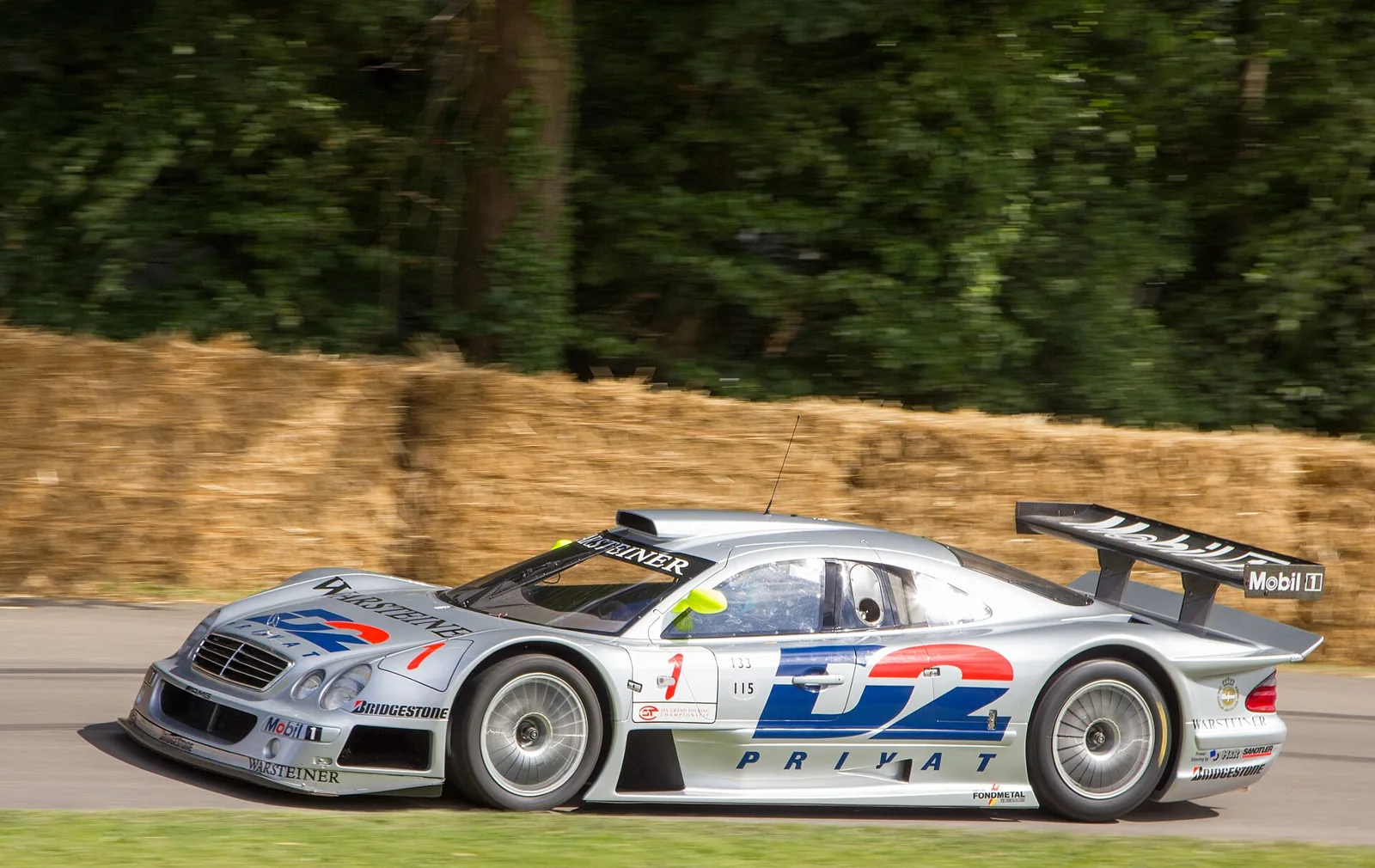
A homologation special built around a bought-in McLaren chassis, and a hand-assembled gullwing coupe that AMG designed entirely from scratch.
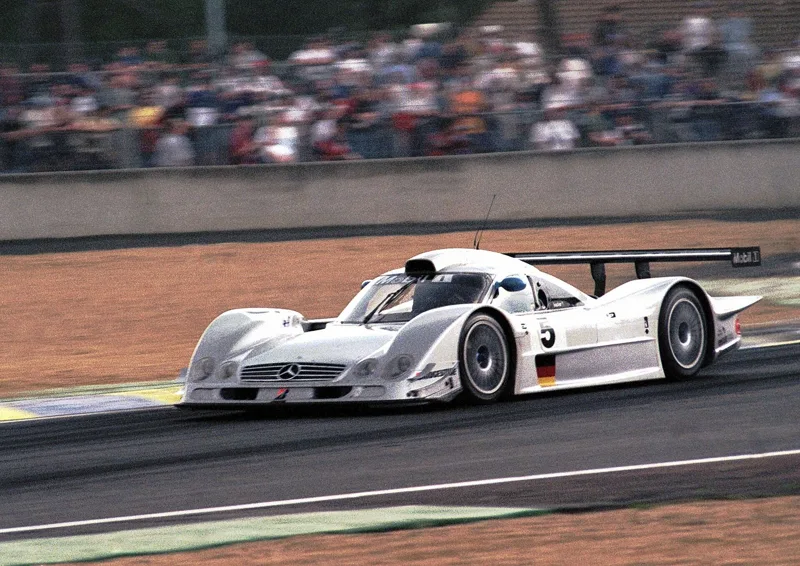
The Mercedes CLK GTR was a GT1 race car that AMG developed in 128 days and then built as a road-legal homologation special, with 28 produced. The SLS AMG, unveiled in 2009, was the first Mercedes designed entirely by AMG, and it revived the gullwing door of the 300SL.
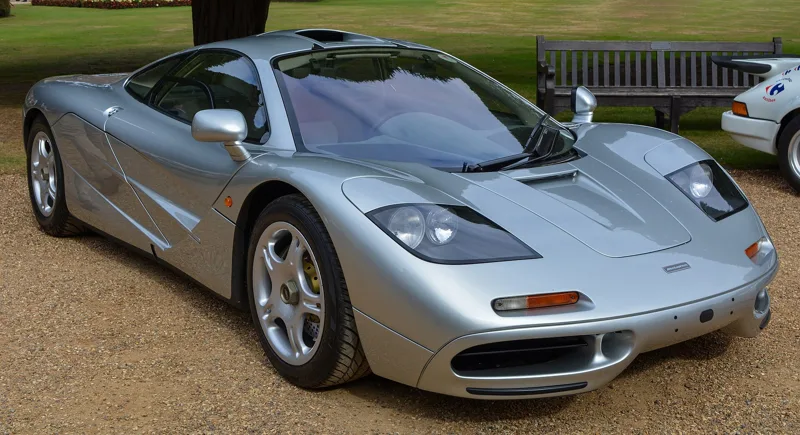
Mercedes-Benz built the CLK GTR in 128 days, and it got there by buying a McLaren. The chassis of a McLaren F1 GTR went to AMG as a test mule, and what came out the other side won the 1997 FIA GT Championship and then, as a road car, earned a Guinness record as the priciest production car anywhere.
Years later AMG showed a very different kind of showpiece: the SLS AMG, a front-engined two-seater with doors hinged at the roof. The two cars share a maker and a talent for theatre. How they came to exist is where they part company, because racing rules forced the first into being while the second was drawn as a modern answer to the 300SL Gullwing.
Why Mercedes needed a road-legal race car
After the 1955 Le Mans disaster, Mercedes-Benz pulled its factory team out of motorsport altogether. It did not come back until 1985, first as an engine supplier to Sauber and then as a full factory effort. That partnership won the World Sportscar Championship in 1989 and 1990, though disappointing results led Mercedes to withdraw again at the end of 1991.
Touring cars gave the company a second chance. The 190 E, with its Evolution I and II offshoots, moved up through the German touring car ranks, and the Evo II took the 1991 constructors' title. Klaus Ludwig drove it to the 1992 drivers' championship. The W202 C-Class replaced it after 1993 and dominated both championships from 1994 to 1996, so thoroughly that the series folded in late 1996 once Opel and Alfa Romeo, the two remaining rivals, pulled out over rising costs.
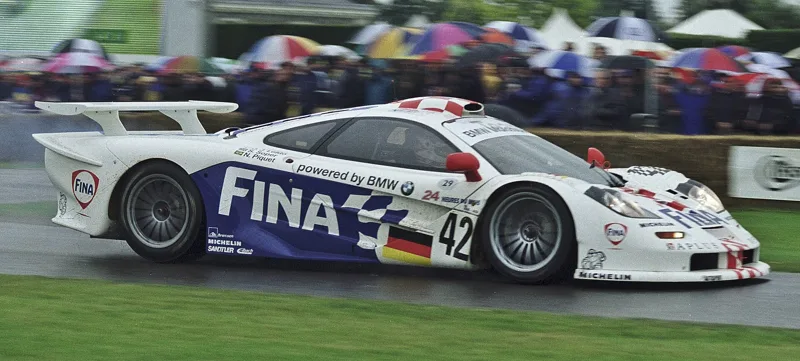
With no top series left, Mercedes turned to the FIA GT Championship, which had grown out of the BPR Global GT Series. The McLaren F1 GTR dominated it. Porsche's reply was the 911 GT1, built by Norbert Singer from a 962 chassis with the front end of a 993 grafted on, and it became the first of the class's homologation specials. Only two of the 993-based cars were finished by the end of 1996. AMG watched, and Mercedes asked it for the same trick: an almost pure racing machine that merely resembled a road car.
One was a race car with number plates; the other was a road car drawn around the 300SL Gullwing.
How the Mercedes CLK GTR was built in 128 days
The shortcut was Larbre Competition's McLaren. Mercedes bought F1 GTR chassis #11R from the team, which was then the reigning FIA GT champion, and AMG swapped the bodywork for its own and the BMW S70 engine for a Mercedes M120 V12. That rolling laboratory let the CLK GTR go from idea to race car in just 128 days. The mule itself was later restored to its original mechanical condition and auctioned in Monaco in 2000 by RM Sotheby's.
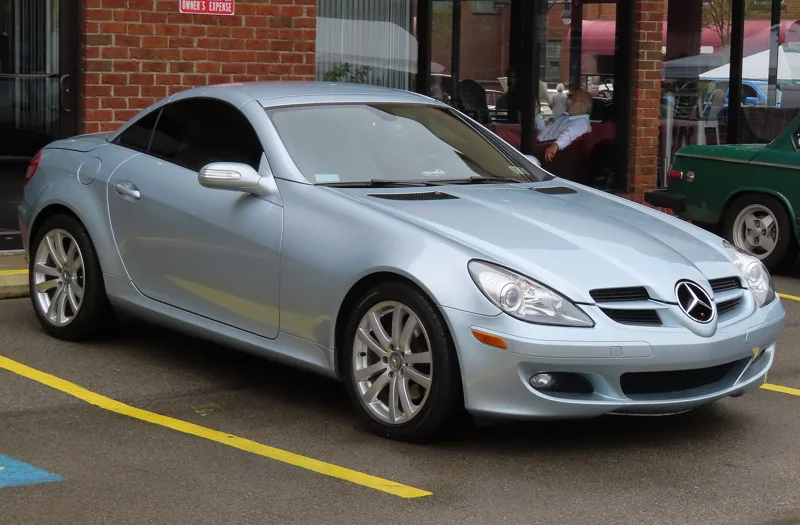
The name promised a link to the road-going CLK, but the link was thin. The racer shared only its headlights, taillights and grille with the showroom car.
Underneath, the structure was a carbon-fibre monocoque bonded to an aluminium honeycomb frame, made by Lola Composites. The V12 was a development of the M120 found in the R129 SL-Class and the W140 S-Class, renamed the LS600, or GT 112. Bore and stroke stayed at 89 mm (3.5 in) and 80.2 mm (3.2 in), but titanium connecting rods went in and the compression ratio rose from 10.0:1 to 12.0:1.
Peak power was 441 kW (600 PS), arriving at 7,000 rpm, while the 700 Nm (516 lb ft) of torque peaked lower down at 3,900 rpm. The engine sat behind the driver and worked as a stressed part of the structure, sending power to the rear wheels through a six-speed sequential gearbox. Top speed was 330 km/h (205 mph) and 0-100 km/h took 3.8 seconds.
The regulations left the driver with remarkably little help. Traction control, ABS, active suspension and drive-by-wire throttles were all banned, and fore-aft brake bias was the only permitted aid. Front and rear suspension were identical double wishbones with pull-rod coil springs and adjustable dampers.
The 1997 season and what came after
The car made its debut at Mercedes' home circuit, the Hockenheimring, for the 1997 FIA GT four-hour race. Bernd Schneider qualified on pole and set the fastest lap, then retired with braking problems. The sister car, number 10, finished 27th, hampered by its own mechanical troubles. It was a shaky start, but the pace was clear.
After intense development over the summer break, Schneider and Klaus Ludwig won the Nurburgring four-hour race, Mercedes' first 1-2 finish. Three more 1-2 results followed that season. Wins at Sebring and Laguna Seca sealed the constructors' and drivers' championships, with Schneider champion in his first season in the car.
Le Mans was skipped in 1997. AMG judged that the V12 suited four-hour sprints better than the 24-hour grind of the Sarthe circuit, and chose instead to develop a bespoke Le Mans car, the CLK LM. The CLK GTR still contested the opening pair of 1998 FIA GT rounds before the CLK LM took over for that year's Le Mans, and the CLK LM concluded Mercedes' GT1 programme. For 1999 the company introduced the CLR, built to Le Mans Grand Touring Prototype rules, a purpose-built racer that no longer had to satisfy the homologation requirements of the earlier GT1 cars.
The CLK GTR Strassenversion: road car and price
To go racing, Mercedes had to sell road cars. The road-legal version added the suffix Strassenversion, German for street version. As with the Porsche in 1996, a single car was finished in 1997 and shown at the Frankfurt Motor Show. AMG built the rest at Affalterbach with HWA during 1998, and production stopped in mid-1999.
Plenty came straight from the racer: the suspension, the sequential gearbox and the carbon-fibre tub. In total, 28 were produced: two prototypes, six roadsters and twenty coupes, two of the coupes in SuperSport specification. One coupe and one roadster were built in right-hand drive for the Sultan of Brunei, Hassanal Bolkiah.
The CLK GTR price made headlines. Guinness World Records named the Strassenversion and its siblings the priciest production car anywhere, at a retail price of US$1,547,620 (US$2,572,940 in 2021 money). That mark stood until the Ferrari FXX-K appeared in 2015.
Specification and driving impressions
For the road car, Ilmor stroked the V12 out to 6,898 cc (420.9 cu in), which raised output to 622 hp (464 kW; 631 PS) and 731 Nm (539 lb ft), peaking at 6,500 rpm and 5,250 rpm respectively. The six-speed sequential gearbox gained a four-plate carbon-fibre clutch. Acceleration to 100 km/h stayed at 3.8 seconds, and Mercedes claimed a top speed above 320 km/h (199 mph), depending on gearing.
Centrelock 18-inch wheels wore Bridgestone tyres, 295/35ZR18 at the front and 345/35ZR18 at the rear. Six-piston calipers clamped carbon-composite rotors, 380 mm (15.0 in) across up front and a smaller 335 mm (13.2 in) behind.
A road car needed some comforts, and the CLK GTR received ABS, air-conditioning and an audio system. Luggage bins sat under each door, and the control for the fire suppression system was on the driver's side. Owners could trim the seats in tartan, leather or Alcantara, and the harnesses had four points. The roof-mounted air dams and sill NACA ducts of the racer remained.
Paul Frere, the former racing driver and journalist, drove the car at Hockenheim for Road & Track. He admired its tractability in spite of the power and applauded the soundproofing that Mercedes added to quieten the engine and gearbox. He found the cockpit cramped for such a wide car, and city driving awkward because of the non-synchronous gearbox and the torque available at low revs. He closed by calling it a real work of art.
Buyers in the United States faced a further hurdle. Mercedes chose not to modify the car to meet American safety regulations, so every example imported there came in under Show or Display exemptions.
Roadsters, SuperSport and the left-over cars
When the first run of 20 coupes ended in 1999, AMG built one roadster and kept it until 2002. HWA later converted five more coupes to roadsters, available from 2006. The engine breathed through side intakes instead of the roof scoop, mirrors moved onto the doors, a rollbar was built in behind the seats, and the grille was revised. A rear wing echoed the fixed wing of the racers.
Of the six roadsters, a black car was sold by Bonhams in 2015 and is now kept at Dutton Garage in Melbourne. Another, in dark silver with a purple interior, was made for the Sultan of Brunei and sold to the Indian businessman Vijay Mallya in 2009.
The SuperSport swapped the 6,898 cc engine for a larger 7,291 cc (444.9 cu in) E73 unit, also found in the Pagani Zonda. Its figures were 664 PS (488 kW; 655 hp) and 786 Nm (580 lb ft), at the same two engine speeds. The speedometer was etched to 400 km/h (249 mph), the front splitter was redesigned and 0-100 km/h fell to 3.5 seconds. Two chassis left the factory as SuperSports, and three more later received the E73 engine and the package, the later ones making 711 hp (721 PS; 530 kW).
The SLS AMG: a gullwing revival
The SLS AMG was a different proposition: a front mid-engined, two-seat sports car developed with help from the Scottish racing driver David Coulthard. SLS stands for Super Leicht Sport. It was the first Mercedes-Benz that AMG designed and engineered entirely on its own, and it was unveiled at the 2009 Frankfurt Motor Show with a 420 kW (563 hp) M159 engine that AMG called the most powerful naturally aspirated production series engine in the world.
Mark Fetherston drew it between October 2006 and April 2007 as a modern revival of the 300SL Gullwing, and the doors are the proof. They swing upwards on gas struts and have to be closed by hand, because AMG's engineers refused to accept the 41 kg (90 lb) that an automatic closing system would add. If the car rolls over, the doors come off: according to Car and Driver in 2010, explosive bolts at the top of each door frame fire ten to fifteen milliseconds after the sensors detect the roll.
The design world took notice. In 2010 the SLS collected the top red dot prize, an iF award in the transportation category and Auto Bild's verdict as the most attractive car in Europe. It is the only car to have won the German federal gold design prize.
Against the SLR McLaren, Mercedes-AMG head Tobias Moers says the SLS is faster on the track for both ordinary drivers and racing drivers. The SLR weighed 1,750 kg (3,858 lb); the SLS has a kerb weight of 1,619 kg (3,569 lb) on standard wheels. Compared with the heavier, more luxurious SL, a grand tourer with a hardtop convertible roof and available heated massage seats, the SLS is the sportier, track-oriented choice.
Inside the SLS AMG gullwing coupe
Magna Steyr in Graz, Austria, produced the chassis and aluminium body shell, which went to Sindelfingen in Germany for largely hand assembly. AMG built each engine by hand at Affalterbach. German deliveries began on 16 November 2009; sales started in mid-2010 in Europe and mid-2011 in the United States.
The 6.2-litre V8 started life as the M156 block, but AMG made more than 120 changes and gave it a new code, M159. A dry-sump lubrication system keeps oil flowing during hard cornering. The power goes through a rear-mounted seven-speed dual-clutch automatic, linked to the engine by a carbon-fibre driveshaft inside a torque tube. Drivers pick C, S, S+ or M, where paddles on the steering column take over the shifting. A true manual was never offered.
The chassis is a forged-aluminium double-wishbone design, front and rear, mounted on an aluminium space frame that weighs 241 kg (531 lb). Standard brakes are cast-iron discs, 390 mm (15.35 in) up front and 360 mm (14.17 in) behind. Optional carbon-ceramic discs of 402 mm (15.83 in) at the front cut brake weight by 40 percent.
Performance matched the looks. AMG claims 0-100 km/h in 3.8 seconds and a top speed of 315 km/h (196 mph), with a quarter mile in 11.7 seconds at 201 km/h (125 mph). Lateral acceleration reached 0.99, ahead of the SLR McLaren's 0.97. Combined fuel consumption on the provisional NEDC cycle is around 13 L/100 km (22 mpg-imp; 18 mpg-US). A retractable rear wing rises at 120 km/h (75 mph) and doubles as an airbrake under braking.
Practicalities included a 176-litre luggage compartment, ABS and three-stage ESP as standard, and a menu of expensive options. Alubeam Silver paint was a hand-applied, seven-layer finish costing EUR 11,900 in Germany, and it limited Mercedes to two or three such cars each week. Carbon-ceramic brakes were roughly US$12,500 and the 1,000-watt stereo about US$6,500.
SLS AMG GT3, Roadster, E-Cell and Black Series
The coupe came first. A GT3 racing version followed in mid-2010, and the roadster, the electric E-Cell and the Black Series came between 2011 and 2013. The Black Series, described as the ultimate iteration, cut 70 kg (154 lb) from the car.
The GT3 used a sequential six-speed gearbox, an integrated locking differential and traction control, with testing starting at Lausitz Eurospeedway in June 2010. Deliveries began in February 2011 after FIA homologation, and 86 cars were sold.
The Roadster swapped gullwings for conventional doors and a three-layer fabric roof that opens or closes in 11 seconds, even at up to 50 km/h (31 mph). It weighs 40 kg (88 lb) more than the coupe. The E-Cell prototype, shown in 2011, replaced the V8 with four electric motors producing 392 kW (533 PS; 526 hp) and 880 Nm (649 lb ft), fed by a 48 kWh, 400-volt lithium battery from Deutsche Accumotive. The Electric Drive version was presented at the 2012 Paris Motor Show.
One-offs and special editions rounded out the family. The Desert Gold, shown in Dubai in 2010, wore matte gold paint. The Blackbird, commissioned by Mercedes in Australia for that country's international motor show, was a one-off in Night Black with red highlights.
CLK GTR and SLS AMG compared
| Model | Engine | Power | 0-100 km/h | Top speed |
|---|---|---|---|---|
| CLK GTR race car | LS600 V12 | 441 kW (600 PS) | 3.8 s | 330 km/h (205 mph) |
| CLK GTR Strassenversion | 6,898 cc V12 | 464 kW (631 PS) | 3.8 s | Over 320 km/h (199 mph) |
| CLK GTR SuperSport | 7,291 cc V12 | 488 kW (664 PS) | 3.5 s | Speedometer to 400 km/h (249 mph) |
| SLS AMG coupe | 6.2-litre V8 | 420 kW (563 hp) | 3.8 s | 315 km/h (196 mph) |
What followed the CLK GTR and the SLS
For the CLK GTR, the next step was the CLK LM, built for Le Mans, and then the CLR in 1999, a prototype that did not have to carry any road-car baggage. The three GT1 cars, the Mercedes, the Porsche and the McLaren, came to be called the "holy trinity" of Group GT1 and a golden era of 1990s sportscar racing.
The SLS had a longer public run. After the Electric Drive in 2012, production ended in 2014 with the SLS AMG GT Final Edition, which brought a fixed spoiler and carbon-effect trim to the 2015 model year. Across its life the SLS gained only a very small increase in power, and its torque never changed.