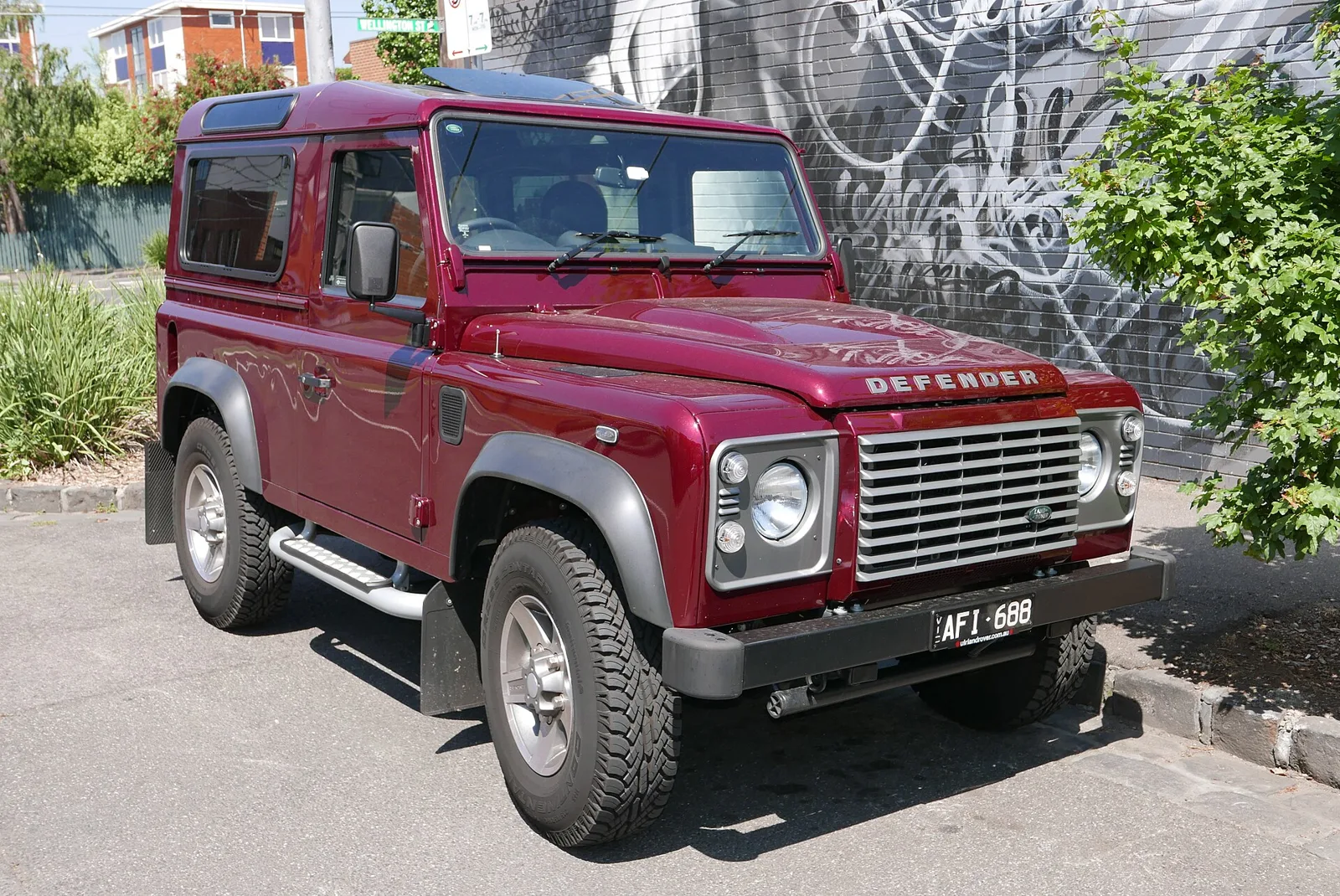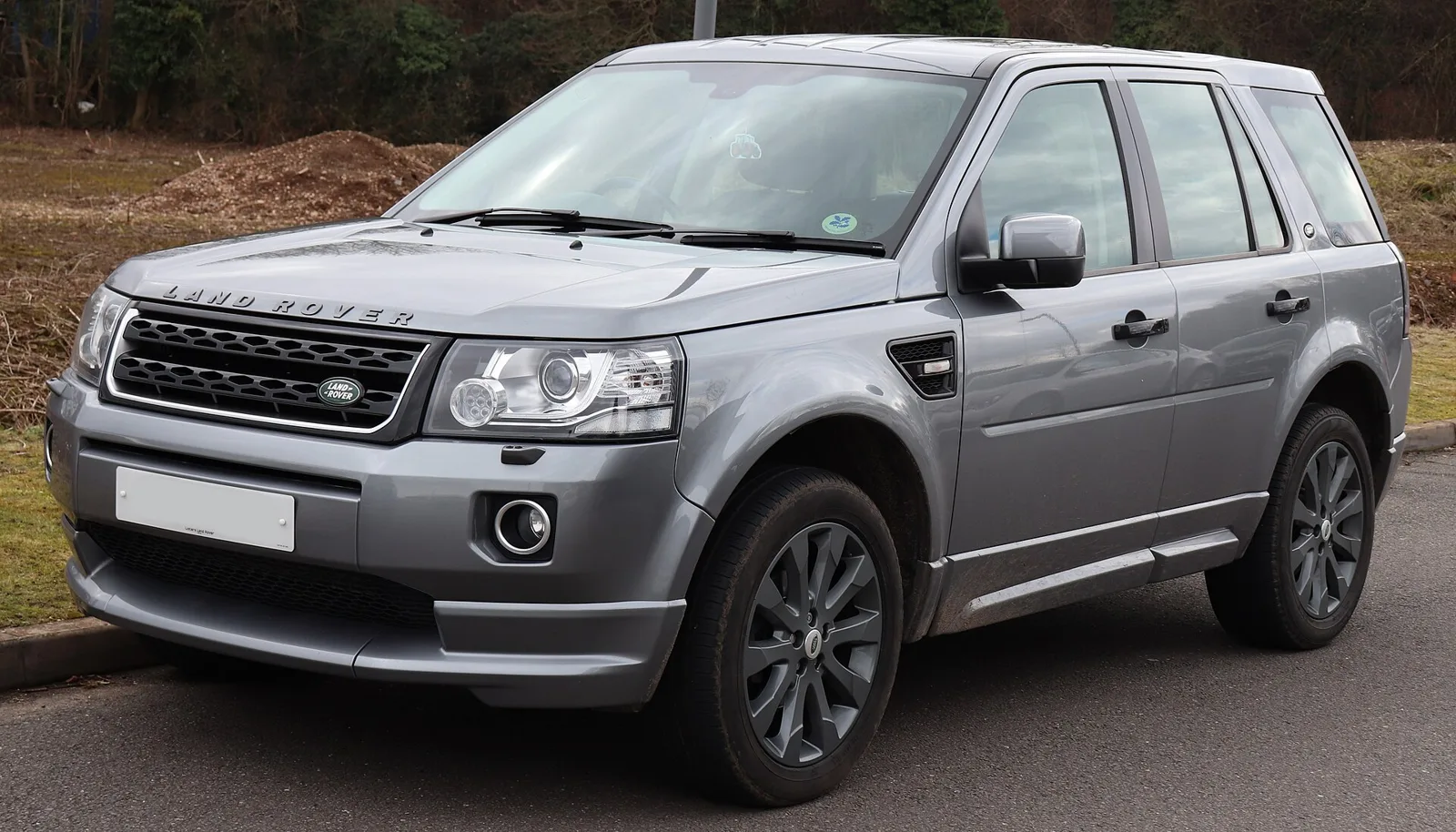
From a hit in Europe and a reliability headache in America to the unibody Discovery Sport, and a 2024 letter of intent to bring the Freelander name back.
The Land Rover Freelander was a compact 4x4 sold from 1997, in two generations, and replaced in 2015 by the Discovery Sport. The Discovery Sport is a unibody, seven-seat compact SUV built at Halewood and Land Rover's best seller since 2017.
Land Rover sold its second Freelander in America as the LR2, a name chosen to escape the first car's reputation. Yet in 2024 Jaguar Land Rover signed a letter of intent with Chery to revive the Freelander name on electric vehicles.
What was the Land Rover Freelander?
Between 1997 and 2015 Land Rover made the Freelander, a family of four-wheel-drive vehicles, a few of them driven only through the front wheels. The name blends the words freedom and lander. After half a century of building only body-on-frame four-wheel-drive vehicles, Land Rover made the first Freelander its first monocoque, or unibody, model.
It came as a three-door, including a semi soft-top, and as a five-door. The second generation, sold from 2007 to 2015 under the LR2 name in the Middle East and North America and as the Freelander 2 in Europe, dropped the two-door bodies and kept a five-door, estate-like shape. After 62 years it also became the first Land Rover to offer a two-wheel-drive option, from the 2011 model year. The nameplate spanned two generations and less than eighteen years.
The Freelander name was dropped in America to escape its reputation, and was later chosen for revival on electric cars.
How was the first Freelander developed?
The project began after British Aerospace bought the Rover Group in 1988 for 150 million pounds, which let Rover and Land Rover pool resources in new ways. Inside the company the Pathfinder project went by CB40, named for the Canley Building 40 in which the concept took shape.
The compact Land Rover swelled to nearly the length of the original Range Rover, dropped the year before, and its wheelbase was an inch (2.5 cm) longer. Although it was Land Rover's first monocoque, it still had a stout subframe of welded box-section rails for extra strength. Manufacturing was originally to be contracted out, with an agreement with Valmet in Finland, but BMW ended that deal on acquiring Rover Group and funded production at Solihull instead, in the former Rover SD1 assembly hall that had been inactive since the early 1980s.
How popular was the first Freelander?
The first-generation Freelander was an instant hit. It went on to be Europe's top-selling four-wheel-drive model, with over 540,000 finding buyers across nine years, and held the title of Europe's best-selling 4WD for five consecutive years after its 1997 launch. In 2016 Land Rover named it its eighth Heritage vehicle.
Bodies included a five-door estate, a three-door softback that is semi-convertible, a hardback and a van-like commercial version. A 2004 upgrade added a new interior and a new face and rear. Three-door trims were E, S, ES, Sport and Sport Premium, and the five-door added HSE.
Engine choices were a 1.8-litre Rover K-series petrol (not sold in North America), a 2.0-litre Rover L-series diesel from 1997 to 2000, a 2.0-litre BMW M47 diesel called Td4 from 2001 to 2006 and a 2.5-litre Rover KV6 petrol from 2001. Manual gearboxes dominated at first. The Jatco JF506E automatic became increasingly popular, was standard on the V6 and optional on the Td4.
How capable off-road was the first Freelander?
Land Rover marketed it as a premium compact 4x4 and used it in the 1998 Camel Trophy and the G4 Challenge. It was a compromise, however: with no low-range gearbox and no locking differential, as on larger Land Rovers, it could not match them off-road.
It carried more than sixteen patented features. The Intermediate Reduction Drive, or IRD, doubled as front differential and transfer unit with a fixed ratio. The VCU, a viscous coupling, reacts to differing prop shaft speeds so that torque can vary across it, and Hill Descent Control later spread to the rest of the range and even to the first-generation BMW X5, because BMW then owned Rover Group. A traction control system and an off-road-tuned ABS by Wabco completed the package.
What went wrong in North America?
The Freelander launched in the US and Canada in 2001 for the 2002 model year, with only the 2.5-litre KV6 and a five-speed Jatco automatic. Priced from under $25,000, it undercut the Discovery II by more than $8,000 and was pitched against the Toyota RAV4, Honda CR-V, Jeep Liberty and Nissan Xterra. Five-door S, SE and HSE trims were joined by the three-door SE3 in 2003.
Reliability soon let it down. In the KV6, cast-iron cylinder liners could slip out of place, irreparably damaging the engine. The thermostat and coolant expansion tank failed under warranty, so engines overheated, damaging head gaskets and warping the block and heads. The transmission often suffered shift solenoid failure. Replacing the solenoids is cheap, but dealers usually replaced the whole transmission, so the failure came back and mechanics often misdiagnosed it as a failed gearbox.
Owners filed a class action, claiming Land Rover had knowingly sold a defective product and had not respected the warranty during repairs. Land Rover settled by reimbursing repairs owners had paid for, or by repurchasing vehicles under lemon law. Sales collapsed. Dealers sold 15,021 in 2002, making it Land Rover's second-biggest seller in the US after the Discovery II, but only 6,618 in 2003, 5,430 in 2004 and 2,141 in 2005.
When MG Rover Group went into administration and its Powertrain Ltd division could no longer make KV6 engines, Land Rover ended Freelander sales in North America after the 2005 model year, on 31 August 2005. It then left the compact SUV class until the 2008 model year, when the Freelander 2 returned as the LR2.
What is the Freelander 2?
The second generation, internally L359, first appeared at the 2006 British International Motor Show. Europe kept the Freelander name, while buyers in the Middle East and North America saw the LR2 badge, echoing how the new third-generation Discovery became the LR3. Journalists attended a launch event at the Kensington Roof Gardens, featuring the tennis star Maria Sharapova. Production came to an end on 7 October 2014.
It rides on the Ford EUCD platform, itself based on the Ford C1 platform, and was built not at Solihull but at the Halewood plant near Liverpool, alongside the Jaguar X-Type until 2009. The engines were new: a transversely mounted 3.2-litre Volvo SI6 straight-six, first seen in the Volvo S80, and a 2.2-litre DW12 common rail turbodiesel from PSA Peugeot Citroen. Higher ground clearance and a modified Terrain Response system, as on the Discovery 3 and Range Rover, brought off-road ability closer to other Land Rovers.
Four-wheel drive was developed with Haldex, as a Third generation coupling and from the 2009 model year the Fourth generation. In the US the LR2 had the Volvo six with 230 hp (170 kW), a six-speed automatic and all-wheel drive. In the UK the standard engine was the 2.2-litre turbodiesel, as the eD4 with 150 hp (110 kW), the TD4 with 160 hp (120 kW) or the SD4 with 190 hp (140 kW).
What did the Freelander 2 add?
The TD4_e brought stop-start technology in spring 2009, using a heavy-duty starter motor that doubles as a generator and stores braking energy in capacitors to restart the engine without stressing the battery. Equipment grew to include an Alpine 440-watt, 14-speaker audio system, a 7-inch touch navigation screen, and in later cars a Meridian 17-speaker system of 825 watts. A cold climate package added a heated windscreen and heated seats, and a lighting package brought bi-xenon headlights and adaptive front-lighting.
From the 2011 model year the eD4 became the first purely two-wheel-drive Land Rover. It dropped Terrain Response and Hill Descent Control, saved 75 kg (165 lb) and achieved 47 mpg-imp (6 L/100 km) combined, with 158 g/km of CO2. The Range Rover Evoque, launched in 2011, was cheaper, more efficient and more premium, with standard four-wheel drive, so it competed with the Freelander 2 and especially the eD4. For 2013 the Freelander got a revised grille and new interior trim.
What is the Land Rover Discovery Sport?
Jaguar Land Rover has built the Discovery Sport (internal code L550), a compact luxury crossover, since 2014; since 2017 it has outsold every other Land Rover. It arrived in late 2014 as the Freelander's successor, with a seven-seat layout the Freelander never had.
It was the third generation of compact Land Rover SUV. The company felt the Freelander name was tainted by memories of unreliability and that the Discovery name was more prestigious. The sub-brand was previewed by the Discovery Vision concept at the 2014 New York International Auto Show, where Gerry McGovern named the Discovery Sport as the opening model of an enlarged Discovery family, to be used for leisure and family cars while Range Rovers focus on luxury. In North America and the Middle East the larger Discovery was badged the LR4.
McGovern styled the Discovery Sport and had designed the original Freelander. He left Land Rover for Ford in 1999, returned in 2004 as Director of Advanced Design and became Design Director in 2006 when Geoff Upex retired. Upex had designed the Freelander 2.
How is the Discovery Sport built?
It is the first Discovery with unibody construction; the bigger Discoveries were body-on-frame until the Discovery 5 in 2017. The steel monocoque is topped by an aluminium bonnet, wings, roof and tailgate. Its LR-MS platform, which the Evoque also uses, descends from the Ford EUCD platform, although 90% of the components were redesigned from scratch to suit off-road work.
A compact rear multi-link suspension allows folding rear seats and a spare wheel well without a high load floor. Ground clearance of 212 mm (8.3 in) matches the Freelander 2, and it can wade 600 mm (24 in) deep, an improvement of 100 mm (4 in). The approach angle is 25 degrees and the ramp angle 21 degrees, 6 and 2 degrees less than the Freelander 2, while the departure angle stays at 31 degrees. Front discs are 325 mm (12.8 in) and rear discs 300 mm (12 in).
Euro NCAP tested it in December 2014 and gave it five stars, ranking it the safest vehicle in the Small Off-Road class. In some markets the bonnet carries an airbag to protect a pedestrian's head from the base of the windscreen. Steering takes 2.43 turns lock to lock, the turning circle is 11.86 metres (38.9 ft), and an automatic parking system is possible because the power steering is electric.
What engines and drive systems does the Discovery Sport use?
The first Discovery Sport reused the Freelander 2's engine range: Ford's 2.0-litre EcoBoost turbo petrol with 240 PS (177 kW; 237 hp), the only engine for North America, and Ford's 2.2-litre Duratorq diesel with 150 PS (110 kW; 148 hp) or 190 PS (140 kW; 187 hp). From late 2015 Jaguar Land Rover's Ingenium family replaced them: modular 2.0-litre four-cylinder turbo engines built from 500cc cylinders, in petrol and diesel form.
Mounted across the car, the engines free up cabin space. The most efficient is the eD4, a front-wheel-drive-only diesel of 150 PS (110 kW; 148 hp); Land Rover planned CO2 of 119 g/km and economy of up to 24.2 km/L (4.13 L/100 km; 68 mpg-imp; 57 mpg-US).
Customers can choose a nine-speed ZF automatic or a six-speed Getrag manual, and one of two all-wheel-drive systems. The standard Haldex fifth generation is joined by an optional Active Driveline from GKN, which has a 75% smaller parasitic load and disconnects the main driveline components at the gearbox, with torque vectoring to individual wheels. Neither has low range, but the ZF has a very low first gear for off-road use, and on the road the car normally starts in second.
How do the three models compare?
| Model | Years | Platform | Notable figure |
|---|---|---|---|
| Freelander (L314) | 1997 to 2006 | Own subframe monocoque | Over 540,000 sold in Europe |
| Freelander 2 (L359) | 2006 to 2015 | Ford EUCD | Ground clearance 212 mm |
| Discovery Sport (L550) | 2014 on | LR-MS, later PTA | Euro NCAP five stars |
What is it like inside, and where is it made?
The Discovery Sport offers a 5+2 layout with two front seats, three in the second row and two in the third. The second row slides, reclines and folds 60:40. Land Rover describes the third row as suited to children up to age 15 and occasional adult use, and it folds flat into the floor. An 8 in (20 cm) touch screen, shared with the Jaguar XE, handles entertainment, navigation and settings, and some models let the owner pre-heat the cabin or unlock the car with a smartphone app.
It is built at Halewood in Liverpool alongside the Evoque. Early Ford engines came from Dagenham and Valencia, and the Ingenium engines are made at Wolverhampton. ZF makes transmissions at Gray Court, South Carolina and Getrag at Cologne, and drive components come from Haldex in Landskrona or from GKN in Koping and Birmingham.
What did the 2019 facelift change?
Land Rover revealed the facelifted Discovery Sport on 21 May 2019. It moved to the Premium Transverse Architecture platform used by the Jaguar E-Pace and the second Evoque, and that switch allows 48-volt mild-hybrid and plug-in hybrid engines.
Outside there are new bumpers, a wider track, new LED lighting, a new grille and, for the first time, an option of 21-inch wheels. Inside are a smart rear view mirror, the Touch Pro system with a 10.25-inch screen that works with Apple CarPlay and Android Auto, and Luxtex upholstery, a recycled polyester microfibre.
Will the Freelander name return?
A letter of intent signed in 2024 between Jaguar Land Rover and Chery Automobile outlines cooperation to bring the Freelander back as a new electric vehicle brand. Their Chinese joint venture, Chery Jaguar Land Rover, has authority to develop and build a range of electric cars under the Freelander name.
The lineup is planned to be based on Chery's electrified platforms, with Chery leading engineering and development. The cars are expected to be built in China, where sales are planned to begin. The first model is expected to be a crossover-style EV, with design direction overseen by Gerry McGovern. They are meant to sit apart from Land Rover's core model range, forming a standalone lineup.