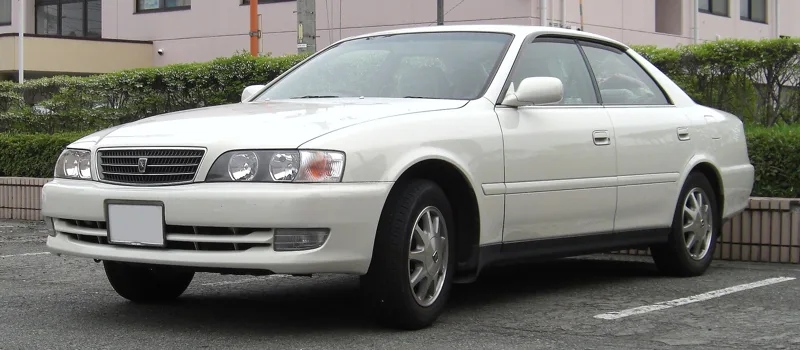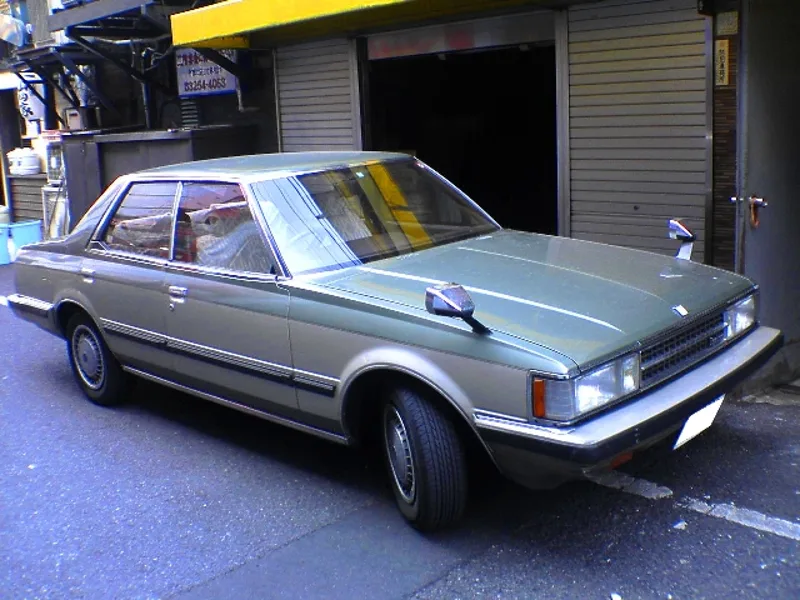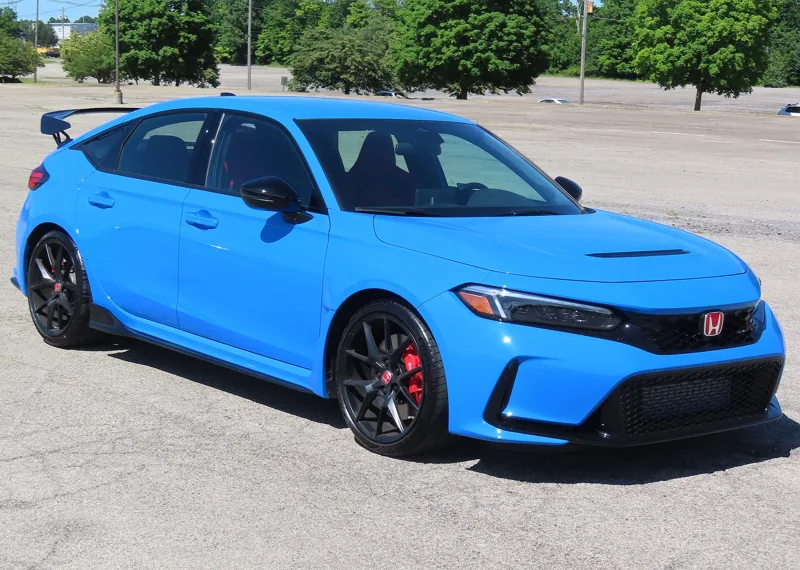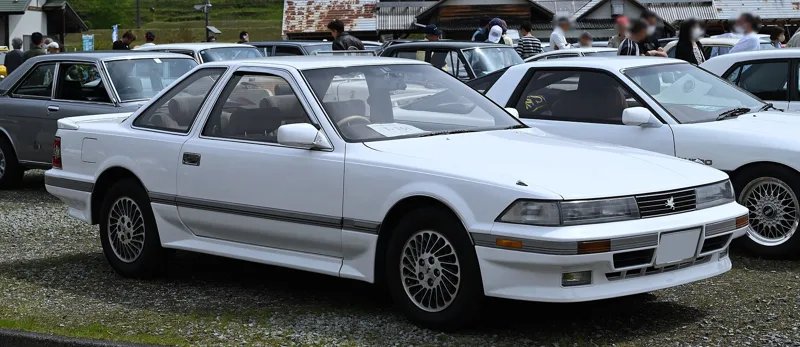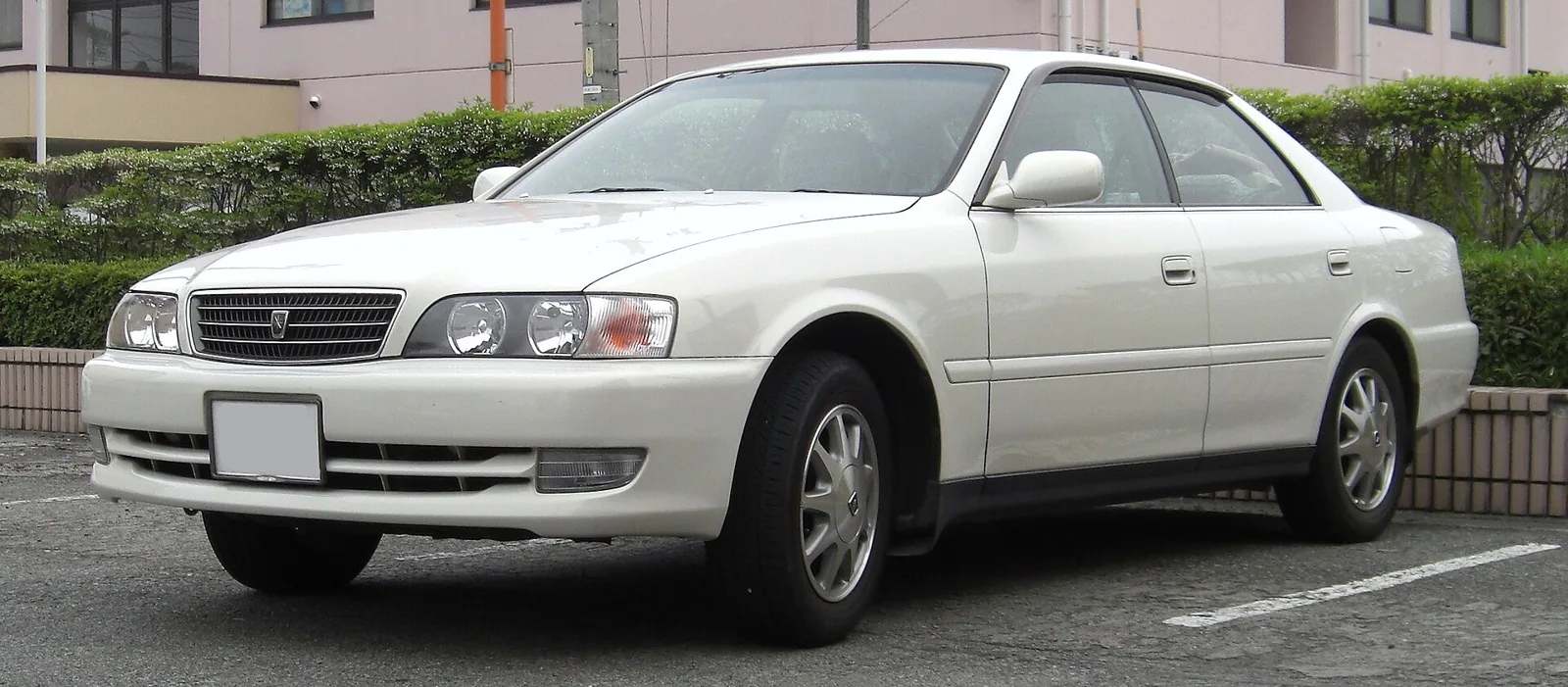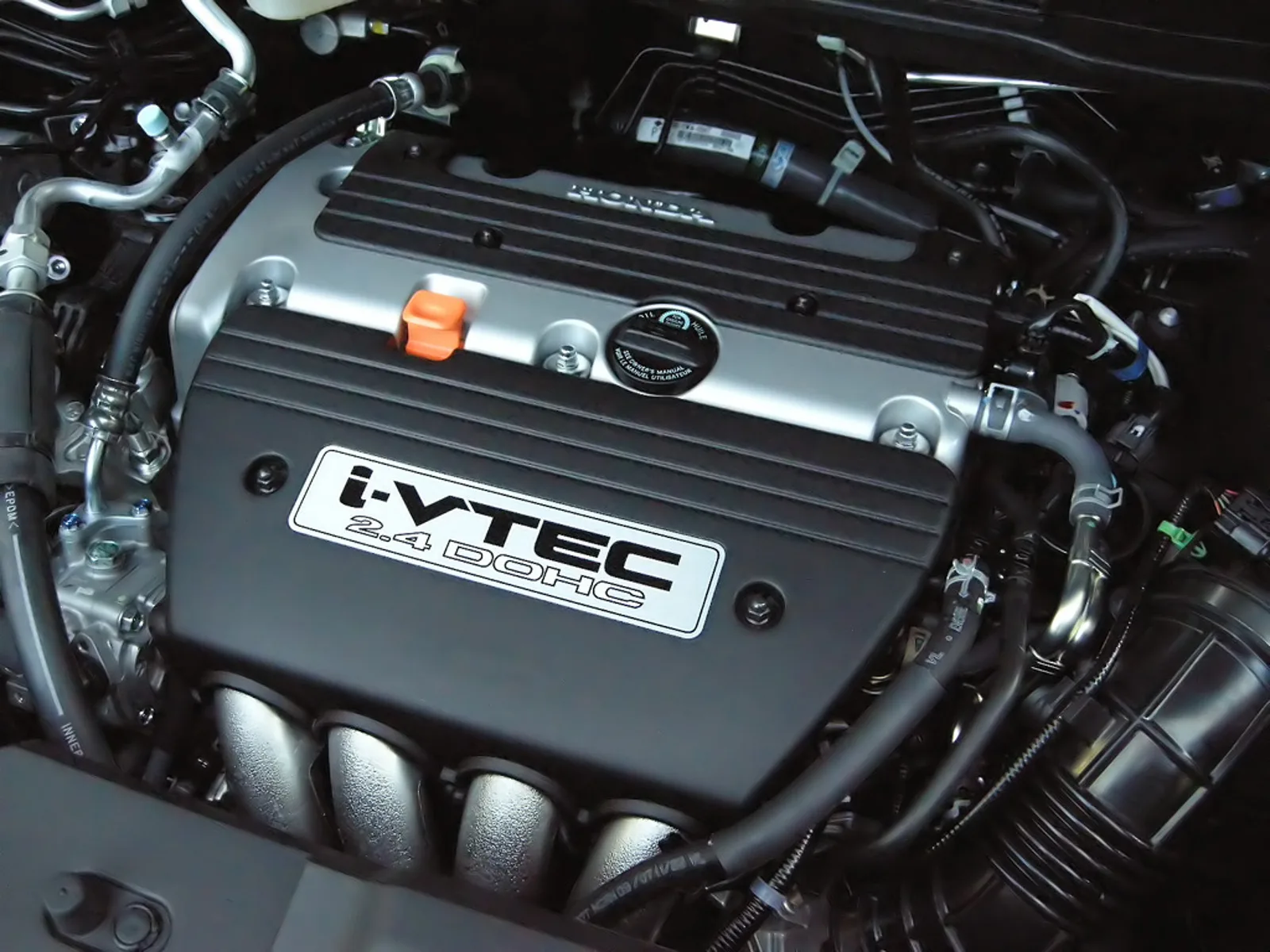
One is a four-cylinder with a growing swap following, the other a cast-iron straight-six whose power figure was set by agreement rather than engineering.
Honda's K-series is a four-cylinder DOHC family launched in 2001 with i-VTEC, cast-iron sleeves and a growing swap following. Toyota's JZ is a 24-valve inline-six built from 1990 to 2007, whose twin-turbo 2JZ-GTE carried a 318 PS Japanese rating set by an industry agreement.
The most famous number attached to Toyota's 2JZ-GTE, 318 PS, was never a measure of what the engine could do. It was an industry-wide output ceiling, enforced by Japan's Gentlemen's Agreement among manufacturers selling cars at home. Versions documented for North America and Europe were rated at 320 hp (239 kW; 324 PS).
That detail says a lot about the two engine families people argue over most, Honda's K-series and Toyota's JZ. Both families are well known for how they are built, the cars that carried them and, in the Honda's case, the swaps that followed.
What is the Honda K-series engine?
Honda introduced the K-series in 2001 as a range of four-cylinder car engines, all of them four-strokes. Every one has a double overhead camshaft valvetrain, and roller rockers on the cylinder head cut friction. Ignition is distributorless, with a coil sitting on each spark plug and the engine computer setting timing from sensor readings.
Inside, the cylinders have cast iron sleeves, the same approach as Honda's B-series and F-series engines. The H-series and the newer F-series, which is found only in the S2000, use a different cylinder lining called FRM.
The family comes in two short blocks of the same design. The only difference is height: the K20 block's deck is 212 mm (8.3 in) high, while the K23 and K24 blocks rise to 231.5 mm (9.1 in).
The 318 PS printed on a Japanese 2JZ-GTE was an industry-wide ceiling, not a measure of what the engine could give.
How does i-VTEC work in a K engine?
Think of an engine as an air pump. At low speed it needs to breathe gently, and at high speed it needs to gulp. VTEC is Honda's way of giving one engine two sets of breathing instructions.
On a K20A3 the system works on the intake cam alone. At low revs one intake valve opens fully and the other barely cracks open, which makes the mixture swirl in the combustion chamber and helps the fuel atomise. At high revs both intake valves open fully so the engine can breathe more freely.
The K20A2 in the Acura RSX Type-S goes further, applying VTEC to both intake and exhaust valves so each gets more than one cam profile. The K20Z3, fitted to the Ariel Atom 3.5, also uses the traditional performance VTEC on intake and exhaust cams. Variable cam timing is added on the intake side only, and that addition is the "i" in i-VTEC.
Both versions of i-VTEC can pair with VTC, variable timing control, on the intake cam.
Which K20 versions matter most?
The K20A Spec R, used in the FD2 Civic Type R, is the hand-built end of the family. It gets a chromoly flywheel, stiffer valve springs, high-compression pistons and higher-tensile connecting rods, plus hollow camshafts with more lift and duration. The Japanese Type R block was pulled off the production line so an experienced technician could torque the connecting rod bolts by hand, measuring bolt stretch with a micrometer, before the block went back to be finished.
The K20B was a different animal. It used 10 megapascals (99 atm) of injection pressure with a centrally placed injector and a swirl guide, and a deep cavity in the piston crown. In normal driving it ran an air-fuel ratio of 65:1, extremely lean, switching to 14.7:1 under acceleration or heavy load. Its application was the 2003-2006 Honda Stream Absolute.
Then came the K20C family, Honda's Earth Dreams turbo engines. The K20C1 was the first Honda Type R engine built in the United States, at the Anna Engine Plant in Ohio, and the first time Honda put a turbocharger in a Type R. Its crankshaft sits 8 mm off the centreline of the bore. Engines built that way are called Desaxe, and the offset gives the power stroke more leverage with less thrust wasted on the cylinder walls.
VTEC on the K20C works only on the exhaust valves. Variants multiply from there: the K20C5 goes into every Acura RDX sold in China, built by GAC Acura, and the K20C4 in the RDX and K20C6 in the TLX share internals but have different mounting points. The Acura Integra Type S has the K20C8, identical to the K20C1 apart from the mounts. The K20C7 starts from the K20C3 and is detuned to meet Chinese VI-b regulations. The K20C9 is a different idea again, using dual VTC, the Atkinson cycle and direct injection.
A modified K20C even powers the Sports Car Club of America's Formula 3 and Formula 4 series in North America. The Formula 4 engine goes without a turbocharger.
How do K23 and K24 engines differ?
The K23A is the turbo one. It breathes through a Mitsubishi TD04HL-15T turbocharger whose turbine housing has a dual path, designed to give quick low-speed response without strangling flow at high speed. Maximum boost is 13.5psi. It carries both i-VTEC and VTC, and is paired with a version of Honda's 5-speed automatic and SH-AWD. SH-AWD was standard from 2007 to 2009 and optional from 2010 to 2012.
The K24 is the one to read closely if you are weighing K24 against 2JZ. The K24A2 fitted to the 2006-2008 Acura TSX shows how much airflow work Honda did on a production engine:
- Intake valves 1 mm oversize, the valve head wider than its seat
- A high-lift intake cam lobe giving 0.9 mm extra lift and 12 degrees of extra duration
- A throttle body enlarged from 60 mm to 64 mm
- Exhaust head pipe widened from 60 mm to 65 mm and a higher-flow catalytic converter
- Stronger connecting rods, under-piston oil squirters and extra air passages in the crankcase to reduce pumping losses
The later K24W and K24V move to Earth Dreams i-VTEC with direct injection, putting i-VTEC on the intake camshaft.
Why did people start swapping K engines into other cars?
K-swaps have grown steadily in popularity in the import scene and among hot rodders and kit car builders. One reason is layout: these engines can be fitted in longitudinal, rear-wheel-drive installations. The spread of K20 and K24 variants gives builders a wide menu, from the hand-assembled Spec R engine to the turbocharged K20C1.
What is the Toyota JZ engine?
Toyota's JZ family is a series of inline-six engines that replaced the M-series sixes. They are 24-valve DOHC units in 2.5-litre and 3.0-litre sizes, built for longitudinal mounting and rear-wheel drive.
The 2.5-litre 1JZ measures 2,492 cc, with an 86 mm bore and a 71.5 mm stroke, and was built from 1990 to 2007, ending its run in the Crown Athlete and the Mark II Blit Wagon. Its twin camshafts are belt-driven, and the intake manifold has two stages.
The 3.0-litre 2JZ displaces 2,997 cc from an 86 mm bore and an 86 mm stroke. It ran from 1991 to 2007, debuting in the 1991 Toyota Aristo. It is not just a stroked 1JZ. It keeps the same bore, bore spacing and overall layout, but a taller block and longer rods make room for the extra 14.5 mm (0.57 in) of stroke.
How does the 1JZ-GTE work?
The 1JZ-GTE is the twin-turbo 2.5, built from 1990 to 2007. The first generation uses two CT12A turbochargers in parallel, feeding a side-mounted or front-mounted air-to-air intercooler, with 8.5:1 compression. Toyota quoted torque of 363 N.m (268 lbf ft) at 4800 rpm, with 280 PS (206 kW; 276 hp) arriving at 6200 rpm. It reached the road in 1991 in the all-new Soarer GT.
It also had a weakness. Those first engines used ceramic turbine wheels, which can delaminate at high impeller speed and temperature. A faulty one-way valve on the intake cam cover let blow-by gases into the intake manifold, and oil vapour flowing into the turbos wore their seals early. The second generation fixed the fault, and Japan ran a recall to repair first-generation engines, though that recall did not cover 1JZ engines exported in the meantime.
The third generation arrived around 1996 with Toyota's BEAMS architecture: a reworked head, VVT-i, modified water jackets for better cylinder cooling and titanium nitride coated shims to cut cam friction. A single CT15B turbo replaced the parallel pair, helped by smaller exhaust ports that speed up the gas so the turbo spools at lower revs. Compression rose from 8.5:1 to 9.0:1. Official power stayed at 280 PS, but torque climbed 20 N.m (15 lbf ft), reaching 379 N.m (280 lbf ft) at 2400 rpm. Fuel consumption fell by 10%, and low-speed torque rose by 50%.
That version went mostly into the X-chassis cars, the Chaser, Mark II, Cresta, Verossa and Blit, plus the Crown Athlete V and the later JZZ30 Soarer. The Supra MK III 2.5 Twin Turbo (JZA70) also used a 1JZ-GTE.
The non-turbo 1JZ-GE made 125 kW (168 bhp; 170 PS) in early form, rising to 147 kW (197 bhp; 200 PS) once VVT-i arrived in 1995. It was offered only with a 4-speed automatic. The direct-injection 1JZ-FSE, which appeared around 2000, runs air-fuel ratios of 20 to 40:1 at certain loads, uses 11:1 compression and cut fuel use by about 20 percent in the Japanese 10/15 urban test while matching the VVT-i 1JZ-GE's 147 kW.
What makes the 2JZ-GTE the flagship?
Built from 1991 to 2005 in Japan, the 2JZ-GTE is an inline-six with a cast-iron block, aluminium head, belt-driven double overhead cams and twin sequential turbochargers developed jointly with Hitachi, with an air-to-air side-mounted intercooler. It first powered the Toyota Aristo V (JZS147) in 1991 and in 1993 took over as Toyota's top performance engine, in the Supra RZ (JZA80).
Much of the engine comes straight from the 2JZ-GE. The block, crankshaft and connecting rods are the same, and the differences are in the recessed piston tops that lower compression, oil spray nozzles to cool the pistons, and a different head with redesigned ports, cams and valves. One caution: the later VVT-i 2JZ-GE models used a different, weaker connecting rod part number.
The twin turbos lifted the commercially quoted output from 230 PS (169 kW; 227 hp) to 318 PS (234 kW; 314 hp) at 6000 rpm, the industry maximum at the time. At launch, torque stood at 434 N.m (320 lb ft; 44.3 kg.m) at 3800 rpm, restated later as 451 N.m (333 lb ft; 46 kg.m) once VVT-i arrived in 1997. VVT-i came to the 2JZ-GTE in September 1997, ending production of the original engine in Japan.
The export engine got its 320 hp (239 kW; 324 PS) at 5600 rpm by different means: stainless steel turbochargers where Japanese cars had ceramic ones, revised camshafts and larger injectors, 550 cc/min against 440 cc/min. The Japanese CT20 and export CT12B turbines are similar enough that the exhaust-side shaft can be swapped between them, and the export turbine also has tougher housings and stainless turbine and impeller blades.
Road cars could be had with two gearboxes: the Toyota A340E 4-speed automatic, or the V160 and V161 6-speed manuals, which Toyota developed with Getrag as the Type 233. The GTE went into the Japan-only Aristo 3.0V (JZS147) and Aristo V300 (JZS161) and the Supra RZ/Turbo (JZA80).
What did the naturally aspirated 2JZ look like?
The 2JZ-GE produced 215 to 230 PS (158-169 kW; 212-227 bhp) at 5800 to 6000 rpm, with 283 to 298 N.m (209 to 220 lb ft) between 4800 and 5800 rpm. It used sequential fuel injection, an aluminium head with four valves per cylinder and a cast-iron block. VVT-i arrived in 1995, along with a DIS ignition that relied on one coil firing two cylinders rather than a coil on every plug.
It went into a wide range of cars: the Altezza AS 300 (Lexus IS 300), Aristo (Lexus GS 300), Crown and Crown Majesta, Mark II, Chaser and Cresta, Origin, Progres, Soarer (Lexus SC 300) and the Supra. The 3.0-litre direct-injection 2JZ-FSE ran 11.3:1 compression, weighed about 200 kg (440 lb) and made 162 kW (217 hp; 220 PS) with 294 N.m, always with an automatic, in the Brevis, Progres, Crown and Crown Majesta.
K24 vs 2JZ, how do the numbers sit side by side?
| Detail | Honda K-series | Toyota JZ |
|---|---|---|
| Layout | Four-cylinder | Inline-six |
| Introduced | 2001 | 1990 (1JZ), 1991 (2JZ) |
| Valvetrain | DOHC with roller rockers, i-VTEC | 24-valve DOHC, belt-driven cams, VVT-i from 1995 |
| Block | Cast iron sleeves; 212 mm or 231.5 mm deck | Cast-iron block (2JZ-GE and GTE); taller deck on 2JZ |
| Ignition | Coil-on-plug, distributorless | DIS on VVT-i 2JZ-GE, one coil per two cylinders |
| Forced induction | K20C turbo; K23A with a Mitsubishi turbocharger | Twin turbo 1JZ-GTE and 2JZ-GTE; single CT15B on third-generation 1JZ-GTE |
| Direct-injection versions | K20C9, K24W, K24V | 1JZ-FSE, 2JZ-FSE |
What does this mean for someone buying a car with one?
If a 2JZ-GTE car is the goal, the list is short: the Supra RZ/Turbo (JZA80) and the Japan-only Aristo 3.0V and V300. Generation matters on the 1JZ-GTE, because early engines carry the turbo and valve faults described above, and the Japanese recall did not reach every exported example.
On the Honda side the choice is wider. A Civic Type R FD2 gets the Spec R engine, an Acura RSX Type-S the K20A2, an Acura TSX the K24A2 and an Integra Type S the K20C8. Those engine codes matter, because the K20C versions differ by name when they differ by mounting points, even where the internals are shared.
Where each family ended up
Toyota's JZ production wound up in 2007 for the 1JZ and 2JZ, with the 2JZ-GTE ending in 2005. The direct-injection FSE versions around 2000 were aimed at minimal emissions and fuel consumption with no loss of performance, according to Toyota's stated aims for them.
The K-series carried on past that with the Earth Dreams engines: the K20C turbo family, the Atkinson-cycle K20C9 and the direct-injection K24W and K24V.