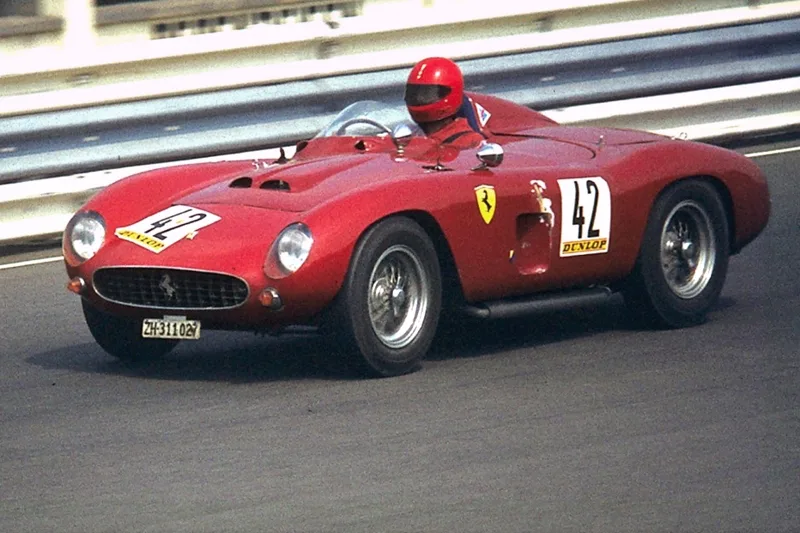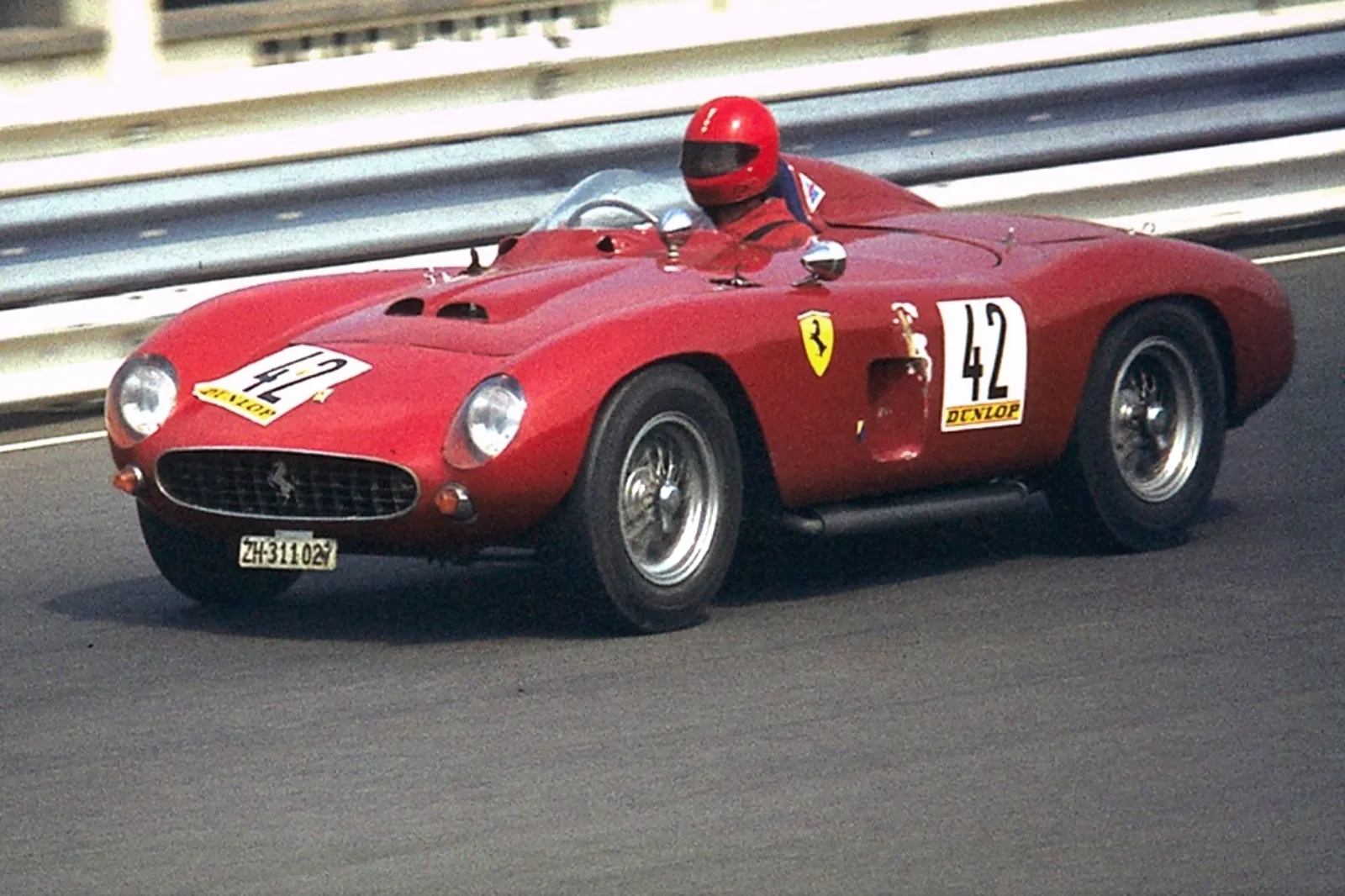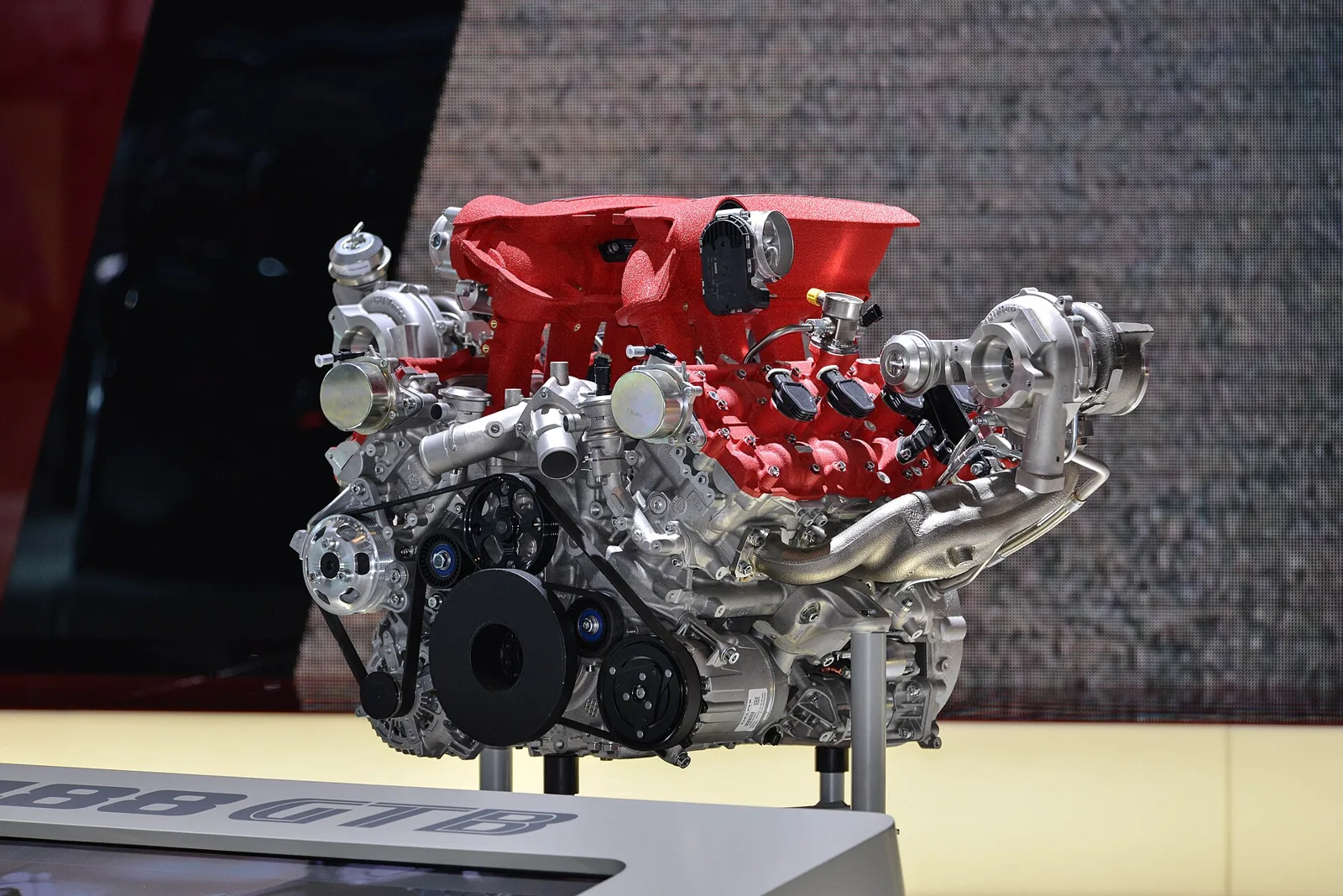
Three eras of Ferrari engineering, from a sports-racing V12 of 1956 and a Formula One V12 that reached 17,000 rpm to the modern turbocharged V8.
Ferrari's Jano V12 powered sports-racing cars from 1956 to 1958, drawn by Vittorio Jano. Its Formula One V12s ran from 1950 to 1995, ending with the 3.0-litre Tipo 044/1. The F154 is the twin-turbo V8 family Ferrari has built since 2013 to replace the naturally aspirated F136.
By the end of 1994 Ferrari's Tipo 043 V12 was producing around 850 hp (634 kW) at 15,800 rpm. To date it remains the most powerful naturally aspirated V12 ever used in Formula One.
What are Ferrari's Jano V12, Formula One V12 and F154 engines?
The Jano V12 is a 60-degree sports-racing engine designed by Vittorio Jano and introduced in 1956. Ferrari's Formula One V12s powered its grand prix cars from 1950 to 1995. The F154 is a family of twin-turbo V8s that Ferrari has built since 2013.
Each belongs to a different era of the company. The Jano engine served Ferrari's sports cars in the mid-1950s, the Formula One V12s took it from a modest start to its first world championship win, and the F154 replaced the naturally aspirated F136 V8 in Ferrari and Maserati road cars.
By the end of 1994 Ferrari's Tipo 043 V12 was producing around 850 hp (634 kW) at 15,800 rpm.
Who was Vittorio Jano, and what was the Ferrari Jano V12?
Jano moved to Ferrari in 1955, bringing his Lancia D50 designs with him, and went on to create both a new V12 and the Dino V6 family. His V12 was a 60-degree sports-racing engine with dry sump lubrication, built only until 1958 in sizes from 3.0 to 4.0 litres.
The architecture followed the Lampredi school but kept the smaller internal measurements of the Colombo V12. Some of the ideas came from Jano's Lancia V8 engine, which was meant for Formula One. The new family replaced the Lampredi inline-fours of the Ferrari Monza line, and the team around Jano comprised Vittorio Bellentani, Andrea Fraschetti and Alberto Massimino, remembered above all for the Maserati 250F.
All the Jano engines used dry sump lubrication, in which the oil is stored in a separate tank rather than a pan under the crankshaft, and almost all had two spark plugs per cylinder fed by four coils. Most had twin overhead cams driven by chains, with two valves for each cylinder.
How did the Jano V12 develop from 1956 to 1958?
The first model was the Type 130 of 1956, the only single-cam engine in the family. With a 73 mm x 69.5 mm bore and stroke it displaced 3,490.61 cc, and three Weber carburettors helped it make 320 PS (235 kW; 316 hp) at 7,200 rpm.
Only four cars used it, all of them Scaglietti-bodied spyders called the 290 MM. For 1957 the 290 S gained double overhead cams, inspired by the Lancia D50, making it Ferrari's first sports racing car to have a DOHC V12, nine years before the Colombo V12 received quad-cam heads in the 275 P2. It lasted only a few races before an upgrade to the 315 specification.
The 315 S enlarged the bore to 76 mm for 3,783.40 cc and 360 PS (265 kW; 355 hp), and the double-cam layout proved lighter and more reliable than single-cam power, which mattered in long-distance racing. The 335 S went to 77 mm by 72 mm for 4,023.32 cc, the final enlargement, with 9.2:1 compression and 390 PS (287 kW; 385 hp). It could top 300 km/h.
Then the rules changed. After the tragic events at the Mille Miglia, limits of 3.0 litres were imposed for 1958, and the 312 S used the Colombo 250's 73 mm x 58.8 mm measurements, giving 2,953.21 cc in a quad-cam layout. It made 320 PS (235 kW; 316 hp), 20 PS more than that year's 250 Testa Rossa, but it was installed in only one chassis, ran a single unfinished race at Spa in May 1958 and was quickly converted into the 412 S.
The 412 MI, built for the 1958 500 Miles of Monza, used the 4.0-litre engine from the 335 S with a 9.9:1 compression ratio. At 447 PS (329 kW; 441 hp), it was the most powerful Ferrari engine to date. Qualifying went to Luigi Musso, at a record average of 280.8 km/h (174.5 mph), and with help from Phil Hill and Mike Hawthorn the car finished third overall. The 412 S, often confused with it, delivered 432 PS (318 kW; 426 hp) and raced in California.
Ferrari Jano V12 variants compared
| Model | Year | Capacity | Power |
|---|---|---|---|
| 290 MM (Type 130) | 1956 | 3,490.61 cc | 320 PS (235 kW; 316 hp) at 7,200 rpm |
| 290 S (Type 136) | 1957 | 3,490.61 cc | 330 PS (243 kW; 325 hp) at 8,000 rpm |
| 315 S (Type 140) | 1957 | 3,783.40 cc | 360 PS (265 kW; 355 hp) at 7,800 rpm |
| 335 S (Type 141) | 1957 | 4,023.32 cc | 390 PS (287 kW; 385 hp) at 7,400 rpm |
| 312 S (Type 142) | 1958 | 2,953.21 cc | 320 PS (235 kW; 316 hp) at 8,400 rpm |
| 412 MI | 1958 | 4.0 L | 447 PS (329 kW; 441 hp) at 7,700 rpm |
| 412 S | 1958 | 4.0 L | 432 PS (318 kW; 426 hp) at 8,000 rpm |
How successful was the Ferrari Jano V12 in racing?
Jano-engined Ferraris helped win the World Sportscar Championship in 1956 and 1957. In 1956 the 290 MM won two of five rounds, and in 1957 three different models won three of seven.
The 290 MM also won the 1956 Mille Miglia, took a 1-2 at the Sveriges Grand Prix and was third in the 1000 km Nurburgring, then won the 1957 1000 km Buenos Aires. The 315 S scored a 1-2 at the Mille Miglia in 1957, the last, and the 335 S followed with a 1-2 in the Gran Premio de Venezuela. At the Race of Two Worlds, an event run only in 1957 and 1958, the highest European placing came from the 412 MI.
The 3.0-litre limit for 1958 left most Jano sports cars obsolete. Ferrari turned instead to the Colombo 250 engine and won the 1958 title solely with the 250 Testa Rossas.
What were Ferrari's Formula One V12 engines?
Between 1950 and 1995 Ferrari made a series of V12 racing engines for Formula One, starting with the supercharged 1.5-litre Colombo 125 and ending with the 3.0-litre Tipo 044/1. Some derived engines also went into sports prototypes and road cars.
The supercharged 125 found only modest success, so Ferrari moved to naturally aspirated engines. Aurelio Lampredi replaced Gioacchino Colombo as technical director, and Enzo Ferrari asked him to grow a large-displacement V12 in stages. The 3.3-litre (3,322 cc) 275 debuted at the Belgian Grand Prix on 18 June 1950 with 300 hp (224 kW) at 7,200 rpm, and Alberto Ascari finished fifth. The 4.1-litre 340 F1 (4,101.66 cc) followed at Geneva with 335 hp (250 kW), and the 4.5-litre 375 (4,493.73 cc) reached Monza in September, where Ascari took second.
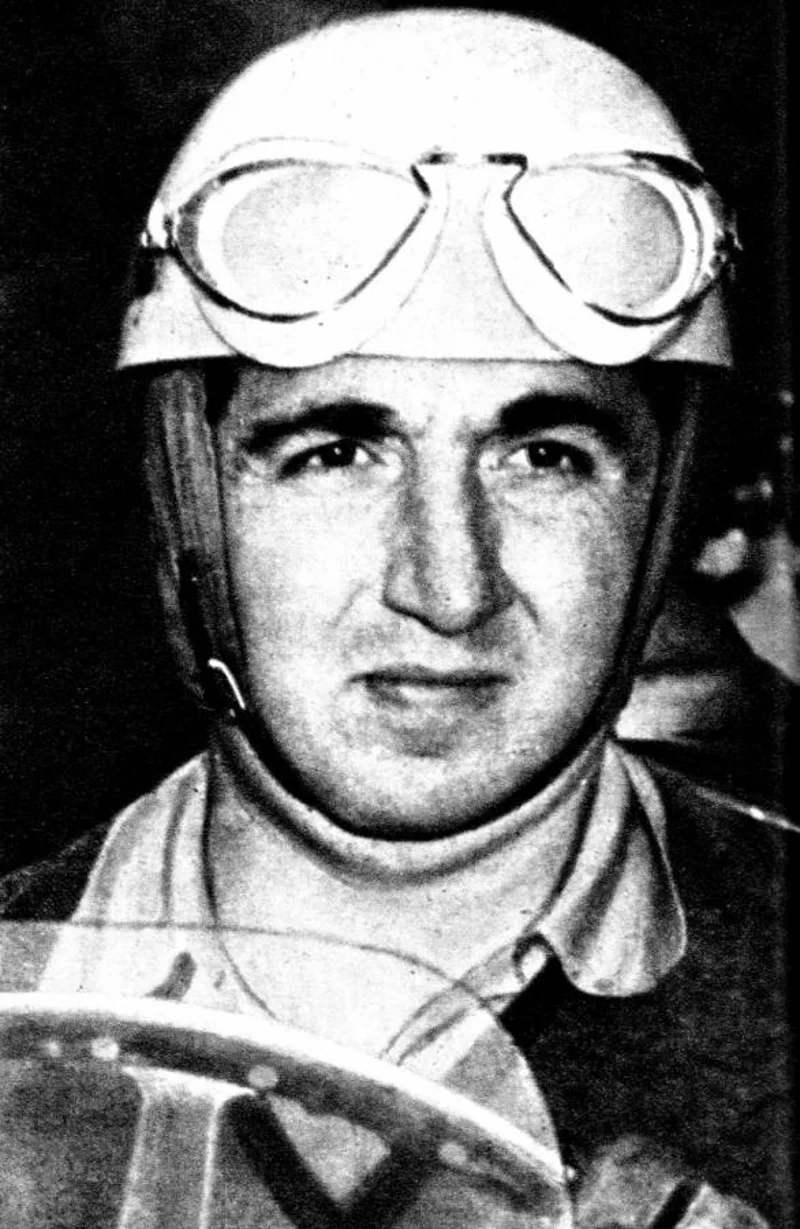
Through 1951 modifications made the car quick enough to beat Alfa Romeo. Jose Froilan Gonzalez won at Silverstone on 14 July, the constructor's first World Championship win, and Ascari won at the Nurburgring and Monza. A 2562 cc Colombo V12 also powered the 212 F1 that year.
For 1966 a three-litre rule arrived. Ferrari's first car used the 3.3-litre V12 from the 275P2 sports prototype, modified to 3.0 litres, and the 312 name marked a 3-litre, 12-cylinder engine. The unit proved heavy, and with less capacity it lost power and especially torque. John Surtees won the Belgian Grand Prix on a power circuit but left after a row with manager Eugenio Dragoni, and Mike Parkes finished second in the drivers' championship, with Ludovico Scarfiotti winning at Monza as Ferrari took second in the constructors' standings.
The modern V12 came after the ban on turbo engines. The 3.5-litre, 65-degree Tipo 035/5 of 1989 started at 600 bhp (447 kW; 608 PS) and reached 660 bhp (492 kW; 669 PS) by the season's end. It was unreliable, though it won on its debut. The Tipo 036 in the 641 made 680 bhp (507 kW; 689 PS), a little below the 690 bhp (515 kW; 700 PS) Honda V10 used by McLaren, and less flexible out of slow corners than Honda's V10, Williams's Renault V10 or Benetton's Ford-Cosworth HB V8. An updated Tipo 037 gave 710 bhp (529 kW; 720 PS).
In 1994 the Tipo 041 in the 412 T1 started with 750 bhp at 15,300 rpm, then the Tipo 043 arrived. Claudio Lombardi and the former Honda chief engine designer Osamu Goto designed it from scratch, with a wider 75-degree vee, up from 65 degrees, and a shorter stroke, and Ferrari had hired a number of engineers from the Honda programme. It debuted in qualifying for the San Marino Grand Prix and was first raced at Hockenheim. Power rose above 830 bhp, and the engine became famous for its noise.
The 1995 Tipo 044/1 was Ferrari's last V12, cut from 3.5 to 3.0 litres by regulations introduced after the previous year's events. It gave around 700 hp (522 kW) at 17,000 rpm in race trim and reportedly up to 760 hp for qualifying. Ferrari then chose a V10 for 1996 as the best compromise between power and economy; the V12 had plenty of power but drank fuel, and a V8 was the opposite.
Which Ferrari cars used the Formula One V12 line?
Three cars borrowed the Formula One V12's genes. The F50 road car used a 4.7-litre, 60-valve V12 developed from the 3.5-litre engine in the 1990 Ferrari 641, with 382 kW (519 PS; 512 bhp) at 8,500 rpm and 491 Nm (362 lb ft) at 6,500 rpm.
The F50 GT, which never raced, pushed the same 4.7 litres to around 750 PS (552 kW; 740 hp) at 10,500 rpm, with 529 Nm (390 lb ft) arriving at 7,500 rpm.
The F333 SP sports prototype took the 641's 65-degree V12 and enlarged it from 3.5 to 4.0 litres for durability. Its bore and stroke of 85 mm and 58.7 mm gave 333.09 cc per cylinder, a total of 3,997.11 cc. It made 641 hp (650 PS; 478 kW) at 11,000 rpm, about 40 hp less than the original, and Southgate later ranked it among the most dependable race engines he had handled.
What is the Ferrari F154 V8 engine?
The F154 is a modular family of twin-turbocharged, direct-injected V8 petrol engines that Ferrari has designed and built since 2013. It replaces the naturally aspirated Ferrari-Maserati F136 V8 in both Maserati and Ferrari cars.
Not since the 2.9-litre F120A V8 in the 1987 F40 had Ferrari put a turbocharged engine in a road car. The engines have a 90-degree angle between the banks and aluminium blocks and heads, with two parallel water-cooled twin-scroll turbochargers from IHI and two air-to-air intercoolers. Four valves per cylinder are worked by roller finger followers on two overhead camshafts per bank, and the timing chain sits at the flywheel end.
The Ferrari and Maserati versions differ. Ferrari's has a flatplane crankshaft, in which the crankpins lie in a single plane, and dry sump lubrication. Its exhaust manifolds are welded from several cast steel pieces so that every pipe has an equal length, and the turbo housing is built from three pieces. Maserati's engine uses a crossplane crankshaft and wet sump lubrication, and merges turbine housings and manifolds into one piece. On the Quattroporte an overboost function lifts maximum torque from 650 Nm (479 lb ft) between 2,000 and 4,000 rpm to 710 Nm (524 lb ft) between 2,250 and 3,500 rpm. Ferrari's versions all add direct injection and variable valve timing that acts continuously on the intake and exhaust sides.
The Nettuno, the 3.0-litre V6 in the Maserati MC20, has much in common with both the F154 and the Alfa Romeo 690T.
How many awards has the Ferrari F154 won?
The F154B and F154C have collected 14 International Engine of the Year trophies, including a record four consecutive overall titles from 2016 to 2019, plus four Best Performance Engine titles. They were Best New Engine at their 2016 debut.
From 2016 to 2018 the engine topped the 3-to-4 litre class. When the competition changed to power-based categories in 2019, F154 variants won both the 550 to 650 PS and the Above 650 PS awards. In 2018 the F154C was named the most significant engine since the competition began in 1999.