A British IndyCar engine shop that became the Mercedes engine, a start-up re-badging Honda units, and a French firm that spent decades assembling Renault's.
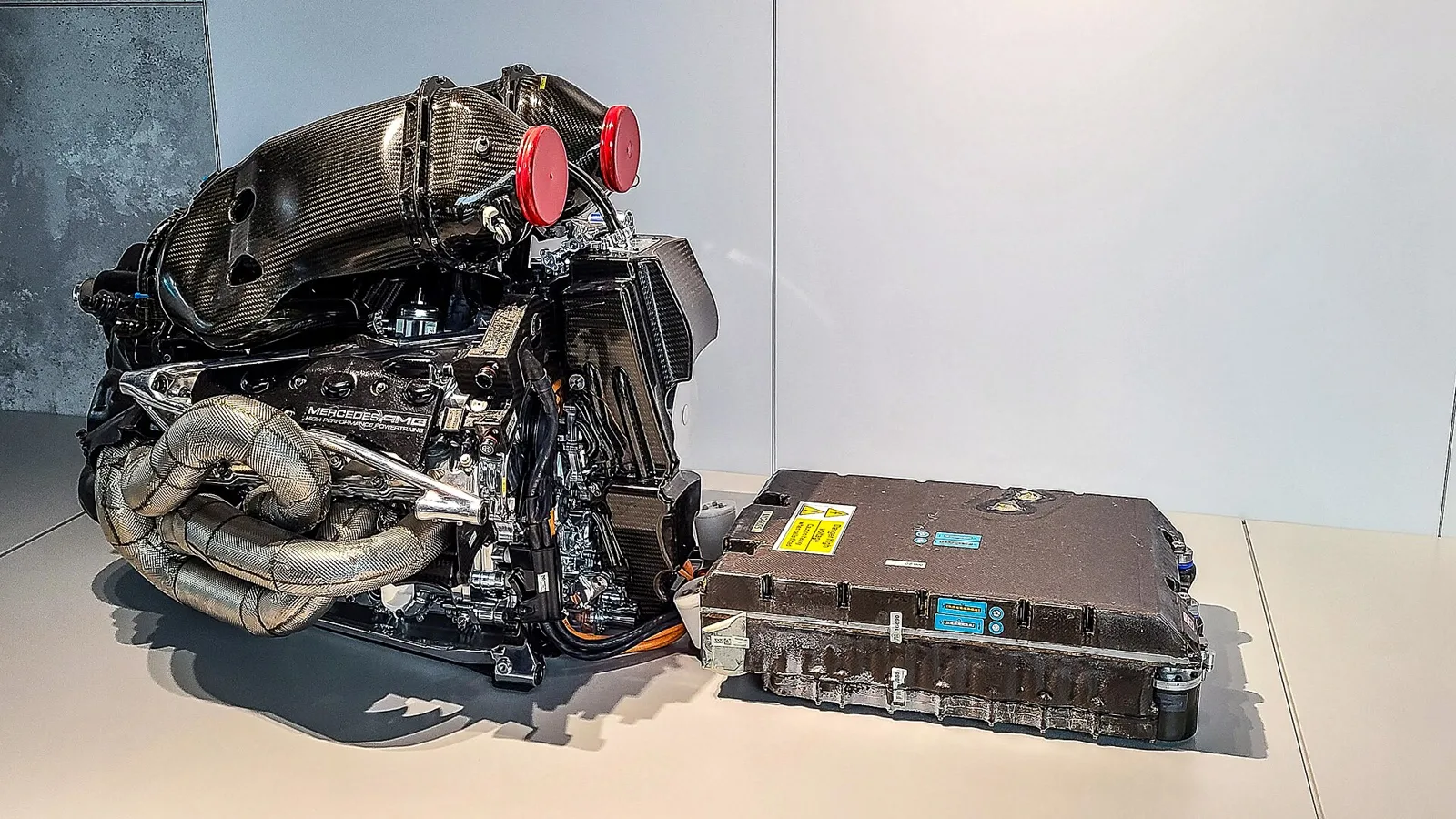
Mercedes AMG High Performance Powertrains, formerly Ilmor, builds the Mercedes hybrid V6, with twelve Drivers' titles to its engines. Red Bull Powertrains started in 2021 by re-badging Honda units and becomes Red Bull Ford in 2026. Mecachrome prepared Renault's F1 engines until Renault's works exit after 2025.
Since 2014, cars powered by Mercedes have won 153 Formula One races and taken pole position 163 times. The company behind them began as a small British firm named from the surnames of its two founders, and it built its first engines for IndyCars with money from Roger Penske. Mercedes AMG High Performance Powertrains now sits beside two very different companies in the business of making or preparing Formula One power units: Red Bull Powertrains, which started out re-badging Honda engines, and the French engineering firm Mecachrome, which spent decades preparing Renault's.
Mercedes AMG High Performance Powertrains: from Ilmor to champion
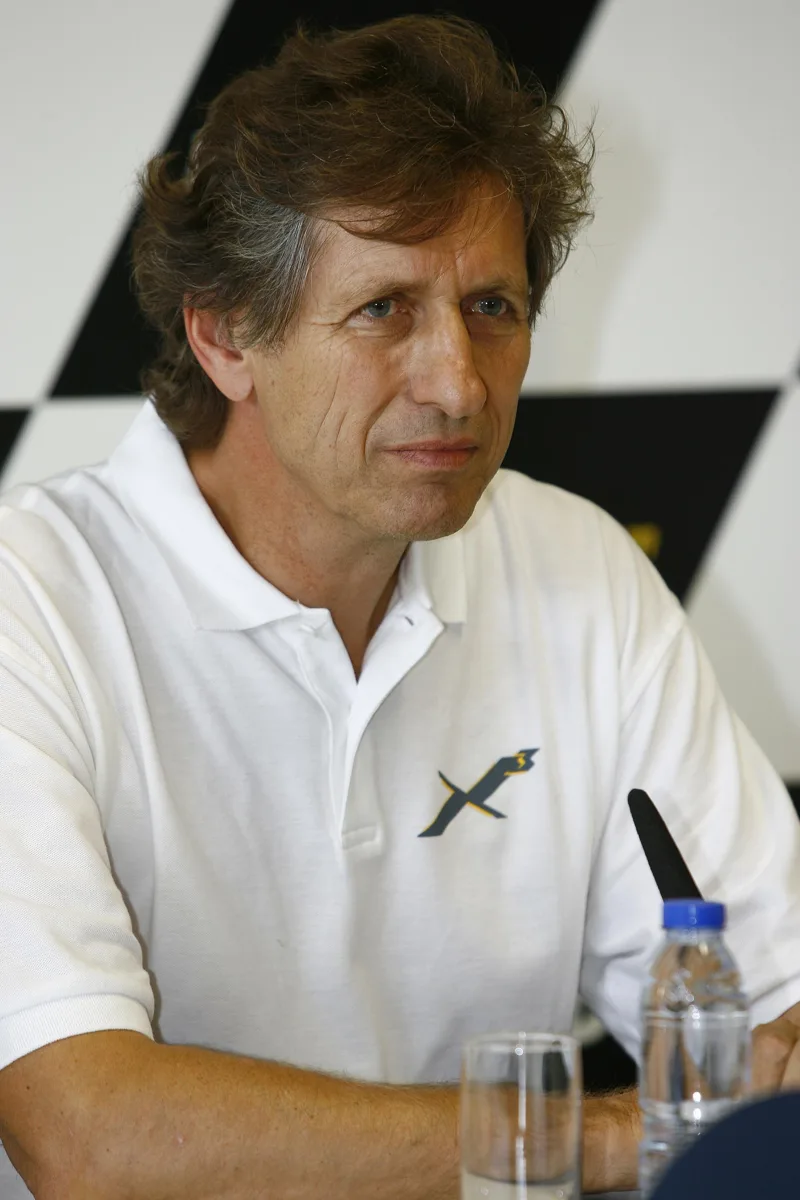
Mercedes AMG High Performance Powertrains, usually shortened to HPP, makes Formula One engines and belongs to Mercedes-Benz. It was formerly known as Ilmor Engineering, and then as Mercedes-Benz High Performance Engines. Mario Illien and Paul Morgan founded Ilmor in 1983 as an independent British builder, and the name combines their surnames. The first customers were IndyCar teams, paid for by the team owner and chassis maker Roger Penske.
Daimler-Benz took over General Motors' 25% holding in Ilmor during 1993. During 2002 Daimler lifted its stake to 55% and renamed the company Mercedes-Ilmor. By 2005 it was the sole owner, and in December 2011 it took its present name, matching the renaming of Mercedes GP. At the same time a small Special Projects section, which between 2003 and 2011 had been contracted to help develop and prepare Honda's IndyCar engines, split away. It is owned by Illien and Penske and is entirely independent of Mercedes, and it trades once more as Ilmor Engineering Ltd.
How Ilmor reached Formula One
Ilmor entered Formula One in 1991 as engine supplier to Leyton House, the team formerly called March. In 1992 the team reverted to the March name and kept the engines, and Tyrrell also took them. With Ilmor's V10, March scored 3 points and Tyrrell 8.
The firm's reputation attracted Sauber's sports car team and Mercedes-Benz, who were planning a joint Formula One entry and signed Ilmor to build their engines. Mercedes stepped back from the project at first, and the engines bore only the slogan 'Concept by Mercedes-Benz', being officially called Saubers. After an unexpectedly fast showing in 1993, Sauber persuaded Mercedes to enter officially in 1994. That year Ilmor also gave the new Pacific team of Keith Wiggins its old 1993-specification engines. Pacific qualified only seven times in thirty-two attempts, though the engine was not blamed.
In 1995 Ilmor became Mercedes' trusted engine builder and assembler for McLaren, after deciding to stop supplying engines independently. The partnership's first victory came in the 1997 Australian Grand Prix, and Mika Hakkinen followed with the Drivers' Championship in 1998 and 1999, while McLaren took the Constructors' title in 1998. After a winless 2006, the team bounced back and Lewis Hamilton won the 2008 Drivers' title.
Tragedy struck in 2001, when Paul Morgan was killed while landing his vintage aeroplane at Sywell Aerodrome in Northamptonshire. Mercedes responded by raising its financial involvement.
| Customer | Years supplied |
|---|---|
| Sauber | 1994 |
| McLaren | 1995 to 2014, and from 2021 |
| Force India (later Racing Point Force India, Racing Point) | 2009 to 2018; Racing Point 2019 to 2020 |
| Brawn | 2009 |
| Mercedes factory team | From 2010 |
| Williams | From 2014 |
| Lotus | 2015 |
| Manor Racing | 2016 |
| Aston Martin | 2021 to 2025 |
| Alpine | From 2026 |
Twelve Drivers' titles have come with the company's engines: 7 with the Mercedes factory team, 4 with McLaren and 1 with Brawn. The same engines took twelve Constructors' titles, 8 with the factory team, 3 with McLaren and 1 with Brawn. Mercedes-supplied McLaren cars won the Constructors' title in 2024 and 2025, and in 2025 Lando Norris took the Drivers' title in a Mercedes-powered McLaren.
Breathing aids in a week
In March 2020, as the pandemic delayed seasons, Mercedes HPP worked with UCL Mechanical Engineering and the Institute of Healthcare Engineering on devices to help patients breathe and stay out of intensive care. A working device was ready within a week, and 600 continuous positive airway pressure units came off the line on the first day, with a plan to reach 1,000 a day. They were made on the machines that normally turn out pistons and turbochargers for Formula One engines.
The Red Bull engines carried a Red Bull name while Honda built, assembled and supported them.
How the Mercedes V6 hybrid power unit works
The 2014 regulations called for a hybrid. Mercedes produced a 1.6-litre turbocharged V6 with two energy-recovery systems. The MGU-K is an electric machine on the crankshaft that recovers energy under braking and adds power on the way out. The MGU-H sits on the turbocharger. It keeps the turbine spinning at lower engine speeds, which removes turbo lag and sharpens the throttle response. Mercedes' version produced a lot of power on less fuel than the Ferrari and Renault engines, and cars with it scored the majority of the points in 2014.
Over its development, power rose from 630 kW (840 hp) to 810 kW (1,080 hp), both at 15,000 rpm. Customer engines go to Williams, McLaren and Alpine, and past customers included Force India and its successors, Lotus and Manor. The engine set a record for wins in a single season in 2016, which Honda later surpassed with Red Bull Racing in 2023. Hamilton collected a record six Drivers' championships with it, while the Mercedes factory team claimed a record eight consecutive Constructors' titles.
Since 2014, as of the 2026 Singapore Grand Prix, Mercedes-powered cars have taken pole position in 163 of 269 races and won 153 of them, along with 8 Drivers' and 10 Constructors' championships. For 2026 the regulations removed the MGU-H and increased the power of the MGU-K.
The Mercedes-AMG One road car
The Mercedes-AMG One uses a modified version of the 1.6-litre PU106B engine from the F1 W06 Hybrid car. Changes for road legality include a lower idle speed and redline. The engine alone makes 422 kW (574 PS; 566 hp), and torque could not be measured because of the complexity of the powertrain.
Four electric motors work with it: a 120 kW MGU-K on the crankshaft, a 90 kW MGU-H on the turbocharger, and two 240 kW motors on the front axle that drive the front wheels, making the car all-wheel drive. The electric side contributes 360 kW of effective power to a combined output of 782 kW (1,063 PS; 1,049 hp). Tobias Moers, head of Mercedes-AMG, said the engine idles at 1,280 rpm and redlines at 11,000 rpm. He also said that it will last only 50,000 km (31,000 mi) before owners must return the car for a refurbishment costing 850,000 euros. Mercedes-AMG quotes a top speed of 352 km/h (219 mph) and 0 to 100 km/h in 2.9 seconds, 0 to 200 km/h in 7.0 seconds and 0 to 300 km/h in 15.6 seconds.
Red Bull Powertrains: engines from a standing start
Red Bull Powertrains Limited, or RBPT, is a Formula One power unit company owned by the Austrian company Red Bull GmbH, with its home in the UK. It was set up in 2021 to run the Honda-developed power units from 2022, once Honda had withdrawn from the sport at the end of 2021. Its small facility of 5,000 square feet stands beside the chassis department of Red Bull Racing, at Milton Keynes. Apart from Ferrari, Red Bull is the only current F1 team to keep chassis and engine departments in the same place.
A Honda engine under another name
Red Bull Advanced Technologies agreed an exclusive deal with Honda in February 2021 to distribute its engines from 2022. The engines were bought from Honda, relabelled as Red Bull Powertrains units and sent to Red Bull Racing and AlphaTauri. Honda kept backing the two teams right through 2025, building up the power units and staffing the track. The units remained Honda's intellectual property, and with engine development frozen since September 2022, Red Bull Powertrains left them undeveloped. In October 2022 Honda announced it would reinforce the partnership and keep total oversight of the engines until 2025, and its logo returned to the cars from the 2022 Japanese Grand Prix.
The first engine, the RBPTH001, was developed, produced and maintained by Honda despite its name. It derived from Honda's RA621H, but with revised ignition timing, cylinder pressure and MGU-H, all to suit the new E10 fuels. Honda reshaped the crankshaft and cylinder block for reliability on E10, and a special coating from its motorcycle arm lined the cylinder walls. Fuel injection, exhaust and both halves of the turbocharger were reworked for E10 as well. The result was heavier than the RA621H, though virtually identical in size apart from the exhaust, intake layout and electrical components. It also ran at noticeably higher temperatures, and its thermal efficiency was greater than its predecessor's despite the lower energy density of the 2022 fuels.
Hiring from Brixworth
RBPT announced Ben Hodgkinson as technical director on 23 April 2021. He had led mechanical engineering at Mercedes HPP from 2017, after 20 years at the Brixworth factory. On 6 May 2021 Red Bull Racing named five other senior engine people from Mercedes: Steve Blewett as production director, Omid Mostaghimi as chief of engine, electronics and energy recovery, Pip Clode (mechanical design, energy recovery), Anton Mayo (combustion power unit design) and Steve Brodie (combustion engine operations).
Red Bull Ford and what comes next
A strategic partnership between Red Bull Racing and the Ford Motor Company was announced on 4 February 2023, with Ford coming back to Formula One in 2026 alongside the new engine regulations. Ford would contribute know-how in battery cells and electric motors, control software and analytics for the power unit, and work on the combustion engine. The company was to be renamed Red Bull Ford Powertrains, and in December 2025 the naming was simplified to Red Bull Ford.
Starting in 2026, Red Bull Powertrains takes complete charge of supplying and running engines for the two teams Red Bull owns. The DM01 power unit was launched on 15 January 2026 and named after the Red Bull GmbH founder Dietrich Mateschitz, who was heavily involved in setting up RBPT before his death in 2022.
Mecachrome: the company that built Renault's engines
Mecachrome SAS is a French precision engineering company working in aerospace, motor racing, energy and defence. It was founded in 1937 in Colombes, and it is most famous in Formula One for manufacturing engines designed by Renault for teams including Williams and Benetton in the 1990s.
Its involvement with Renault Sport goes back to 1977. From 1983, when Renault began supplying engines to other teams, Mecachrome was responsible for preparing and assembling them for customers such as Lotus in 1983 and Ligier in 1984. Renault withdrew as a constructor in 1985, and from engine supply for 1987. It returned in 1989 supplying Williams, with Ligier added from 1992, and Mecachrome once more prepared the engines.
Renault power took Williams and Benetton to six straight Constructors' titles between 1992 and 1997, together with five Drivers' crowns: Nigel Mansell in 1992, Alain Prost in 1993, Michael Schumacher in 1995, Damon Hill in 1996 and Jacques Villeneuve in 1997.
The Supertec and Playlife years
Benetton acquired Ligier's stock of Renault V10s in 1995. In 1996 Renault was privatised and announced it would leave Formula One after 1997. To avoid shareholder protests over engine development costs, Mecachrome offered to reimburse Renault for its development work so the link could continue. Williams' engines for 1998 took the Mecachrome name, Benetton's the name Playlife. Also in 1998, Flavio Briatore's firm Super Performance Competition Engineering agreed to distribute the engines from 1999, buying them and rebadging them as Supertec. They powered Williams and BAR in 1999 and Arrows in 2000, while Benetton continued with Playlife.
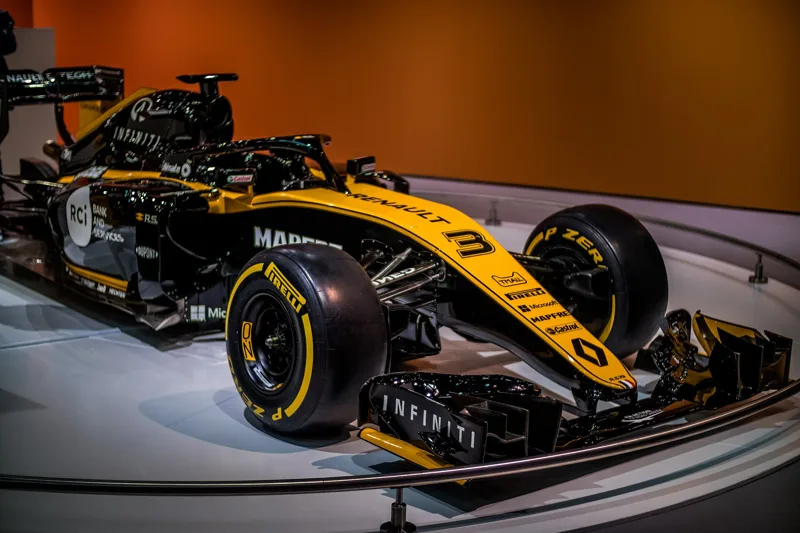
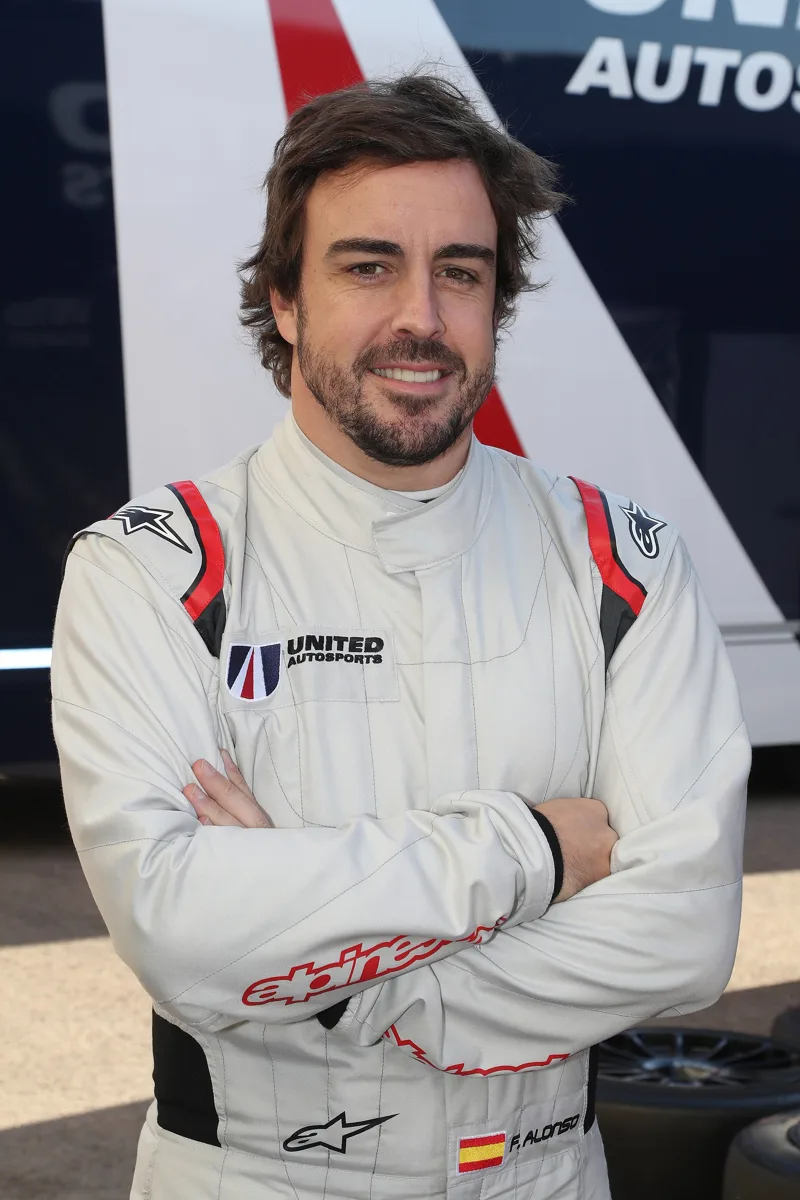
Renault returned in 2001 by buying the Benetton team, and its engines carried the Renault name again. Under the arrangement Renault handled the research and design as well as assembly, preparation, upkeep, trackside support and tune-up, and that set-up helped it win both titles in 2005 and 2006 with Fernando Alonso. Later Mecachrome-assembled Renault engines powered Red Bull Racing and Sebastian Vettel to championships in 2010, 2011, 2012 and 2013. Mecachrome also helped build the Renault hybrid power unit from 2014.
The end of the Renault works programme
On 29 September 2024 Renault announced it would end its works engine programme and stop providing engines for Alpine after 2025, when revised regulations arrive in 2026, citing a lack of success and unreliability since the start of the turbo-hybrid era in 2014. That ended Mecachrome's long collaboration with Renault in Formula One. The Groupe Renault chief executive, Luca de Meo, gave financial reasons as the main motive, saying it would be cheaper to buy a power unit from another manufacturer than to keep developing one in-house. Reports in May 2025 said Mecachrome had agreed to remain in the sport as a supplier of engine parts.
Mecachrome in the feeder series and endurance racing
When the GP2 Series (now the FIA Formula 2 Championship) launched in 2005 as Formula One's official support series, its engines carried Renault badges only, and Mecachrome was tasked with building them. Heini Mader in Switzerland directed the work, and the engines were built at Renault's F1 site in Aubigny, France. Mecachrome kept supplying engines and gearboxes in the second generation from 2008 to 2010, and slightly detuned versions for the GP2 Asia Series. From 2011 Renault Sport stopped badging the engines. The V8 formula, developed jointly with TEOS Engineering, ran from 2005 and was retired after 2017.
New for 2018 was the Mecachrome V634 Turbo, a 620 hp 3,400 cc single-turbocharged, direct-injected V6, developed from the naturally aspirated V634 used in the GP3 Series. It arrived with a new Dallara F2 2018 chassis, with turbochargers from the Dutch company Van Der Lee Turbo Systems. The V634 was also chosen as the official engine of the GP3 Series from 2016, and was set to serve all FIA Formula 3 competitors until at least 2024.
Endurance racing has been rougher. In 2017 Mecachrome partnered with Ginetta to supply the V634P1, a turbocharged variant of the F2 engine, for the G60-LT-P1 prototype. After the car withdrew from the opening round of the World Endurance Championship at Spa-Francorchamps and finished fifth in class at Le Mans, which was 41st overall, Ginetta swapped to an AER engine. Ginetta's technical director Ewan Baldry said the engine was underpowered and missed the contractually agreed targets, while Mecachrome said it planned to continue the programme, though it has yet to find customers. From the 2024 season Mecachrome supplied a heavily modified V634 for the two Alpine A424 cars. At the 2024 24 Hours of Le Mans both retired with engine problems: the number 35 car pulled up at Arnage five hours in, trailing smoke, and the number 36 ended its race in the pits during hour 6.
Aerospace and the rest of the business
Away from the track, in 2003 Mecachrome's head office went from France to Canada, and the firm listed on the stock exchange in 2008, just before the global financial crisis, when its share price plunged from a high of $13.55 to 15 cents. Cuts followed in Canada and France as Boeing 787 delays left it with spare capacity. In November the Casella family, descendants of the founders and the majority shareholders, stepped aside, Christian Jacqmin became chief executive, and the restructuring was complete by the end of 2008. Christian Cornille took over as chief executive in April 2019. The company has 14 sites spread over Europe, North Africa and North America and employs more than 2,500 people.
Aerospace accounted for 56% of international sales as of 2024. Mecachrome makes structural pieces, among them wing spars and fuselage sections, as well as sheet metal work, and works with Airbus, Boeing, Dassault and Embraer on aircraft that include the Boeing 737 and Eurocopter Tiger, as well as components for the Dassault Rafale, including its Snecma M88 engine. In 2014 it signed a deal to supply Safran for the new LEAP engine, and in 2022 it bought the WeAre group, which gave it access to 20 manufacturing sites across 5 continents. Back in 2017 it had said it was interested in supplying a standard low-cost engine to Formula One.