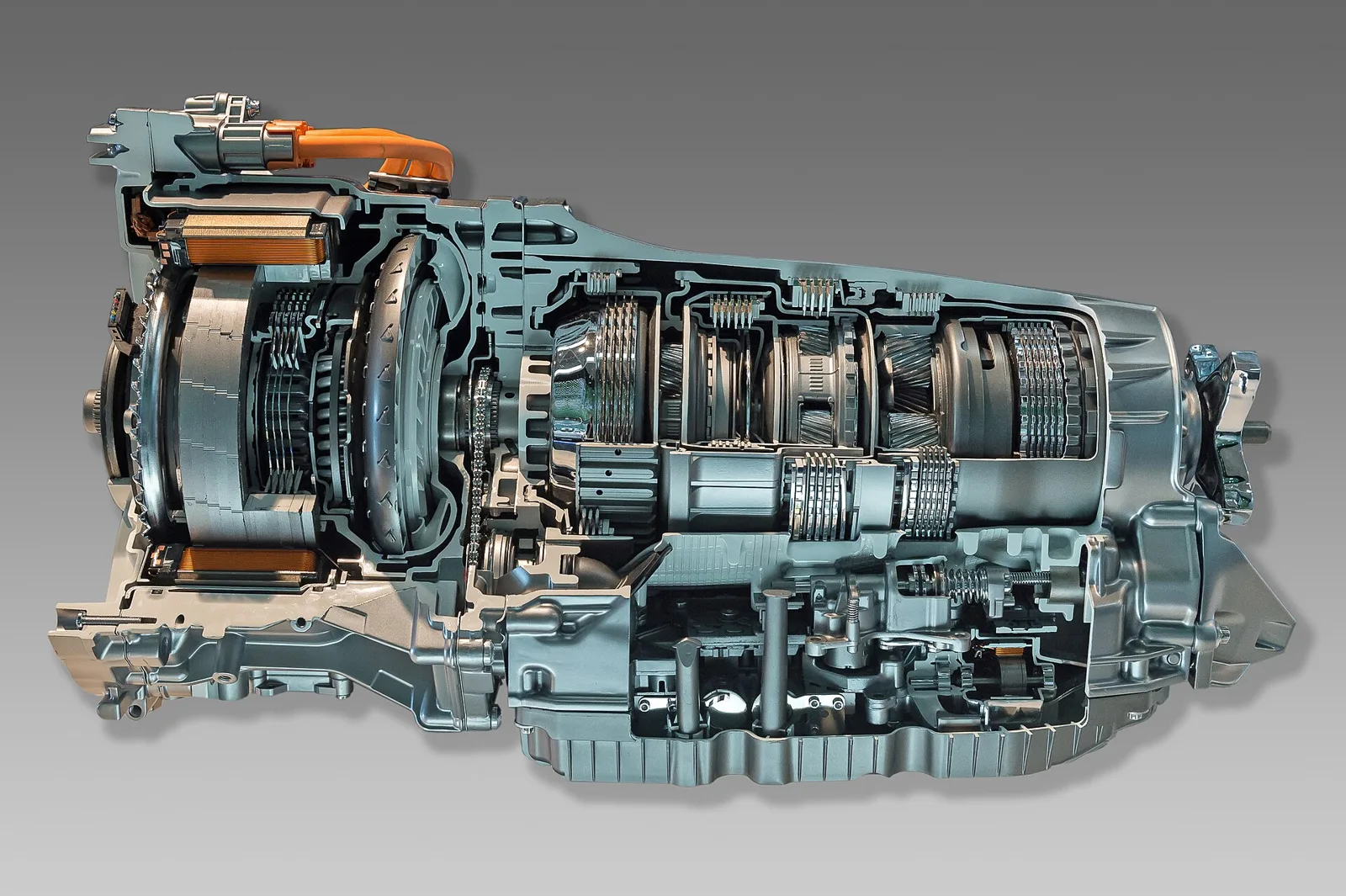
Parallel power flow, patented gearsets and a few trade-offs: what sits inside modern eight- and nine-speed automatics and where they have gone wrong.
The GM 8L, ZF 9HP and Mercedes-Benz 9G-Tronic all use computer-designed planetary gearsets with parallel and serial power flow, adding ratios without adding bulk. Extra gears let engines run slower for lower fuel use and noise. Each has had issues, from 8L shudder to 9HP software complaints.
When Mercedes-Benz engineers set out to build the 9G-Tronic, they examined 85 billion possible gearset concepts. The one they chose fitted into the same space as the older seven-speed and weighed 1 kg (2.2 lb) less, despite carrying two more gears.
Squeezing more ratios into an automatic gearbox without making it bigger, heavier or costlier is the central problem of modern transmission design. The GM 8L, the ZF 9HP and the Mercedes-Benz 9G-Tronic are three answers, and they share more than they differ.
Why do automatics keep adding gears?
The main aim of each replacement was better fuel economy. Extra speeds and a wider gear span let the engine turn more slowly at a given road speed, a practice called downspeeding. A lower engine speed saves fuel and also makes the car quieter and smoother. The company says the 9G-Tronic cut fuel consumption by 6.5%, and exterior noise by up to 4 dB(A). In a Mercedes-Benz E 350 BlueTEC, 120 km/h arrives in ninth gear with the engine turning at about 1350 rpm. ZF claims its 9HP saves an average of 16% of fuel compared with current six-speed automatics. On GM's 8L, internal redesign brought shift times down to 0.2 seconds.
Mercedes-Benz walked this path in stages. The 5G-Tronic was the first generation of its modern automatics, the seven-speed 7G-Tronic the second, and the 9G-Tronic is the third, known inside the company as NAG 3, for New Automatic Gearbox Generation 3.
The 9G-Tronic design team examined 85 billion gearset concepts and chose one that weighed 1 kg less than the seven-speed it replaced.
How do you add gears without adding parts?
Older planetary designs passed power through the gearsets in a single line, one stage after another, much like a production line with only one route. More ratios meant more stages and more components. The newer method combines parallel and serial power flow, so that power can also take side routes, and it needs computer-aided design to work out. The result is a globally patented gearset concept that delivers a better ratio of gears to components than earlier layouts.
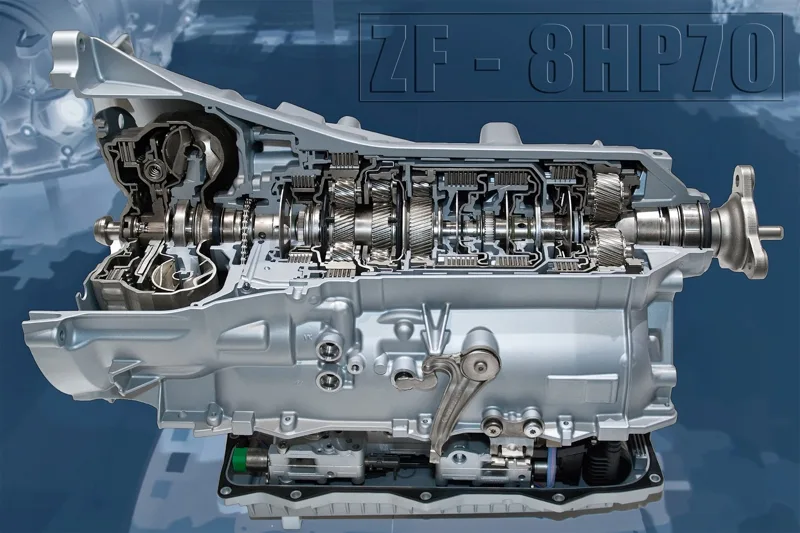
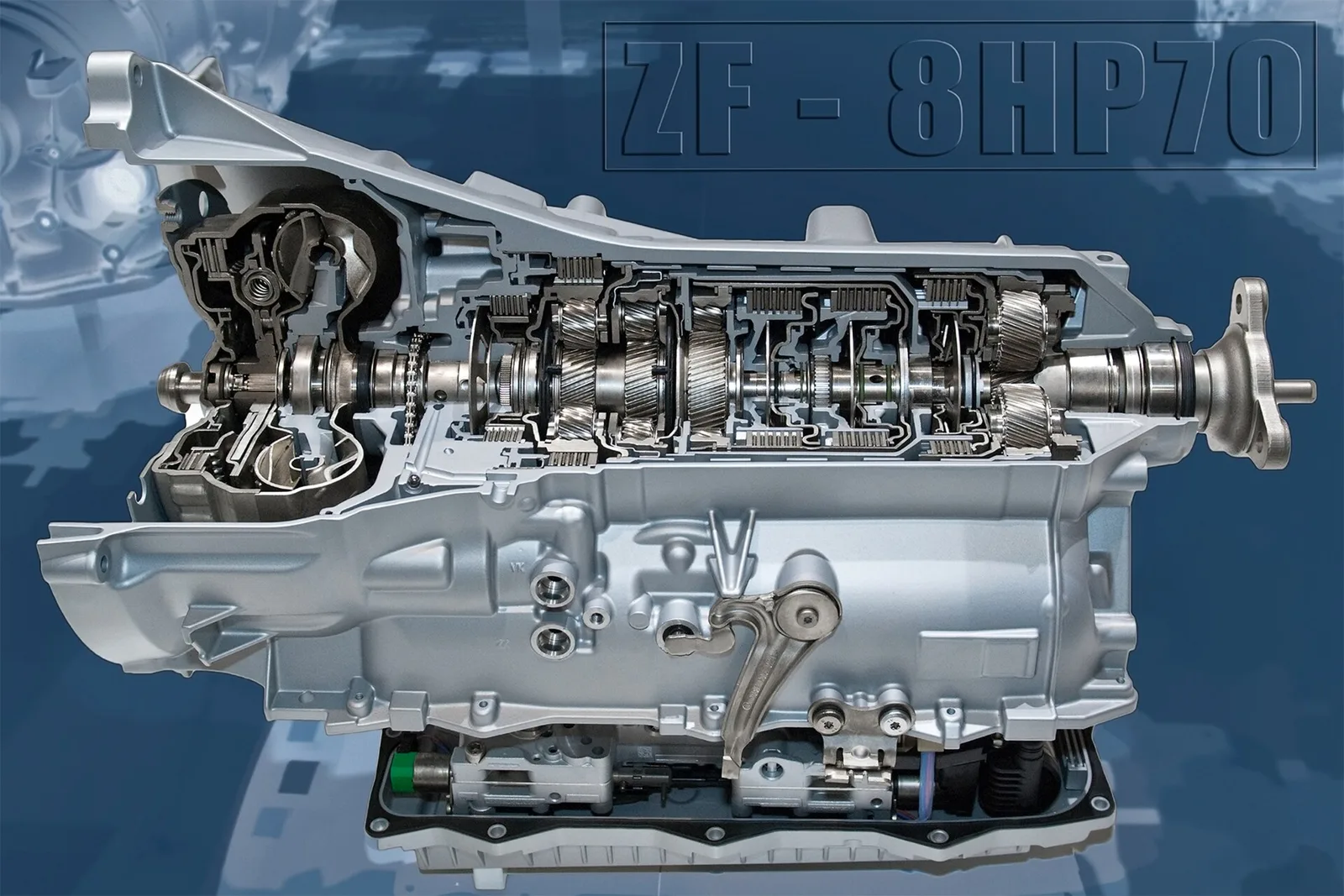
ZF's eight-speed 8HP of 2008 became the benchmark, and the others borrow from it. All 8L transmissions are built on the same gearset concept as the 8HP and differ only in how the parts are arranged, with planetary gearsets 1 and 3 swapped. Jatco's 9AT shares the 9G-Tronic's patented concept.
The 7G-Tronic took the first step. The design was more advanced than its predecessor but significantly less economical than competitors, and Mercedes-Benz could include it in the range because it can charge higher prices than many rivals. The seven-speed was considerably more complex than ZF's six-speed 6HP and even the newer eight-speed 8HP, so the specification for the 9G-Tronic stipulated that at least one shift element be left out.
| Transmission | Speeds | Debut | Layout and first use |
|---|---|---|---|
| Mercedes-Benz 7G-Tronic | 7 | Autumn 2003 | Longitudinal; E 500, S 430, S 500, CL 500, SL 500 |
| ZF 9HP | 9 | 2013 Geneva Motor Show | Transverse; 2014 Jeep Cherokee first delivered |
| Mercedes-Benz 9G-Tronic | 9 | 2013 | Longitudinal; E 350 BlueTEC first |
| GM 8L 90 | 8 | 2014 | Longitudinal; front or rear mounted, as in the Corvette |
| GM 8L 45 | 8 | 2015 | Longitudinal; 2016 Cadillac CT6 |
What is the GM 8L90 and 8L45?
The 8L is General Motors' first eight-speed automatic, a longitudinal design that keeps the hydraulic Hydramatic layout. The 8L 90 was introduced in 2014. It can bolt to a front-mounted engine through a standard bell housing or sit at the rear next to the differential, as in the Corvette. The smaller 8L 45 followed in 2015, launching in the 2016 Cadillac CT6, always attached to a front engine and about 33 lb (15 kg) lighter than the heavy-duty 8L 90. In 2023 an updated 8L 80 appeared on the Chevrolet Colorado and GMC Canyon, along with a second-generation 8L 45.
The ratios are not evenly spread in any version. The step between third and fourth gear is too small and the step between seventh and eighth too large, and this cannot be fixed without disturbing every other ratio. Against that, the gearset gives two to three more gears than conventional transmissions of comparable manufacturing cost. The layout can also shift in a non-sequential way: from eighth to second in extreme cases by changing one shift element, applying brake B and releasing clutch D.
8L problems and the class action
Transmissions of the 8L 45 and 8L 90 built between 2015 and 2019 show two unrelated problems. The first is that the fluid can take in moisture from the air through the vent, most of all in humid climates, and the clutches then slip. Some drivers, particularly in high gears, feel a shake or shudder like driving over rumble strips. A moisture-resistant fluid introduced in December 2018 largely resolved it. The second problem arises in gear changes: the unit sometimes applies too much pressure and does not clear air trapped in the valves, so shifts turn jerky or hard. The redesigned second-generation units fixed this, but affected transmissions cannot be repaired.
A class action filed in December 2018 covers both. It alleges persistent shudder and says GM has known of the problems since launch but let units run out of warranty without a fix. By 2025 the case had been sent back to the district court over procedural issues.
How does the ZF 9HP work?
Its name spells out the recipe: nine speeds, a hydraulic torque converter and planetary gearsets. It is meant for transverse engines, which suits front-wheel-drive and all-wheel-drive layouts. ZF's subsidiary in Saarbruecken designed it, and Gray Court, South Carolina, is where it is made. It was the world's first nine-speed automatic for passenger cars. Land Rover and Jeep unveiled it at the 2013 Geneva Motor Show, and the 2014 Jeep Cherokee was the first car delivered to customers with it. Production began in 2013 at Gray Court, at a rate of 400,000 units a year, and for Fiat and Chrysler it started in May 2013 at Indiana Transmission Plant I, joined in May 2014 by the Tipton Transmission Plant.
Its packaging is the main trick. Against the six-speed it replaced, the 9HP is just 0.24 inches (6 mm) longer and 16.5 lb (7.5 kg) lighter. ZF gets there with a compact vane-type hydraulic pump, two patented dog clutches that take the place of bulkier clutch packs, and a nested gear set. Inside are four planetary gearsets and six shift elements, three brakes and three clutches, two of them dog-type, which between them give nine ratios plus reverse.
It has not been trouble free. Owners of Jeep, Chrysler and Acura models reported slow shifting and noisy operation, which ZF attributed to software rather than mechanical faults. Chrysler put out technical service bulletins for the 2014 Jeep Cherokee aimed at rough, delayed gearshifts, and Acura issued transmission-related recalls for the 2015 TLX.
What is the Mercedes-Benz 9G-Tronic?
Mercedes-Benz's nine-speed is designed for longitudinal engines, in cars with rear-wheel drive, all-wheel drive or hybrid and plug-in hybrid drive. It began with the W9A 700, rated for 700 Nm (516 lb ft) of input torque, and versions exist for up to 1,000 Nm (738 lb ft). It was developed at the group's Stuttgart-Untertuerkheim headquarters and at first built only at the Daimler plant in Stuttgart-Hedelfingen, with Star Assembly in Sebes, Romania, adding output since April 2016.
The E 350 BlueTEC used it first, in 2013, and it gradually replaced both the 7G-Tronic and the 5G-Tronic. The GLE Coupe was the first model launched with it from the start, and at its market launch it was standard in every model except the AMG ones.
It is fully electronically controlled. Hydraulic direct control through electromagnetic valves gives fast, smooth shifts, and it cut leakage losses by 80% compared with the earlier hydraulic pilot control. Two pumps feed the oil: a mechanical vane pump on a chain drive, and a second pump with a brushless electric motor that the control unit switches on as needed. Because the electric pump keeps the transmission ready to go when the engine is stopped, the 9G-Tronic can work with start/stop systems.
AMG developed a variant, the MCT 9G, which swaps the torque converter for a wet start-off clutch to save weight and sharpen the response to the accelerator. It first appeared in the Mercedes-AMG E 63 4Matic+, is rated at 900 Nm (664 lb ft), offers Comfort, Sport, Sport plus and Manual modes, and manages 0.1-second shifts in Manual and Sport plus. A launch-control Race Start function comes with it. The TCT 9G is essentially the standard 9G-Tronic.
The nine ratios are judged better distributed than those of ZF's 8HP and much better than in the ten-speed gearboxes of Ford/GM and Aisin/Toyota. The weaknesses are a relatively small step between fifth and sixth and one too small between sixth and seventh. Like the 8L, it can skip gears non-sequentially, in this case from ninth to fourth by applying brake C and releasing brake A.
Maintenance is the trade-off. The NAG 3 is more highly integrated than the earlier generations, so repairs mean replacing whole assemblies. The oil filters are built permanently into the plastic oil pan, and the mechatronic module, which combines sensors, control unit and shift plate, must be replaced as one unit even if only one sensor fails.
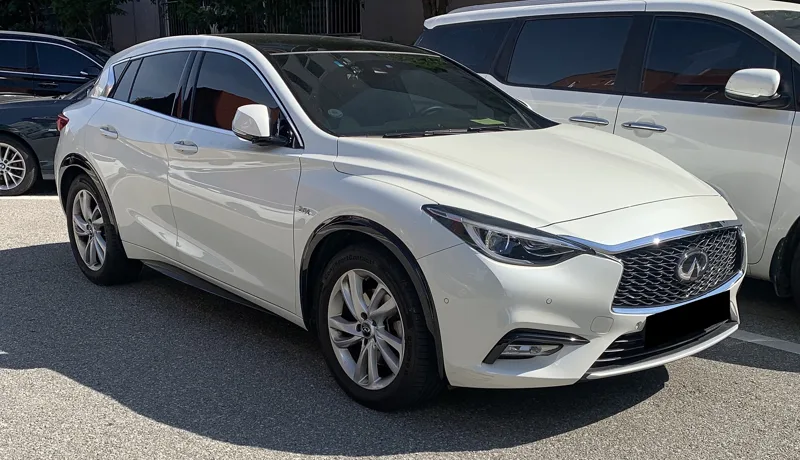
Beyond Mercedes-Benz, Jatco Ltd of Fuji, Shizuoka, Japan began licensed production in 2019 for Nissan and Infiniti vehicles. That version is limited to 700 Nm, which lets gearsets 1, 2 and 4 use only three planetary gears each, and has a ratio span of just under 9.1:1.
What did the 7G-Tronic do first?
The 7G-Tronic, type 722.9, was built from 2003 to 2020 and was the first seven-speed automatic used in a production passenger car. It arrived in autumn 2003 on five V8 models, the E 500, S 430, S 500, CL 500 and SL 500, and spread to many six-cylinder cars, while turbocharged V12 and four-cylinder models stayed with the 5G-Tronic for years. Its casing is magnesium alloy, an industry first, and it uses neither bands nor sprag clutches. It can skip gears, has two reverse gears, and locks the torque converter in all seven forward gears. If the control unit senses a critical fault, a limp-home mode takes over; after an electrical failure it shifts to sixth gear. In July 2009, Mercedes-Benz announced it was working on a nine-speed.
AMG made two sporting versions. The TCT kept the same ratios and the torque converter, and first appeared in the 2005 SLK 55 AMG. The MCT dropped the converter in favour of a compact wet start-off clutch, supports computer-controlled double-clutching, and has four drive modes, with 0.1-second shifts in the two sportiest. It reached showrooms on the 2009 SL 63 AMG and E 63 AMG, and became compulsory on the 2014 CLS 63 and E 63 AMG, including their S-Model variants.
Where this goes next
The list of makers is widening: Jatco began licensed production of the 9G-Tronic design in 2019, and GM brought updated 8L 80 and second-generation 8L 45 units into its 2023 model year. The 7G-Tronic production run ended in 2020. Rivals have gone further in raw numbers, with ten-speed gearboxes from Ford/GM and Aisin/Toyota already in service.