A teenager's Corvette sketch, a Porsche chief who painted a 917 like a butcher's chart, the man who oversaw the Enzo and the founder whose Karma was his only production car.
Anatole Lapine led Porsche design from 1969 and oversaw the 928. Pete Brock drew the Corvette Sting Ray and the Shelby Daytona Cobra Coupe. Ken Okuyama supervised the Enzo Ferrari at Pininfarina. Henrik Fisker designed for BMW and Aston Martin before building the Karma.
Pete Brock was 19 and still a student when he drew the sketch that GM's design chief picked, in November 1957, to shape the second-generation Corvette. The car reached showrooms in 1963 as the Sting Ray, almost four years after Brock had left the company. He was only getting started.
Anatole Lapine, Pete Brock, Ken Okuyama and Henrik Fisker drew very different cars. Their work runs from a Corvette studio hidden inside General Motors to a Japanese bullet train, and from a Porsche paint job that looked like a butcher's chart to a billion-dollar hybrid that never found its feet.
Pete Brock and the Daytona Cobra Coupe
Brock grew up around Sausalito in northern California. At 16 he bought a 1949 MG and painted it white, so that it matched the white-and-blue colours America used in international racing. Soon afterwards he turned a half-built 1946 Ford convertible into the Fordillac, named for its Cadillac engine, and it won the Oakland Roadster show while he was still in high school.
His route into design was unconventional. He dropped out of engineering at Stanford and drove to Los Angeles to apply to the Art Center School. Asked for a portfolio, he had none. He went back to his car, drew some hot rods in a three-ring binder, and handed that over. He was admitted.
At 19 he was one of the youngest designers GM Styling had ever taken on. The company had pledged to stay out of racing, a pledge known as the AMA ban, so Brock worked with Bill Mitchell in a secret studio on a prototype of the Sting Ray racer. When he turned 21 in 1959 he could finally hold an SCCA race licence, and he left to race in California.
Shelby American and the 1965 title
In 1961 Carroll Shelby hired him as his first paid employee, to run the Carroll Shelby School of High Performance Driving. Brock stayed until the end of the 1965 season, creating logos, advertising and car liveries as well as hardware. He designed the Shelby components of the Mustang GT350, and race cars including the Lang Cooper, the Nethercutt Mirage and the De Tomaso P70.
The car that carries his name in the history books is the Shelby Daytona Cobra Coupe. The coupes won the FIA GT World Championship in 1965.
Brock Racing Enterprises, hang gliders and the Brock Coupe
In December 1965 he started his own design firm and race team, Brock Racing Enterprises, known as BRE. Clients included Hino, Toyota and Datsun, and the GT cars he drew for them included the Hino Samurai, the Toyota JP6 and the Triumph TR-250K. After Toyota gave two promised 2000GTs to Shelby instead, Brock turned to Datsun. BRE became the west coast Datsun factory team, and it paid off: the 240Zs were SCCA National Champions in 1970 and 1971, and the Datsun 510s won the 2.5 Trans-Am title in 1971 and 1972.
Then he walked away from cars. After the 1972 season he shut the team and founded Ultralight Products to build hang gliders. The firm became the largest hang gliding company in the world, and its competition team won 7 out of 8 Worldwide Championships. He left in the late 1980s, citing dissatisfaction with liability laws.
Back in the car world, he taught automotive history and aerodynamics at Art Center. In 1999 he worked with Hi-Tech of Port Elizabeth, South Africa, on a modern version of the coupe, the Brock Coupe. More than 150 were built there and sold through Superformance, and Brock owns chassis #0073 himself, in Amulet Red.
His 2013 book Corvette Sting Ray: Genesis of an American Icon won the Motor Press Guild's Best Book of the Year award and the Dean Batchelor Award. A second book, in 2018, covered the P70. He lives in Henderson, Nevada, and still designs with clay models. His wife Gayle runs BRE as a source of 1960s and 1970s memorabilia and aftermarket parts for Datsun 510s and 240Zs, plus Daytona Cobra Coupe replicas.
Four designers, four routes: a studio sketch, a factory chief's desk, a Pininfarina chair and a company with a founder's name on it.
Anatole Lapine, the man behind the Porsche 928
Anatole "Tony" Lapine was born in Riga, Latvia, on 23 May 1930. His family fled the war, first to Poznan in 1941 and then to a village near Hamburg in 1944. He apprenticed at Daimler-Benz in Hamburg in 1950, and the family moved to the United States the following year.
He joined General Motors in 1951 by accident. He had applied to GM Research, reported to the wrong building, and ended up in body development at Fisher Body, where his Daimler-Benz experience counted for more than the paperwork did. His first job was a seating buck for the 1954 Cadillac.
From Studio X to Opel
By the mid-1950s he had followed Robert Cumberford into Studio X, Bill Mitchell's clandestine design studio, where he worked on the Corvette SS with Zora Arkus-Duntov and on the Stingray racer with Larry Shinoda. He was studio engineer on the 1963 Corvette Sting Ray, so his path and Brock's ran through the same secret rooms.
In 1965 GM sent him to Opel to oversee the Research Center at Russelsheim. There he built a secret skunkworks of his own. One product was a covert racing Rekord C nicknamed the Black Widow, which Erich Bitter and Niki Lauda raced. It had first been called the Taxi, because Lapine stuck a taxi sign on its roof. He also contributed to the final shape of the Opel GT, and a visit from members of the Porsche and Piech families led to a job offer weeks later.
Chief designer at Porsche
On 15 April 1969 Lapine became chief designer at Porsche, bringing Wolfgang Mobius, Dick Soderberg and chief modeller Peter Reisinger with him. One of his first big projects was a redesign of the 911, though he was not especially fond of the car. The result was the 1974 G-series, with bumpers tucked behind bellows-style covers to meet new American safety rules and a fresh black-on-body-colour trim treatment.
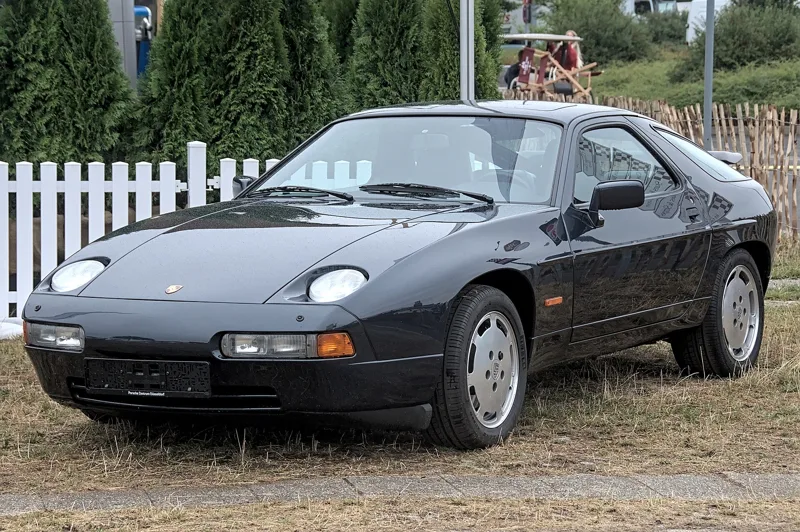
Fearing that future American legislation might end the 911 in its biggest export market, he led the project most closely tied to his name, the Porsche 928. Mobius was its principal designer; Lapine oversaw and guided the work. The car was Porsche's reading of an American performance car and leaned on his Corvette years, so much so that the 928 has been called the "German Corvette". Lapine himself said the shape was influenced by the Chevrolet Testudo, drawn by Giorgetto Giugiaro while at Bertone.
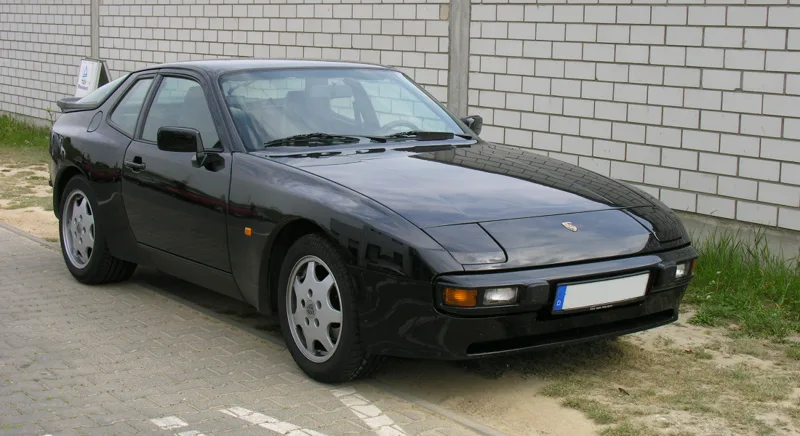
Two more front-engined, rear-transaxle cars followed under his authority. The 924 began as project EA425 for Volkswagen and was drawn by Harm Lagaay. Because VW was the paying customer, development was accelerated and the car reached the market in 1976, a year before the 928. The 944 arrived in 1982, developed from the 924.
The Gruppe B prototype at the September 1983 Frankfurt show was designed under his oversight, with Dick Soderberg producing the shape, and that body went on to become the Porsche 959. The 911 Speedster entered limited production in 1989, after Helmuth Bott won Peter Schutz's approval for a factory version and Lapine did the design. His last project was the Type 964 of 1989, which looked unmistakably like a 911 even though every panel had been redrawn.
Hippies, pigs and aircraft cockpits
Lapine also drew the body of the Porsche 917 PA Spyder, and his paint jobs became famous in their own right. For the 1970 24 Hours of Le Mans he gave 917-043 a flowing psychedelic finish, in colours chosen to echo irises, his favourite flower. It took 1500 spray cans and earned the car the nickname "Hippie" Porsche. At Le Mans in 1971, 917-20, whose rounded French-built bodywork someone compared to a pig, was painted pink and marked with dotted lines naming cuts of pork. Its nickname was Die Sau, the Pink Pig.
The design office also took outside work. Lapine's team redesigned the Airbus A310 cockpit so that two crew could handle everything previously done by three.
He suffered a heart attack in the late 1980s, moved to Baden-Baden to recover, and retired in 1989, succeeded by Harm Lagaay. He died on 29 April 2012. Michael Mauer, Porsche's chief designer from 2004, has said Lapine shaped the company's sports car design over more than two decades and set trends rather than following fashion.
Ken Okuyama, from the Enzo to the bullet train
Ken Okuyama was born in 1959 and finished his studies at Art Center in Pasadena in 1986. He chaired its transportation design department from 2000 to 2004. His industry credits include work at General Motors' Advanced Concepts Center in California, where he worked on the fourth-generation Chevrolet Camaro, and on the Porsche 911 known as the 996 and the Boxster.
Creative director at Pininfarina
He had already supervised the design of the Enzo Ferrari for Pininfarina before taking the role of Creative Director there on 10 May 2004. The projects he oversaw read like a Ferrari catalogue: the 599 GTB Fiorano, 456M GT, California and 612 Scaglietti, plus the Rossa and P4/5 concepts. Beyond Maranello he supervised the Mitsubishi Colt CZC, the Maserati Quattroporte V and the Maserati Birdcage 75th concept.
The honours followed: Best Interior Design of the Year in 1999 for the Pininfarina Metrocubo, and Best Concept Car of the Year in 2000 for the Ferrari Rossa.
Ken Okuyama Design and the Kode cars
He left Pininfarina in 2006 to set up Newton Design Lab. His first concept under his own name, the K.O. 7 Spider, appeared at the Geneva Motor Show in March 2008. It was a two-seater in carbon fibre reinforced polymer and unpainted aluminium, with a TAG Heuer Grand Carrera watch fitted to the dashboard and an interior inspired by the watch's design.
His studio built the first 20 K.O. 7 cars in 2008, pre-sold to a circle of fans, then 99 in 2009 and 99 more in 2010. In 2016 he revealed the Kode 57, limited to five units.
His design work reaches well beyond cars. For JR East he worked on trains including the E6 Shinkansen, introduced in March 2013, the E7 Shinkansen of March 2014 and the Train Suite Shiki-shima luxury cruise train. In October 2022 Japanese police arrested him for speeding, after he was caught driving an Enzo 88 km/h (55 mph) over the limit.
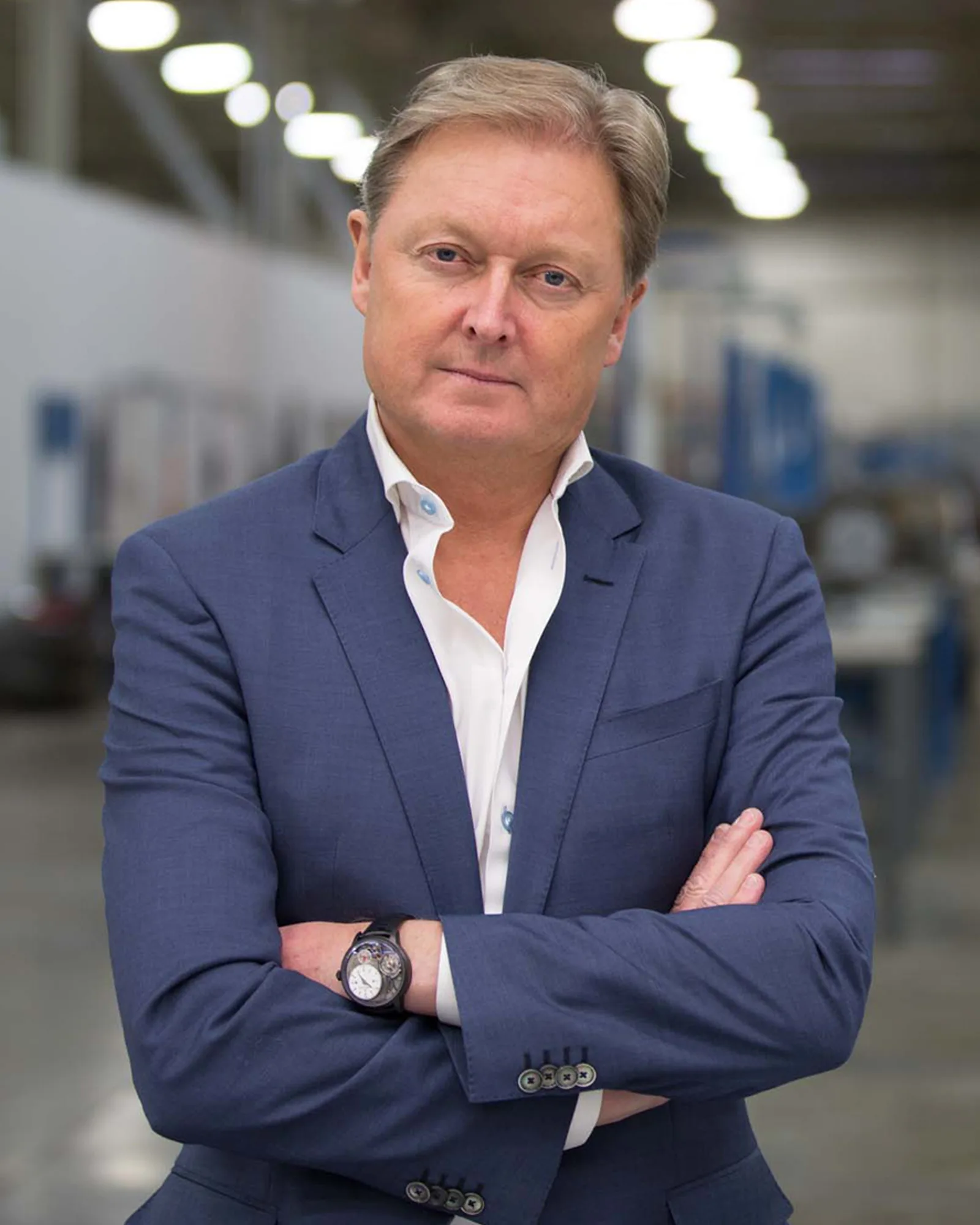
Henrik Fisker, from BMW and Aston Martin to Fisker Inc.
Henrik Fisker was born on 10 August 1963 in Allerod, Denmark. As a boy he saw a Maserati Bora on the highway and began filling notebooks with sketches. In 1989 he took a transportation design degree at the Art Center campus in Vevey, Switzerland, and started that year at BMW Technik, the company's advanced design studio in Munich.
BMW, Ford and Aston Martin
At BMW he refined the Z07 concept from 1992 to 1997. It became the Z8 roadster, built from 1999 to 2003, which paid homage to the BMW 507. He also worked on the design of the X5, BMW's first SUV, and from 1999 to 2001 was president and chief executive of Designworks, BMW's industrial design studio in California.
In 2001 he moved to Ford as design director at Aston Martin. He was in charge of production design of the DB9, built from 2004 to 2016, and designed the V8 Vantage, built from 2005 to 2018, which became the best-selling Aston Martin of all time. How much of either car was Fisker's is disputed: Ian Callum, Aston Martin's former director of design, says both were largely designed on his watch before Fisker arrived.
Fisker left Aston Martin and Ford in 2005. Tesla Motors hired him in 2007 for early design work on the Model S, which was introduced in 2012.
Fisker Coachbuild and Fisker Automotive
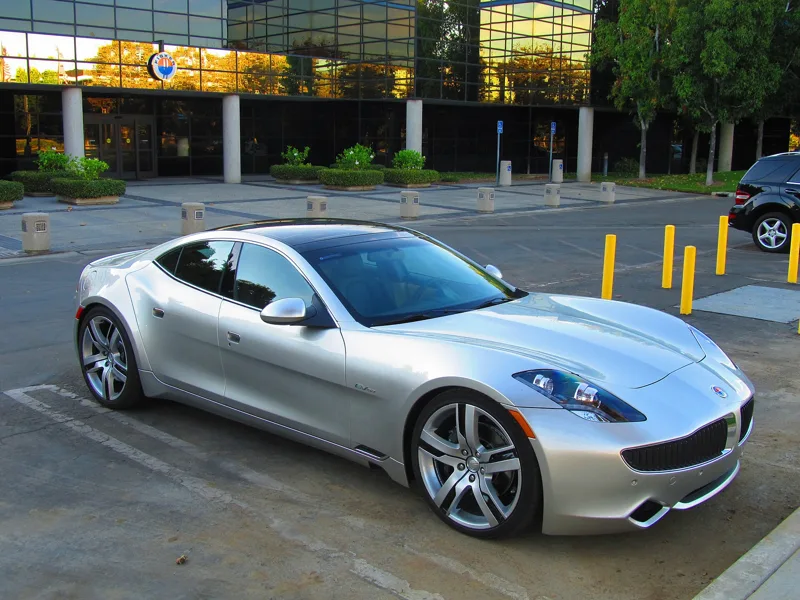
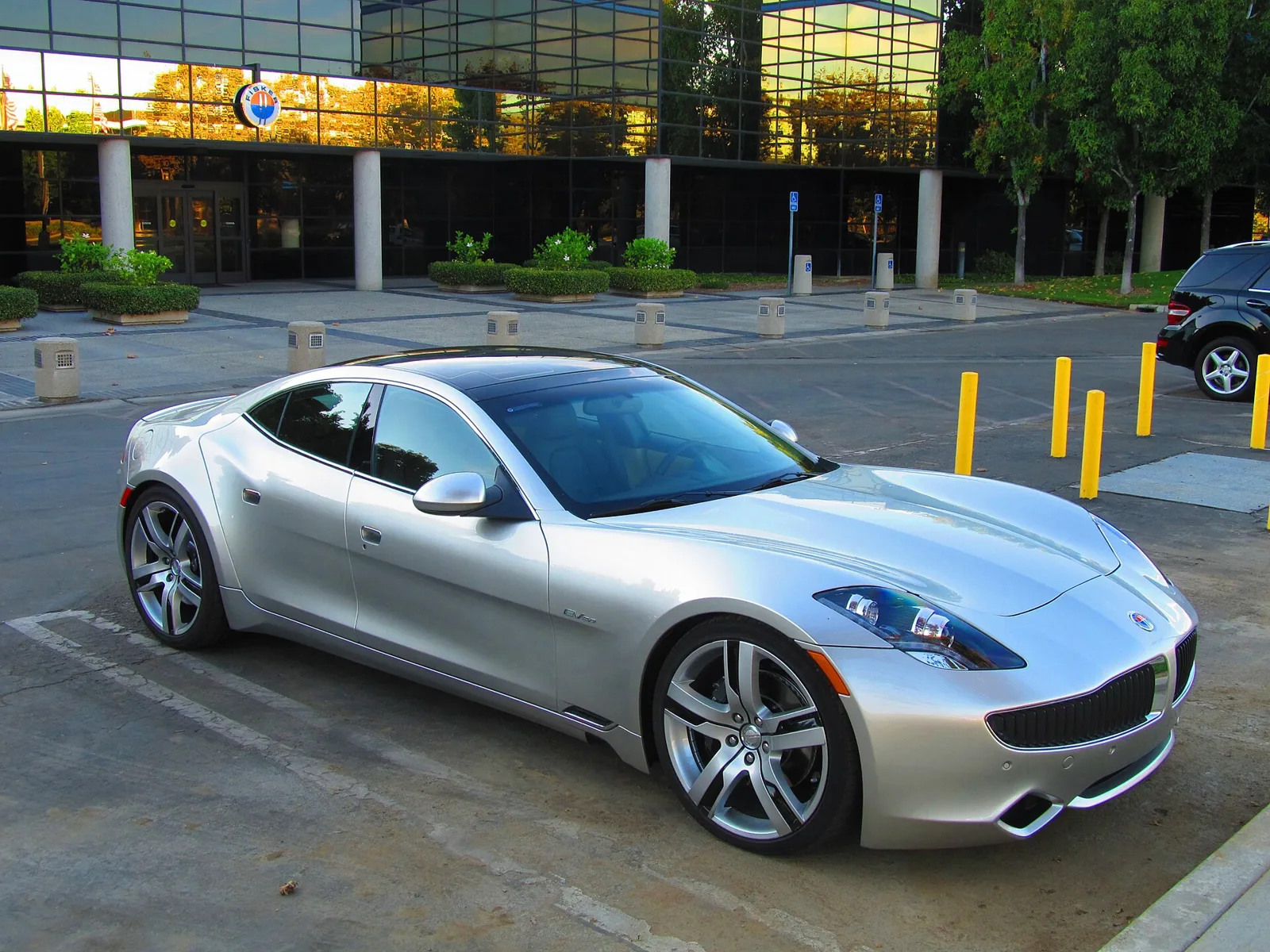
In 2005 he had started a custom car firm, Fisker Coachbuild, whose Tramonto roadster used Mercedes-Benz SL 55 AMG underpinnings; 17 were made. Fisker Automotive launched in Anaheim in August 2007, and its Karma, a hybrid sports sedan, was the only car it ever put into production. The Karma Sunset convertible of 2009 and the four-door plug-in hybrid Surf hatchback shown in 2011 never reached the showroom.
Money was never the obstacle at first. In 2008 the company raised more than $90 million from investors including Kleiner Perkins Caufield and Byers and the actor Leonardo DiCaprio, and over $1 billion from private investors in total. In September 2009 the US Department of Energy awarded a $528 million loan guarantee. The facility was frozen at $192 million in February 2012 after the department said Fisker had missed milestones. The New York Times called the company the "Solyndra of the electric car industry" and a "debacle".
Fisker resigned as chairman in March 2013, after the company failed to meet production deadlines. Fisker Automotive declared bankruptcy later that year, and in 2014 its assets went to the Chinese parts firm Wanxiang for $149.2 million. They became Karma Automotive in September 2015, and the Karma became the Karma Revero.
VLF and Fisker Inc.
In January 2016 he teamed with former Boeing executive Gilbert Villarreal and former General Motors executive Bob Lutz to form VLF Automotive in Auburn Hills, Michigan, for small runs of handcrafted luxury cars. Its Force 1 V10 was planned at around 50 two-seaters; only five were produced.
Later in 2016 he launched Fisker Inc. with his wife, Geeta Gupta-Fisker, who was its co-founder and chief financial officer. The company's only vehicle, the Fisker Ocean, went into production in 2022, and deliveries of the launch edition Ocean One began in May 2023. The Ocean had 63,000 preorders as of 2022. Only 10,000 were built, and fewer than half of those were delivered. On 17 June 2024 Fisker Inc. filed for Chapter 11 bankruptcy protection in Delaware, listing liabilities of $100 million to $500 million. It said possible deal talks with a large automaker had collapsed.
Fisker has also spent time in court. Tesla sued Fisker Coachbuild in April 2008 over a design contract; an arbitrator ruled for Fisker that November and Tesla was ordered to pay US$1.14 million in legal fees and costs. In January 2016 Fisker sued Aston Martin for US$100 million, alleging it was trying to stop him unveiling the VLF Force 1 V10 by claiming a resemblance to its DB10. The matter was resolved in April 2016.
Four designers compared
| Designer | Training | Best-known cars | Own company |
|---|---|---|---|
| Pete Brock | Art Center School, Los Angeles | Corvette Sting Ray sketch, Shelby Daytona Cobra Coupe, Brock Coupe | Brock Racing Enterprises (1965), Ultralight Products |
| Anatole Lapine | Daimler-Benz apprenticeship, Hamburg Wagenbauschule | Porsche 928, 924, 944, G-series 911, Type 964 | None; GM, Opel and Porsche employee |
| Ken Okuyama | Art Center, Pasadena (1986) | Enzo Ferrari, 599 GTB Fiorano, Maserati Birdcage 75th, K.O. 7 Spider | Newton Design Lab (2006), Ken Okuyama Design |
| Henrik Fisker | Art Center, Vevey (1989) | BMW Z8, Aston Martin DB9 and V8 Vantage (disputed), Fisker Karma, Fisker Ocean | Fisker Coachbuild, Fisker Automotive, VLF Automotive, Fisker Inc. |
Where each designer stands now
Lapine's story ended with his death in 2012. Brock is the one still working with clay: he gives talks on automotive history, writes, judges car shows and designs new cars. For a driver, the practical legacy is concrete. More than 150 Brock Coupes were built, the Kode 57 run was set at five, and BRE still supplies parts for Datsun 510s and 240Zs.
Fisker Inc. filed for Chapter 11 on 17 June 2024 and said it planned to repay its creditors during the bankruptcy proceedings.