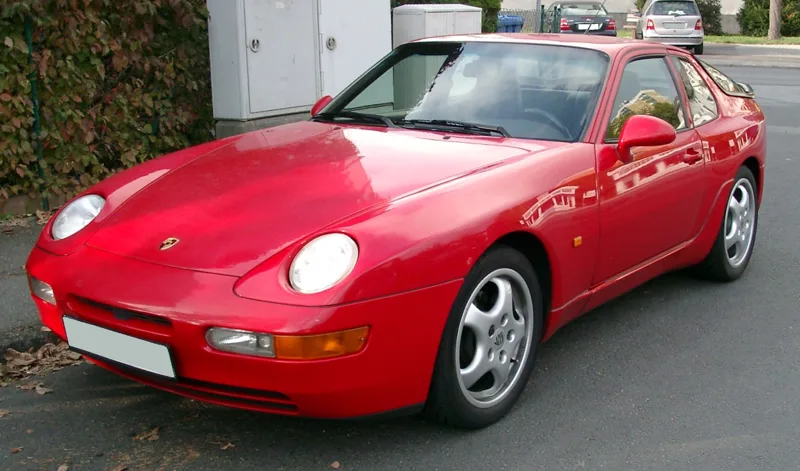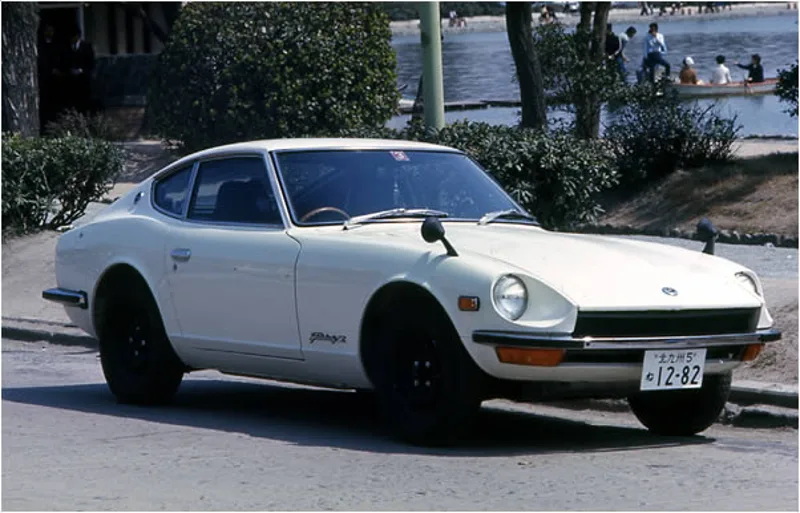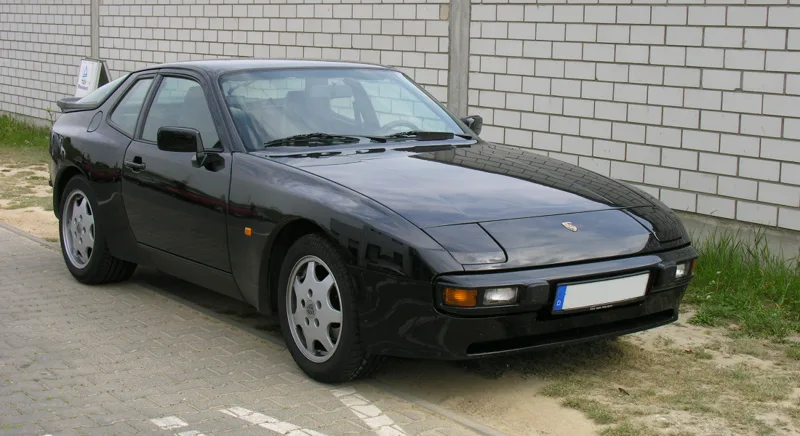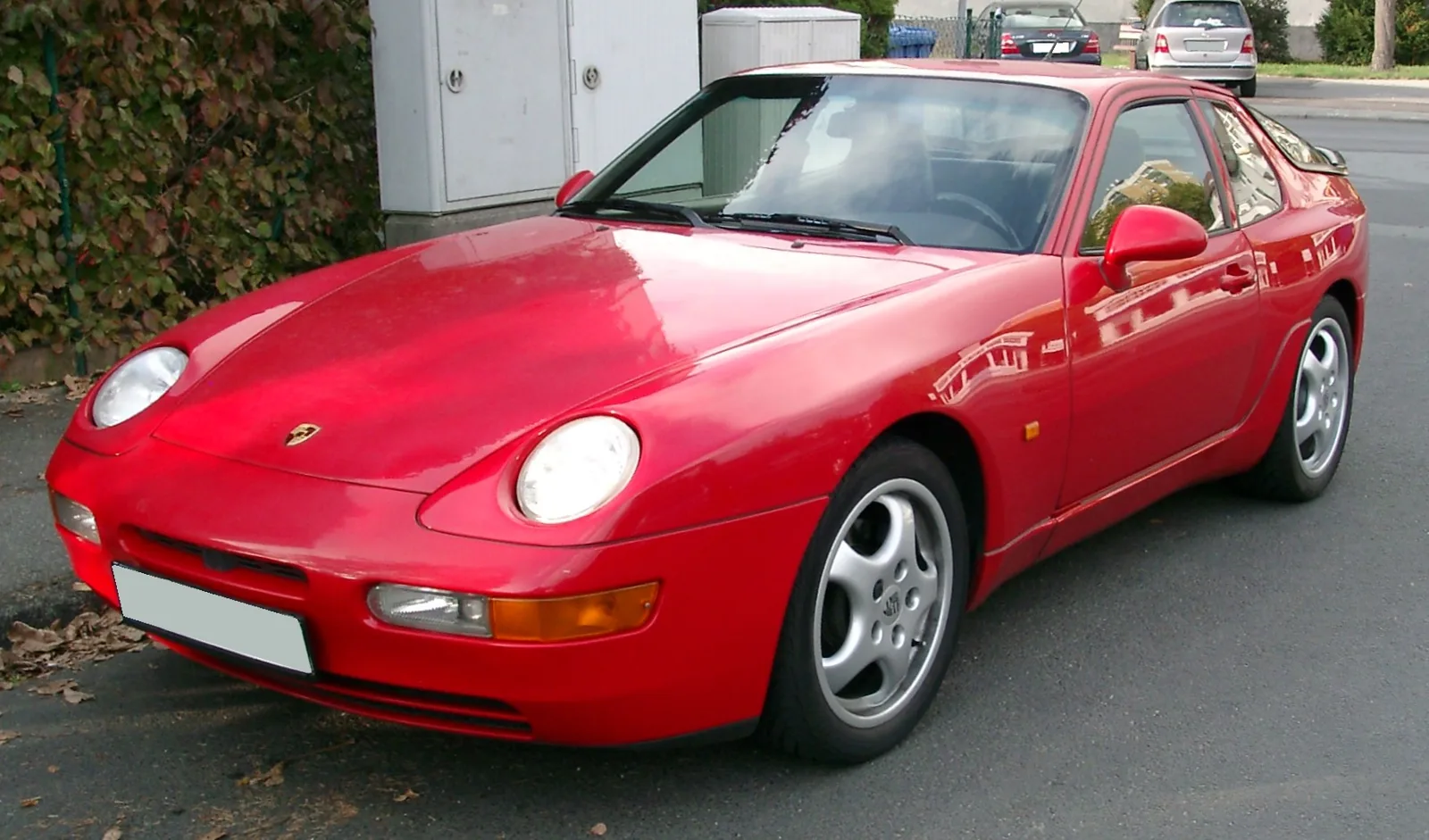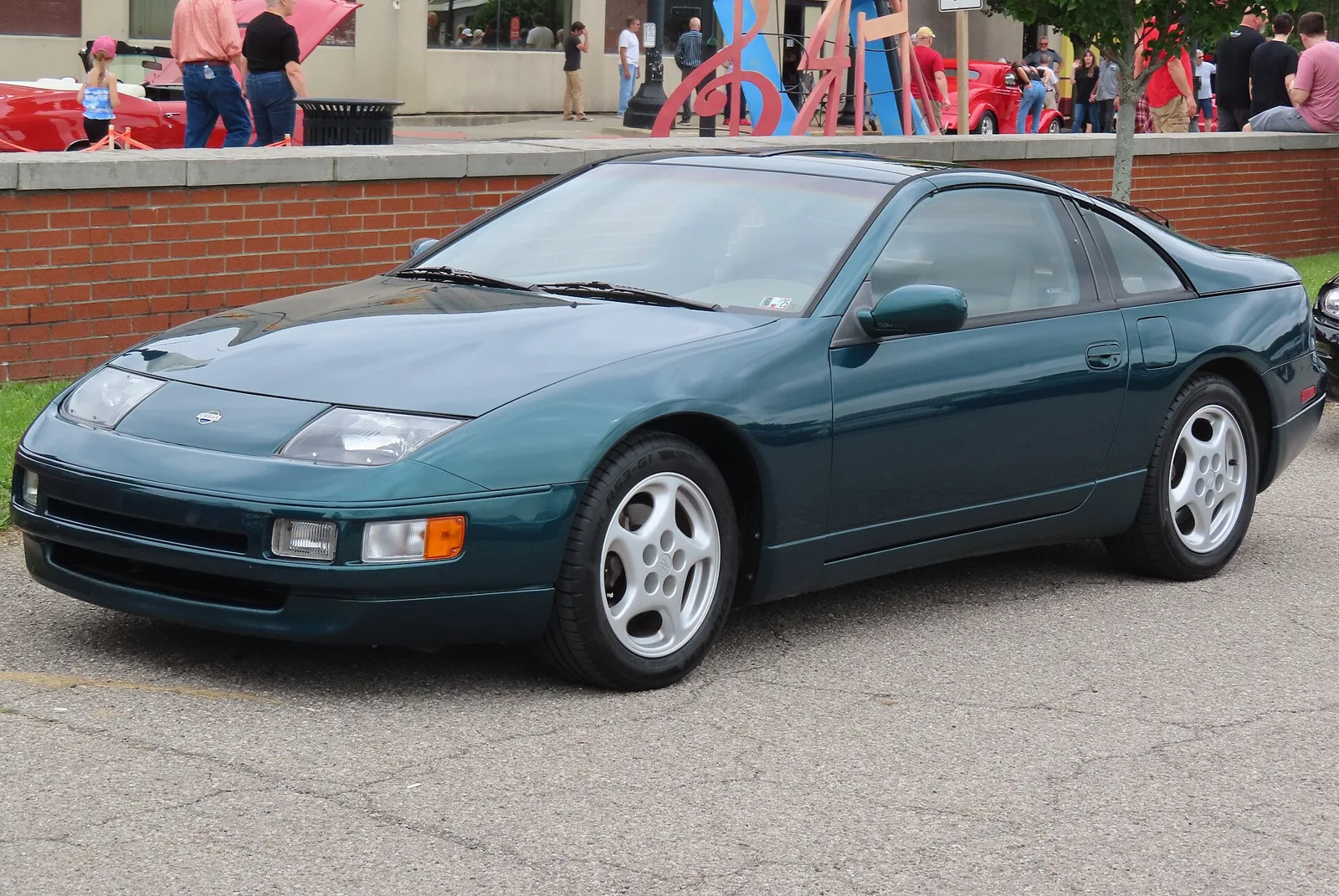
One came from Nissan as a turbocharged V6 grand tourer with a T-top, and the other from Porsche as the last front-engined car of a long line that began with the 924.
The Nissan 300ZX Z31 ran from 1983 to 1989 with a 3.0-litre V6, and North American turbo models made 200 hp. The Porsche 968 from 1991 to 1995 used a 3.0-litre four with 240 PS (177 kW; 237 hp) and reached 100 km/h in 6.5 seconds.
The Nissan 300ZX and the Porsche 968 were both front-engined, rear-drive sports cars, but they grew from different traditions. The 300ZX took the Z-car line in a more luxurious direction with a V6 and a T-top, while the 968 was the final refinement of Porsche's water-cooled front-engined cars, which began with the 924. Each chased a different kind of buyer.
Where did the 300ZX and 968 come from?
The 300ZX is the Z31 and Z32 of the Nissan Z line, sold as the Fairlady Z in Japan. The Z31 arrived in Japan on 16 September 1983, and it became the highest-volume Z-car the company had built. The X in the name marked the more luxurious and comfort-oriented version, a habit carried over from the 280ZX.
The 968 was a sports car built by Porsche from 1991 to 1995. It took over from the 944, its ancestor in the lineup, and it was the last front-engined Porsche until the Cayenne arrived in 2003. The 944 had debuted for 1982, been updated as the 944S in 1987 and later as the 944S2 in 1989, and Porsche's engineers then began work on a new model that became the 968.
One car offered a turbocharged V6 and a T-top, while the other was Porsche's final front-engined sports car and the last four-cylinder Porsche for decades.
Specifications side by side
| Specification | Nissan 300ZX (Z31, 1983 to 1989) | Porsche 968 (1991 to 1995) |
|---|---|---|
| Launch | Japan, 16 September 1983; North America from October 1983 | 1991 model year |
| Layout | Front engine, rear-wheel drive, T-top roof | Front engine, rear-wheel drive; coupe and convertible |
| Engine | 3.0-litre V6, naturally aspirated or turbocharged | 3.0-litre four-cylinder, 240 PS at a peak of 6,200 rpm |
| North American output | 160 hp (119 kW) naturally aspirated; 200 hp (149 kW) turbo, 1984 to 1987 | 237 hp (177 kW) from the 3.0-litre four |
| Transmission | Five-speed manual or four-speed automatic | Six-speed manual; four-speed Tiptronic optional |
| 0 to 100 km/h | None given | 6.5 seconds |
| Top speed | 153 mph (246 km/h) for a Shiro Special tested with the limiter off | 252 km/h (157 mph) with the manual |
| Special editions | 50th Anniversary Edition (1984); Shiro Special (1988) | Club Sport (1992 to 1995); 968 Sport (UK, 1994 and 1995) |
| Production | Over 70,000 sold in North America in 1985 alone | 1,232 Club Sports registered |
| Awards | Z32 on Car and Driver's Ten Best for seven years; Motor Trend Import Car of the Year 1990 (Z32) | Performance Car of the Year 1993 for the Club Sport |
How did the 300ZX's V6 work?
The Z31 was Japan's first mass-produced V6, part of the VG family that was the first 60-degree V6 in Japan. It used electronic fuel injection throughout, and every car was rear-wheel drive. The naturally aspirated VG30E and the turbocharged VG30ET both displaced 3.0 litres.
North American turbo models produced 200 hp (149 kW) in the 1984 to 1987 period, and they carried a 7.8:1 compression ratio. In 1988 and 1989 the turbo switched to a T25 unit with an 8.3:1 ratio, lifting the output to 205 hp (153 kW), while the naturally aspirated car made 165 hp (123 kW).
The Japanese range offered more variety. The 200Z models used a 2.0-litre turbo V6, while the 300ZR was the only Japanese Z31 with a naturally aspirated engine, the DOHC VG30DE. The 200ZR used a turbocharged four-cylinder, the RB20DET, which was the first RB engine to combine a DOHC four-valve head with turbocharging.
What did the Z31 chassis offer?
The Z31's underpinnings came from the 280ZX, and the car kept the same wheelbase with MacPherson struts at the front and semi-trailing arms at the rear. Even so, the car was a clear step forward in handling and acceleration.
Turbo models, apart from the Shiro Special and the lower-trim 200Z and 200ZR-I, had three-way electronically adjustable shock absorbers.
The styling changed over the car's life. The original cars had black polypropylene bumper covers and black spoilers, with a T-top roof on every car. The 1986 update added side skirts and 16-inch wheels for the turbo models, and the 1987 makeover brought fog lamps in the air dam and a tail-light panel with an LED third brake light, a first in the car industry.
What did the 968 get from the 944?
The 968 was largely a restyled 944, but Porsche insisted that about 80 percent of the car was new. Harm Lagaay, who had also styled the 924 and 944, did the design. The front shared the exposed pop-up headlamps and integrated bumper of the 928, a look that later appeared on the 911 of the 993 generation.
The engine was a 3.0-litre four whose bore measured 104 mm and whose stroke was 88 mm, producing 240 PS, or 237 hp, at a peak of 6,200 rpm. It had an 11.0:1 compression ratio, a lighter crankshaft and VarioCam variable valve timing, which was new to Porsche. A six-speed manual replaced the old five-speed, and a four-speed Tiptronic automatic was available.
The chassis carried Brembo four-piston calipers on all four wheels, with ventilated discs and ABS. Aluminium semi-trailing arms and front A-arms carried the MacPherson struts. The car reached 100 km/h (62 mph) in 6.5 seconds, and the manual car could reach 252 km/h (157 mph).
How did the 968's interior and detailing compare?
The 968's cabin was largely carried over from the 944 S2 that preceded it, with changes limited to the switches and control knobs. The car gained a Fuba roof-mounted antenna, a wider choice of exterior colours and a slightly reworked B-pillar and rear quarter window, which were now bonded in place rather than held by rubber gaskets.
The rear lamps were updated as well. Each lamp was a single unit, and its special bulbs lit a small amber area when the indicators were used and a white area when the car was reversing. The Cup-style 16-inch alloy wheels were a clear step up from the older 944 wheels.
Which 968 variants were built?
For 1993 the 968 received a pollen filter, heated front seats and 17-inch wheels with a better brake package. The model also offered a lighter Club Sport from October 1992 to 1995, with less sound deadening, crank windows and a lowered suspension tuned for track use.
Its declared weight was 1,320 kg (2,910 lb), about 100 kg lighter than the standard 968. It also dropped the rear seats that the standard 2+2 coupe kept.
The Club Sport went from rest to 97 km/h (60 mph) in 5.6 seconds and reached 260 km/h (162 mph). Porsche built 1,232 cars that were registered as Club Sports, and its UK-only sibling, the 968 Sport, was priced 4,500 pounds below the standard coupe. The Club Sport won Performance Car of the Year in 1993. Officially it was sold only in the UK, Europe, Japan and Australia, though grey-market cars reached other countries.
Porsche also built a 968 Turbo S in 1993. It had a 3.0-litre engine with an 8-valve head, rated at 305 PS (224 kW; 301 hp), and it reached 100 km/h in 5.0 seconds. Only 14 were made, and they were sold only in mainland Europe.
How did the 968 and 300ZX race?
The 968 had a real racing career through the Turbo RS, a stripped-out customer car built between 1992 and 1994. Four were produced. Joest finished fourth at Avus in the 1993 ADAC GT Cup, and a 968 took sixth place at the 1994 BPR Dijon race.
Seikel fielded a Turbo RS in the 1994 Le Mans 24 Hours, and it retired after 84 laps following an accident. The 300ZX had no comparable race programme to set against that.
Which car sold better?
The 300ZX was the more successful of the two by volume. Its first generation became Nissan's highest-volume Z-car, and North American sales topped 70,000 units in 1985 alone. Car and Driver named the Z32 to its Ten Best roster in seven straight model years.
The later Z32 was pushed further upmarket, and its price rose with almost every model year until sales dwindled.
The 968 had a different story. Its sales were poor, and Porsche ended production in 1995, a fate it shared with the 928. The 968 was also the last four-cylinder Porsche sold before the Macan of 2014.
How did the 300ZX's special editions compare?
The 1984 50th Anniversary Edition marked Nissan's half century and came with a digital dash, Bodysonic speakers in the seats and electronically adjustable shocks. Some 5,148 were built for the United States and 300 for Canada, and the only option was an automatic or five-speed manual.
The 1988 Shiro Special was a more serious car, with pearl white paint, stiffer springs, heavy-duty anti-sway bars, Recaro seats and a viscous limited-slip differential. A total of 1,002 were produced for the United States, with 75 more for Canada, and Motor Trend recorded 153 mph (246 km/h) with the speed limiter disabled.
How did the Z31 sell in each market?
The Z31 sold most strongly in North America, where it arrived in October 1983 and the 1984 lineup offered three trims: SF, GL and GLL. The SF was offered only in Canada. Japan was a different market, where the 300ZX ran into government dimension rules that capped overall width below 1,700 mm.
The Japanese 300ZX measured 1,725 mm (67.9 in) across, which made it wider than the 2-litre models and liable for additional yearly taxes that affected its sales. As first sold, every Japanese Fairlady Z was a slicktop, and the T-top option was added in February 1984.
North American cars changed in small steps. For 1986 the base two-seater was offered without its T-bars, which created a lower-cost entry point. By the end of the Z31's run the car had a 1987 makeover and the 1988 and 1989 cars carried the T25 turbo.
Which car suits which buyer?
A buyer who wanted a turbocharged V6 coupe with a T-top, a long production run and a choice of trims had the 300ZX. A buyer who wanted a compact, balanced four-cylinder sports car with Porsche badging, a six-speed manual and a track-ready Club Sport had the 968.
The two cars were rivals in price and purpose, and the figures do not single out one as the better car.