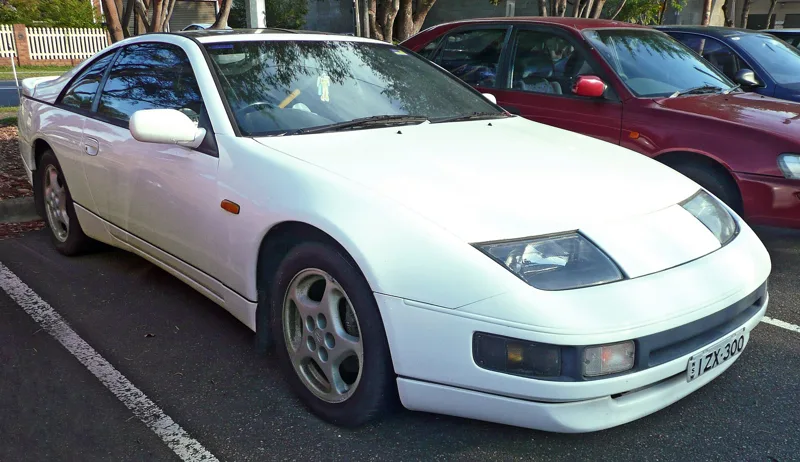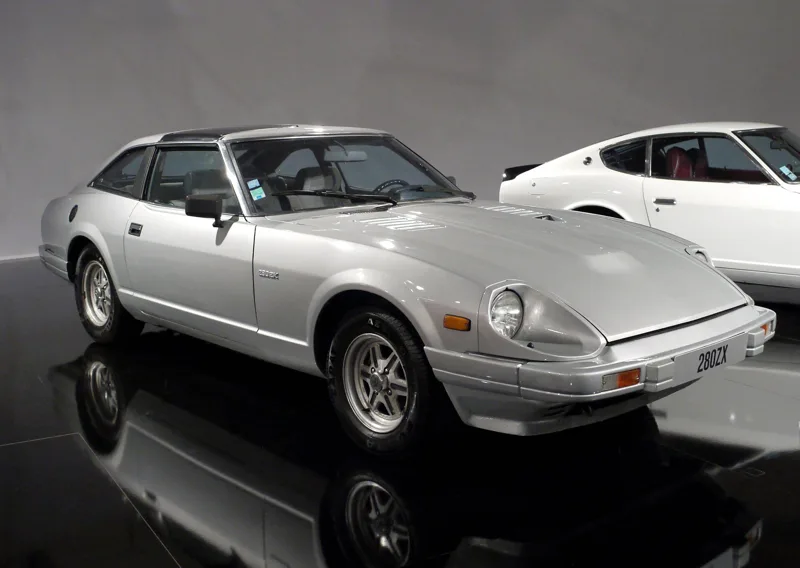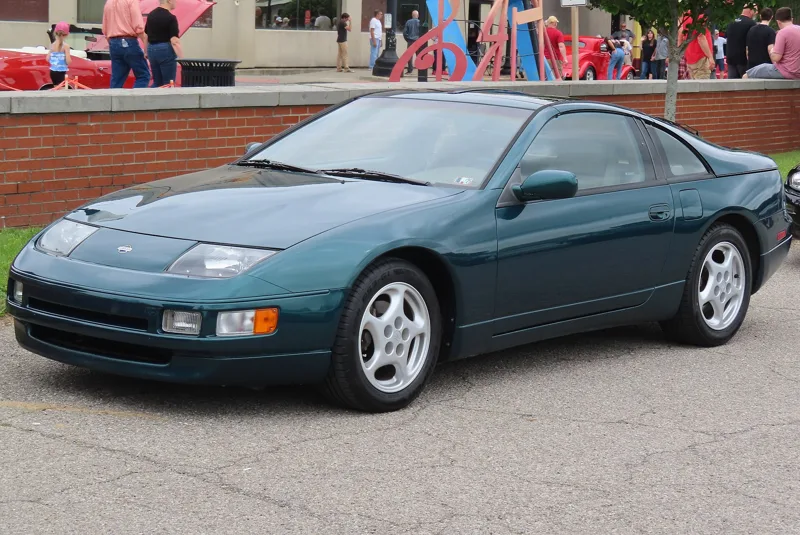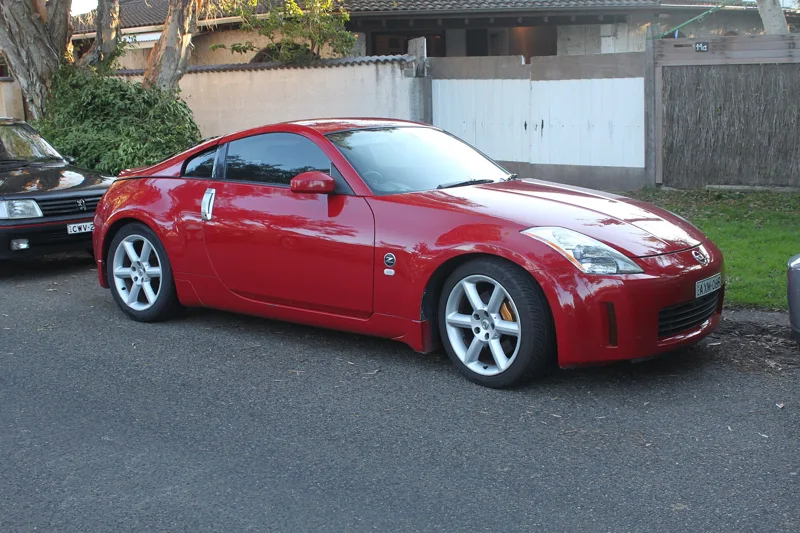
From the 1969 Datsun 240Z to the twin-turbo Nissan Z of 2023, a sports car line built on affordability, racing success and a few hard lessons.
The Nissan Z-car is a sports car series Nissan has built since 1969, starting with the Fairlady Z in Japan and the Datsun 240Z overseas. Seven generations have followed, and the latest Nissan Z, a 2023 model, uses a twin-turbocharged 3.0-litre V6 rated at 406 PS (299 kW; 400 hp).
Nissan has built its Z-car line since October 1969, when the Fairlady Z went on sale in Japan. The same car was sold abroad as the Datsun 240Z, and the line has since passed through seven generations. The latest model, simply called the Nissan Z, is the first in the line to drop the number from its name.
Where did the Z-car come from?
Nissan wanted an affordable, stylish sports car for overseas buyers, and the project began with a 1961 prototype built with Yamaha. Yutaka Katayama, president of Nissan USA, pushed the idea, and the first production Z reached buyers in October 1969.
Nissan's product planners wanted a family of GT cars that looked good, performed well and cost little to build, using parts shared with other Nissan models. The Yamaha DOHC 2.0-litre engine did not meet expectations, so the project was scrapped in 1964. Yamaha took its design to Toyota, which turned it into the Toyota 2000GT.
Nissan also drew on the engineering experience of the recently acquired Prince Motor Company, whose Prince Skyline became the Nissan Skyline in 1966. The first Z-cars were built at the Nissan Shatai plant in Hiratsuka until 2000, while the 350Z was later built at Oppama from 2002 to 2004 and at Tochigi from 2004.
Seven generations of one sports car line, from a Yamaha-assisted prototype to a twin-turbo V6 in 2023.
How did the first-generation S30 sell?
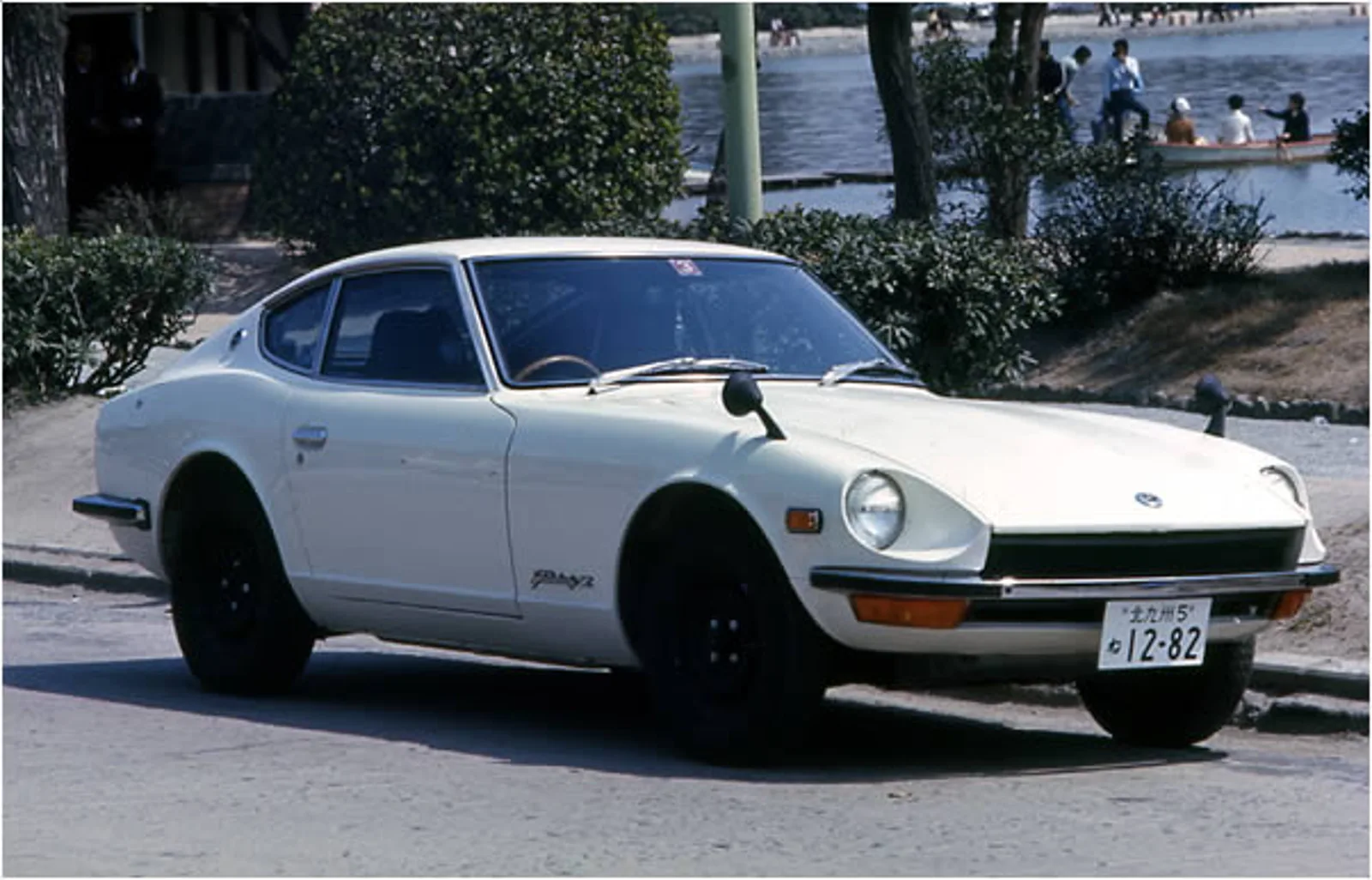
The first generation, internally called the S30, ran from 1969 to 1978 in several forms, including the Japanese Fairlady Z, the American Datsun 240Z, and later the 260Z and 280Z. The US 240Z used a 2.4-litre L24 inline-six rated at 113 kW (151 hp SAE gross), and it sold over 45,000 units in its first few model years.
Sales stayed healthy afterwards, with over 50,000 units in 1972 and 40,000 in 1973. Katayama made sure American cars carried Datsun badges, so the Fairlady Z and 432 badges were replaced on US models. The 432 name stood for four valves, three carburetors and two camshafts, and the performance Z432 (PS30) shared the DOHC 2.0 L S20 engine with the Skyline 2000 GT-R.
The 260Z followed in 1974 with a 2.6-litre engine and a 2+2 option on a wheelbase 30 cm longer. The 280Z arrived in 1975 for North America only, with Bosch fuel injection in place of SU carburetors and an enlarged bumper to meet US Federal rules. Its 170 hp SAE gross (127 kW) output closed out the first generation.
What did the S130 280ZX change?
The second generation, the S130, arrived in 1978 as the Datsun/Nissan 280ZX outside Japan and kept the Fairlady name at home. It carried over the 2.8-litre L28 inline-six and five-speed manual, but the interior and equipment became more luxurious, with T-tops from 1980 and a turbocharged model from 1981.
The turbo made 130 kW (180 bhp) and 275 Nm (203 lb ft) of torque, against 101 kW (135 bhp) and 195 Nm (144 lb ft) for the naturally aspirated car. Enthusiasts praised the extra comfort and performance, but many felt the emphasis had moved towards luxury rather than driving fun.
The 280ZX was a sales hit. Motor Trend named it Import Car of the Year for 1979, and the model set a Z-car sales record of 86,007 units in its first year. The 10th Anniversary Edition added gold emblems and gold alloy wheels to the luxury theme.
Why was the Z31 300ZX a clean-sheet redesign?
The third generation, the Z31, was a complete redesign for 1984 and introduced Nissan's VG series of 3.0-litre V6 engines. The naturally aspirated VG30E made 119 kW (160 bhp), the turbocharged VG30ET made 149 kW (200 bhp), and the car became the second best-selling Z-car with over 70,000 units.
Wedge-shaped styling set the new car apart. Enthusiasts again felt it leaned more towards GT comfort than pure sports car, although its handling, acceleration and refinement improved on earlier Z-cars.
Paul Newman raced a 300ZX in the 1985 GT1 Challenge and won his fourth SCCA national championship. Newman's success helped turn the Z31 into a familiar name on American race tracks.
What set the Z32 300ZX apart?
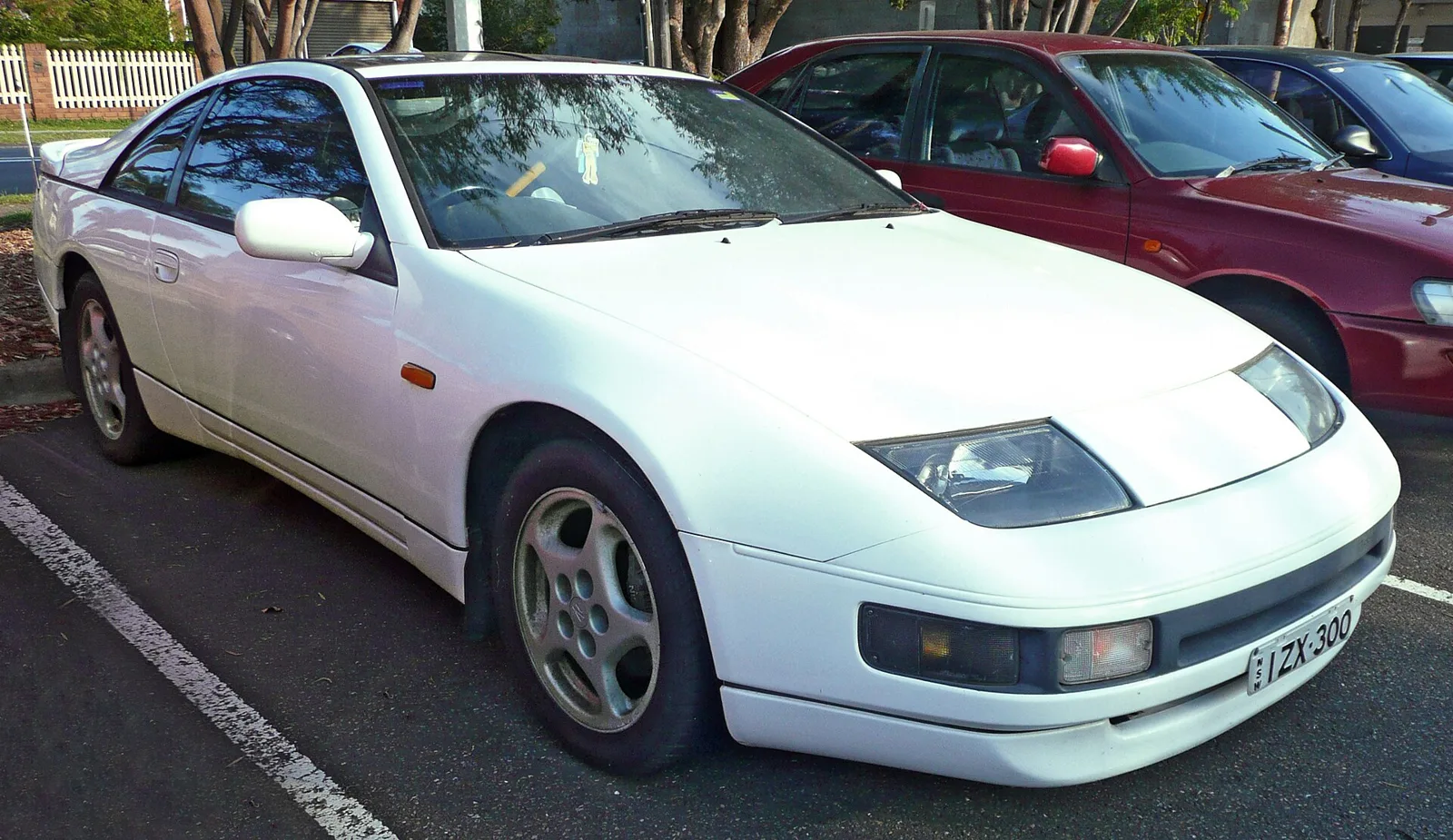
The fourth-generation Z32 kept the 3.0-litre V6 but added dual overhead camshafts and variable valve timing, rated at 166 kW (222 hp) when naturally aspirated. Twin-turbo models reached 220 kW (300 hp) and 384 Nm (283 lb ft) of torque, and Nissan designed the car with a Cray-II supercomputer.
The Z32 was one of the first production cars developed with CAD software, and Super HICAS four-wheel steering was offered on the twin-turbo versions. Its governed top speed was 249 km/h (155 mph), and 0-60 mph times of 5.0 to 6.0 seconds were reported.
Awards followed. Motor Trend named the car Import Car of the Year for 1990, Automobile Magazine chose it as Design of the Year, and Road and Track called the Turbo one of the ten best cars in the world. American Z-car sales reached 1 million in 1990, a milestone for the line.
Why did North American sales of the 300ZX end?
North American sales ended in 1996 at more than 80,000 units. Rising prices were a major factor: the car started at about $30,000 and had climbed to around $50,000 by its final year, while the mid-1990s shift towards SUVs and a rising yen-to-dollar ratio added to the pressure.
Nissan closed the North American run with a Commemorative Edition, and the final 300 units shipped to America carried certificates of authenticity. Production for other markets continued until 2000, and in Japan the car lived on for a few more years.
How did the 240Z Concept lead to the 350Z?
The US Z-car was on hiatus from 1997 to 2002 while Nissan concentrated on SUVs. A 240Z Concept shown in 1999 kept the idea alive, but its four-cylinder engine made it less than a worthy successor to the six-cylinder line, and the 350Z returned to a six-cylinder engine when it arrived in 2002.
Nissan had already tried to rekindle interest through a restoration program from 1998, buying original 240Zs, restoring them and reselling them at dealerships for about $24,000. The 1999 concept was bright orange with swept-back styling and used the 2.4-litre KA24DE four-cylinder from the 240SX, producing 200 bhp (150 kW). The team built it in only 12 weeks.
Renault had bought 44.4% of Nissan in 1999, and Carlos Ghosn became chief operating officer. Ghosn became chief executive in 2001, and the new Z Concept was unveiled on January 8, 2001. Its La Jolla studio design was chosen in March 2000 over Japanese and European proposals, with a $30,000 target price and the Porsche Boxster as the benchmark.
What engines powered the 350Z and 370Z?
The 350Z used the 3.5-litre VQ35DE V6 shared with the Skyline and Pathfinder, starting at 214 kW (287 bhp) and rising to 220 kW (300 bhp) in 2005. The 370Z, launched in Japan in December 2008, used a 3.7-litre VQ37VHR rated at 245-261 kW (328-350 hp).
The 350Z reached the US on 20 August 2002 with five trim packages and prices from $26,000, below the original $30,000 target. A convertible followed in 2004. The 2007-2008 car, with the VQ35HR engine producing 228 kW (306 hp) and a 7,500 rpm redline, is the one enthusiasts most often ask for.
The 370Z launched in Japan on 1 December 2008 and in the US on 30 December 2008 as a 2009 model. Its official 0-60 mph (97 km/h) time was 5.1 seconds, and a Nismo version debuted in June 2009. A facelift in July 2012 refreshed the car.
Motor Trend measured 4.7 seconds to 0-60 mph with a 1-foot rollout, and quarter-mile times ranged from 13.1 to 13.6 seconds. The six-speed manual introduced SynchroRev Match, which blips the throttle during downshifts to match engine and gearbox speeds.
What is the seventh-generation Nissan Z?
The seventh-generation Nissan Z, with the RZ34 chassis code rather than Z35, was revealed on 17 August 2021 in New York City as a 2023 model. It uses a twin-turbocharged 3.0-litre V6 producing 299 kW (406 PS; 400 hp), with a choice of six-speed manual or nine-speed automatic gearboxes.
Nissan had hinted at a successor to the 370Z well before the reveal. The retro styling echoes the original car, with circular running lights that reference the 240Z. A prototype, the Z Proto, came first and was 142 mm (5.6 in) longer than the 370Z while no wider.
The 2023 car was the first Z without a number in its name. Earlier Z names had reflected the engine's size, so dropping the number marked a clear break from the line's past.
How did Z-cars perform in racing?
Z-cars won in several categories. The S30 cars took SCCA and IMSA titles and enjoyed success in rallying and Baja events, the Electramotive 280ZX Turbo won the IMSA GTO championship in 1982 and 1983, and the twin-turbo Z32 won the 24 Hours of Daytona with Steve Millen driving for Clayton Cunningham Racing.
In 1979 Bob Sharp Racing took a 280ZX to the SCCA C Production category. The Electramotive 280ZX Turbo produced over 700 hp (522 kW) and reached 140 mph (230 km/h) at the end of the standing quarter mile.
The GTP ZX-Turbo raced from 1985 to 1987 on a Lola T810 chassis. In 1995 the JUN-BLITZ Bonneville Z32 set an E/BMS land speed record of 419.84 km/h (260.88 mph), and the record has never been broken.
Millen won two IMSA GTS driving championships with the twin-turbo 300ZX. Nissan's 350Z later took the GT500 title in 2004 with Nismo, and Hasemi Sports had won the GT300 title with a 350Z in 2003.
What are the Nissan Z-car specifications?
| Model | Engine | Power |
|---|---|---|
| 240Z (US, 1970) | 2.4-litre L24 inline-six | 113 kW (151 hp SAE gross) |
| 280Z (1975) | 2.8-litre inline-six, Bosch injection | 127 kW (170 hp SAE gross) |
| 280ZX Turbo | 2.8-litre L28 turbo | 130 kW (180 bhp) |
| 300ZX Turbo (Z31) | 3.0-litre VG30ET V6 | 149 kW (200 bhp) |
| 300ZX Turbo (Z32) | 3.0-litre twin-turbo V6 | 220 kW (300 hp) |
| 350Z (2002) | 3.5-litre VQ35DE V6 | 214 kW (287 bhp) |
| 370Z (2009) | 3.7-litre VQ37VHR V6 | 245-261 kW (328-350 hp) |
| Nissan Z (2023) | 3.0-litre VR30DDTT twin-turbo V6 | 299 kW (406 PS; 400 hp) |