A Stuttgart motorcyclists' society, a Paris dinner party and a London club under royal patronage grew into very different organisations.
The Automobile Club de France was founded in Paris on 12 November 1895, the Royal Automobile Club in London on 10 August 1897 and the ADAC in Stuttgart on 24 May 1903 as a motorcyclists' association. Today the ADAC has around 21 million members, the RAC is a private social club, and the French club shares its Paris building with the FIA.
The biggest motoring club in Europe started out as a club for motorcyclists. The ADAC was founded in a Stuttgart hotel in 1903, when a motorcycle cost far less than a car and many cars were driven by hired chauffeurs rather than their owners. It now counts around 21 million members.
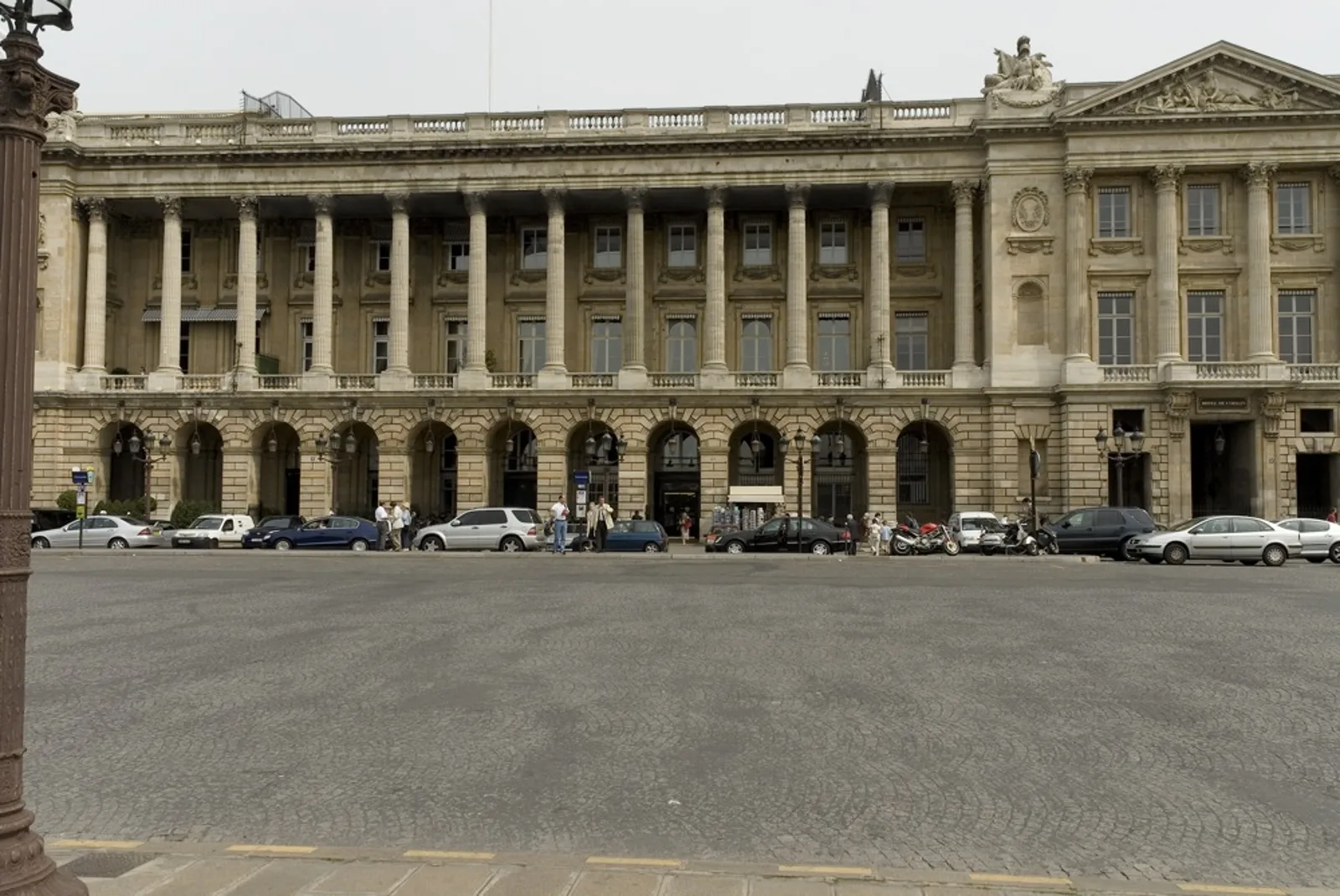
Two older clubs, in Paris and London, grew up alongside it and took very different roads. The French one sits in a Place de la Concorde building it shares with the FIA, and passed French motorsport to the state in 1952. The British one sold off its breakdown business and became a private social club with Turkish baths. The German one kept the yellow vans, added helicopters and grew into a corporate group.
Where did the Automobile Club de France come from?
The Automobile Club de France was formed on 12 November 1895 in Paris, a few months after the June 1895 Paris-Bordeaux-Paris race. That race had been organised by a committee of competitors and motor industry businessmen, among them the pioneer manufacturer Marquis de Dion and Baron Etienne van Zuylen van Nyevelt, who became the club's first president.
The path to a club was less direct than one meeting suggests. After the race, de Dion told his colleagues that letting such forces scatter would betray the fatherland. The committee agreed, and then did nothing. A publisher, Paul Meyan, had already suggested to de Dion in October 1894 that gatherings of car owners could improve the manufacture of automobiles through collaboration. De Dion invited him to dinner with van Zuylen and the naval engineer Count Edmond Recope, and by Meyan's telling the club was named and founded before dessert arrived. He was handed the job of drafting its statutes.
Approval came on 12 November 1895 at de Dion's own mansion on the quai d'Orsay, with van Zuylen elected president. The club began near the Paris Opera, with a villa at its disposal in the Bois de Boulogne. In 1898 it moved to the former Place Louis XV, today the Place de la Concorde, so that members could be received in more comfort and more prestige. It still occupies more than 10,000 square metres across two mansions there, the Hotels du Plessis-Belliere and Moreau.
Europe's largest motoring club began as an association of motorcyclists, because motorcycles were the cheaper machine.
How did the Automobile Club de France shape the Grand Prix and Formula One?
The club's Sporting Committee took charge of top-level racing in France once the 1895 race was over, sorting cars into three weight classes: under 400 kg, 400 to 650 kg and over 650 kg. In 1906 it chose the name Grand Prix for its largest race, which was open to entrants from any country, and it switched the class divisions from weight to engine size.
A run of fatal accidents brought new rules, and fresh engine limits were set in 1914. The First World War halted racing until 1921, when the national event came back as the ACF Grand Prix. That name lasted until 1967, when the race became the French Grand Prix.
The club's most lasting idea arrived in 1946, when it proposed Formula One as the first racing regulation that could apply internationally. The other members of the AIACR, the sport's international body at the time, accepted it, and it took effect in 1947. The club was also a founder member of the FIA, and its presidents often led both bodies. Baron de Zuylen headed the AIACR from 1904 to 1931, and Viscount de Rohan-Chabot, who presided over the French club from 1928 to 1948, was FIA president from 1946 to 1958.
From 1952 the direct link with the racing ended. The club passed control of French motorsport to the FFSA, a body of the French state.
What is the Automobile Club de France today?
It is a gentlemen's club on the Place de la Concorde, with the FIA sharing its premises. Members get lounges, a swimming pool, a gym, a cinema, bars, dining rooms, a hair salon and a travel agency, plus a library of more than 50,000 references. The programme includes yoga, squash, shooting, billiards and fencing.
The member list still reads like a roll call of French industry. It names Carlos Ghosn, the former chairman and chief executive of Renault and Nissan, Roland Peugeot, once chairman of Peugeot, and Jean-Martin Folz, a former Peugeot chief executive. Alain-Dominique Perrin, who runs Richemont, and Gerard Wertheimer, co-owner of Chanel, appear as well. Count Yann de Pontbriand has been president since 2024, succeeding Louis Desanges.
How did the Royal Automobile Club start?
The Royal Automobile Club was founded on 10 August 1897 as the Automobile Club of Great Britain, later widened to Great Britain and Ireland. It began in a London mansion block at Whitehall Court and moved to 119 Piccadilly in 1902. King Edward VII took an interest in motoring, and in 1907 he commanded that the club carry the royal title.
In its early years it was as much a pressure group as a social club. In 1902 it joined the newly formed Association of Motor Manufactures and Traders in pushing for looser speed limits, calling the 14 mph limit of the Locomotives on Highways Act 1896 absurd and seldom obeyed. With Prime Minister Arthur Balfour behind them, the two bodies had real influence over the Motor Car Act 1903. The bill first planned to scrap every speed limit for cars and create an offence of reckless driving. Opposition was fierce, and in the end a 20 mph limit stayed, with the new offence on top.
Racing followed. In 1905 the club ran the first Tourist Trophy motorcycle race, the oldest motor race still run regularly, and it came to govern motor sport in Britain. It put on the first British Grand Prix at Brooklands in Surrey in 1926. In 1977 it set up the Motor Sports Association, now Motorsport UK, to take over governance and events.
War gave it another role. In August 1914 the club sent 25 members and their own cars across the Channel with the British Expeditionary Force, to serve as chauffeurs and messengers for the General Staff. The group, calling itself the RAC Corps of Volunteer Motor Drivers, included the Duke of Westminster, and many members were commissioned and served with distinction.
How did the RAC roadside service work, and who owns it now?
Uniformed patrols took to British roads in 1901. The men wore tailored jodhpurs and held army-style ranks from corporal upward, and they rode Matchless motorcycles with sidecars packed with tools, fanbelts, hoses and spare petrol. They waited at junctions and laybys, and until about 1930 the only way to reach them was to ring a nearby public phone box. Radios were fitted from 1957.
In 1912, copying the Automobile Association, the club began installing roadside telephones, in locked royal blue boxes on the main trunk roads. New members received a key, and the keys opened AA boxes as well, with messages passed between the two clubs. A metal badge on the radiator grille marked a member's car, and patrolmen saluted as it passed.
An annual Guide and Handbook listed approved garages and hotels, which the club graded for readers: one to five stars for hotels and one to three spanners for garages. Hotel inspection ended in 2004.
Ownership shifted in stages. The motorists' section became RAC Motoring Services Ltd in 1978, and the RAC Foundation became its research arm in 1991. In September 1999 the club's members sold the RAC Motoring Services business to Lex Service plc, which renamed itself RAC plc in 2002. The foundation received a legacy from the sale and became a charity. Aviva acquired RAC plc in March 2005 for around 1.1 billion pounds.
What is the Royal Automobile Club today?
A private social and athletic club with two clubhouses, at 89 Pall Mall in London and in the Surrey countryside at Woodcote Park, near Epsom, both offering rooms, dining and sport. It is best known for a roadside service it no longer owns.
The London building has 108 bedrooms, seven banqueting rooms and three restaurants, as well as a business centre, squash courts and a billiards room. A full-size marble pool in Art Deco style sits beside a Victorian-style Turkish bath, and only eleven such baths still operate in Britain. Woodcote Park adds more rooms and restaurants, and two 18-hole golf courses.
A board of directors governs the club under a chairman, and Duncan Wiltshire took that role in 2024 from Benjamin Cussons. The presidency changes far more slowly. Louis Mountbatten held it from 1943 to 1979, and Prince Michael of Kent has held it since.
How did the ADAC begin?
The ADAC began on 24 May 1903 as the Deutsche Motorradfahrer-Vereinigung, a motorcyclists' association founded at the Hotel Silber in Stuttgart. Motorcycles were cheaper than automobiles, which were often driven by a chauffeur, so riders soon outnumbered car owners. In 1911 it took the name Allgemeiner Deutscher Automobil-Club.
A car club already existed. The Deutscher Automobilclub dates from 1899, gained recognition from the Kaiser, became the KAC in 1905 and has been the Automobilclub von Deutschland, or AvD, since 1918. It organised the German Grand Prix. The motorcyclists' association quickly passed it on membership, then took a new name as car owners joined in large numbers.
Like the KAC and other bodies of the time, the ADAC put the Prussian eagle on its badge, thanking the Prussian royal family for its patronage. Its most senior figure then was Wilhelm II, German Emperor and King of Prussia. After 1933 the Nazi Party merged every motoring organisation in Germany into an umbrella body, the DDAC, which survived in the shadow of the National Socialist Motor Corps. The ADAC resumed business in 1946.
How did the ADAC Yellow Angels start?
The ADAC launched its roadside service in 1927 as the ADAC-Strassen-Hilfsdienst. Operations stopped during the Second World War, and in 1954 the service returned as the ADAC-Strassenwacht, or road patrol.
Heinz Frolich became the first of 56 patrolmen that year, riding a motorcycle with a sidecar whose big compartment held tools and spares. The riders, on NSU Konsul machines, were nicknamed the Gelber Engel, or Yellow Angels. At the end of 1962 the ADAC announced that the sidecar combinations would retire in favour of 40 specially equipped Volkswagen Beetles. Each had a flashing roof light, a radio, repair tools, compressed air canisters, a spade and a broom, and a basic doctor's kit containing blood plasma.
Help abroad had begun in 1951, and in 1990 the patrol extended to the new federal states of the east. By 2007 more than 1,700 yellow vehicles were on the road. In May 2013 the club kitted out its 10,000th roadside vehicle, a Volkswagen Touran carrying several hundred tools and replacement parts.
Today a member can ask for help by phone, online or through an app, and the patrol driver rings a few minutes before arriving. In 2021 patrols and partners attended 3.5 million cases, most often a flat battery. The ADAC also covers heavy goods vehicles across Europe, with its own specialist vehicles in Germany and partners elsewhere.
How many members does the ADAC have?
At the end of 2019 the ADAC had 21.2 million members, which makes it Europe's largest automobile association and the largest club in Germany. Its 18 millionth member joined in May 2012.
The growth ran well ahead of car ownership. In 1974 the club had 3.8 million members while 19.0 million passenger cars were registered in Germany. By 1990 it had 10.2 million members against 35.5 million cars, so the membership rose more than twice as quickly as the national fleet, and German reunification boosted the rates that followed. The club marked its 100th anniversary in 2003.
What does the ADAC do besides breakdowns?
ADAC Luftrettung, the air rescue arm, runs Germany's biggest ambulance helicopter fleet. As of 2020 the club flew 55 of them, stationed so that every part of the country is within 15 minutes. Ambulance jets bring Plus members and international travel insurance customers home from anywhere after an accident or serious illness, and a stake in Aero-Dienst gives it a small fleet of fixed-wing aircraft for medical repatriation.
Behind the vans sits a large business. ADAC SE holds more than 25 subsidiaries, including insurance and publishing. In 2012 the club had revenues of 911 million euros and a profit of 25 million euros, while the subsidiaries together took in 1.03 billion euros and made 84.9 million euros.
Its technical centre at Landsberg am Lech, opened in 1997, puts cars, tyres, child seats, pedelecs, helmets and roof boxes through their paces. The club also takes part in the European Road Assessment Programme, publishing maps that give German roads a safety star rating comparable across Europe.
In motorsport, events hosted by the ADAC include the European Grand Prix, the former Eifelrennen and the 24 Hours Nurburgring. In 1998 it set up ADAC Stiftung Sport to support young German racing talent, and since 2007 its Gelber Engel foundation has backed survivors of road accidents. In June 2008 it paused its ties with the FIA after the Max Mosley scandal and his retention as president.
Why has the ADAC been criticised?
The most serious charge came in 2014, when it emerged that the club had systematically rigged its Yellow Angel "Audience Award" over several years. The vote for Germany's favourite car was sold as a poll of members, yet the figures showed the winner had been picked at the club's discretion since at least 2009. Earlier years may not have been clean either, but the auditors, Deloitte, lacked the data to say. Models that had only just been launched were favoured. Most manufacturers, BMW, VW and Daimler among them, sent their trophies back as worthless.
The same year an insider revealed that a published tyre test did not reflect the real results. According to the insider, the club had told friendly manufacturers which models it wanted to test, and where and under what conditions.
Questions about structure followed. In 2012 the Munich District Court looked at whether the ADAC was really an association, given that it behaved like a corporate group, and the lawyer and author Dirk-Ulrich Otto judged its internal controls inadequate. In 2017 the court confirmed its association status, saying it could not establish commercial operation. The club has since moved its commercial activities into ADAC SE, which has an independent board.
Critics also pointed to reporting mixed with advertising. In 2017 the club rated the electric Renault Zoe highly while helping to market it, offering members favourable lease terms under a deal with Renault, which paid it marketing subsidies.
The three clubs side by side
| Club | Founded | Home | Role now |
|---|---|---|---|
| Automobile Club de France | 12 November 1895, Paris | Place de la Concorde, shared with the FIA | Gentlemen's club; French motorsport handed to the FFSA in 1952 |
| Royal Automobile Club | 10 August 1897, London | 89 Pall Mall and Woodcote Park | Private social and athletic club; roadside arm sold in 1999 |
| ADAC | 24 May 1903, Stuttgart | Munich | Roadside help, air rescue, insurance and testing; 21.2 million members at the end of 2019 |
Where each club stands now
Two of the three changed leaders in 2024. In London, Duncan Wiltshire became chairman, and Prince Michael of Kent remains president. In Paris, Count Yann de Pontbriand took over from Louis Desanges. The ADAC, for its part, had reached 21.2 million members by the end of 2019, with 55 helicopters flying as of 2020 and a corporate arm, ADAC SE, carrying its commercial side.