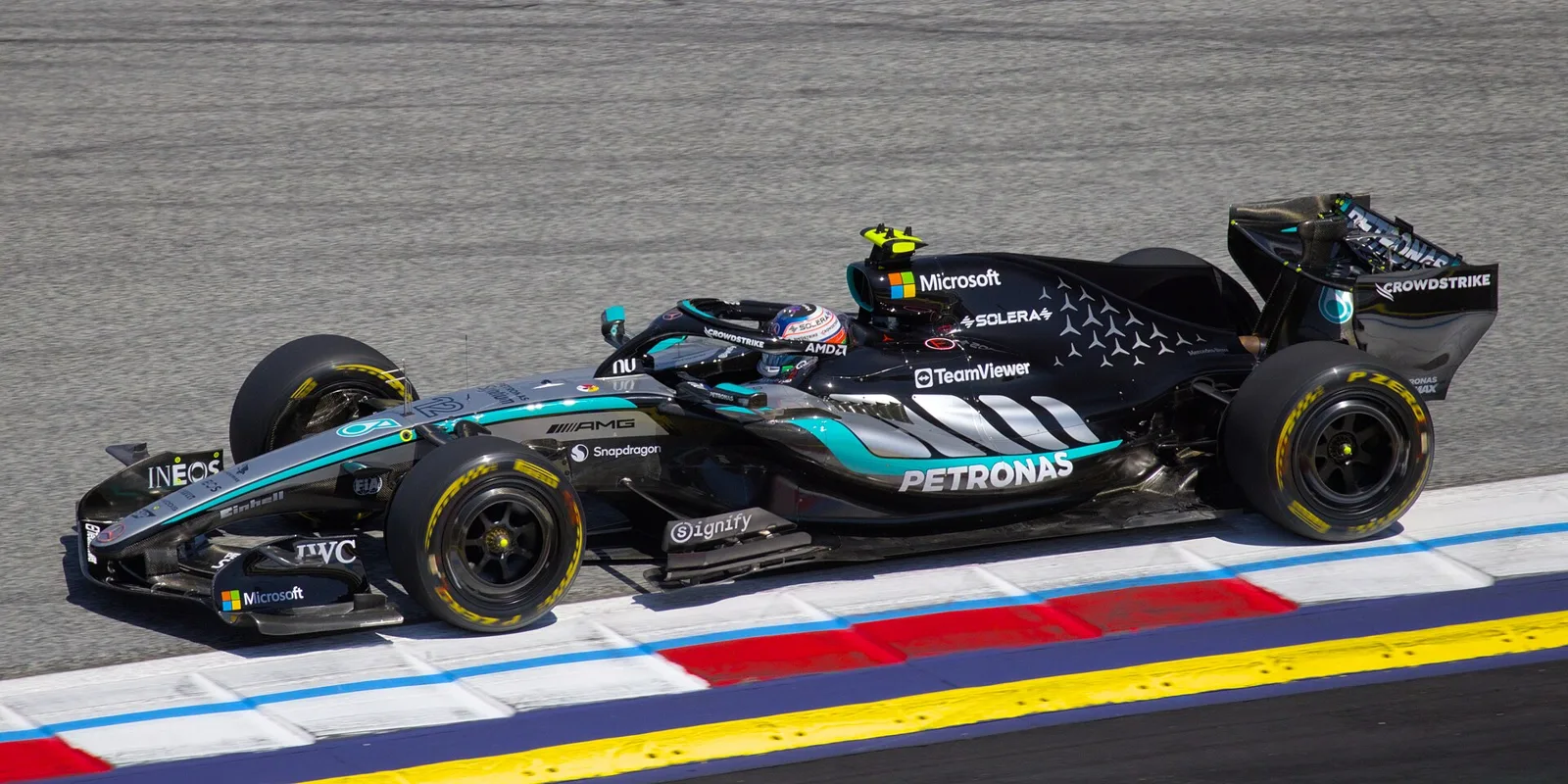
DRS is gone, both wings now move, the electric motor has grown to 350 kW and the cars are smaller.
The 2026 F1 regulations replace DRS with active aerodynamics on both wings and an overtake mode, remove the MGU-H and lift the electric motor to 350 kW (470 bhp), while the V6 petrol engine falls to 400 kW (540 bhp). Cars are also smaller, with a 340 cm wheelbase and 190 cm width.
A 2026 Formula 1 car still makes more than 1,000 bhp (750 kW), but its electric motor now delivers 470 bhp (350 kW) of that, up from 160 bhp (120 kW). Around it the cars are smaller, the drag reduction flap has gone and both wings move.
What are the 2026 F1 regulations, and why did they change?
The 2026 regulations are a major rewrite of the technical rules, covering power units, aerodynamics, car size, fuel and costs. According to the FIA, the new power-unit formula is part of an effort to improve efficiency and attract manufacturers, and the package arrived alongside an eleventh team on the grid for the first time since 2016.
The rulebook is made and enforced by the FIA and splits into technical, sporting, financial and operational parts. Most years bring only small edits, such as closing a loophole, improving safety or adjusting the points system. Big resets are rare and are announced years ahead so that teams and manufacturers can plan and design new cars. The last came in 2014, when turbocharged hybrid V6 engines of 1.6 litres arrived, and the 2026 reset follows the same pattern.
From this season the regulations also carry a stated extra aim of promoting environmental sustainability. That shows most clearly in the fuel, which must now be fully sustainable, and in an engine that leans far more heavily on electrical power.
A wing that makes downforce also churns the air behind the car.
What happened to DRS, and how does active aero work?
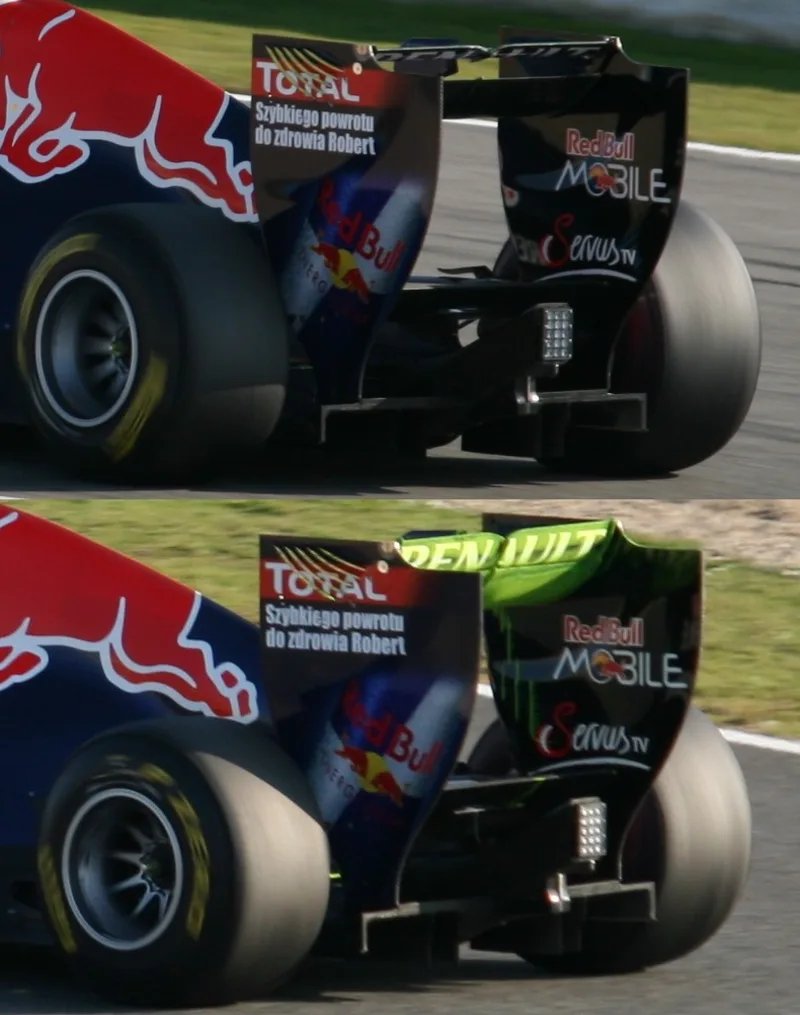
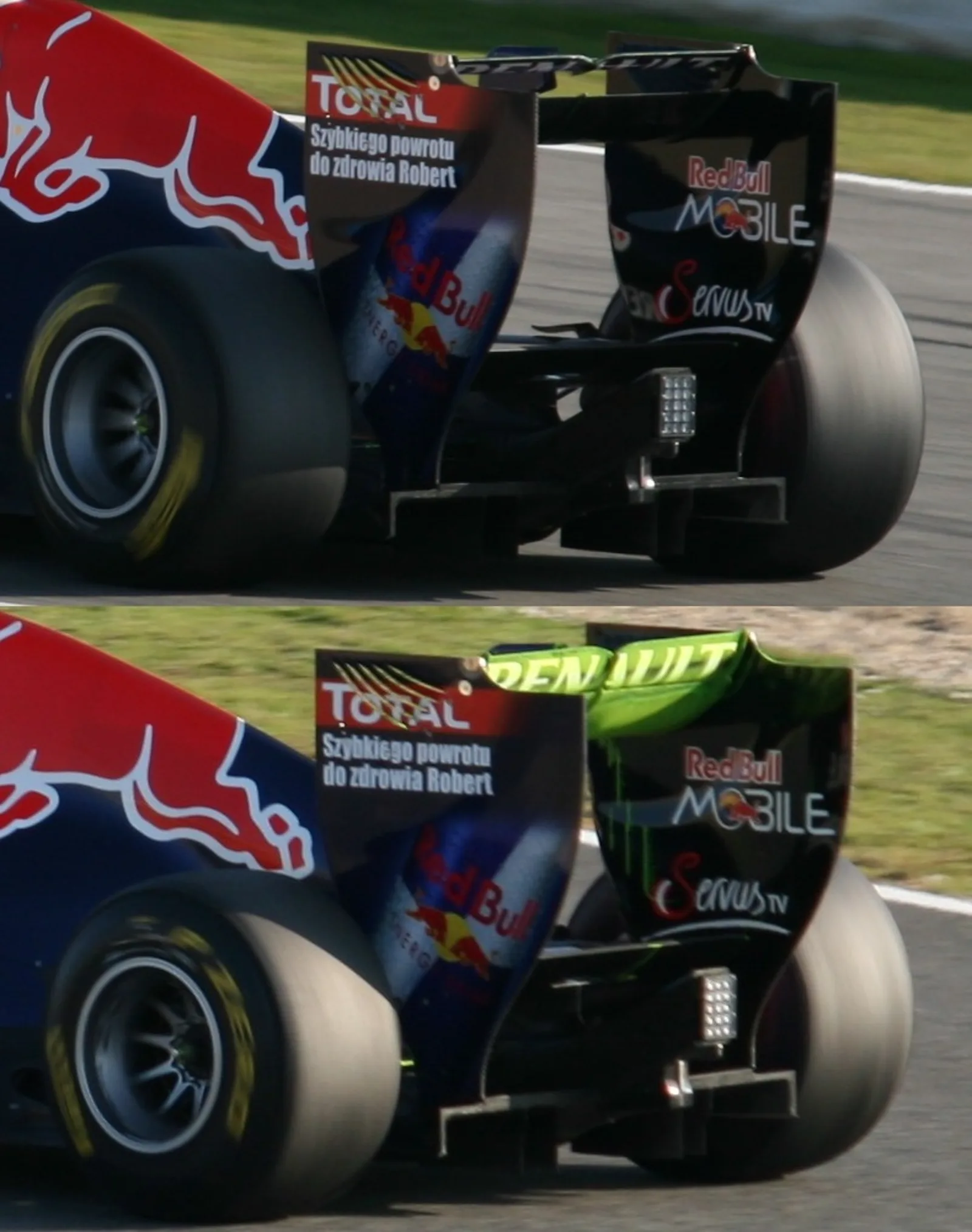
The drag reduction system, a flap on the rear wing used from 2011 to 2025, has been removed. In its place the 2026 cars have active aerodynamics: moving elements on both the front and rear wings that switch between a high-downforce setting for corners and a low-drag setting for straights. All cars can use them under set conditions.
A wing that makes downforce also churns the air behind the car. A following car's front wing works less well in that turbulent air, its cornering suffers, and passing becomes hard. DRS was the old answer. It opened a flap that could lift by up to 85 mm (3.3 in), cutting drag for a chasing car within one second of the car ahead and inside a zone chosen by the FIA. The defending driver could not use it.
How much DRS was worth is disputed. The FIA put the speed gain at 10 to 12 km/h (6.2 to 7.5 mph) by the end of a zone, while technical staff at racecar-engineering.com quoted a far lower 4 to 5 km/h (2.5 to 3.1 mph). Fans and drivers were split too: some saw the cure for a lack of overtaking, others thought it made passing too easy.
The new system has its own vocabulary, which Formula 1 made official on 17 December 2025.
- Boost mode: the normal use of the energy recovery system to attack or defend.
- Active aero: the moving front and rear wing elements, in corner mode (more downforce) or straightline mode (less drag).
- Recharge: a car harvesting electrical energy.
- Overtake mode: extra stored energy used to help one driver pass another, allowed only to a driver no more than a second behind the car in front, much as pre-2026 DRS deployment was.
Think of an aeroplane's flaps, set one way for slow, controlled flight and another for fast cruising; the wings now do that on every lap. Monaco alone had active aero disabled, a tight, twisty layout that had only one DRS zone in the past.
How do the new power units split the work between engine and battery?
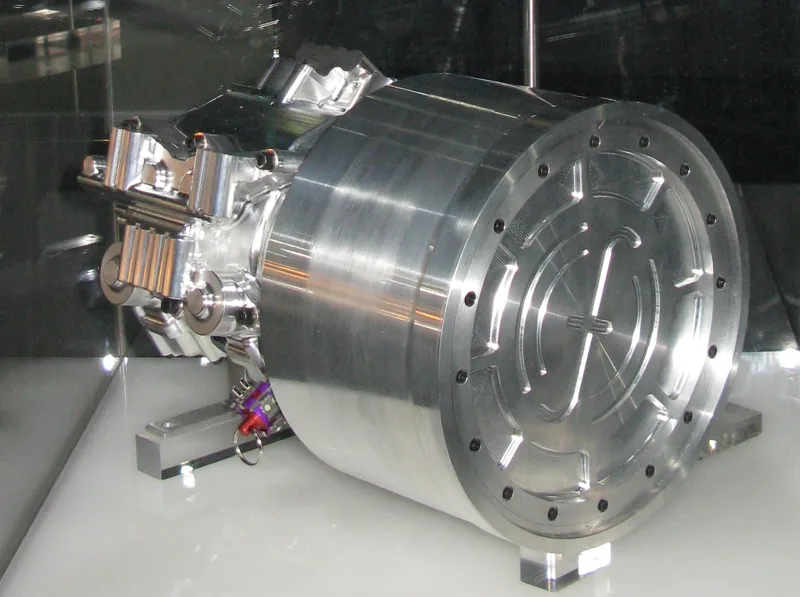
The 1.6-litre turbocharged V6 stays, but it now provides 400 kW (540 bhp), down from 630 kW (850 bhp). The MGU-K, the electric motor-generator that recovers braking energy and feeds it back, rises to 350 kW (470 bhp) from 120 kW (160 bhp). The total still tops 750 kW (1,000 bhp), and the units should recover double the electrical energy they did previously.
The power unit has six parts: the combustion engine, the turbocharger, the MGU-K, an energy store that works as a battery, control electronics and the exhaust. The MGU-K behaves like the regenerative braking in a hybrid road car, acting as a generator when the car slows and as a motor when it accelerates. In the 2014 to 2025 era it gave a constant boost of about 160 bhp (120 kW) on top of a combustion engine, for around 1,000 bhp in total.
Fuel is regulated differently too. Flow is now measured and limited by energy, not by the mass of the fuel. The fuel itself must come from sustainable sources: non-food biological materials, municipal waste or carbon captured through sustainable processes. The aim is to avoid putting new fossil-derived carbon into the atmosphere. Stefano Domenicali has said the 2026 rules will also impose a deliberately louder exhaust note to please fans.
Why did F1 remove the MGU-H?
The MGU-H was a motor-generator on the shaft linking the turbocharger's exhaust turbine and intake compressor, and it collected energy from exhaust heat between 2014 and 2025. It was dropped because it was judged too expensive and too complicated for newcomers to build, which suits a push to attract manufacturers.
That push has had visible results. Three new engine manufacturers entered with the rule change. Audi arrived as a works team after buying Sauber in 2024, and builds its own power unit. Ford returned as a supplier for the first time since 2004, working with Red Bull Powertrains to supply Red Bull Racing and Racing Bulls. Honda split from the two Red Bull teams and now supplies Aston Martin under an exclusive works agreement.
Cadillac is the eleventh team, and the first new one since Haas in 2016. It starts with Ferrari power units and gearboxes, then plans to move to a unit developed in-house by General Motors with TWG Motorsports. The FIA has approved that programme, scheduled from the 2029 season. Renault has stopped supplying engines, so Alpine now runs Mercedes units. The cost cap for engine makers, introduced in 2023, rose from $95 million to $130 million to support the new hybrid engines.
How much smaller are the 2026 cars?
The car concept revealed on 6 June 2024 shortened the wheelbase to 340 cm (130 in), against 360 cm (140 in) before, narrowed the car to 190 cm (75 in), against 200 cm (79 in), and cut the minimum mass by 30 kg (66 lb). Front tyres lose 2.5 cm (0.98 in) of width and rears lose 3.0 cm (1.2 in).
The floor is different as well. Ground effect, which sucks a car towards the track using the shape of its underside, was curbed after Roland Ratzenberger and Ayrton Senna died in 1994, then brought back from 2022 to 2025. The 2026 rules pull it back again with flatter floors and a higher ride height, partly to ease porpoising, the bouncing that some cars suffered on fast straights. As of 2026 a car and driver must weigh at least 724 kg together.
The FIA says the cars will produce less downforce, but by less than first planned. In October 2024 it confirmed a reduction of around 15% compared with the 2022 to 2025 cars, where the original draft would have cut over 40%, according to the FIA. The governing body cited performance and safety. It expects the 2026 cars to be about two seconds a lap slower, rather than the four first envisaged.
2025 and 2026 side by side
| Area | 2025 | 2026 |
|---|---|---|
| Overtaking aid | DRS rear-wing flap | Active aero on both wings, plus overtake mode |
| Combustion engine output | 630 kW (850 bhp) | 400 kW (540 bhp) |
| MGU-K output | 120 kW (160 bhp) | 350 kW (470 bhp) |
| MGU-H | Fitted | Removed |
| Fuel flow | Limited by mass | Limited by energy |
| Wheelbase | 360 cm (140 in) | 340 cm (130 in) |
| Width | 200 cm (79 in) | 190 cm (75 in) |
| Minimum mass | Baseline | Cut by 30 kg (66 lb) |
| Floor | Ground effect | Flatter, with a higher ride height |
| Team cost cap | $135 million | $215 million |
| Engine-maker cost cap | $95 million | $130 million |
What has already changed since the season began?
The energy rules drew scrutiny within weeks. At the Japanese Grand Prix Oliver Bearman crashed at high speed because of a speed difference with Franco Colapinto, who had chosen to harvest energy while Bearman used more electrical power. On 9 April the FIA sat down with power unit developers for a review, and further meetings followed on 15, 16 and 20 April.
One option was to deploy electrical energy more slowly while allowing more to be harvested during what is called super clipping. That is when the battery charges on full throttle against the engine, so the car gives up top speed before the end of a straight. Ahead of the Miami Grand Prix the super clipping limit became 470 bhp (350 kW), where it had been 340 bhp (250 kW), reducing its duration to 2 to 4 seconds a lap, according to the regulations as announced.
Top speed on the straights will still suffer, but drivers need to lift and coast less, because the gaps in speed between cars feel more natural. In qualifying the harvesting cap is now 7 MJ (1.9 kWh), previously 8 MJ (2.2 kWh), with room to lower it again at some races. Concerns of this kind had surfaced earlier. A Commission meeting in early 2025 had agreed to explore catch-up options for manufacturers who fell behind, and suggested an advisory committee examine cutting the planned 470 bhp (350 kW) of deployment in race trim, after teams worried about running out of energy.
What else changed, from cost caps to crash structures?
The team cost cap rose from $135 million to $215 million, mainly because of inflation and the inclusion of costs that had been exempt. Driver pay, the pay of the three best-paid team members, marketing, travel, hospitality and infrastructure remain outside the cap. The front impact structure rules were also revised, with the stated intent of making crashes safer.
Component limits are changing too. Across this season a driver may use four of each of the combustion engine, turbocharger and exhaust, and three of each of the MGU-K, energy store and control electronics. Going beyond a limit brings a grid penalty. All teams run Pirelli tyres, and the calendar was trimmed from twenty-four Grands Prix to twenty-three after the Saudi Arabian race was dropped when the Iran war broke out.
Young drivers get a guaranteed outing as well. On four occasions in the year, twice for each car, a team must put a driver with no more than two race starts into one of the first two practice sessions of a Grand Prix weekend. Six Grands Prix, in China, Miami, Canada, Britain, the Netherlands and Singapore, use the sprint format, and a sprint weekend trims the dry tyre allocation to 12 sets.
Where this goes next
From 2027 the allowance tightens to three engines, turbochargers and exhausts per driver, with only two of the electrical parts, unless it is a manufacturer's first season supplying units under the 2026 rules. Cadillac's in-house power unit is scheduled from 2029.
The energy rules remain a live subject. The announced changes leave room to cut the qualifying harvesting limit further at some races, and the Commission has talked of catch-up options for manufacturers that start behind. The season began in March and is scheduled to finish in December, which leaves several rounds for the regulations to be tested again.

.jpg)