From Jenson Button in 2011 to Lance Stroll's final overtake, how the drag reduction system worked, why it divided opinion and what took its place in 2026.
DRS, the drag reduction system, was an adjustable rear wing flap that Formula 1 drivers could open within one second of the car ahead in set zones, cutting drag to help overtaking. It was used from 2011 to 2025 and replaced in 2026 by active aerodynamics on the front and rear wings.
The last successful DRS overtake in Formula 1 history was made by Lance Stroll. The final driver to use the system was Andrea Kimi Antonelli, and the first, back in 2011, was Jenson Button. Between those three names sits a piece of bodywork that split opinion for as long as it lasted, and from 2026 it has gone.
What is DRS in F1?
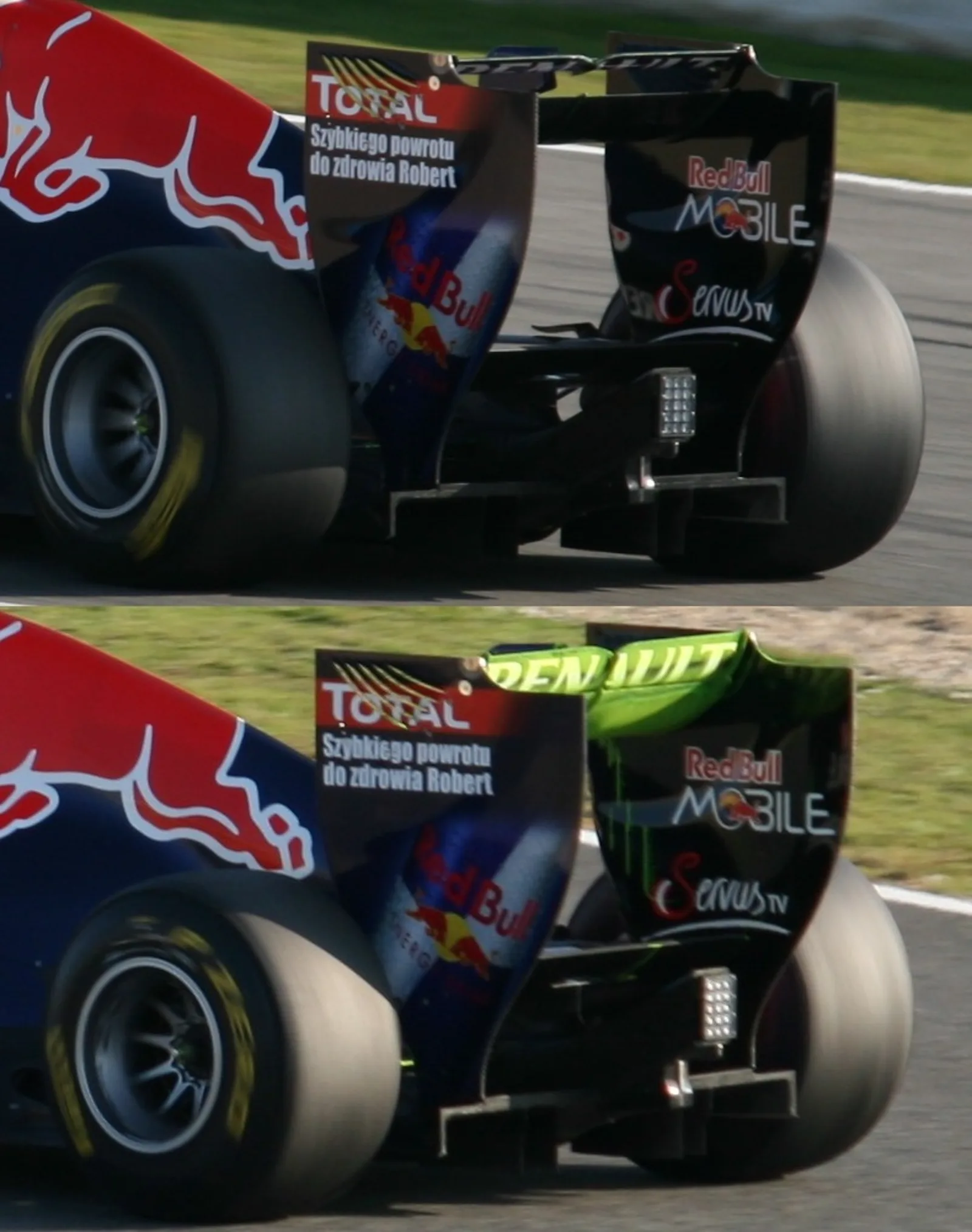
DRS stands for drag reduction system. It is bodywork that the driver can adjust to shed aerodynamic drag, raising top speed and promoting overtaking. In Formula 1 it took the form of a flap on the rear wing that opened on command. The rear wing is made of a main plane and a flap, and DRS let the flap lift a maximum of 85 mm (3.3 in) away from the fixed main plane.
Think of it as opening a window on a fast-moving car. Air passes through more easily, so there is less drag and less downforce, and on a straight, where downforce is not needed, the car accelerates harder and can reach a higher top speed unless the engine and transmission set the limit. Close the flap again and the downforce returns, which gives better cornering.
The system was used in Formula 1 from 2011 to 2025. It was an exception to the rule that bans any moving part whose primary purpose is to affect a car's aerodynamics.
Under DRS only the car within one second could use it; the new aero modes are open to every car.
Why did Formula 1 need DRS?
The reason is turbulence. In most high-performance racing categories, the cars lean on downforce from their wings to corner faster. But wings also churn up the air behind the car, and a following car's front wing works less well in that disturbed flow. Its cornering suffers just when the driver most needs to stay close.
Compare that with NASCAR, where downforce matters less. There the following car gains from drafting and loses little cornering performance, so it has an aerodynamic advantage. In categories with high downforce the opposite is true. Overtaking becomes much harder and rarer, which makes the sport less interesting for spectators. DRS was the countermeasure.
How did the DRS rules work?
Use was tightly restricted. DRS was permitted only when the following car sat one second or less behind the car ahead at a detection point, and when it was inside an overtaking zone set by the FIA before the race. That car could be one that was being lapped, and the FIA could change the one-second parameter from race to race.
- From 2011 to 2023 the device could not be used until two racing laps had been completed, including two laps after a safety car restart. In 2024 that was cut to one racing lap after the start or a restart.
- The defending driver could not use it unless a car ahead of that driver was itself one second or less away.
- The race director could disable it in dangerous conditions such as rain, as at the 2011 Canadian race.
- A dashboard light told the driver when the system was enabled, and it also showed in the wing mirrors. The flap closed when the driver released the button or touched the brakes.
Painted lines on the track marked the detection point and, further on, the activation point, with a vertical sign marked DRS where the zone began. The rules had curious consequences. At the 2021 Belgian Grand Prix, the whole race ran behind a safety car before ending because of bad weather, so no driver could have activated DRS at all.
The number of zones grew over time. In 2011 the FIA added second zones at Valencia, Montreal, Monza and Buddh, and later at Yas Marina. Melbourne gained a second zone in 2012, and a third zone appeared during 2018 and 2019 in Mexico, Singapore, Austria, Canada, Bahrain and Australia. A fourth Melbourne zone was added in 2022, removed for safety reasons and re-added in 2023, and Singapore received a fourth in 2024. In 2022 the FIA adjusted the zones at Bahrain, Jeddah, Melbourne, Baku and Miami based on whether it judged overtaking there too easy or too hard.
How much speed did DRS give?
That depends on whom you ask. The FIA put the gain at 10-12 km/h (6.2-7.5 mph) at the point where the zone ended. Technical staff at racecar-engineering.com quote only 4-5 km/h (2.5-3.1 mph). Sam Michael, a former sporting director of the McLaren team, believed DRS in qualifying was good for roughly half a second a lap.
Effects differed between circuits and, less so, between cars. It was likely to depend on the downforce level at a circuit, the length of the zone and the character of the track just after it. At Monza, where cars already run in low-drag trim, the effect may be smaller. A review in 2011 asked whether overtaking could be made easier without sidelining driver skill.
Why did fans and drivers criticise DRS?
Reaction was mixed from the start. Some people saw DRS as the answer to a lack of overtaking in recent years, while others argued it made passing too easy. Juan Pablo Montoya, who raced in both Formula 1 and IndyCar, compared it to "giving Picasso Photoshop". The strongest argument against it was that the leader could not use DRS to defend, so the pass was not an even contest. Tighter rules on defending only added to the argument. In 2018, then-Ferrari driver Sebastian Vettel said he would rather throw bananas, Mario Kart-style, and argued that DRS was artificial.
Why was DRS removed from F1?
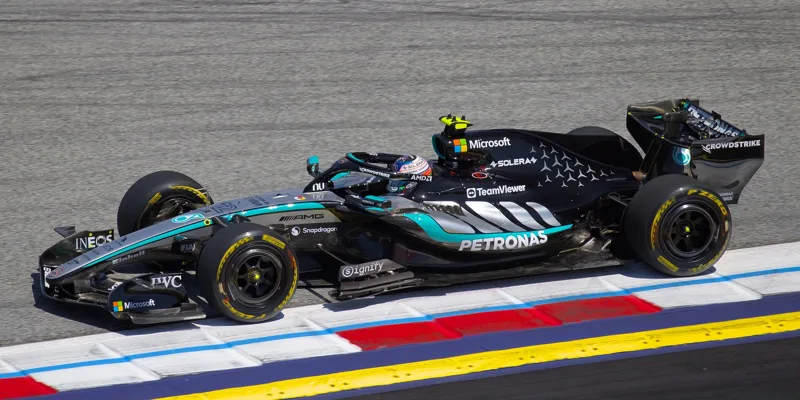
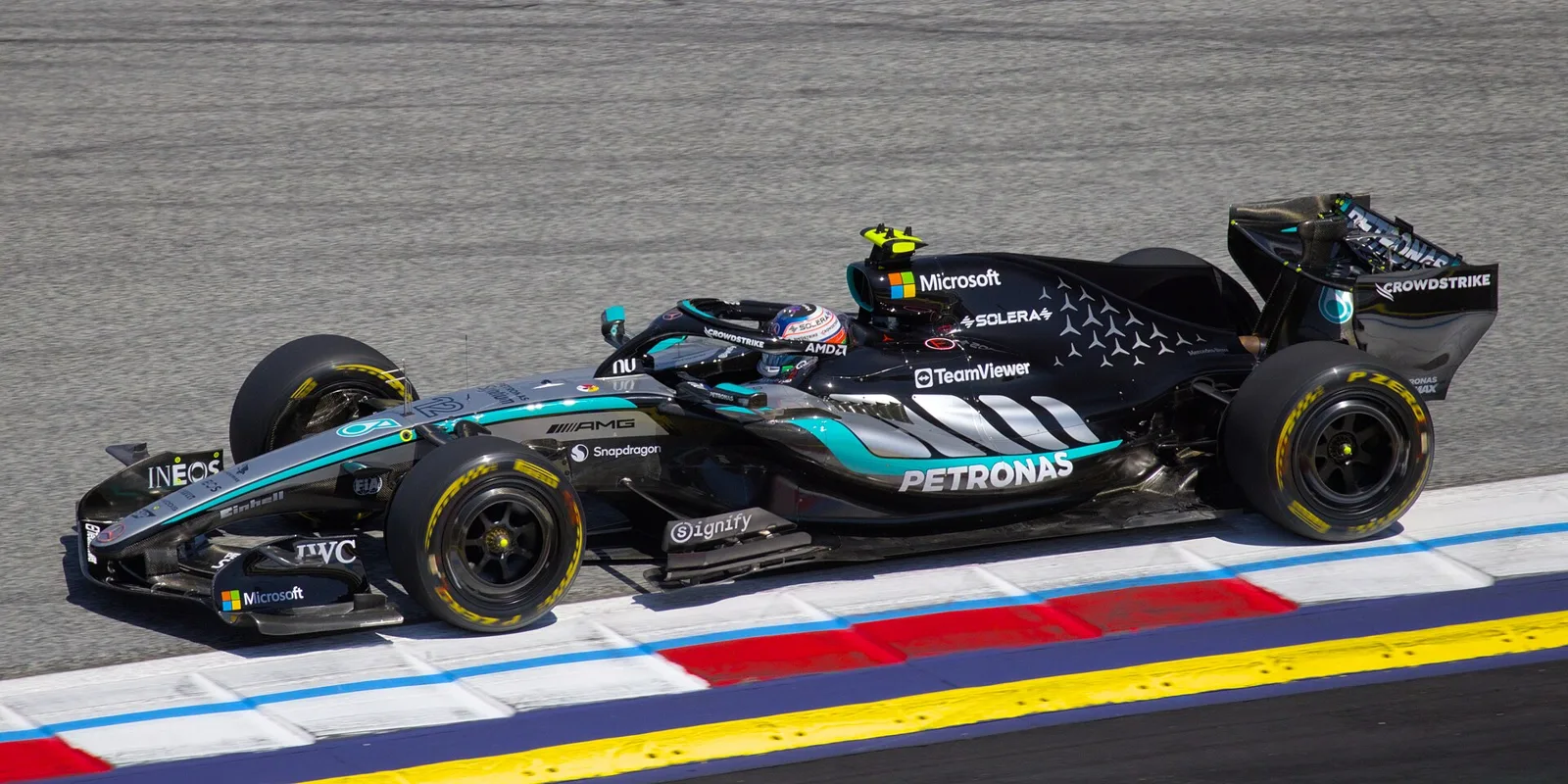
The 2026 regulations are a major rewrite, the first of that scale since the hybrid era began in 2014, and DRS went with them. The 2026 car concept was revealed on 6 June 2024, with active aerodynamics on both the front and rear wings and the elimination of DRS in favour of a new overtake mode, first called manual override mode. According to the regulations' stated intent, the changes were meant to improve aerodynamic efficiency, make the cars more responsive to drive and allow more overtakes on the track.
The key difference is who can use it. Under DRS, only a driver within one second of the car ahead in a designated zone qualified. The new aero modes are meant for every car, within certain conditions. DRS remains in Formula Two and Formula Three.
What replaces DRS in 2026?
Formula One announced the official terms on 17 December 2025. Active aerodynamics, or active aero, describes the movable front and rear wing elements, which switch between a higher-downforce corner mode and a lower-drag straightline mode. Boost mode is the normal use of the energy recovery system to defend or attack, and recharge is when a car is harvesting electrical energy. Overtake mode uses extra stored energy to help one driver pass another, but only if the car behind is within one second of the car ahead, which is similar to the old DRS rule.
| Area | DRS (2011 to 2025) | Active aero and overtake mode (2026) |
|---|---|---|
| Hardware | Flap on the rear wing, lifting a maximum 85 mm (3.3 in) | Movable elements on both front and rear wings |
| Who can use it | Pursuing car within one second, inside a designated zone | All cars under specific conditions; overtake mode needs the car behind within one second |
| Modes | Open or closed | Corner mode and straightline mode, plus boost, recharge and overtake modes |
| Defending | Not allowed unless within one second of the car ahead | Boost mode can be used to defend or attack |
| Exception | Disabled in dangerous conditions such as rain | Active aero disabled only at the Monaco Grand Prix |
The cars changed around the new system. The wheelbase shrank from 360 cm to 340 cm, the width from 200 cm to 190 cm, and the minimum mass fell by 30 kg. Tyres are 2.5 cm narrower at the front and 3.0 cm narrower at the rear, and flatter floors reduce ground effect. The FIA first drafted a downforce cut of over 40%, then settled on about 15%, which makes the cars roughly two seconds a lap slower than the 2022-2025 generation, not four.
Has the new system fixed overtaking?
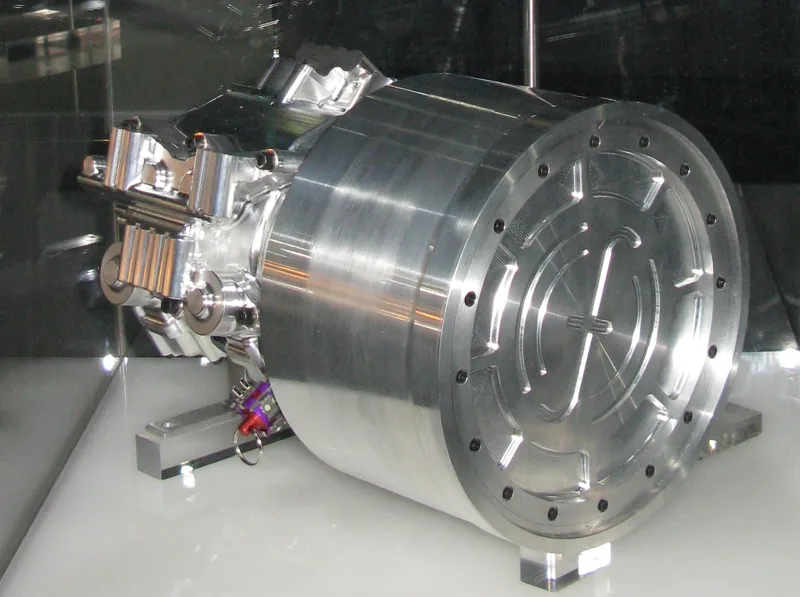
It is too early for a verdict, and the opening races produced controversy of a different kind. The power units now draw far more on electricity, with the MGU-K raised from 120 kW (160 bhp) to 350 kW (470 bhp) while the combustion engine fell from 630 kW (850 bhp) to 400 kW (540 bhp). At the Japanese Grand Prix, Oliver Bearman crashed at high speed because of a speed difference after he used more electrical energy than Franco Colapinto, who chose to harvest. The incident drew scrutiny from drivers.
On 9 April the FIA sat down with power unit developers for a review, and three more meetings followed on 15, 16 and 20 April. One idea was to cut the electrical deployment rate while allowing more harvesting during super clipping, which happens when the battery is being charged at full throttle against the engine. Ahead of the Miami Grand Prix the super clipping limit rose from 340 bhp (250 kW) to 470 bhp (350 kW), with the aim of cutting its duration to 2-4 seconds a lap. For qualifying, the harvesting cap dropped to 7 MJ (1.9 kWh) from 8 MJ (2.2 kWh).
Where else does DRS live on?
Outside Formula 1, DRS has had a long life. Formula Renault 3.5 used it from 2012 until the series folded in 2017. It has been used in the DTM since 2013, in GP2 and its successor Formula 2 since 2015, and in GP3 and its successor Formula 3 since 2017. The Nissan DeltaWing ran an adjustable wing at the 2012 24 Hours of Le Mans, though with free usage.
What does DRS mean for people who buy or drive cars?
The McLaren P1 coupe was the first road car to incorporate an F1-style rear wing drag reduction system. The McLaren Senna GTR followed in 2019 and the Porsche 911 (992) GT3 RS in 2022. So the idea of an active rear wing now exists well beyond the grid, and a buyer of those cars is getting a version of the technology Formula 1 has just retired.
Where this goes next
The rules are still being adjusted. Early in 2025 the Formula 1 Commission agreed to explore catch-up options for power unit development and asked an advisory committee to consider whether deployed energy in race trim should be reduced from the planned 350 kW (470 bhp), after some teams worried about running out of energy during a race. The pre-Miami changes also leave room to cut the qualifying harvesting limit further at some races.