A $145 million limit became $215 million in 2026, yet driver pay, marketing and hospitality still sit outside it.
The F1 cost cap limits a team's operational spending, and for 2026 it is US$215 million, up from $135 million. The rise reflects inflation and the inclusion of costs once exempt, but driver pay, top salaries, marketing, travel, hospitality and infrastructure remain outside it.
In 2026 the Formula One cost cap stands at US$215 million, up from 135 million dollars the year before, and the real cost of running a team still runs higher because several big items sit outside it.
What is the F1 cost cap?
The F1 cost cap, also called the budget cap, limits how much a team can spend on running its operation in a season. It arrived with the 2021 championship, when teams could spend no more than $145 million a year. They also had to file their annual expenditure and make more use of commercially available materials.
There is a second cap as well. The companies that build power units have had a separate limit of their own since 2023. The team figure is the one most often quoted, and it is the one that has climbed to $215 million for 2026.
The actual total cost of running an F1 team often exceeds the cap because of what sits outside it.
What does the cost cap exclude?
Several of the largest expenses were never inside the cap. When it began in 2021, it did not include marketing, drivers' salaries or the salaries of a team's top three executives. A team could therefore stay under the cap while its total outlay was higher.
For 2026 the items outside the cap are what the drivers earn, the pay of the three best-paid people at each team, marketing, travel and hospitality, and spending on infrastructure. That is why the headline figure of US$215 million is not the same as the true cost of running a team, which often exceeds it. The cap measures operational spending, not everything a team pays out.
How does the cap change with the calendar?
The 2021 cap was set for a 21-race season. Each extra race added $1 million to the limit, and each race removed from the schedule took $1 million off it. The idea was that a longer calendar meant more work for the same budget.
Calendars had been growing. Liberty Media, which acquired the commercial rights in 2017, added Miami, Las Vegas, Saudi Arabia, Qatar, the Netherlands and Barcelona-Catalunya to the list of Grands Prix. In 2021 the pandemic forced constant reshuffling: China, Australia, Canada, Singapore and Japan were all cancelled, and Turkey, Qatar and Saudi Arabia filled gaps. That mattered under the cap. The 2021 season had 22 Grands Prix, after pandemic cancellations reshaped it, and the sporting regulations were amended to allow up to 25 in a year. In 2026 the calendar was planned at 24 races and is now at 23 after the Saudi Arabian race was cancelled once the Iran war began. The Bahrain Grand Prix was postponed and moved to the Sepang circuit in Malaysia, keeping its name because the Bahraini government remained the promoter. Spain moved to Madrid and a new street layout around the IFEMA Exhibition Centre, while Barcelona-Catalunya keeps a race of its own and Imola dropped off the list.
Why did the cost cap rise to 215 million dollars?
For 2026 the cap on team operational spending rose from $135 million to $215 million. The sport says this was primarily because of inflation adjustments and because some costs that were previously exempt now count inside the cap. In other words, part of the increase is a wider definition rather than extra spending room.
The cap began at $145 million in 2021 and was $135 million before the 2026 rise. The new cap is a large step up, and the power unit cap rose at the same time.
How have the caps changed?
| Cap | Figure |
|---|---|
| Team cap, 2021 | $145 million |
| Team cap, before 2026 | $135 million |
| Team cap, 2026 | $215 million |
| Power unit manufacturers' cap, from 2023 | $95 million |
| Power unit manufacturers' cap, from 2026 | $130 million |
The power unit increase, from $95 million to $130 million, is meant to help pay for developing the new hybrid engines.
What is new on the 2026 cars?
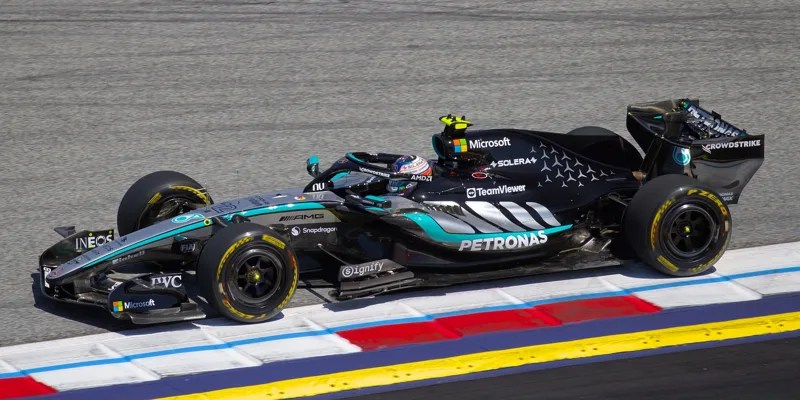
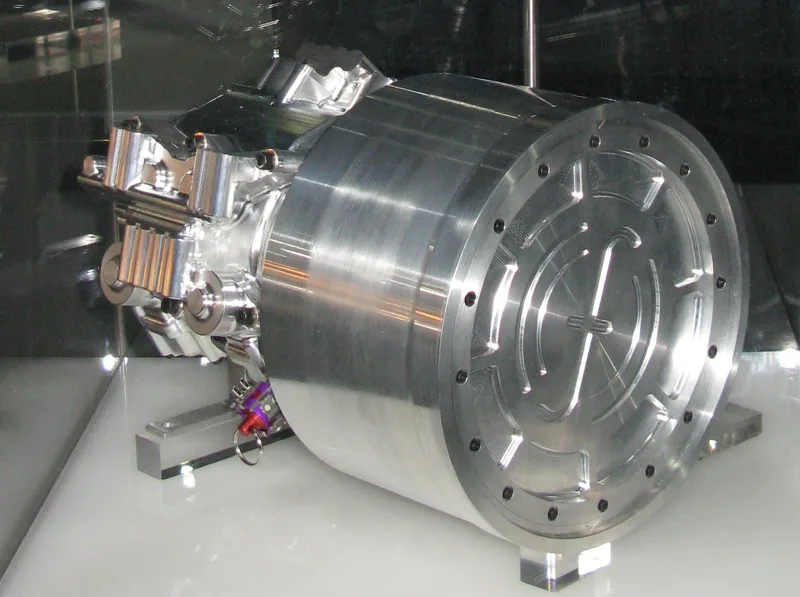
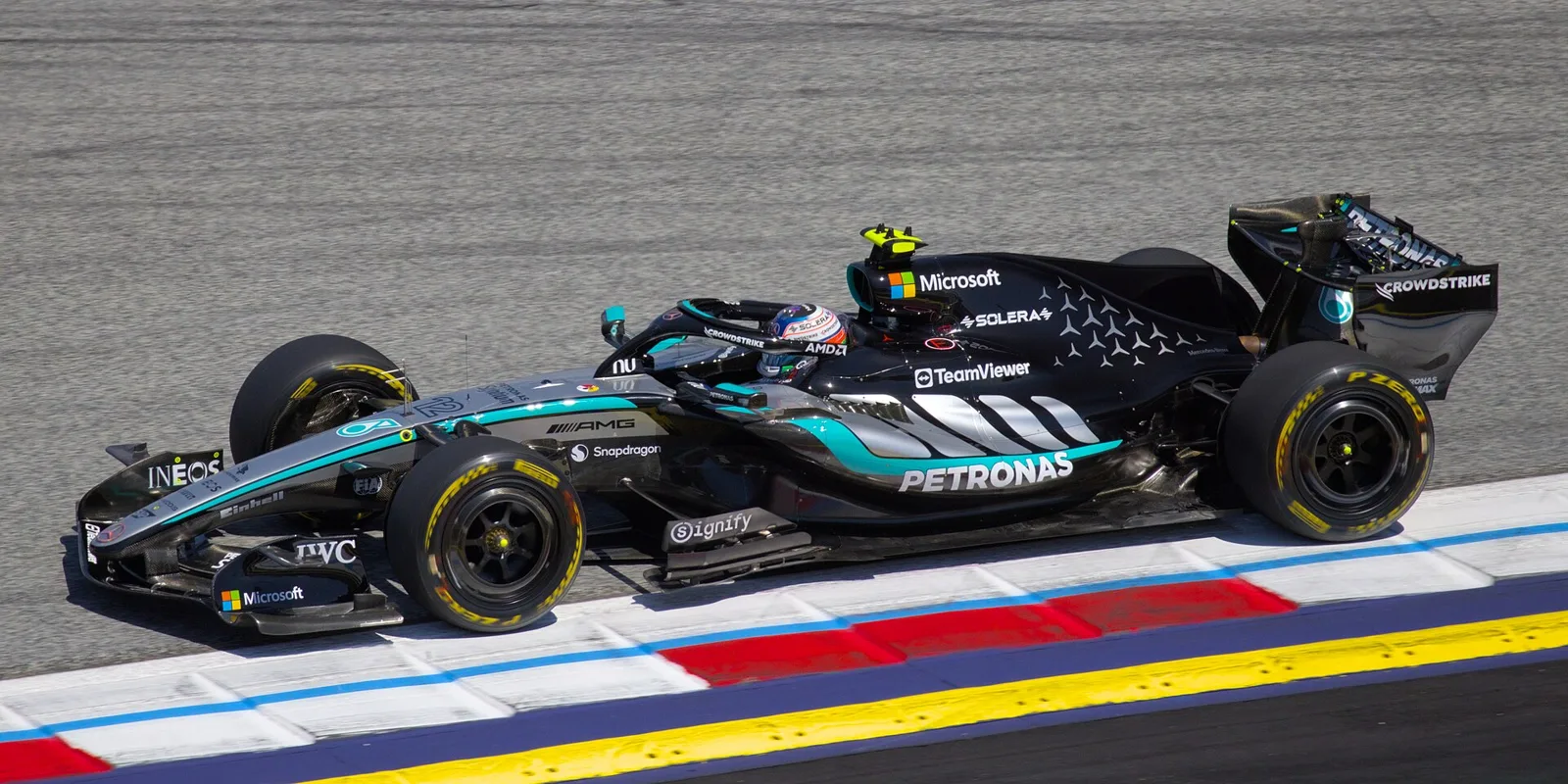
The 2026 season brings the biggest package of changes in years. Power units keep the turbocharged 1.6-litre V6 but lose the MGU-H, a heat-recovery motor that had been in use since 2014. The electric MGU-K now delivers 470 bhp (350 kW) where it gave 160 bhp (120 kW), and the combustion side falls to 540 bhp (400 kW), down from 850 bhp (630 kW). Total output stays above 1,000 bhp (750 kW), the fuel is fully sustainable, and designers expect to harvest double the electrical energy.
The cars are smaller and lighter. The wheelbase goes down to 340 cm (130 in) from 360 cm (140 in), the width to 190 cm (75 in) from 200 cm (79 in), and the minimum mass drops by 30 kg (66 lb). Active aerodynamics replace the drag reduction system, and a new overtake mode lets a driver within a second of the car ahead use extra stored energy. The FIA confirmed that downforce would fall by around 15 per cent, making the cars about two seconds a lap slower than the 2022 to 2025 generation, rather than the four seconds first envisaged.
The rules have already been adjusted. After Oliver Bearman crashed at high speed in Japan because of a speed difference caused by electrical energy use, the FIA held a review on 9 April. Changes announced for the Miami Grand Prix lifted the 'super clipping' limit to 470 bhp (350 kW), where it had been 340 bhp (250 kW), and trimmed the qualifying harvesting limit to 7 MJ from 8 MJ.
Why did teams ask for a lower cap in 2021?
When the first cap arrived, some teams argued for a figure as low as $100 million. They feared that the lasting financial effects of the COVID-19 pandemic could endanger as many as four teams. Ross Brawn, then Formula One's managing director, said the sport intended to reduce the cap further in the following years.
The 2026 figure runs the other way. The cap is far higher, although the stated reasons are inflation and a wider definition of what counts.
How did Formula One become a billion-dollar business?
Bernie Ecclestone is widely credited with turning the sport into a business worth many billions of dollars. He bought the Brabham team in 1971, won a place on the teams' association, FOCA, and became its president in 1978. Circuit owners had previously controlled the teams' income and dealt with each team one by one. Ecclestone got the teams acting together and sold the series to circuit owners as one bundle.
The formation of FISA in 1979 set off a war with the teams' association over television money and technical rules. It ended with the 1981 Concorde Agreement, which gave teams reasonable notice of new regulations. A second Concorde Agreement followed in 1992 and a third in 1997. Liberty Media's purchase in 2017 added a new owner and more races.
Why is Formula One so expensive?
Cost has been an issue for decades. The rising price of competition made non-championship Formula One races less common in the 1970s. In the 1980s, turbocharged engines reached over 520 kW (700 bhp) and a BMW unit recorded a flash reading estimated at more than 970 kW (1,300 bhp) in qualifying at Monza in 1986. In 1987 race power reached around 820 kW (1,100 bhp).
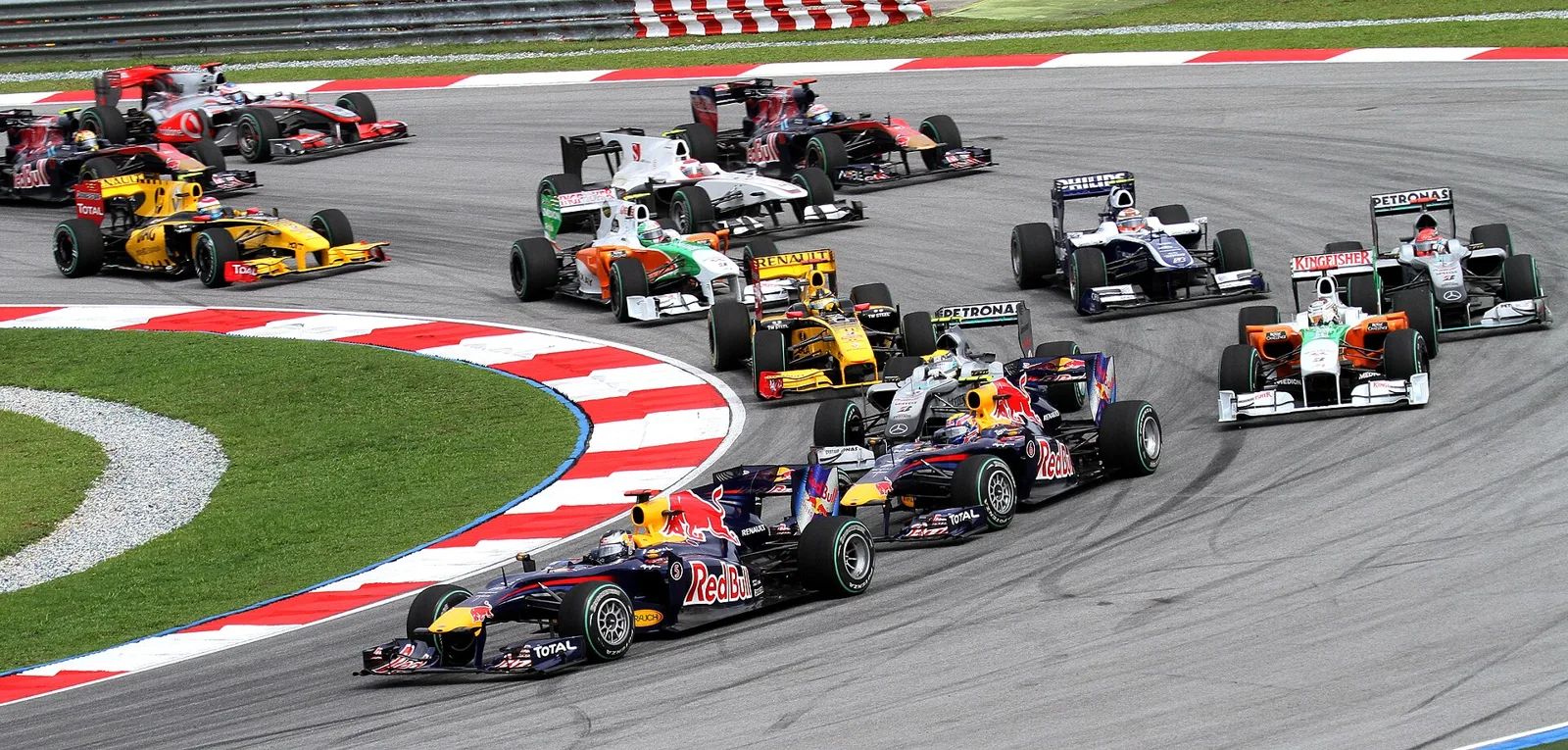
Governing bodies tried to rein it in. In the 2000s the FIA kept changing the championship rules to improve the racing and cut costs, covering qualifying, scoring, technical regulations and engine and tyre life. When recession hit, Honda, BMW and Toyota all left within a year in 2008 and 2009, which ended manufacturer dominance of the sport.
Honda's team went through a management buyout and became Brawn GP, laying off hundreds of staff before winning that year's world championships. BMW's team was bought back by its founder, Peter Sauber, and the Renault team was acquired by Genii Capital investors. Commercial rights have also changed hands, with Liberty Media acquiring them in 2017 for an estimated $8 billion.
Who is competing under the 2026 cap?
There are eleven teams, with six of them based in the United Kingdom. Cadillac is the new arrival, the first new team since Haas in 2016. It starts with Ferrari power units, and a General Motors power unit developed with TWG Motorsports is scheduled from 2029.
Audi, which bought the Sauber team in 2024, runs as a factory team building its own power unit. Its predecessor, Auto Union, raced in Grand Prix events before the Second World War. Cadillac had earlier tried to enter in conjunction with Andretti Global. Ford came back to supply engines, its first return since 2004, working with Red Bull Powertrains to power Red Bull Racing and Racing Bulls. Honda split from those teams and now supplies Aston Martin as a full works partner.
The driver market shifted too. Sergio Perez and Valtteri Bottas took full-time seats at Cadillac, after Perez's Red Bull contract was ended by mutual agreement. Isack Hadjar moved up to Red Bull Racing, replacing Yuki Tsunoda, and Arvid Lindblad was promoted from Formula 2 to take his seat at Racing Bulls. Because driver salaries sit outside the cap, none of those contracts counts against the $215 million.
Renault stopped supplying engines after poor results since the hybrid era began in 2014, so Alpine is now a Mercedes customer. 2026 is the first season since 2000 without a Renault engine on the grid.
What has happened on the track under the cap?
In the first cap season of 2021, Max Verstappen won his first title with 10 wins, after going into the final race tied on points with Lewis Hamilton. He passed Hamilton on the last lap after a late safety car restart. Mercedes protested and then decided not to appeal, and the controversy led to the removal of Michael Masi as race director and a virtual race control room.
That was the first year since 2008 that the champion driver came from a team other than the constructors' champion. Mercedes won the constructors' title for the eighth consecutive season. In 2023 Verstappen won 19 of 22 races, and Red Bull won 21 of 22, a team record of 95.45 per cent. Ferrari, through Carlos Sainz at Singapore, took the only other win.
In 2026 Lando Norris is the reigning drivers' champion, and McLaren-Mercedes are the reigning constructors' champions.
Where does the cost cap go next?
The 2026 rules are still being refined. The Commission agreed in early 2025 to look at catch-up options for power unit makers who had fallen behind in the first stage of development. It also suggested that an advisory committee study whether energy deployment in a race should be cut below the 470 bhp (350 kW) originally planned, because some teams feared their cars would run out of deployable energy.
On the commercial side, the 2023 arrangement under which Honda continued technical support for Red Bull Racing and AlphaTauri was due to run until the end of 2025, and Cadillac's own General Motors power unit has been approved by the FIA for 2029.