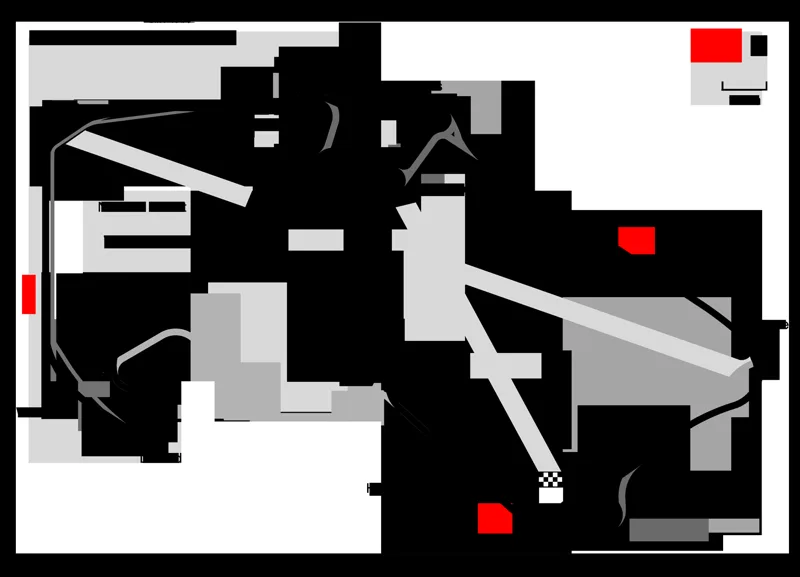
Verstappen took pole, Mercedes and Red Bull fought at the front, and a turn 4 track limits dispute dominated the weekend.
The 2021 Bahrain Grand Prix was the season opener of the 2021 Formula One World Championship, held on 28 March 2021 at the Bahrain International Circuit. Lewis Hamilton won from Max Verstappen and Valtteri Bottas, with a track limits dispute at turn 4 shaping the result.
The 2021 Bahrain Grand Prix ran on 28 March 2021 at the Bahrain International Circuit and opened the Formula One calendar for the year. Lewis Hamilton took the win ahead of Max Verstappen, while Valtteri Bottas finished third, so the top three was two Mercedes drivers and one Red Bull. The weekend is remembered as much for an argument over track limits as for the result itself.
Who won the 2021 Bahrain Grand Prix?
Lewis Hamilton won the race for Mercedes in a contest shaped by tyre strategy, penalties and an unusual dispute about where drivers could run. Max Verstappen finished second for Red Bull, and Valtteri Bottas came third. The result was close enough that team instructions and the track limits rulings carried real weight.
Verstappen had led from the start until his pit stop, then pressed Hamilton hard in the closing laps and gave the place back under instruction from his team. The gap between the two leaders moved around a great deal. Bottas dropped to fifth after a ten-second pit stop, then fought his way back to third.
Mercedes had been hit harder by the season's regulation changes than its rivals, because its low-rake floor design suffered more than the high-rake designs. Toto Wolff described the team's steps forward across the weekend, and the win showed that Mercedes could still fight at the front.
A season opener shaped by pit stops, penalties and a turn 4 track limits rulebook that nobody read the same way.
How did practice set up the weekend?
Practice gave an early sign that Red Bull were ready to challenge Mercedes, with Verstappen fastest in every session. The three sessions lasted one hour each, the first race of the year to use reduced practice lengths. The earlier first and second sessions had run for 90 minutes from 2007 to 2020.
Verstappen was quickest in the first session ahead of Bottas and Lando Norris, then topped the second ahead of Norris and Lewis Hamilton. In the third he finished ahead of Hamilton and Pierre Gasly. Kimi Raikkonen hit the barriers at turn 3 during practice.
Norris played down his form, saying he was not completely happy with his car despite being second fastest in the second session. He expected Mercedes and Red Bull to stay ahead of McLaren in qualifying and the race, a view shared by his new teammate Daniel Ricciardo. Sergio Perez was disappointed with his qualifying simulations against Verstappen, but pleased with his race running.
Pirelli brought its C2, C3 and C4 compounds, labelled hard, medium and soft. Those choices were one step softer than the range used in 2019. Wolff expected Mercedes and Red Bull to fight a close dogfight at the front for the rest of the weekend.
Why did Mazepin and Vettel lose ground in qualifying?
Qualifying was disrupted early when Nikita Mazepin spun in the first part, then broke an unwritten rule near the end of the session. The incident ruined the chances of other drivers. Sebastian Vettel received a five-place grid penalty for failing to slow adequately for yellow flags, and he started the race from last.
Mazepin's first spin came early in Q1. Later he angered the other drivers by overtaking on his out lap in the final sector, which broke the unwritten agreement not to pass there, and then he spun again at the first corner. That second spin left Esteban Ocon and Vettel without a clear run at a faster lap time, and both were knocked out in Q1.
Vettel's penalty followed Mazepin's second spin, when he did not slow enough for the double yellow flags, so he was sent to the back. Ocon believed that a normal qualifying lap would have put him in the lower half of the points, which shows how much the session mattered to the midfield.
Sergio Perez, who had won his first Grand Prix at this track the previous year on the Outer Circuit, failed to reach the final part of qualifying on his Red Bull debut. The team gambled on medium tyres and it did not pay off, and he ended the session eleventh. Yuki Tsunoda had been second fastest at the end of Q1 but struggled on the same medium tyres and finished thirteenth.
How did the top of the grid take shape?
Max Verstappen claimed pole, with Lewis Hamilton second and Valtteri Bottas third. Charles Leclerc was fourth for Ferrari, while Carlos Sainz Jr. could manage only eighth. The front rows showed Red Bull and Mercedes as the teams to beat in this opening round.
Verstappen's pole was his fourth in Formula One, and his Red Bull was slightly quicker than the Mercedes pair on the first set of Q3 lap times. Leclerc's fourth place was highly praised for Ferrari, which had endured its worst season in forty years in 2020. Sainz finished four places behind his teammate.
Pierre Gasly, Daniel Ricciardo and Norris filled the gap in the top ten. Fernando Alonso ended ninth in his Alpine after two years away from the sport, and Lance Stroll rounded out the top ten in his Aston Martin.
How did the race unfold?
The race began with Verstappen leading and a safety car period after Mazepin spun on his debut. The field then settled into a long battle for position. Hamilton pitted on lap 14 and Verstappen four laps later, and by the finish the order had been shaped by tyres, penalties and track limits.
Verstappen held the lead through the first corner, while Bottas was passed by Leclerc. Mazepin lost control at the exit of turn 3 and spun into the barriers, so the safety car stayed out until the end of lap three. At the restart Verstappen held off both Hamilton and Leclerc, and Red Bull worried about the reliability of his car after Perez's problem on the formation lap.
Norris passed teammate Ricciardo on the opening lap and later moved past Leclerc for fourth on lap 8, after a long battle. Gasly made contact with the back of Ricciardo and lost his front wing, while Ricciardo lost pace for the rest of the race. The midfield was packed, and numerous moves were being made in close quarters.
Alpine called Alonso in from eighth on lap 11 for fresh tyres, which started a flurry of activity as teams tried not to be outwitted by the undercut. Hamilton pitted for hard tyres at the end of lap 14, and Red Bull kept Verstappen out to run on fresher rubber later. When Verstappen stopped four laps after his rival, he emerged second, seven seconds behind.
Verstappen then closed to within four seconds of Hamilton in eight laps. Sainz beat Vettel and Alonso for eighth on lap 23 in a three-way fight, and Tsunoda passed Vettel on lap 25 and Alonso on lap 27. Bottas then suffered a ten-second stop when his crew could not get one wheel off straight away, which dropped him to fifth. Alonso retired with a brake problem that Alpine later traced to a sandwich wrapper caught in a brake duct.
What was the track limits row about?
The dispute centred on turn 4, where Hamilton was repeatedly exceeding track limits. He was warned on lap 38, having committed the offence 29 times, but the pre-race instruction had said enforcement would apply only where a lasting advantage was gained. Both teams said the rules felt confusing.
On lap 32 Verstappen was told by his team that Hamilton was consistently going beyond the limits at turn 4 and that he could do the same. Verstappen questioned whether that was allowed, since he had understood the rules did not permit it. The team's message set up the exchange that followed in the closing laps.
By the start of lap 51 Verstappen was within a second of Hamilton. When Hamilton ran wide on the exit of turn 10, Verstappen moved around the outside at turn 4 on the next lap. Because he left the track to complete the move, his team instructed him to hand the place back, and he gave it up between turns 10 and 11.
Red Bull then struggled with oversteer caused by dirty air on the exit of turn 13, which cost Verstappen significant time. Hamilton pulled away and the rapidly closing Verstappen could not complete a pass before the flag. Meanwhile Bottas pitted for fresh tyres and set the fastest lap of the race.
Post-race analysis showed that Hamilton had gained almost three seconds at turn 4, and running wide was worth at least 0.1 seconds per lap. The stewards had read the pre-race note as banning only overtaking off the track, which left drivers and teams uncertain about where the boundary lay. Hamilton himself asked where the boundary was when overtaking.
What did the teams and drivers say afterwards?
Hamilton praised Red Bull's performance across the weekend and said that winning had taken something special from both driver and team. Verstappen said Red Bull had really taken the fight to Mercedes. Christian Horner said that being frustrated by second place was not a bad place to be.
Toto Wolff praised the whole team but acknowledged that luck had helped. He compared the regulations applied at the event to a Shakespeare novel and called for the FIA to give consistent instructions. Race director Michael Masi insisted that the rules had been clear and that nothing had changed during the race.
Ross Brawn described Tsunoda as the best rookie Formula One had seen for years, although Tsunoda said he was only half satisfied with his own performance. Vettel accepted that he could not have avoided Ocon but apologised for the collision. Ocon was pleased with his race pace and strategy, but disappointed with the final result after bad luck in qualifying.
Why does the 2021 Bahrain Grand Prix still matter?
The race opened a season with new debutants, a changing engine arrangement at Honda and a debate over track limits that outlasted the chequered flag. It also showed how a rule interpreted in different ways can decide a result. Drivers and team bosses said afterwards that the rules were confusing on the day.
Three drivers made their Formula One debuts: Tsunoda, Mick Schumacher and Nikita Mazepin. Schumacher is the son of seven-time world champion Michael Schumacher, and Mazepin raced under a neutral flag because of his country's role in a doping scandal. Tsunoda had impressed in pre-season testing for AlphaTauri.
It was also the first time since 2010 that Bahrain had opened a Formula One season. Honda had said it would not supply engines beyond 2021, and it brought forward a lower, more compact and more powerful unit that had been planned for 2022. Ferrari and Alpine tested 18-inch tyres intended for the 2022 cars in the days after the race.
| Position or role | Driver | Team | Detail |
|---|---|---|---|
| Pole | Max Verstappen | Red Bull | Fourth career pole; led all three practice sessions |
| 1st | Lewis Hamilton | Mercedes | Won after the turn 4 track limits row |
| 2nd | Max Verstappen | Red Bull | Handed the place back between turns 10 and 11 |
| 3rd | Valtteri Bottas | Mercedes | Ten-second pit stop; set the fastest lap of the race |
| Last | Sebastian Vettel | Aston Martin | Five-place grid penalty; 10-second time penalty for the collision with Ocon |