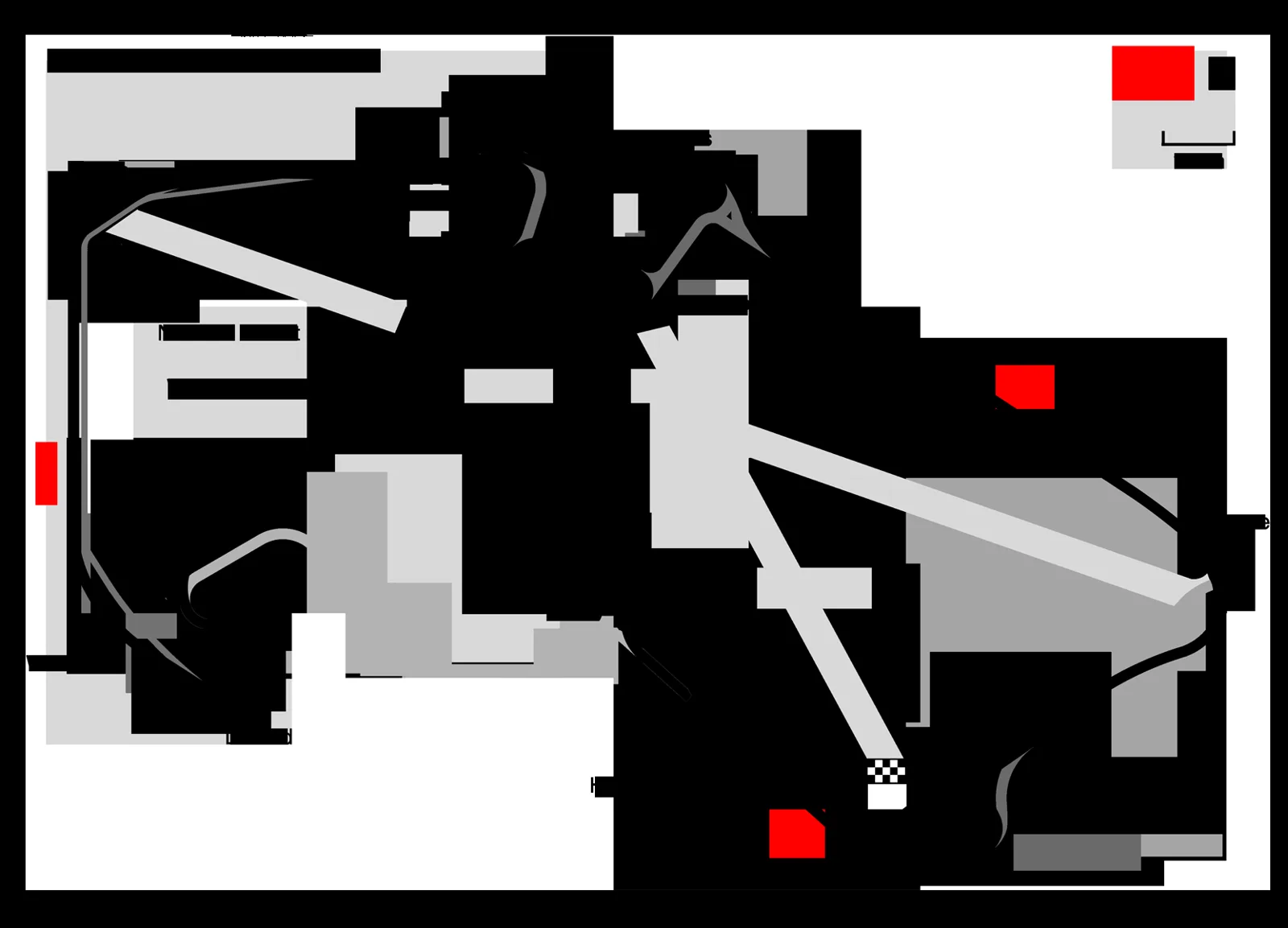

Silverstone hosted the first sprint qualifying weekend in Formula One, and a first-lap clash between title rivals at Copse decided much of the afternoon.
Lewis Hamilton won the 2021 British Grand Prix at Silverstone on 18 July 2021, his eighth win at the circuit. Charles Leclerc was second for Ferrari and Valtteri Bottas third for Mercedes, after a first-lap collision with Max Verstappen had ended the Red Bull's race.
The 2021 British Grand Prix was held at Silverstone on 18 July 2021 and was the tenth round of the season. Lewis Hamilton won for Mercedes, his eighth British Grand Prix victory, ahead of Charles Leclerc and Valtteri Bottas. The race was also the first to feature sprint qualifying, a new format that reshaped the weekend and set the stage for a first-lap clash between the two title rivals.
Who won the 2021 British Grand Prix?
Lewis Hamilton won the race after recovering from a ten-second time penalty for causing a collision with Max Verstappen on the first lap. Charles Leclerc led for almost the whole race for Ferrari, and Valtteri Bottas finished third for Mercedes. The eighth British win was a record for any driver at the event.
The collision removed Verstappen from the race, and it turned a championship battle into a dramatic afternoon. Hamilton had a better start than Verstappen and the pair ran side by side through the opening corners. Their wheels touched at Copse, and the contact decided the race more than any strategy call.
Hamilton pitted from second for his penalty and rejoined in fourth. He quickly passed Lando Norris and then his teammate Bottas, who was instructed to let him through. Hamilton then overtook Leclerc on lap 50 to take the lead, and the race ended with the Mercedes at the front.
A sprint weekend that gave Silverstone a new format, and a first-lap collision that gave Hamilton the win.
How did the crowd and COVID rules shape the weekend?
Silverstone was the only Formula One race at the circuit in 2021, after two races there in 2020 had been held behind closed doors. On 24 June the government allowed a full-capacity crowd, provided ticket holders showed a negative test taken within 48 hours or proof of double vaccination.
Hamilton was aiming for a record eighth British win, having already won the event seven times, starting with 2008. Before the weekend he said that allowing such large numbers was premature, while George Russell and Max Verstappen were more positive about the news. Reports noted that more of the spectators were women than in previous years.
McLaren confirmed on 15 July that three team members had tested positive for COVID-19, one of them chief executive Zak Brown. The drivers did not have to self-isolate, and the team said its plans for the weekend were unaffected. The weekend also marked the seventieth anniversary of Ferrari's first world championship Grand Prix win.
What was the sprint qualifying format?
The 2021 British Grand Prix was the first race of the season to use the new sprint qualifying format, and two more were expected later in the year. The change had been agreed by the FIA, Formula One and all ten teams, and it altered both the weekend's schedule and its rules.
On Saturday the second practice took place at noon, and a sprint race was run in the afternoon. The sprint was 100 km (62 mi), or seventeen laps, and it set the starting grid for the Sunday race. The winner of the sprint would start from pole, and the top three finishers scored points, with three for the winner, two for second and one for third.
The format was not universally popular. Sebastian Vettel expressed scepticism about it, while Hamilton, Carlos Sainz Jr., Fernando Alonso and George Russell reacted positively to the willingness to try something new. Hamilton later said the new format would probably not be too exciting. Ross Brawn said the experiment could be the first of many format changes.
The weekend was the first time for decades that a Grand Prix meeting had included more than one race for Grand Prix cars. The last comparable event was the 1959 German Grand Prix at AVUS, where the Grand Prix was decided over two heats of 30 laps each. Formula One also noted that the sprint format would be analysed by audiences, who had given both positive and negative reactions.
How did practice and qualifying set the order?
The first practice session took place on Friday at 14:30 BST in warm, sunny conditions. Verstappen topped the timesheets 0.779 seconds ahead of Norris, who was second for McLaren. Hamilton was third for Mercedes, only 0.001 seconds slower than Norris. There were no major incidents in the session.
On Saturday Verstappen was quickest again, 0.375 seconds clear of Leclerc. Sainz was third, 0.230 seconds behind. Practice gave little hint of the collision to come, although Verstappen had found the cooler qualifying temperatures difficult for his tyres.
Hamilton set the fastest time in qualifying, which gave him first place on the sprint grid, with Verstappen second and Bottas third. Since the sprint winner would start from pole, the quickest qualifier was given the title of speed king instead. Formula One's chief technical officer Pat Symonds said the title of pole position was declared under the control of the FIA rather than Formula One Management.
What happened in the sprint race?
The sprint got under way at 16:30 BST over seventeen laps. Hamilton lost out at the start, and Verstappen overtook him into the lead. Verstappen had struggled to bring his tyres up to temperature in the cooler qualifying conditions, but the sprint was much warmer, and that helped him.
Bottas and Leclerc kept the third and fourth places they had started in. Alonso went from eleventh to fifth on the first lap, but Nikita Mazepin hit his Haas teammate Mick Schumacher and spun. Russell and Sainz made contact on the first lap as well, which dropped Sainz to 19th and earned Russell a three-place grid penalty for the race.
Sergio Perez lost control on lap five and spun into the gravel. He carried on but later retired on lap 16. Alonso finished the sprint seventh and was warned about his moves in the braking zone, which he said he would keep making for the rest of the year. The two McLaren drivers passed him without much resistance, but he held off Vettel's Aston Martin.
How did the Copse collision happen?
The two drivers ran side by side through the first corner, and each contested the lead through the early part of the lap. Hamilton briefly got ahead after a stronger exit from the fourth turn, but Verstappen re-passed him on the inside.
Hamilton then accelerated faster out of the seventh turn and the two cars collided going into Copse. Verstappen's right-rear tyre was stripped from its rim, and he slid across the gravel trap on the outside of the track. He hit the tyre wall at at least 290 km/h (180 mph), and the impact was recorded at 51 g.
The crash brought out a red flag, and The race was suspended for about thirty minutes while the car was removed and the barrier repaired. Verstappen was taken to the medical centre and then to hospital for precautionary checks. He was released that night, as he had not been seriously injured.
The stewards ruled that Hamilton was predominantly, but not fully, at fault. He received a ten-second time penalty, and his car was repaired during the stoppage. The collision caused Hamilton to lose speed, which allowed Leclerc to move into the lead before the race was neutralised.
How did the race unfold after the restart?
Hamilton pitted from second, served his penalty and came back out fourth. He quickly dispatched Norris and then Bottas, who was told to let him through. Norris suffered a slow pit stop because of a problem with his rear-right tyre, and he was stuck behind Bottas in fourth for the rest of the race.
Norris lost further time on rejoining, because he had to clear Alonso. It was his fifteenth consecutive race finishing in the points. Leclerc, meanwhile, struggled with intermittent power issues in the first half of the race, which kept his gap to Hamilton at around 1.5 seconds.
Hamilton caught Leclerc on lap 50 and overtook him for the lead. His move was similar to the one on Verstappen, but with less fuel and warmer tyres he did not understeer and held the apex. Leclerc had a moment on the exit of the corner and ran wide, which allowed Hamilton to complete the pass. Leclerc had led for almost the entire race, which was unexpected given the relative pace of the cars.
Vettel lost control of his Aston Martin in a battle with Alonso on lap four and dropped to last. He recovered to 17th but later retired. Kimi Raikkonen also spun on lap 49 after a minor collision with Perez, and Pierre Gasly's late puncture dropped him out of the points.
Why did the penalty divide opinion?
Much of the post-race debate centred on the first-lap incident. Verstappen said the penalty issued to Hamilton mid-race was not enough, and he described Hamilton's celebrations as disrespectful and unsportsmanlike. Mercedes said it would not have celebrated the win had it not known that Verstappen was uninjured.
Hamilton said he did not believe himself to be at fault, but that he would accept the penalty and keep working. Hamilton was relieved that Verstappen had escaped without serious harm. Red Bull team principal Christian Horner called the move desperate and the victory hollow, and he said the team was lucky that nobody had been seriously hurt. Horner said the damage to Red Bull's car amounted to at least 1,300,000 pounds, and he added that Verstappen had been winded.
Red Bull adviser Helmut Marko accused Hamilton of dangerous driving and suggested a one-race ban. Toto Wolff defended Hamilton, saying the collision was a racing incident and that it always takes two to tango. Mercedes trackside engineer Andrew Shovlin said the collision had been inevitable, citing Verstappen's aggressive style.
Several drivers saw it differently. Leclerc said there had been space on the inside and that Verstappen had been quite aggressive on the outside, and Daniel Ricciardo said that Hamilton had gone in too hot but had not meant the collision. Race director Michael Masi said the stewards did not weigh an incident's outcome when setting penalties.
What else followed the race?
Hamilton became the target of racist abuse online after the race. Teams including Red Bull and McLaren, Formula One, and members of the wider Formula One community condemned those responses. Facebook said it had removed some offensive comments from its platforms.
Red Bull later asked for a review of Hamilton's penalty, but the stewards dismissed the request. In an interview after the season Verstappen, by then a world champion, said that being in hospital after the crash had been among the lowest points of his title-winning year.
| Position | Driver | Team | Note |
|---|---|---|---|
| 1st | Lewis Hamilton | Mercedes | Eighth British win; ten-second penalty served |
| 2nd | Charles Leclerc | Ferrari | Led for almost the whole race |
| 3rd | Valtteri Bottas | Mercedes | Finished on the podium behind his teammate |
| 4th | Lando Norris | McLaren | Slow pit stop; fifteenth consecutive race in the points |
| Retired | Max Verstappen | Red Bull | Out after the collision at Copse |