How wheel size is written, why bolt patterns and offset must match the car, and how staggered fitment changes grip, handling and tyre choice.
Wheel sizing combines diameter, width, offset, bolt pattern, centre bore and load rating, and each must suit the car. Tyre codes add their own width, aspect ratio and wheel diameter figures, so a change to one usually affects the others.
Wheel size describes the diameter, width and offset of a wheel, and the tyre that goes on it has its own code. Getting either one wrong can stop a wheel from fitting, rub against the bodywork or change how the car drives. The numbers look simple, but they interact, so they are worth understanding before any wheel or tyre is bought.
How are wheel sizes written?
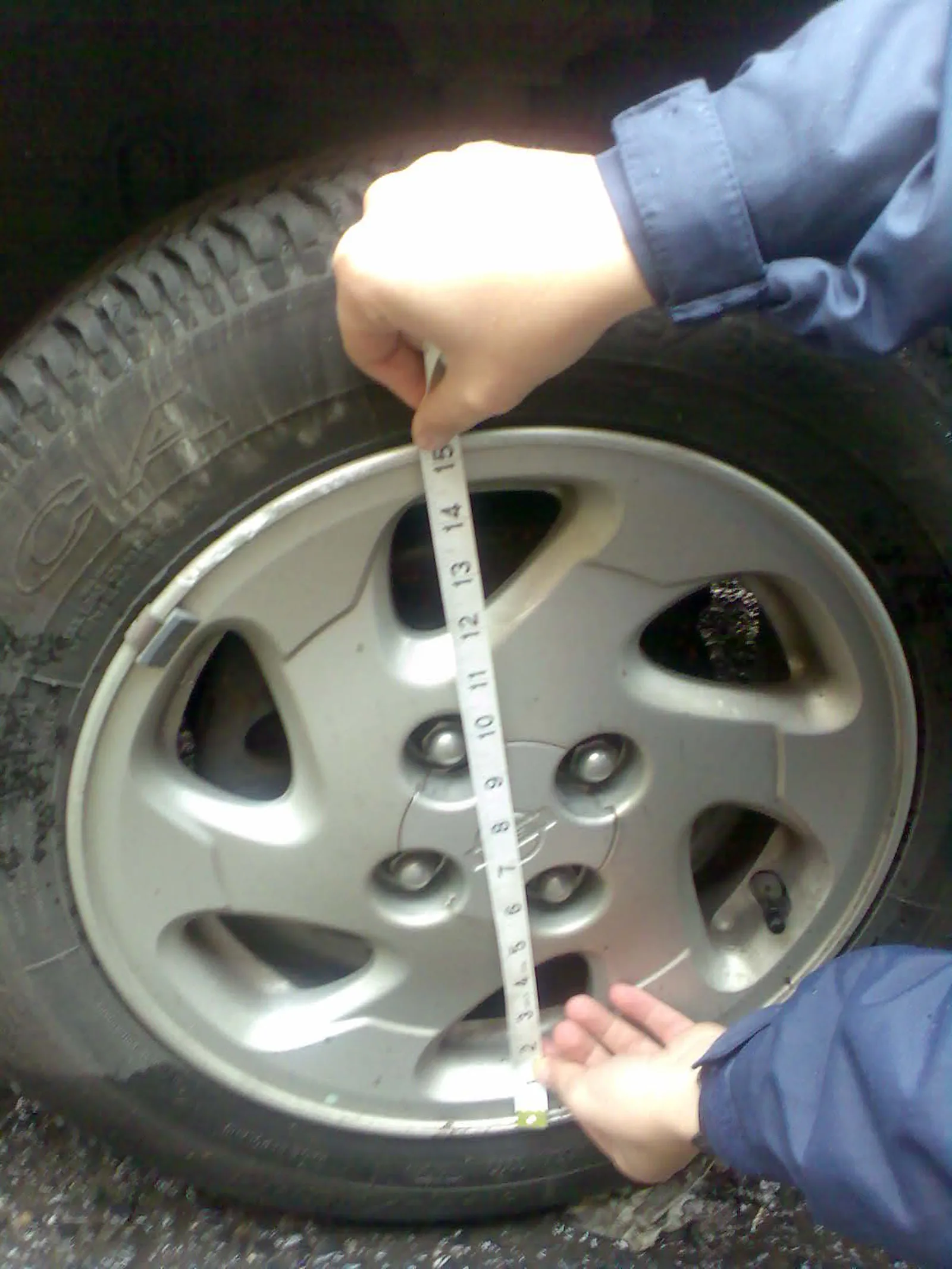
A wheel size is its designation by diameter, width and offset. The diameter is measured across the cylindrical surface on which the tyre bead sits, and the width is the inside distance between the bead seat faces. Offset is the distance from the wheel's true centreline to its mounting surface, and it is given with a plus or minus sign.
A typical designation lists the diameter first, then the width and finally the offset. The format 17 x 8.5 x +35 means a 17 inch diameter, an 8.5 inch width and a positive offset of 35 mm. In fully metric terms the same wheel is 432 x 216 x +35. Although car wheel sizes are marketed in inches, the Michelin TRX of 1975 was sold in millimetres.
Wheel size is a set of linked numbers, and changing one usually means checking the others.
Why do units vary so much?
The millimetre is the most common unit in modern production drawings, but marketing still sometimes uses traditional measurements. Road bicycle wheels are a clear example. They are often called 700C, though the rim actually measures 622 mm. In cars, wheel diameters and widths are quoted in inches, while tyre bead diameters are in inches and tyre widths are in millimetres.
The mix of units is a reminder that a wheel specification is a set of related numbers rather than a single figure. Buyers should convert the labels into one system before comparing options, because a size that looks larger in inches may not fit once the metric figures are checked.
What does the bolt pattern tell you?
The bolt pattern sets the number and position of the bolt holes, so they line up with the studs on the car's hub. The holes are spaced evenly around a bolt hole circle, and the second number in the pattern is the diameter of that circle. The circle is called the bolt circle diameter, or BCD, and it is also known as the pitch circle diameter, or PCD.
A common example is 5x100 mm, which means five bolts evenly spaced on a 100 mm circle. Other common values are 112 mm, which is about 4.41 inches, and 114.3 mm, which is 4.5 inches. A 100 mm pattern is about 3.94 inches. Owners should check the manual or ask a dealership to confirm the pattern, because more than 30 different patterns have been used over the years, and most are incompatible.
| Bolt pattern | Bolt circle | Note |
|---|---|---|
| 5x100 mm | 100 mm (about 3.94 in) | Example given for the Subaru BRZ |
| 5x112 mm | 112 mm (about 4.41 in) | Listed among the most common values |
| 5x114.3 mm | 114.3 mm (4.5 in) | Listed among the most common values |
How do lug nuts and bolts fit the studs?
Wheels on a car with wheel studs must be fitted with the correct type of lug nut. Cars without studs use lug bolts instead, and the correct type of fastener depends on the seat that the wheel requires. Lug nuts and bolts come with flat, tapered, or ball seats, and each seat type presses the wheel against the hub in a different way.
The original manufacturer's specification shows the right seat for stock wheels. For aftermarket wheels, the wheel maker is the best source.
Some aftermarket wheels will accept only smaller lug nuts, or a standard socket will not fit into the lug hole. Tuner lug nuts solve that problem. They use a special key, so the nut can be removed and installed with a standard lug wrench or socket. Their designs range from bit styles to multisided or spline drives, and some are lightweight for performance use.
Locking wheel nuts are a theft deterrent. One standard nut on each wheel is replaced with a nut that needs a unique key, typically a computer-designed star-shaped key. Universal removal tools can grip the locking head with a hardened left-hand thread, so the deterrent depends on how determined a thief is and what tools they have.
What is wheel offset and why does it matter?
Offset is the distance from the hub-mounting surface to the wheel's true centreline. It is quantified by an ET value, from the German term Einpresstiefe, meaning press-in depth, and it is measured in millimetres. A positive offset places the mounting surface closer to the outside edge of the wheel, while a negative offset places it closer to the inside edge.
Too much negative offset pushes the wheel toward the edge of the fender, which can cause tyre clearance problems. Too much positive offset moves the wheel toward the suspension components, and the tyre may rub on them. Width, offset and tyre size together decide how a wheel and tyre combination will fit a particular vehicle, so changing one usually means checking the others.
Offset also affects steering. It alters the scrub radius, and it changes the lever arm between the tyre's centre and the steering knuckle. That can change how bumps, road irregularities and acceleration or braking forces feed into the steering, which can produce bump-steer or torque-steer. Wheel bearings also see more thrust load when the wheel centreline moves away from the bearing centreline, so vehicle makers recommend staying within their limits.
When choosing an aftermarket offset, the space between the outer edge of the wheel and the fender matters. If there is 15 mm of space and a flush fit is wanted, a driver might move from a +45 mm offset to +30 mm. That brings the mounting surface 15 mm further inward, which pokes the wheel out by the same amount.
How does the centre bore keep a wheel centred?
The centre bore is the hole in the middle of the wheel that fits over the hub. Some factory wheels have a bore that matches the hub exactly, which reduces vibration by keeping the wheel centred. Those are called hubcentric. Wheels without that match are lugcentric, relying on the lug nuts to centre them once they are tightened.
The stud-piloted, or lugcentric, design is the older approach, and the hub-piloted design is more common today because it gives a more accurate fit. Aftermarket wheels must have a bore equal to or larger than the hub, or they cannot be mounted at all. Many come with hubcentric rings that adapt a larger bore to a smaller hub. Plastic rings give only initial centring and are not strong enough to support the wheel after a high-speed pothole, while steel rings are strongest and aluminium rings sit in between.
Brake caliper clearance, sometimes called the X-factor, is the room built into the wheel to clear the caliper assembly. A wheel with too little clearance will not fit over the caliper assembly.
How do tyre sizes work?
Modern road tyres carry several measurements, shown in a code such as 225/70R14. The first number is the nominal width in millimetres. The second is the aspect ratio, the height of the sidewall as a percentage of the width. The letter R indicates radial construction, and the final number is the wheel diameter in inches.
Any change to those figures changes the overall circumference of the tyre. A wider tyre has a larger circumference, and a higher aspect ratio makes the tyre taller and so increases its circumference. That is why changing wheel size usually involves choosing a tyre with a matching overall diameter.
Off-road tyres use a different scheme. Their size is written as tread width by outside diameter, followed by the wheel size, all in inches. An example is 31x10.50R15, which is 787 mm by 267 mm in metric terms. Off-road wheels are often specified as 8.5 in by 20.0 in, which is 220 mm by 510 mm.
How much weight can a wheel carry?
Load capacity is the mass a wheel will carry, and it depends on the number of lugs, the bolt circle diameter, the material and the axle type. A wheel on a free-rolling trailer axle carries more load than the same wheel on a driven or steering axle. The load capacity is stamped on the back of every wheel.
The Gross Vehicle Weight Rating, or GVWR, is the maximum operating mass that the manufacturer specifies for a vehicle. In the United States it appears on the door placard. The combined load capacity of all the vehicle's wheels must meet or exceed that rating, so a heavy vehicle cannot be fitted with weaker wheels.
What is staggered wheel fitment?
Staggered fitment means the rear wheels are wider than the front ones. It usually appears on rear-wheel-drive vehicles, and in smaller numbers on some all-wheel-drive cars. The Ford Mustang, the Infiniti G35 and some Mercedes-Benz and BMW models use it. A common example is 19 x 8 in at the front and 19 x 9.5 in at the rear.
The main benefit is grip. Wider rear wheels improve traction, which helps acceleration and cornering. The drawbacks are that the wheels cannot be rotated from front to rear, the front and rear tyres differ in size, and a poor installation can cause the large rear wheel to rub the suspension or wheel arches.
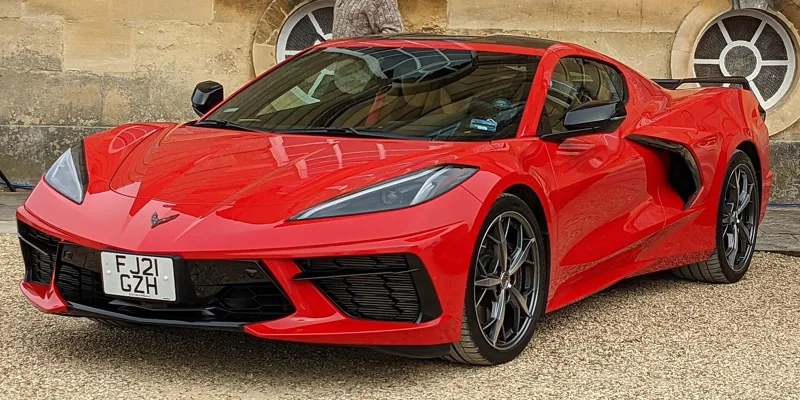
Double staggered fitment goes a step further. The front wheels are smaller in diameter and narrower, while the rear wheels are larger and wider. One pairing uses 18 x 8 in wheels ahead and 19 x 10 in wheels behind. Chevrolet Corvettes and the first and second generation Acura NSX used this layout.