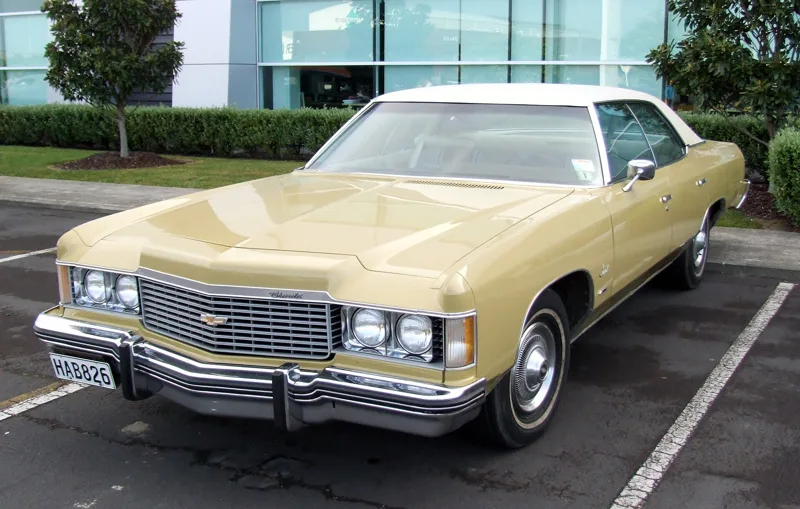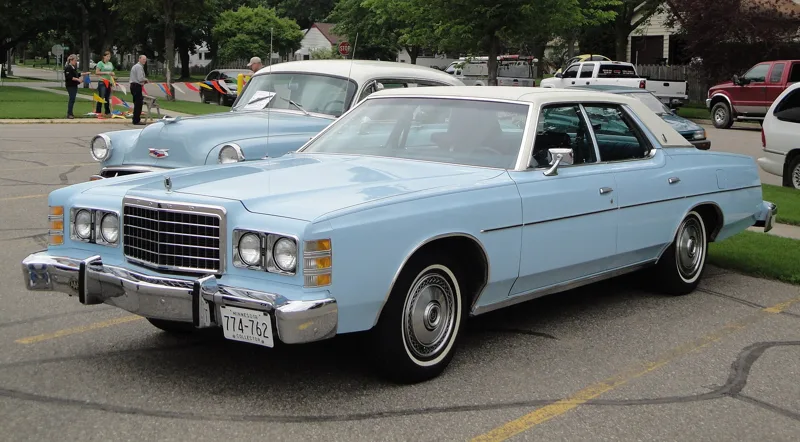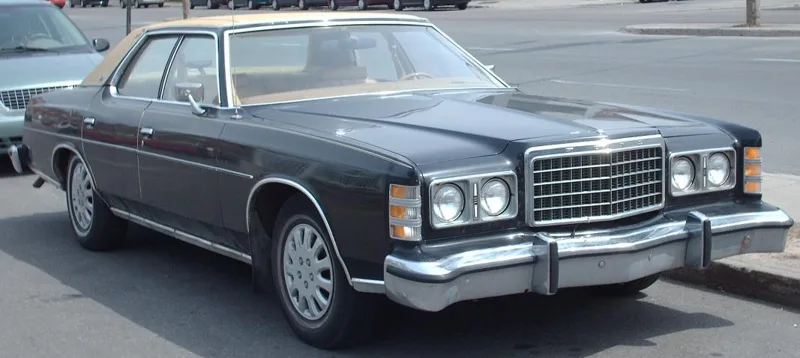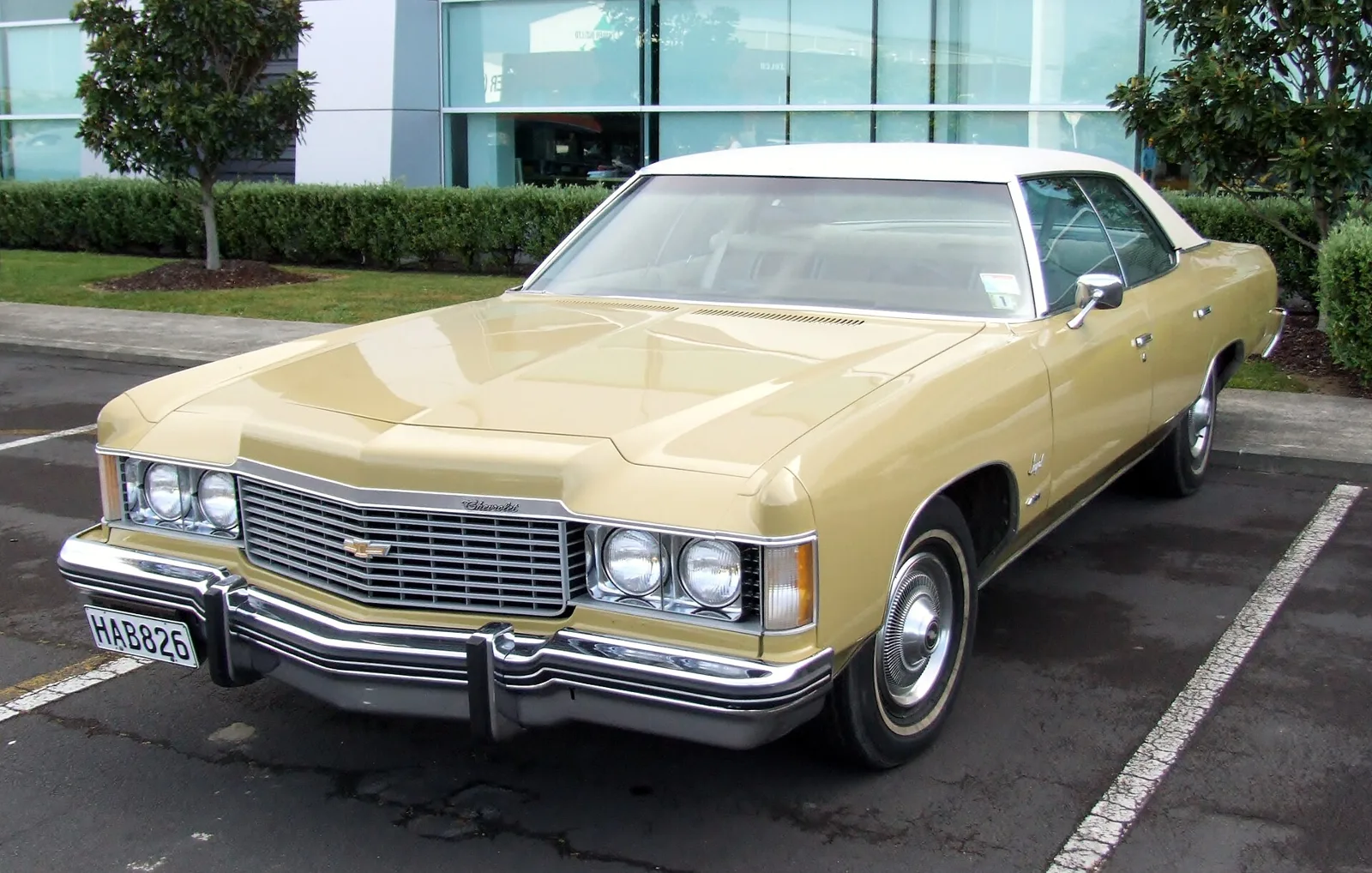
The fifth-generation Impala was the largest Chevrolet ever built, and the Ford LTD was its close rival, with both cars selling in huge numbers while the fuel crisis reshaped the market around them.
The fifth-generation Chevrolet Impala ran from 1971 to 1976 and was the largest Chevrolet ever built. The Ford LTD, in its second generation from 1969 to 1978, sold about 7,850,000 full-size Fords and Mercurys over that period, with a 460 V8 police version.
The fifth-generation Chevrolet Impala and the Ford LTD were the two big sedans that many American families bought in the early 1970s. The Impala was the largest car Chevrolet had ever offered, with a 121.5 in wheelbase, while the LTD had grown out of Ford's top full-size trim and was the chief rival of the Caprice. Both were heavy V8 cars, and both were caught out when fuel prices began to climb.
When did each car first appear?
The fifth-generation Impala ran from 1971 to 1976 and came as a four-door sedan, a four-door hardtop sport sedan, a two-door custom coupe, a two-door sport coupe and a convertible. Ford's LTD ran from 1965 to 1986, starting as the top trim of the Galaxie 500 range.
The LTD's second generation, from 1969 to 1978, overlaps the Impala's fifth generation most closely. That is the version compared here, because the two cars chased the same buyers through the decade.
Two heavy V8 sedans, one from Chevrolet and one from Ford, were both caught by the fuel crisis and both had to shrink.
Specifications side by side
| Specification | Chevrolet Impala (1971 to 1976) | Ford LTD (second generation, 1969 to 1978) |
|---|---|---|
| Wheelbase | 121.5 in; 125 in for station wagons | Lengthened by two inches for 1969 |
| Body styles | Sedan, sport sedan, custom coupe, sport coupe, convertible until 1972 | Two-door and four-door sedans; five-door station wagon at times |
| Base V8 | 350 cu in Turbo Fire at 245 hp (1971) | 302 cu in V8, the base engine |
| Top engine | 454 cu in Turbo Jet at 365 hp (1971), 235 hp by 1974 | 460 cu in V8, introduced in 1974 |
| Police option | None given | 460 Police Interceptor rated 260 net hp |
| Output | 427,000 in 1971; 597,500 in 1972; 176,376 in 1975 | Roughly 7,850,000 full-size Ford and Mercury cars over 1969 to 1978 |
| Convertibles | 6,456 built in 1972, the last Impala convertible | Two-door convertible offered at times |
| Downsizing | Downsized for 1977, the first Big Three sedan line to do so | LTD II replaced the Torino from 1977; full-size LTD downsized for 1979 |
| Price | None given | None given |
How big was the fifth-generation Impala?
The 1971 redesign made the Impala the biggest car in the Chevrolet range, and the fifth generation as a whole was the largest of the model line. The redesign brought a double-panel roof that improved protection in a rollover, along with flush outside door handles, both of which had debuted on the 1970 and a half Camaro.
The station wagon was notable for its power tailgate. The rear glass slid up into the roof while the tailgate dropped below the load floor, a first of its kind. Sister General Motors wagons from Pontiac, Oldsmobile and Buick shared the design, although later generations returned to a door-style gate.
What engines did the Impala offer?
The 1971 engine line began with a 250 cu in Turbo Thrift six rated at 145 hp, which was limited to the sedan and sport coupe. The standard V8 was the 350 cu in Turbo Fire at 245 hp, with 400 and 454 cu in options up to 365 hp.
Those ratings were on their way down. By 1972 the top engine was a 454 at 270 hp, and in California only the 350 and 400 small-block V8s were offered. By 1974 the 454 was rated at 235 hp, and the 400 came in 150 or 180 hp. Emissions rules and the move to unleaded fuel were behind much of the decline.
The 1971 cars also changed gear in other ways. Three-speed column-shift manuals were standard early in the year, but mid-year brought Turbo-Hydramatic and variable-ratio steering as standard on every V8 full-size Chevrolet.
How did the LTD start out?
The LTD began life as the top trim of Ford's full-size line, sitting on the Galaxie 500. Its name has never been fully explained, although Ford Australia later spoke of Lincoln Type Design. It moved Ford upmarket by offering features that had once been reserved for Mercury and Lincoln.
The Mercury Marquis became its divisional counterpart from 1967 to 1986, and the LTD was the largest Ford vehicle in North America through its first three generations.
Early LTDs offered a plush cloth interior, woodgrain accents and contoured seats and door panels that other Ford full-size models did not have. The 1965 options included power windows, a power driver's seat and air conditioning, and a 50/50 split bench seat called Twin Comfort Lounge arrived as an option for 1967. A four-door pillared sedan joined the range for 1967, and the Country Squire wagon carried the LTD badge from 1968. Hidden headlamps marked the top-trim LTD until 1971.
How did the second-generation LTD do?
In 1969 the LTD received a sweeping redesign, its wheelbase stretched two inches on a chassis largely shared with other Ford sedans. For the first time since the 1940s, Ford's full-size line ran on V8s alone, with a 302 cu in V8 as the base engine and the 351 cu in V8 as the most popular choice.
A 400 cu in V8 was also offered, and the 429 at the top of the range gave way to the 460 in 1974.
Ford sold a great many of these cars. Sales across the full-size Ford and Mercury family reached roughly 7,850,000 between 1969 and 1978, which put the platform second only to the Model T among Ford's best sellers.
What did the police versions offer?
The LTD's police packages were among its most important variants. The Police Package used a 351 or 400 cu in engine for city patrol, while the 460 Police Interceptor was built for heavier duty and faster pursuit. The Interceptor was rated at 260 net hp and could reach 60 mph in about eight seconds.
Quarter-mile times for the Police Interceptor were in the upper 15-second range, with top speeds above 135 mph. From 1975 to 1978 the 460 carried a C code designation, while the Police Package kept the smaller engines. Numbers like those made it a serious pursuit car for its time.
What safety features did the 1973 Impala carry?
The 1973 Impala had a larger, shock-absorbing front bumper to meet new federal rules for 5 mph impact protection. The convertible moved to the top-line Caprice Classic, so from 1973 every Impala was a closed body, a first for the name. The chassis was tuned for better handling, and square taillights sat in the carried-over rear bumper.
General Motors fitted about 1,000 Impala sedans in 1973 with its experimental Air Cushion Restraint System, an early airbag prototype with a driver unit in the steering wheel and a dual-stage passenger unit. Those cars were sold only to fleet buyers, and only one of them is known to survive today.
How did the market react to the fuel crisis?
The 1973 energy crisis set off a long climb in petrol prices, which doubled by 1979. Industry car sales fell by 20 percent between 1973 and 1974, and Americans drove less than before, a shift not seen in recent memory. Impala volume slipped to 176,376 in 1975, its lowest since 1958.
Ford's answer to the downsizing trend came with the LTD II for 1977. Built on the Torino, it was a deliberately smaller car that Ford advertised beside a Cadillac Fleetwood Brougham to show how close the dimensions were. The LTD II ended after 1979, with nothing to replace it.
How did the LTD keep up with the downsizing trend?
General Motors became the first American maker to sell downsized full-size sedans, starting with the 1977 model year. Ford answered with the LTD II that year, but the more radical change came for 1979, when the LTD was rebuilt on the rear-wheel-drive Panther platform.
The new car was about 15 inches shorter with a wheelbase 7 inches shorter, and it shed more than 700 lb of curb weight.
The Panther car kept V8s as standard equipment, forgoing diesels and six-cylinder engines even as rivals moved away from V8s. The base engine was a 302 cu in V8 with a 351 optional. For 1981 the base unit became a 4.2-litre V8 rated at 115 hp, the lowest figure for a Ford V8 since the 1953 Flathead.
How did the 1971 model year start out?
The 1971 model year was shaped by a 67-day strike across General Motors, which began in September 1970 after new-model production had already started. Even so, Impala output reached 427,000 units, of which only 2,300 carried six-cylinder engines and 425,400 had V8s.
Other 1971 totals were 91,300 Caprices, 37,600 Biscaynes, 20,000 Bel Airs and 91,300 station wagons across all series. Power front disc brakes and an inside hood release were newly standard.
The redesigned body introduced a double-panel roof and flush outside door handles, and it brought a revised Astro-Ventilation system that drew air through grilles in the trunk lid. That system proved troublesome, and for 1972 the vents moved to the door jambs. A lower grille that extended beneath the bumper and taillights set into the bumper itself also arrived that year.
What changed on the Impala's way to 1976?
The 1973 Impala's convertible story had ended a year earlier. The 1972 car was the last Impala convertible. It sold 6,456 units, enough for fourth place among convertibles that included the Corvette and the Cutlass Supreme, and it stayed just ahead of the Mustang's 6,401 units.
The 1974 model brought a limited-edition Spirit of America package on the Sport Coupe, with white paint, a white full vinyl top and red or blue trim. The Custom Coupe lost its hardtop roof that year, and the Sport Coupe became a narrower fastback. The Sport Coupe ended after 1975, which left the Custom Coupe as the only two-door Impala for 1976. The 1975 speedometers read up to 100 mph, with kilometres per hour added alongside. That year's Landau package brought an elk-grained vinyl roof with a chrome band across it, colour choices, dual remote mirrors and pin-striping.
Which full-size car suits which buyer?
A buyer who wanted a Chevrolet with the largest body the brand had produced, a choice of V8 engines and a convertible in the early years had the Impala. A buyer who wanted a Ford with a long production run, a police-grade V8 and a family of sedans and wagons had the LTD.
The two cars shared the same market and the same fuel crisis, and the figures do not single out one as the better car.