Harry Weslake's naturally aspirated V12 raced for Dan Gurney, Ford's endurance project and BRM between 1966 and 1992, but no road car ever carried it.
The Weslake V12 was a naturally aspirated 60-degree racing V12 built between 1966 and 1992. Designed by Harry Weslake's Rye firm, it raced in Formula One and endurance events. Its Gurney-Weslake Type 58 debuted with 364 bhp, and no road car ever carried it.
The Weslake V12 was a naturally aspirated, four-stroke 60-degree V12 racing engine built between 1966 and 1992. It came in two main families, the Gurney-Weslake Type 58 and the Ford-Weslake WRP-190, and a later redesign called the BRM Type 290 powered the BRM P351 at Le Mans in 1992.
What was the Weslake V12 and where did it start?
The Weslake V12 came from Weslake, an engineering firm based in Rye, East Sussex, that was founded by Harry Weslake. The firm was known for its work on airflow and combustion chamber shape, and it became the research division for British Racing Motors (BRM) on advanced projects. That relationship produced the V12 design when the FIA set a new 3.0-litre limit for naturally aspirated Formula One engines from 1966.
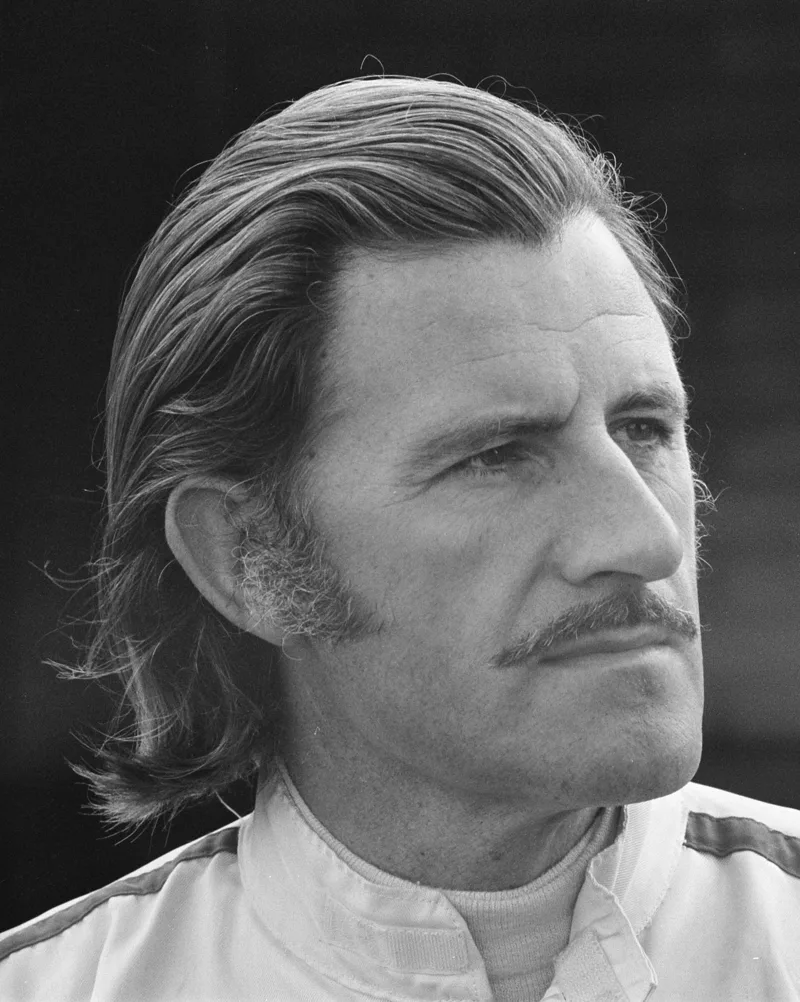
Harry Weslake's company had already helped BRM with its 1.5-litre F1 V8, which powered the team and Graham Hill to the 1962 world championships. Rubery Owen, which owned BRM, acquired 20% of the shares in Weslake, and BRM sent its former chief engineer Peter Berthon and design engineer Frank Aubrey Woods to the Rye works. Shell and its Technology Centre also worked closely with Weslake on the research programme.
A four-valve V12 that won two races for Gurney and then passed through four owners without ever reaching the road.
Why did BRM and Weslake split over the V12?
BRM's technical director, Tony Rudd, resisted the four-valve layout that Berthon and Harry Weslake proposed, so BRM committed to a two-valve H16 and allowed Weslake to continue with its V12. Shell built single-cylinder test engines for each design. The single-cylinder test of the Weslake design gave 158 bhp (118 kW) per litre, and a later Shell twin-cylinder test gave 160 bhp (120 kW) per litre.
The arrangement did not last. BRM's H16 proved too unreliable to compete, and once the three-year agreement with Weslake ran out, the partnership ended and the V12 was put aside. The design did not disappear, however, because Dan Gurney's team took up the Weslake work in its own engine programme.
How was the Gurney-Weslake Type 58 built?
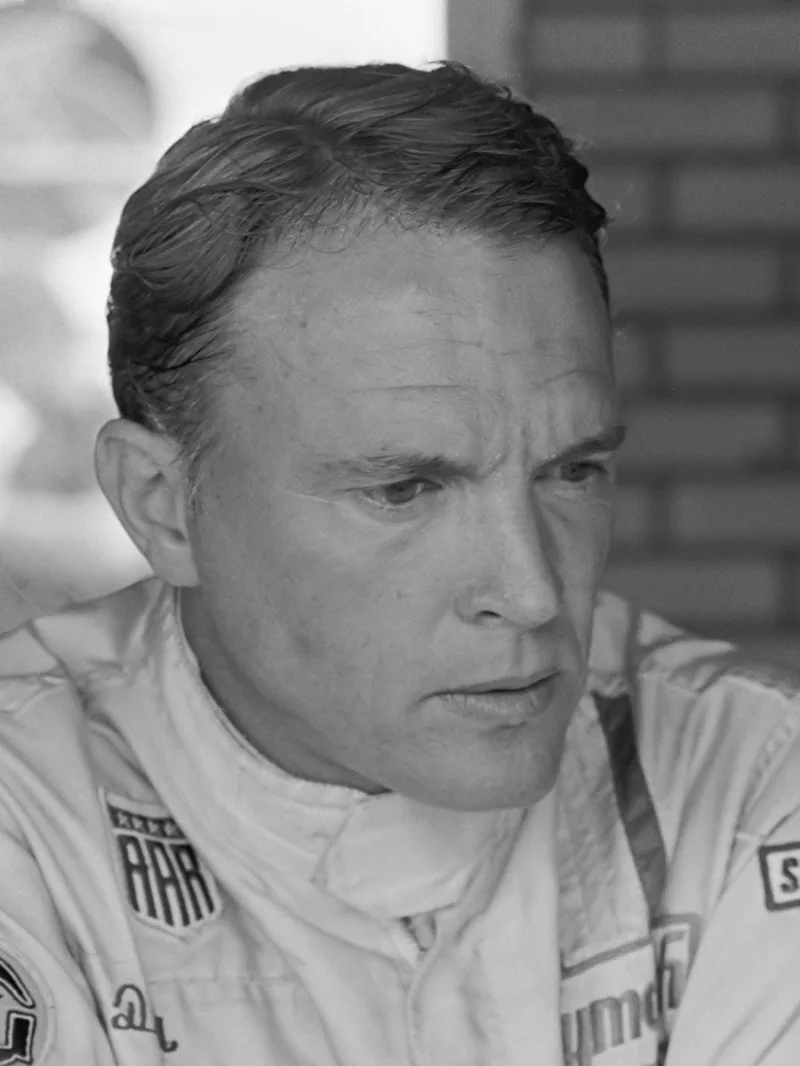
The Gurney-Weslake Type 58 was built to a specification of a naturally aspirated 3.0-litre DOHC 12-cylinder with cylinder banks set at 60 degrees. In October 1965 Gurney's company, All American Racers (AAR), commissioned six engines numbered 5801 to 5806 for its Eagle Mk1 car. Aubrey Woods led the design, and the first engines were initially called the Weslake WRP 58 before the Type 58 name took over.
The layout carried over ideas from BRM's earlier V8s. The crankcase had seven main bearings to carry the extra pistons, and the connecting rods were titanium parts from BRM. Each cylinder had four valves with a 30-degree included angle, and both banks shared a single cylinder head casting. Bore and stroke were 72.8 mm x 60 mm (2.87 in x 2.36 in), giving a displacement of 2,997 cc (182.9 cu in) and a compression ratio of 12:1. Early engines weighed 177 kg (390.2 lb), heavier than the Cosworth DFV, which weighed 167.8 kg (370 lb).
What were the Weslake V12 specifications?
| Engine | Period | Displacement | Bore x stroke | Notable output |
|---|---|---|---|---|
| Gurney-Weslake Type 58 | 1966 to 1968 | 2,997 cc (182.9 cu in) | 72.8 mm x 60 mm (2.87 in x 2.36 in) | 364 bhp (271 kW) at debut; 422 bhp (315 kW) on test |
| Ford-Weslake WRP-190 | Developed from 1970 | 2,995 cc (182.8 cu in) | 75 mm x 56.5 mm (3.0 in x 2.2 in) | Rejected after tests in a Mirage M6 |
| BRM Type 290 | Raced in 1992 | 3,494 cc | 81 mm bore (3.19 in) | 625 bhp (466 kW) at 11,500 rpm, reported |
How much power did the Type 58 make?
The Type 58 debuted at the 1966 Italian Grand Prix with 364 bhp (271 kW), and that figure rose to 390 bhp (290 kW) during the winter. At the 1967 Race of Champions, Gurney's engine gave 413 bhp (308 kW) and Richie Ginther's gave 409 bhp (305 kW), and on test up to 422 bhp (315 kW) was achieved.
At Monaco, Gurney's engine made 411 bhp (306 kW) and Ginther's 417 bhp (311 kW). Quotes of 416 bhp (310 kW) followed later in 1967, and the engines topped out near 10,000 rpm. Some figures put the engine at 442 bhp (330 kW) early in 1968, yet a test at the BRM factory recorded only 378 bhp once the money had dried up. Weslake's reported ultimate goal was 500 bhp (370 kW) at 12,000 rpm, a target that was never reached.
Which races did the Gurney-Weslake engine win?
Gurney took the 1967 Race of Champions, which did not count towards the championship, and the 1967 Belgian Grand Prix in an Eagle-Weslake. Those wins came from a V12 whose development was dogged by overheating and poor oil scavenging, both of which remained serious problems through the programme.
Reliability was not helped by the machinery used to make the parts. Weslake's machine tools were Royal Navy surplus, and some dated back to the First World War. Many of the failures that did occur came from ancillaries rather than the main components. Beatrice Shilling, the British engineer, consulted Weslake on some of the problems the team encountered.
Why did AAR bring engine production in-house?
In October 1967 Weslake became a parts supplier only, with AAR taking over engine assembly. A run of engine failures at the South African Grand Prix in January 1968 convinced AAR to build its own engines entirely. Doug Orchard, formerly of Vanwall, became chief engine fitter, Robert Richards of Cosworth assisted him, and Aubrey Woods left Weslake to become AAR's chief engineer.
AAR's engine group moved into its new facility in May 1968 and borrowed a dynamometer from BRM, where Tony Rudd's team measured the engine at only 385-390 bhp (287-291 kW). That was 42 bhp (31 kW) below the lowest figure Weslake had ever reported. AAR cut weight to 150 kg (331 lb), recasting some parts in magnesium, and it found that the crankcase pressurisation and poor oil scavenging were caused by thermal expansion of the block and by using only two piston rings.
The fixes included deep-skirted pistons with three rings and shorter titanium connecting rods on a new crankshaft. The cam covers were renamed Eagle Mark-1A, and the upgraded engine first appeared at Monaco in 1968. The last Gurney-Weslake race was the 1968 Italian Grand Prix.
What was the Ford-Weslake WRP-190?
The WRP-190 was a 3.0-litre 60-degree V12 built for Ford's sports car programme, after Walter Hayes pledged 30,000 pounds to a new V12 for the John Wyer Automotive Engineering (JWAE) Gulf endurance cars. Michael Daniel, Harry Weslake's son-in-law, headed the design. It used double overhead camshafts, four valves per cylinder and dry cylinder liners in an aluminium block.
The cylinders measured 75 mm x 56.5 mm (3.0 in x 2.2 in), giving 2,995 cc (182.8 cu in). Each pent-roof chamber had a 22-degree included valve angle, and the engine weighed 175 kg (386 lb) including the clutch housing and flywheel. Gulf rejected the engine after tests in a Mirage M6, and the Brabham F1 team also evaluated it and turned it down. Weslake sued JWAE, and Ford pulled out of the project. Ford also declined to buy the design rights from Weslake.
What happened to the Weslake V12 after Ford?
After Ford stepped back, the rights passed through several owners. Lynx Engineering bought them for 10,000 pounds. Lynx specialised in customised Jaguars and was owned by Guy Black, a former Weslake engineer. It planned a Le Mans car but could not secure sponsorship, and it sold the engine after building one V12 into a Jaguar D-Type replica.
Aston Martin Lagonda then ran Project DP1080 to develop the engine as the basis of a road car. When it could not reach the horsepower target or the 4.0-litre goal, it sold the design. The rights finally went to JHS Engines Ltd, whose principals included former Cosworth employees Graham Dale-Jones and Terry Hoyle. JHS removed the dry liners, used Nikasil-coated bores and increased the bore to 81 mm (3.19 in), which took displacement to 3,494 cc.
Ricardo Engineering assisted with development, and John Mangoletsi agreed to build a Group C car for the engine. Rubery Owen sponsored the programme and revived the BRM name, calling the engine the BRM Type 290. Five engines were built, each reportedly good for 625 bhp (466 kW) at 11,500 rpm. The BRM P351 raced at Silverstone and Le Mans in 1992 but did poorly, and the last track appearance of the Type 290 came in an Arrows chassis in the 1998 and 1999 BOSS GP series.
A road car, the BRM P401, was planned around an enlarged, supercharged version of the Type 290. It progressed only to the clay model stage, so the Weslake V12 never became a production car.
Why did the Weslake V12 never reach a road car?
Road-car plans were discussed more than once, but none of them came to anything. The engine was built as a racing unit, and overheating and poor oil scavenging were among its most serious problems. Those faults matter far more in a road car, where long service life is the requirement rather than a few race weekends.
The engine also passed through too many hands to build the sustained development a road car needs. Weslake's dealings with BRM, Gurney's AAR, Ford and then Lynx each ended with the rights moving on. People moved between the firms as well, and Aubrey Woods went from Weslake to become AAR's chief engineer, so some of the knowledge travelled even when the engine did not.
Looking back, the Weslake V12 is best remembered as a racing engine. Its 1967 wins with Gurney, its place in BRM's research programme and its later life in the Type 290 all show an ambitious design that was short on reliability and was never built into a production car.