A 2.5 to 3.0 litre V6 built by a three-way alliance, from its 1974 Volvo debut to a turbocharged Renault era and the Le Mans speed record set by a PRV-powered car.
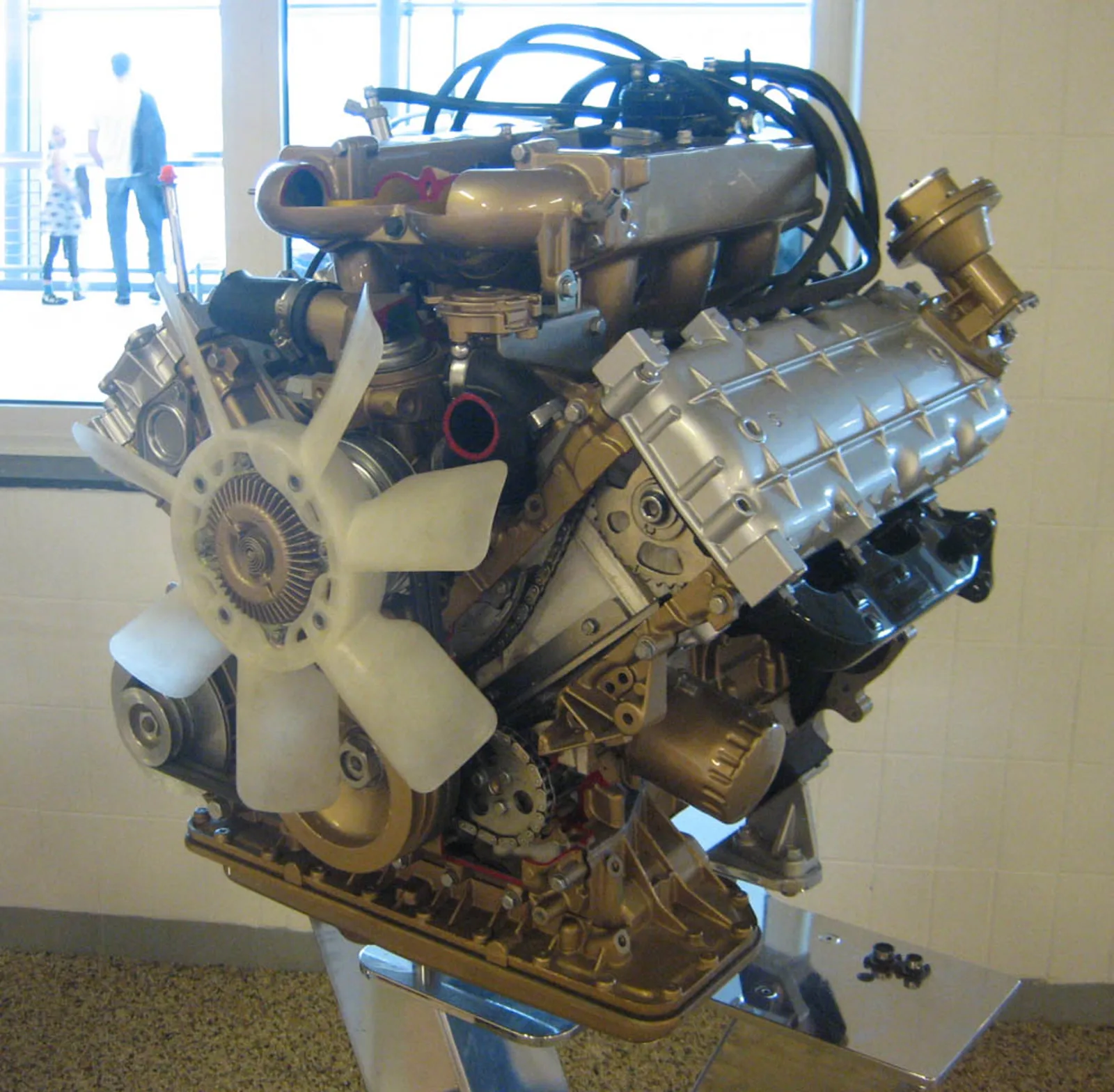
The PRV engine is a V6 built by PRV, the alliance of Peugeot, Renault and Volvo. Produced from 1974 to 1998 in displacements from 2.5 to 3.0 litres, it was used in cars from Volvo, Renault, Peugeot and Citroen, and it began life as a planned V8.
The PRV engine is a V6 built for an alliance of Peugeot, Renault and Volvo. It was sold from 1974 to 1998 in four displacements between 2.5 and 3.0 litres, and it appeared in SOHC and DOHC forms with two or four valves per cylinder. It was replaced after 1994 by a new engine jointly developed by PSA and Renault.
Where did the PRV engine come from?
Peugeot and Renault signed a cooperation agreement in 1966 to share common components. Their first joint subsidiary, La Francaise de Mecanique, was launched in 1969, with its factory at Douvrin near Lens in northern France. Volvo joined in 1971, and the three companies created PRV as an equally held public limited company.
PRV first planned a V8, but the plan was scrapped in favour of a smaller and more fuel-efficient V6. The 1973 energy crisis and taxes on engines above 2.8 litres made large V8s less attractive, and Renault also needed a V6 for its new Renault 30. Renault's internal name for the engine was Z-Type.
A three-maker V6 with an uneven firing order, a turbo second generation and a 1988 Le Mans speed trap record.
When did the PRV go into production?
The first engines reached the market on 3 October 1974, in the Volvo 264 that Volvo designated the B27. Adoption was swift, and by the close of 1975 the V6 was in at least five models.
The machinery for assembling the engines had arrived at Douvrin in June 1973, and the buildings were finished in January 1974. The engines are sometimes referred to as Douvrin engines, a name that is more commonly applied to a family of straight-fours made at the same plant.
Production finally stopped on 15 June 1998, after 970,315 units had been built. Peugeot, Renault and Citroen used the engine until 1997, and it was replaced after 1994 by an engine jointly developed by PSA and Renault, known as the ES at PSA and the L at Renault.
How was the PRV engineered?
The original work was done on a V8 with a 90-degree bank angle, and that layout survived in the V6. Even firing intervals come from banks set at 120 degrees, while a 90-degree V6 fires unevenly unless its crankshaft journals are split. First-generation PRV engines (1974 to 1985) therefore had an uneven firing order.
The second generation, introduced in 1984 in the Renault 25 Turbo, used split crankshaft journals to create evenly spaced ignition events. The Maserati V6 used in the Citroen SM followed a similar pattern of development, and the PRV's crankpins were set 120 degrees apart.
Which cars used the PRV engine?
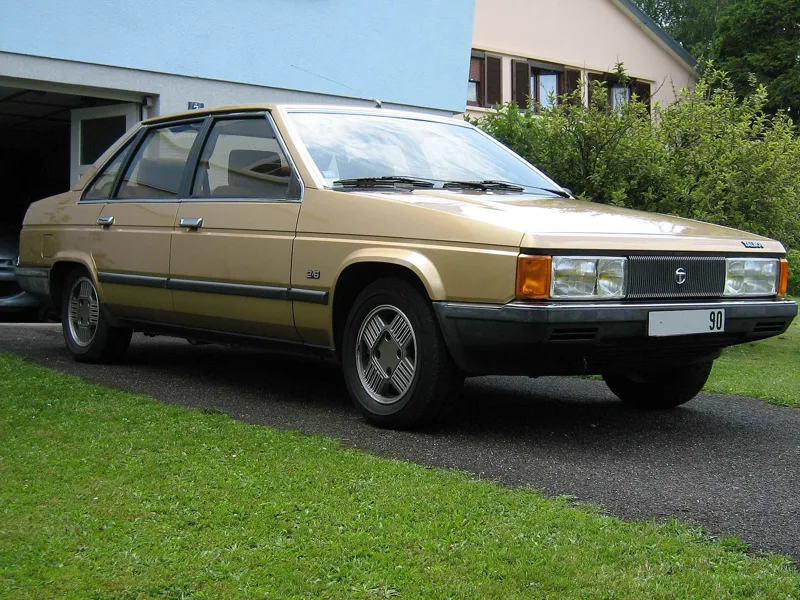
The engine was used in saloons, estates, sports cars and the DeLorean. The table below lists some of the main cars and their years of production.
| Car | Years | Notes |
|---|---|---|
| Volvo 264 and 265 | 1974 to 1980 | The first PRV car, using the B27 engine |
| DMC DeLorean | 1981 to 1983 | Fuel-injected version, ZMJ-159 |
| Renault 25 | 1984 to 1988 | 2664 cc; turbo models used 2458 cc from 1985 |
| Peugeot 505 | 1986 to 1992 | 2849 cc fuel-injected version |
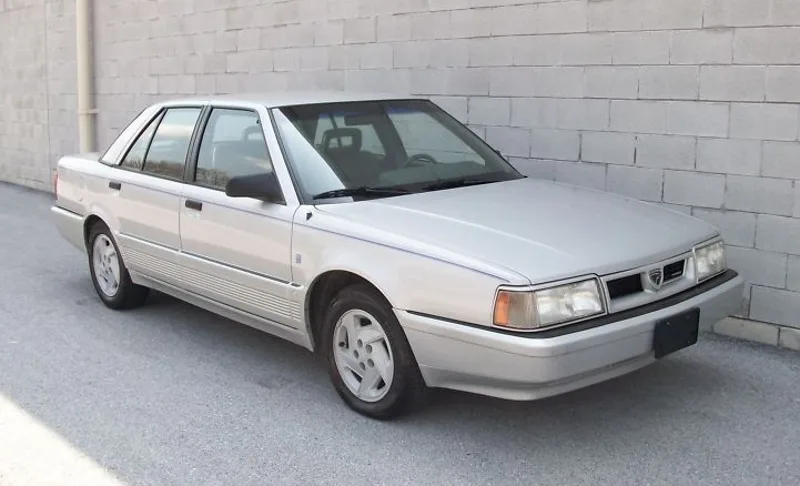
| Eagle Premier | 1988 to 1992 | 2975 cc |
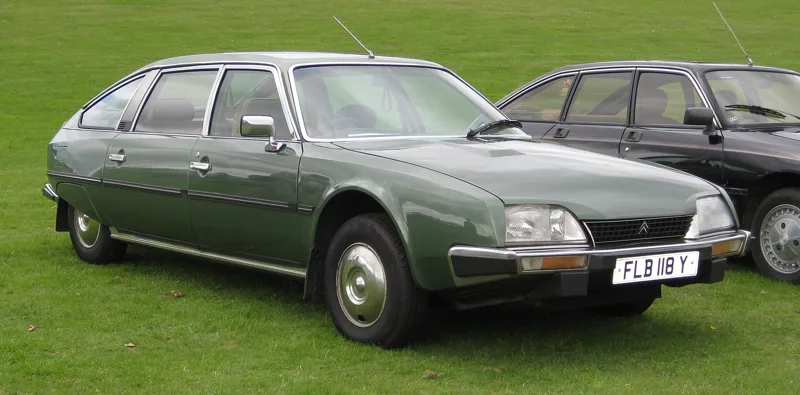
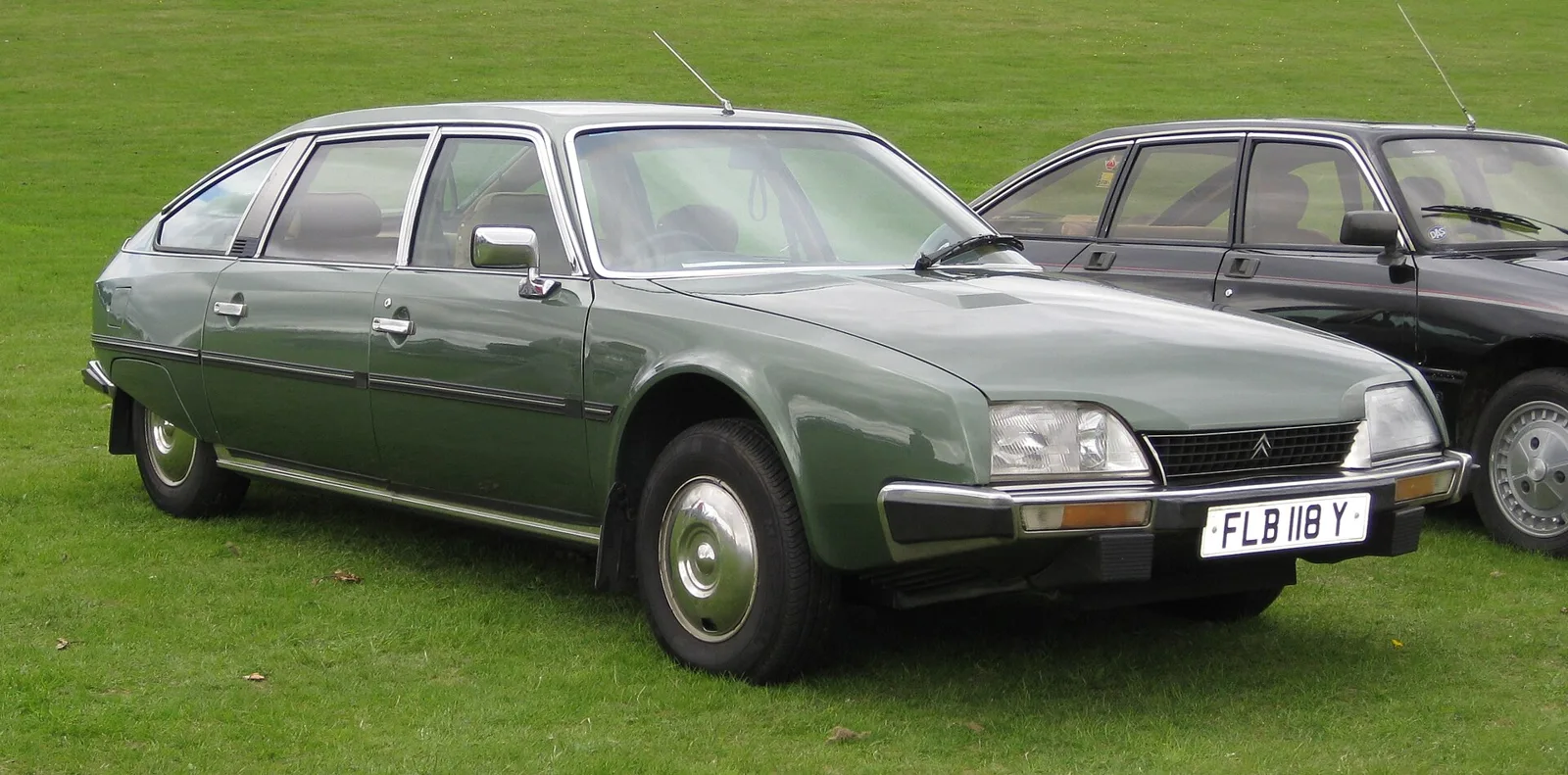
| Citroen XM | 1989 to 1997 | 2975 cc at first, then 2963 cc |
| Renault Safrane | 1992 to 1997 | 2963 cc, including a bi-turbo version |
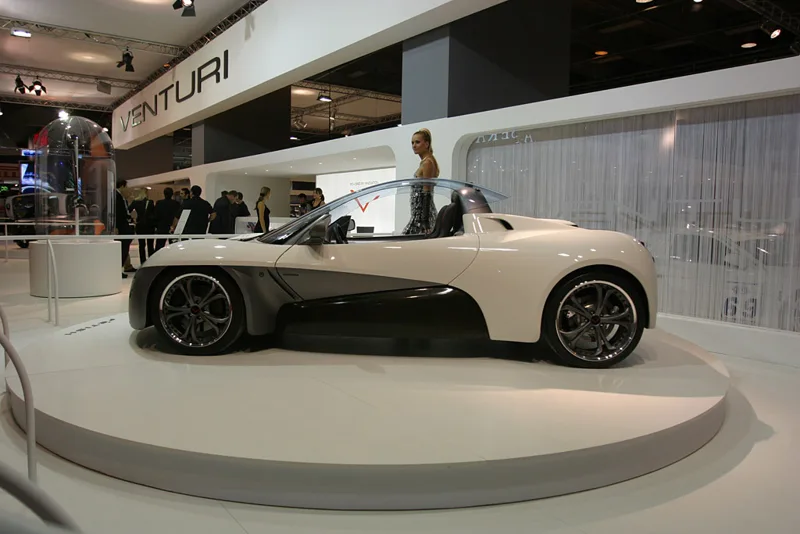
| Venturi 400 | 1994 to 1997 | 2975 cc |
Volvo itself used the engine across several generations. The B27 powered the 264 and 265 until 1980, and the B28 followed in the 264 and 265 and in the Volvo 760 from 1982 to 1986. The final Volvo version was the B280, which was installed in the 760 and 780 from 1987 to 1990.
Why did the 1984 turbo version matter?
The first commercially available turbocharged PRV was sold in the Renault 25 V6 Turbo in 1984. It was the first of the second generation, and it was also the first electronic fuel-injected engine of any sort in the family.
Turbocharged versions went on to power the Renault Alpine GTA V6 Turbo, the Renault Alpine A610 and the Renault Safrane Bi-turbo. Venturi also developed its own turbo PRVs, which it used in the Atlantique 300 and the 600LM race car.
How did the PRV perform in motorsport?
Peugeot's racing team, WM Peugeot, produced the only double-overhead-cam PRV, which was used in its endurance prototypes. The team's P88 holds the speed trap record on the Mulsanne Straight at the 24 Hours of Le Mans, with 407 km/h (253 mph) recorded in 1988.
Venturi raced its turbo PRVs at Le Mans with the 600LM, which used a twin-turbo 3.0-litre unit producing over 450 kW (610 hp) in race trim. Other PRV-powered race cars included the Chevron B36, which ran at the 1987 24 Hours of Le Mans, and the ALD C289, which ran at the 1992 event.
How did the PRV engine end?
Volvo began to withdraw from the consortium in the late 1980s. The 1991 model year was the last for the PRV in a Volvo, and the company moved to its own in-house inline engines, including a new six-cylinder that replaced the PRV in the 960.
Peugeot, Renault and Citroen continued to use the engine until 1997, and production was stopped on 15 June 1998. By then the engine had been built in 970,315 examples over a little more than two decades.
What were the main PRV variants?
The engine came in carburetted and fuel-injected forms, with low-compression and turbocharged versions added for particular cars. The Volvo 260 used carburetted B27A and B28A units, plus fuel-injected B27E and B28E versions, and a low-compression fuel-injected B27F.
Peugeot's 505 used Bosch LH-Jetronic injection in its ZN3J 154F and catalysed ZN3J 154X versions, while the 605 and XM used the ZPJ S6A and the multivalve ZPJ4 SKZ. The Renault 25 V6 Turbo used the Z7U-702, and the turbocharged Alpine GTA used the Z7U-730.
How did Peugeot and Citroen develop the PRV?
Peugeot and Citroen developed their own 24-valve engines as an option in the 605 and XM. The engine kept the same compression as the 12-valve unit, but the pistons and some timing gear were different, and the heads were re-engineered to make maintenance easier.
The 24-valve engine was expensive and suffered cam wear, because the exhaust valves shared a single lobe while each inlet valve had its own. The problem was partly solved with ceramic followers, which were added as one of a succession of recalls.
Was the PRV used in the Alfa Romeo 155?
From the Silverstone round onwards, the 1996 DTM and ITC seasons used a 90-degree V6 in the Alfa Romeo 155 V6 Ti. Its engine rules required a production-based bank separation angle and cylinder bore spacing, and a 90-degree V6 has more room between the banks for a better induction system.
Alfa Romeo reportedly based the engine on the PRV because the PRV had been used in the Lancia Thema, which shared its platform with the Alfa Romeo 164. Other sources instead link the engine to a 1970 Alfa Romeo Montreal V8 with two cylinders removed, although the homologation papers describe a V6 instead.
Across its life the engine kept the same basic block from the B27 to the B280, while much else changed. The DMC DeLorean also used a fuel-injected version between 1981 and 1983.