Before automatics took over, a driver could choose the next gear in advance and let the gearbox handle the timing. Walter Wilson's epicyclic design led the field.
A preselector gearbox let the driver pick the next ratio in advance, with the change made when a pedal was pressed. Walter Wilson's epicyclic design of 1928 was the best-known type. Preselectors appeared in 1930s cars, British buses from 1940 to 1960 and some armoured vehicles.
A preselector gearbox is a transmission in which the driver chooses the next gear in advance, and the change happens only when a pedal is pressed. The type spread through 1930s passenger cars and racing machines, British buses from about 1940 to 1960, and armoured vehicles for much of the period up to the 1970s. The best-known version, the Wilson design, used epicyclic gears operated by brake bands.
What is a preselector gearbox?
A preselector gearbox is a manual-type transmission on which the driver chooses the next gear with a lever while the current gear stays engaged. A pedal then carries out the change, so the driver does not have to time a clutch and lever together. Most preselector designs avoid a driver-operated clutch, though a few use one only for starting.
Drivers no longer had to time the clutch and lever themselves to shift smoothly, and that was the main selling point.
Makers often advertised these gearboxes as self-changing. That was a stretch, since the driver still chose each gear. A true self-changing gearbox is an automatic, which needs no driver input to change gear.
The driver still chose every gear, but the gearbox did the timing, and that was the whole appeal.
Why were preselectors easier than crash gearboxes?
Before synchromesh became common, a non-synchromesh manual, sometimes called a crash gearbox, demanded skilled timing, including double de-clutching. Preselectors removed much of that skill. They also shifted faster, handled bigger outputs and could change gear under load. Many designs also used brakes rather than clutches for friction, which made the wearing parts simpler to maintain.
That brake-based friction had a practical advantage. Non-rotating brake bands wore in place of rotating clutch plates, and the wearing parts could sit on the outside of the mechanism, where they were easy to reach and adjust. In that respect a Wilson box was simpler to service than a comparable clutch-based unit.
How did the Wilson gearbox work?
The Wilson gearbox used epicyclic gear sets that stayed permanently in mesh, so no gear teeth had to slide into place. Brake bands held each set's outer ring, and a rotating cam chose which band engaged. A toggle mechanism multiplied the force of the foot pedal so that the bands could be held in place.
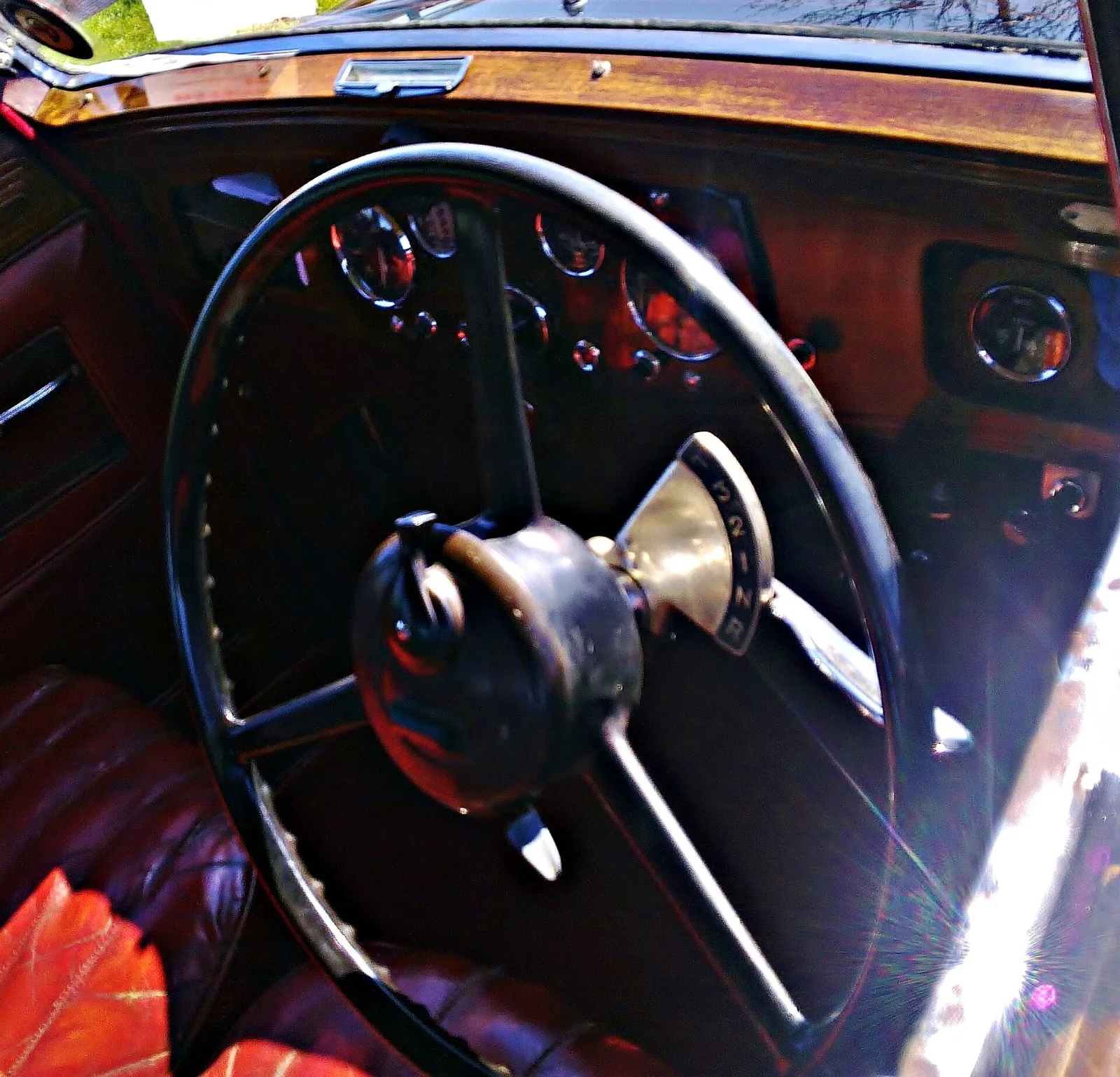
Changing gear started with the lever on the steering wheel, which selected the next band. Pressing the pedal sent a spring-loaded row of levers against linkages set by the selection camshaft. Where a linkage was held in place, the lever pressed the toggle that locked the band, and the lock stayed until the pedal was pressed again.
Walter Wilson had earlier roots. A manually controlled epicyclic gearbox appeared in the 1901 to 1904 Wilson-Pilcher cars, and Lanchester built cars with epicyclic boxes from 1900. Wilson also co-invented the armoured tank, and the 1918 Mark V tank used an epicyclic steering gearbox of his design.
Each higher ratio in the Wilson box was built by compounding the reduction provided by the gear before it. Four gears were a real step forward for the time, and the same epicyclic arrangement later became the basis for post-war automatic transmissions. Those automatics, however, used a torque converter, so they could run with fewer, wider-spaced ratios.
| Design | Maker or designer | Key feature | Where it was used |
|---|---|---|---|
| Wilson | Walter Gordon Wilson | Epicyclic sets with brake bands and toggle actuation | Cars, railcars and buses |
| Cotal | Cotal | Electromagnetic clutches instead of band brakes | French luxury cars, 1920s and 1930s |
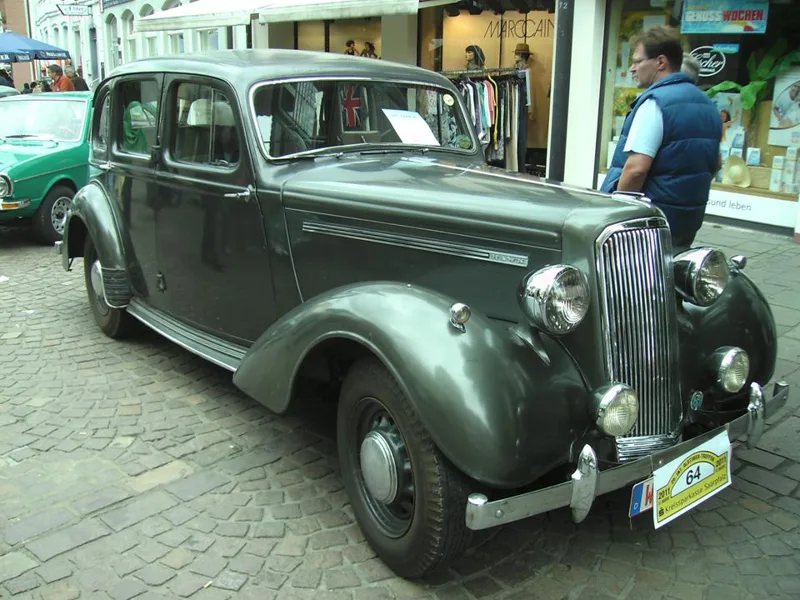
| Laycock-de Normanville | Laycock-de Normanville | Direct hydraulic actuation of the bands from a steering column lever | Humber cars, 1930s |
| Roesch accelerating gearbox | Georges Roesch | Automatic preselection of first, third and fourth gears | Talbot cars, 1932 to 1935 |
| Tiger I gearbox | Maybach | Eight ratios with three hydraulic cylinders | German Tiger I tank, 1942 to 1945 |
Which cars and racers used preselectors?
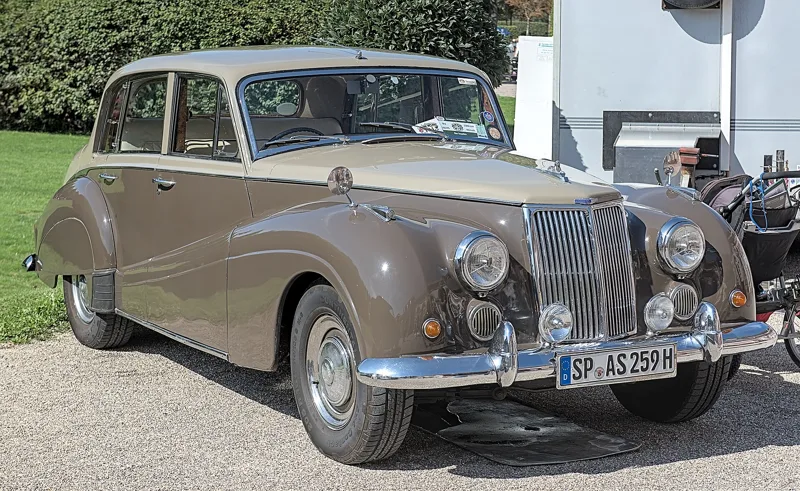
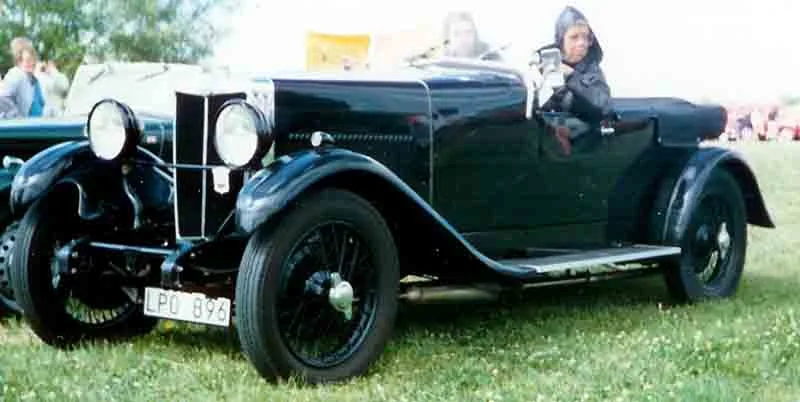
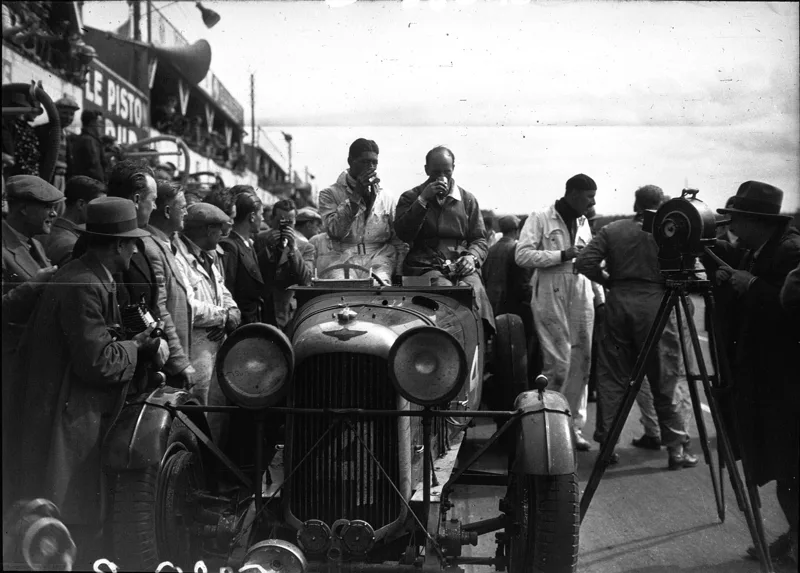
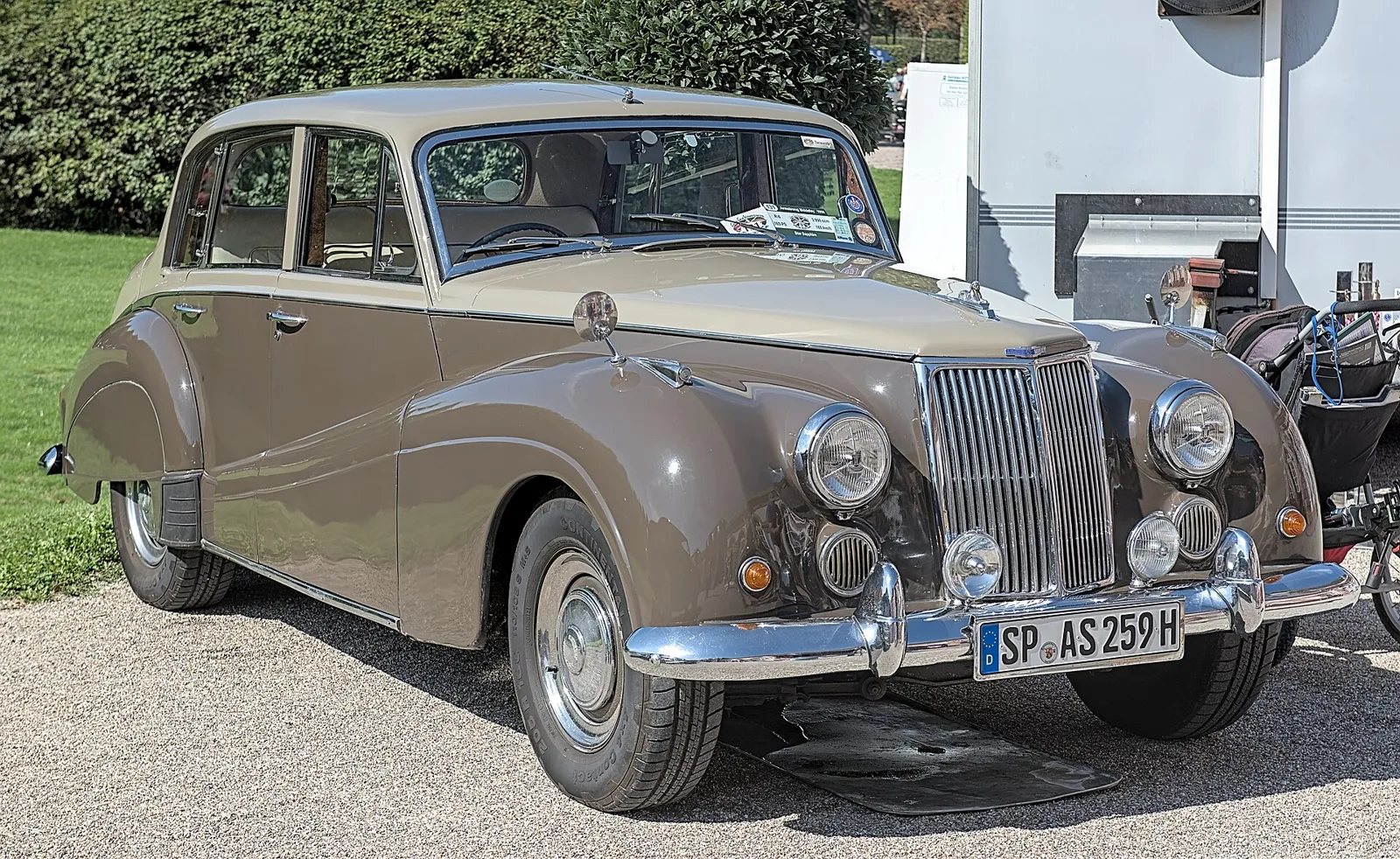
Preselectors were fitted to a long list of 1930s cars, from Armstrong Siddeley, Daimler and Lanchester to MG, Riley and Lagonda. Racing machines included the 1935 ERA R4D and the Auto Union Silver Arrows in hill climbs. Later cars, such as the 1948 Tucker 48, also used the type.
Touring cars such as the Daimler used a fluid flywheel, Armstrong Siddeley used a centrifugal clutch, and sports cars used the Newton centrifugal clutch, which engaged once the engine had built up speed. Pure racers such as the ERA dispensed with a clutch altogether and used the band brake on lowest gear to start. By November 1933 Daimler reported more than 11,000 vehicles with its fluid flywheel transmission, from 10 hp cars up to double-deck buses.
Why were preselector buses so common in Britain?
Several British bus makers, including Leyland, Daimler and AEC, built preselector buses from about 1940 to 1960. London's buses often had a very low first gear used only on hills. Drivers preselected second and then third while the bus was still stationary, so a pull-away needed only the accelerator.
The AEC RT, a common London bus of the period, used compressed air to actuate its gear shifts, while other makers relied on mechanical linkage. Buses also went abroad. AEC Regent III buses with Wilson gearboxes ran in Western Australia from 1950 until 1976.
Where else were preselectors used?
Preselector transmissions also appeared in railcars, motorcycles and armoured vehicles. The Tiger I tank used a Maybach preselector with eight ratios, selected hydraulically. Early GWR Flying Banana railcars used an AEC engine and a Wilson gearbox, and some 1950s James motorcycles used Villiers engines.
The Tiger I's gearbox had three hydraulic cylinders, each with two positions, controlling dog clutches on four shafts. Those cylinders gave eight ratios, although reverse was limited to the lowest four. In 1943 the British studied a captured Tiger I gearbox, with the report carried out by Armstrong Siddeley. A single-ratio-per-clutch design had been tested much earlier, at the Oldbury trials of March 1917 on British heavy tanks.
Why did preselector gearboxes disappear?
Preselectors gave way to automatic transmissions, which used torque converters and fewer ratios to suit large American V8 engines. Automated clutches and dual-clutch systems later took over the job of quick shifting. Isuzu's NAVi5 of 1985 was an early automated manual, and the type spread through the 1990s.
Semi-automatic systems automated only the clutch, appearing from the mid-1930s and surviving until around the early 1990s. Multi-clutch designs avoid shifting altogether by using a separate clutch for each ratio, while dual-clutch gearboxes pair two gearboxes with two clutches. A dual-clutch shift is quick when the computer predicts the next ratio correctly, but a wrong guess slows the change.
Brockhouse developed the Maxwell design, a four-speed with four wet clutches, for urban buses in the UK in the early 1980s. Early units gained a reputation for unreliability, so Brockhouse licensed the design to Avon Maxwell Transmissions in 1985, and its clutches could be serviced from outside the engine.
How did the other preselector designs differ from Wilson?
Cotal used electromagnetic clutches instead of brake bands, so the gears engaged by switch and relay. De Normanville used direct hydraulic actuation from a column lever, removing the need for a change pedal. Both avoided the Wilson's cam and toggle arrangement.
The Cotal design had a weakness. Its clutches needed electrical power, so a failure of supply left the car with no drive from the engine. The controls were a simple dashboard or column-mounted switch working through relays, with no mechanical servo action.
The Talbot accelerating gearbox, designed by Georges Roesch and based on the Wilson patents, was revised extensively in design and materials. It was lighter and tolerated three times the power the Wilson could handle. Talbot later added a centrifugal device called the Traffic Clutch, two radially swinging shoes working like a drum brake, after early versions had no clutch at all.
Marcel Viratelle patented a three-speed motorcycle gearbox in France in 1906. It was compact in both design and production, and it stands among the earliest examples of the type.
How did drivers start a preselector vehicle?
Starting depended on the design. With a fluid flywheel or centrifugal clutch, the driver selected first gear and the clutch engaged once the accelerator was pressed. Other cars used the gear change pedal as a clutch when pulling away from rest.
Racing Wilson boxes without a clutch relied on a band brake on lowest gear, which the driver let in progressively to get away. Touring Wilson boxes were easier, because the centrifugal device or fluid coupling took up the drive smoothly.
Bus drivers prepared the box while stationary. The pedal engaged the transmission, a higher ratio was then waiting in the selector, and the accelerator alone got the vehicle moving.
On the 1950s James motorcycles the sequence was more hands-on. The rider pressed the pedal to select first, squeezed the clutch lever and released it, and the gear took up the drive as the lever came back. Selecting second required the same routine again.
What were multi-clutch gearboxes and how did the Maxwell design work?
A multi-clutch gearbox avoids shifting by giving each ratio its own shaft and clutch, interlocked so that only one engages at a time. The Maxwell bus design of the early 1980s used four wet clutches, which could be serviced without removing the engine. Its first and second gears could even engage together, acting as a hydraulic retarder.
The idea appeared early. The March 1917 Oldbury gearbox trials tested different transmissions on eight British Heavy Tanks, and single-ratio-per-clutch designs were among them. Each ratio had its own shaft and clutch, so the system was simple, provided the clutches were properly interlocked.
Which racing events used preselector gearboxes?
Preselector gearboxes appeared in racing from the early 1920s. Marcel Viratelle motorcycles were entered in the International Six Days Trial in 1921 and 1922, held in Switzerland, with series production machines. Viratelle's 1906 patent had already set out the basic idea, so motorcycles were among its first real-world uses.
Racing and hill climb cars of the 1930s used the type too, with the 1935 ERA R4D among the best-known examples. Pure racers went furthest, dropping the clutch altogether and relying on the band brake when starting.