From the Toyota Mirai and the Chevrolet Electrovan to fuel costs, refuelling gaps and the efficiency debate, a clear look at hydrogen as a fuel for vehicles.
A hydrogen vehicle moves by converting hydrogen's chemical energy into motion, usually through a fuel cell that drives electric motors. Only a handful of hydrogen cars have reached the public, and production, storage and refuelling costs are the main barriers.
A hydrogen vehicle uses hydrogen to move, most often by combining it with oxygen in a fuel cell that powers electric motors. The technology is clean in use, but production, storage and refuelling have held it back, and battery electric cars now dominate the zero-emission debate.
What is a hydrogen vehicle?
A hydrogen vehicle uses hydrogen as its fuel. Power is produced by turning hydrogen's chemical energy into motion. Most designs react hydrogen with oxygen in a fuel cell that drives electric motors, while a smaller number burn it in an internal combustion engine.
Hydrogen vehicles include some road vehicles, rail vehicles, space rockets, forklifts, ships and aircraft. Hydrogen burns more cleanly than gasoline or methane, but it is harder to store and transport because its molecule is so small.
The main advantage of hydrogen is long range on a single refuelling. Its disadvantages include the carbon emissions of production from natural gas, high capital costs and the infrastructure needed to dispense it.
A clean fuel in use, but its production, storage and refuelling costs are the questions that decide whether it reaches the road.
How are hydrogen cars sold today?
Only a few hydrogen cars have reached the public. The Toyota Mirai, launched in Japan at the end of 2014, was the first commercially produced dedicated fuel cell electric vehicle, and the Hyundai Nexo arrived in 2018. The Honda CR-V e:FCEV became available for lease in very limited quantities in 2024.
Global sales of fuel cell electric vehicles reached 70,200 by late 2022, while plug-in electric vehicles numbered 26 million. In 2023 the US sold 3,143 hydrogen cars, against 380,000 battery electric vehicles, so the global scope for hydrogen in cars is shrinking relative to earlier expectations.
The Chevrolet Electrovan, a General Motors machine from 1966, was an early road vehicle to run on a hydrogen fuel cell. The Toyota FCHV and Honda FCX began leasing on 2 December 2002 and became the world's first government-certified commercial hydrogen fuel cell vehicles.
What were the key hydrogen car milestones?
Each entry marks a step in the technology's history, from the 1966 Electrovan to the 2024 Honda lease. The sales figures show how far the market has fallen short of its early hopes. The sales figures show how far the market has fallen short of its early hopes.
| Year | Vehicle or milestone | Note |
|---|---|---|
| 1966 | Chevrolet Electrovan | First road vehicle powered by a hydrogen fuel cell, from General Motors |
| 2002 | Toyota FCHV and Honda FCX | Began leasing on 2 December 2002; first government-certified commercial fuel cell vehicles |
| 2008 | Honda FCX Clarity | Began leasing in 2008; designed for mass production rather than adapted from an existing model |
| 2013 | Hyundai Tucson FCEV | Lease-only; only 273 units sold by the end of May 2015 |
| 2014 | Toyota Mirai | Launched in Japan at the end of 2014; range of 312 mi (502 km) |
| 2018 | Hyundai Nexo | Succeeded the Tucson and was rated the safest SUV by Euro NCAP in 2018 |
| 2024 | Honda CR-V e:FCEV | Available for lease only, in very limited quantities |
Toyota's worldwide Mirai sales fell to 1,702 hydrogen fuel cell vehicles in 2024 through November, after more than 10,000 had been sold by the end of 2019. Several other makers introduced demonstration models in limited numbers.
Where does the hydrogen come from?
As of 2019, 98% of hydrogen was produced by steam methane reforming, which emits carbon dioxide. Hydrogen can also be made by electrolysis of water, or by thermochemical or pyrolytic means using renewable feedstocks, but those processes are currently expensive.
Electrolysis of water runs at working efficiencies of 65 to 70%, and the energy used to produce, compress or liquefy hydrogen totals between 25 and 50 percent of the fuel's higher heating value. That loss is a major reason critics question the whole chain of production.
Supply is a further question, since large volumes must be produced, compressed or liquefied, and then moved by pipeline or truck before a driver can use them.
Renewable routes are being tried. Iceland uses geothermal power to produce hydrogen, and Denmark uses wind, although the scale of renewable production would need to grow a great deal to supply a significant share of transport.
How is hydrogen stored and refuelled?
Compressed hydrogen is held in tanks at 350 bar (5,000 psi) and 700 bar (10,000 psi), built with a carbon-composite design of type IV. Hydrogen has a very low volumetric energy density at ambient conditions, so it must be stored either as a super-cooled liquid or as a highly compressed gas, both of which need extra energy.
A Mirai's tank takes about five minutes to refill, and the car has a range of 312 mi (502 km). The bigger problem is the network: the US had 53 public stations, 52 of them in California, against 65,000 electric charging stations.
Many of the public hydrogen fuel stations in California cannot dispense hydrogen. In 2024 Mirai owners sued in California, arguing that hydrogen was not available for their cars and that the marketing was misleading.
What do hydrogen fuel cells and fuel cost?
Hydrogen fuel cells are relatively expensive to produce, because their designs need rare substances such as platinum as a catalyst. As of September 2023 hydrogen cost $36 per kilogram at public fuelling stations in California, which made a Mirai about 14 times as expensive per mile as a Tesla Model 3.
Toyota was estimated to lose about $100,000 on each Mirai sold at first, according to former European Parliament President Pat Cox. Researchers at the University of Copenhagen have developed a catalyst that uses far less platinum, because its nanowires do not rely on carbon supports that degrade over time.
Recent assessments put hydrogen vehicles at about 38% efficiency, against 80% to 95% for battery EVs. Cold-start problems have been addressed in newer designs, and users in 2014 reported that fuel cell cars operated below zero without a significant loss of range.
Where else are hydrogen vehicles used?
Hydrogen is used in heavy trucks, buses, forklifts and trains. In 2022 five hydrogen fuel cell class 8 trucks moved zinc from Sun Metals' Townsville mine to the Port of Townsville in Queensland, and Hyundai shipped ten Xcient fuel cell trucks to Switzerland in 2020.
Fuel cell forklifts are a larger niche. Over 4,000 were used in material handling in the US in 2013, and about 50,000 hydrogen forklifts were operating worldwide by 2024. That compares with 1.2 million battery electric forklifts bought in 2021, and fuel cell forklifts can be refuelled in 3 minutes.
Trains have seen mixed results. Fuel-cell Coradia iLint trains entered service in northern Germany in 2018, with excess power stored in lithium-ion batteries. In 2025 Alstom announced that it was halting hydrogen train development, and Rhine-Main withdrew its 18 hydrogen-powered trains after repeated technical issues.
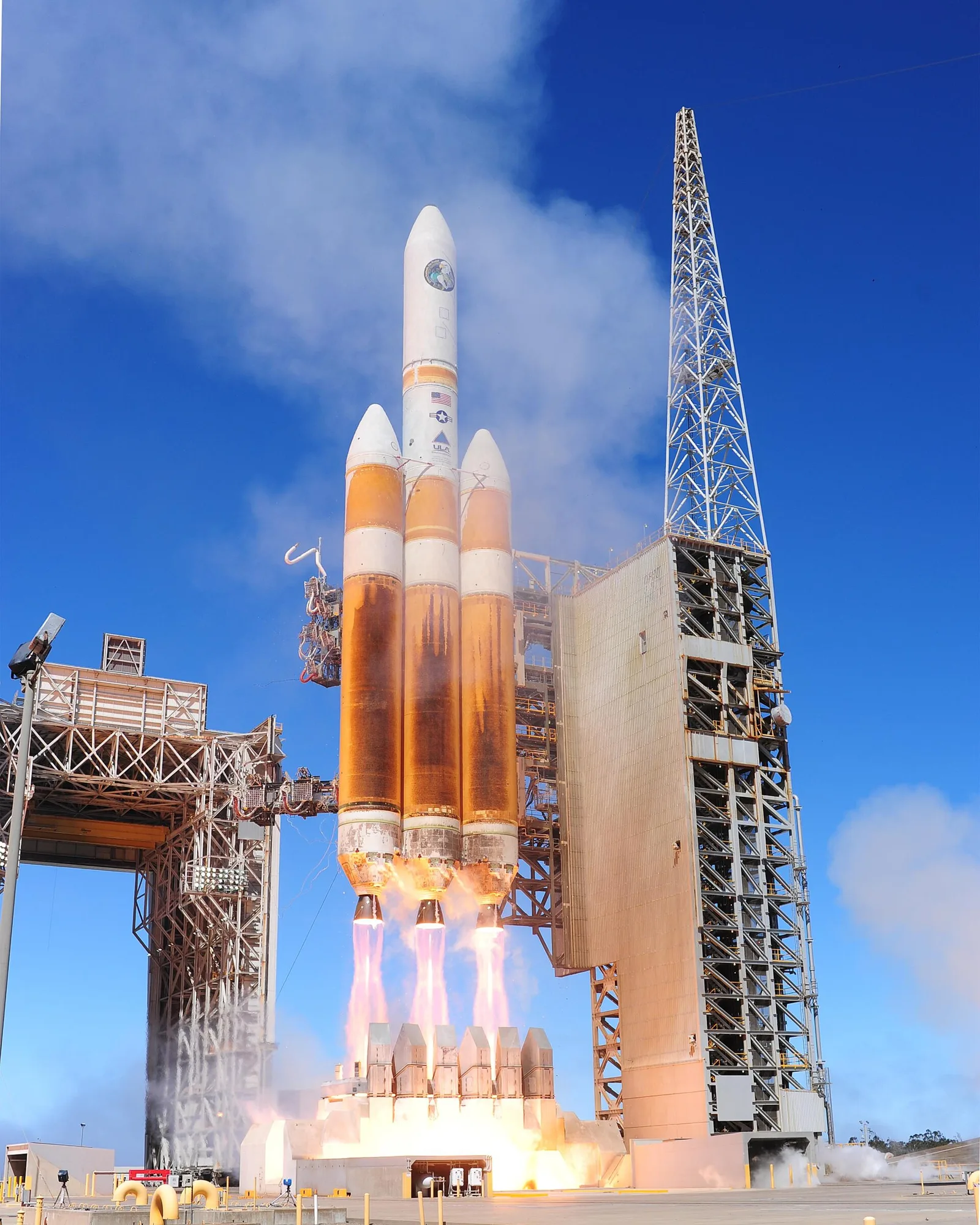
Rockets are a different story. Many large rockets use liquid hydrogen with liquid oxygen, and the Space Shuttle used liquid hydrogen to run fuel cells for its electrical systems, with the water byproduct used for drinking.
Why do critics doubt hydrogen cars?
Critics argue that wide-scale use of hydrogen in cars is unlikely for decades, and that it distracts from easier ways to cut fossil fuel use. Joseph Romm, a former US Department of Energy official, called the hydrogen car one of the least efficient and most expensive ways to reduce greenhouse gases.
Robert Zubrin, author of Energy Victory, called hydrogen a very poor vehicle fuel. Volkswagen's Rudolf Krebs said in 2013 that hydrogen mobility only makes sense with green energy, and he estimated that roughly 40 percent of the initial energy is lost in conversion, so that 30 to 40 percent of the original electric energy ends up in the wheels.
A 2016 study in Energy by researchers at Stanford University and the Technical University of Munich concluded that even with local hydrogen production, investing in all-electric battery vehicles is the more economical choice for cutting carbon dioxide. A 2017 analysis in Green Car Reports found the best fuel-cell vehicles used more than three times as much electricity per mile as an electric car.
Leaked hydrogen adds to the case against it. A 2023 study by the Centre for International Climate and Environmental Research put the warming effect of leaked hydrogen at 11.6 times that of CO2.
What are the safety risks of hydrogen?
Hydrogen is hazardous because it has low ignition energy and high combustion energy, and because it tends to leak easily from tanks given its small molecular size. It is odourless, so leaks are not easily noticed without specialised detectors, and explosions at filling stations have been reported.
In October 2024 Hyundai recalled every Nexo sold in the US so far, because a faulty pressure relief device posed a risk of fuel leaks and fire. Hydrogen embrittlement is also a concern for storage tank materials and nearby parts if chronic leakage occurs.
Supply is a further weakness. Hydrogen stations usually receive deliveries by truck, and an interruption at one supply facility can shut down several stations at once.
How does a hydrogen combustion car differ?
A hydrogen internal combustion car is a slightly modified version of a traditional petrol car. It burns hydrogen in much the same way, and the main difference is the exhaust, which is mainly water vapour rather than the carbon dioxide, carbon monoxide and particulates of petrol combustion.
As of 2021, hydrogen combustion cars were not commercially available. In 1807 Francois Isaac de Rivaz designed the first hydrogen-fuelled internal combustion engine. Mazda has developed Wankel engines that burn hydrogen for the RX-8 Hydrogen RE, and combustion engines offer a cheaper retooling path for production than fuel cells.
Speed records have been set with hydrogen power. A prototype Ford Fusion Hydrogen 999 fuel cell race car reached 207.297 mph (333.612 km/h) at the Bonneville Salt Flats in 2007, and Ohio State University's Buckeye Bullet 2 set a hydrogen land-speed record of 286.476 mph (461.038 km/h) in 2008.