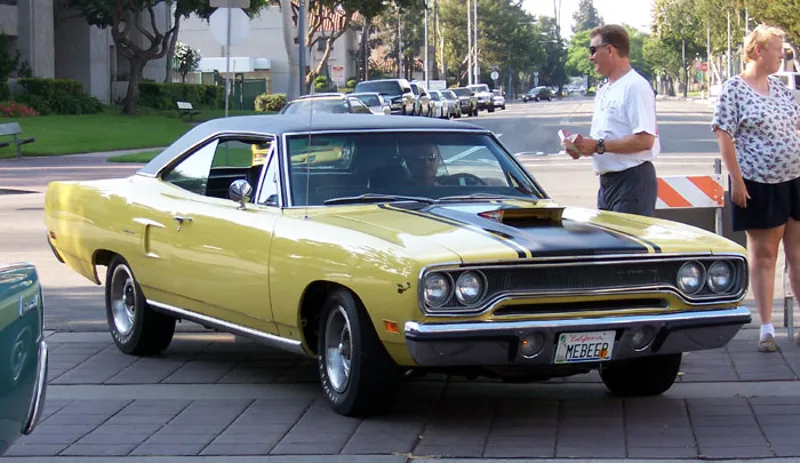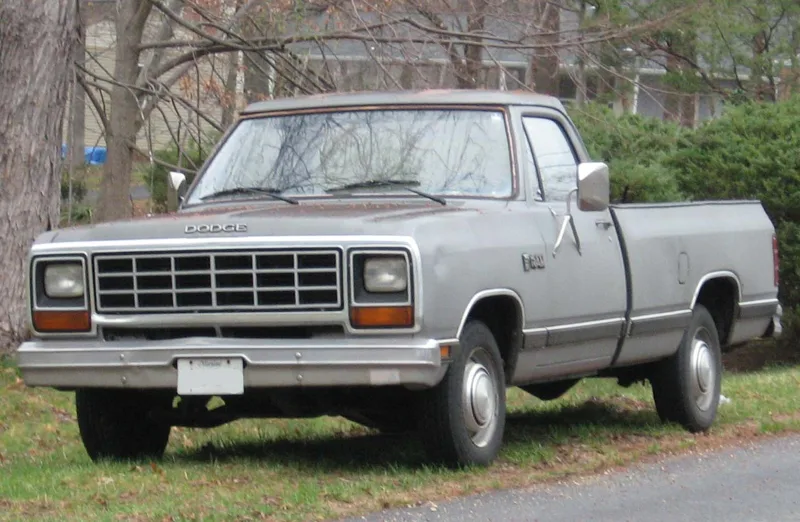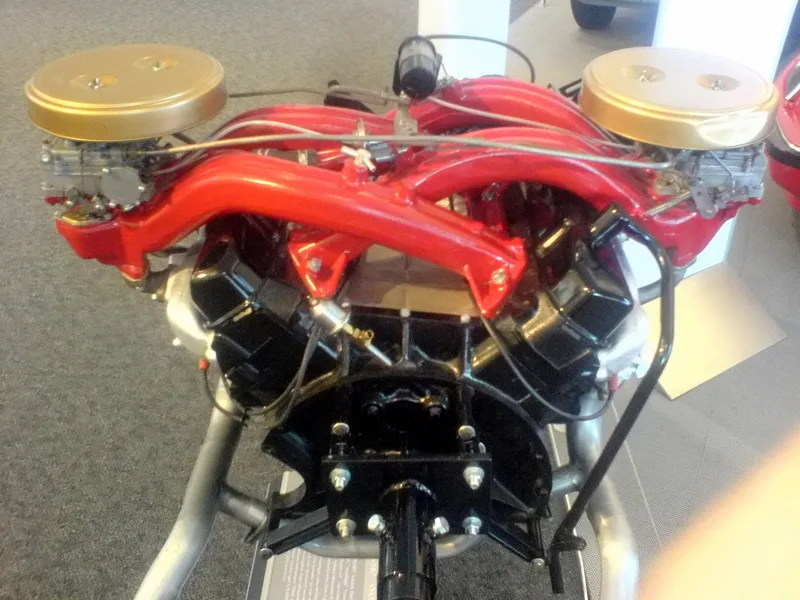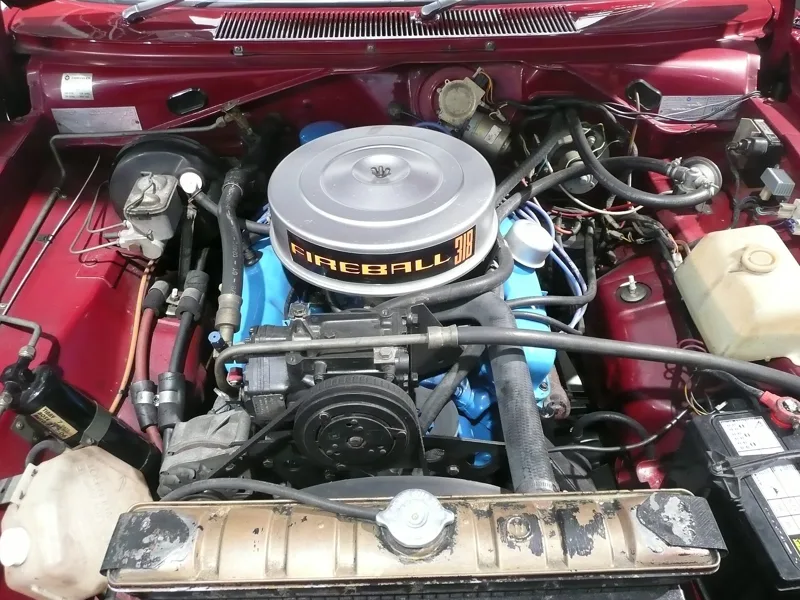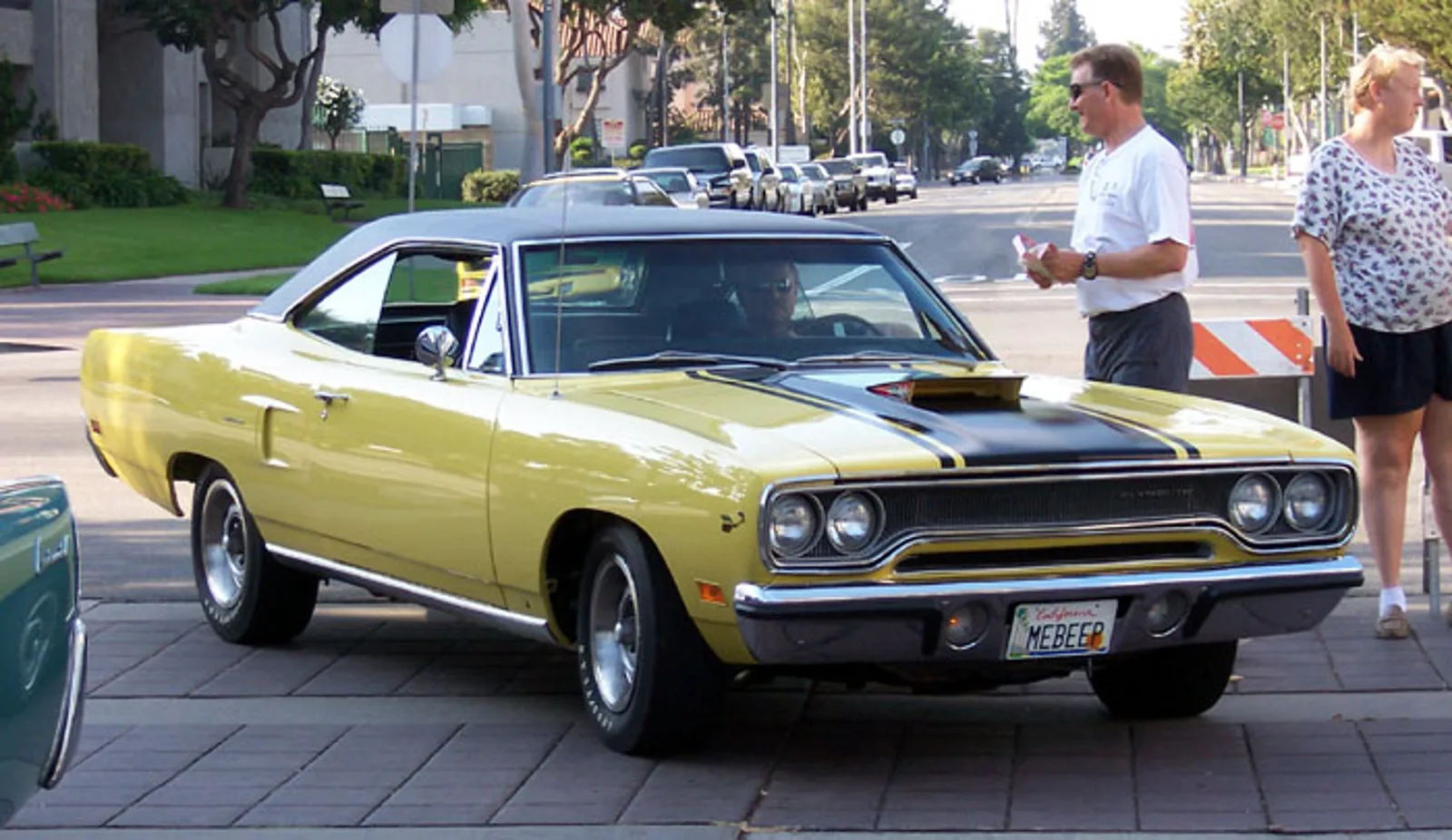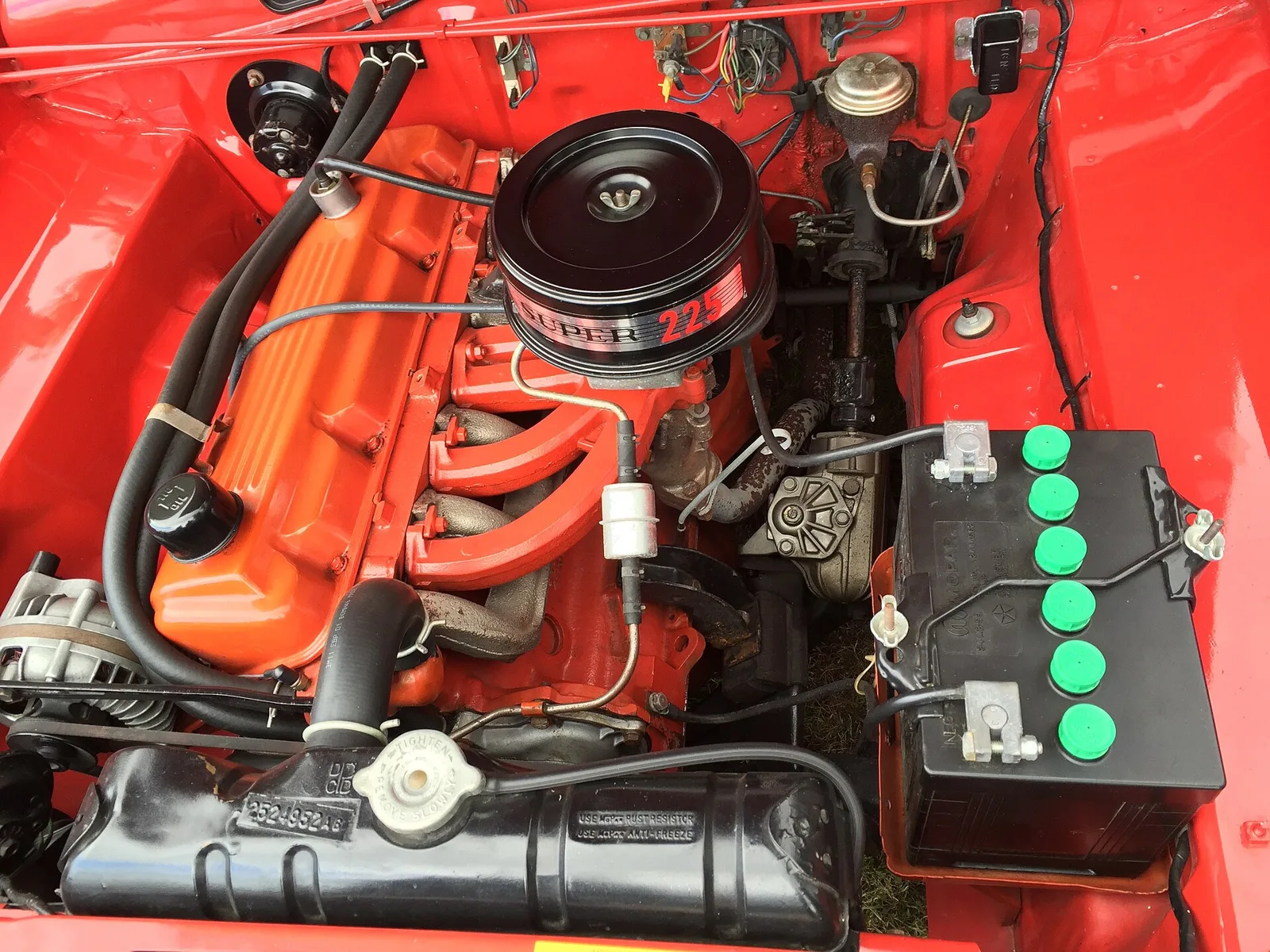
Chrysler's G-engine, built from 1959 to 1991 with a 30 degree cylinder bank, a reverse-flow head and a reputation for durability.
Chrysler's G-engine family spanned 170 to 225 cubic inches over three decades. Its 30 degree block and reverse-flow head suited cars, trucks, boats and industrial machinery, and the engine became known for its durability in every one of those roles.
The Chrysler Slant-Six was an overhead valve inline-six that Chrysler Motors built from 1959 to 1991. Its cylinder bank was inclined 30 degrees and it used a reverse-flow head, and it remained in production for three decades in cars, trucks, boats and industrial machinery.
What was the Slant-Six?
The Slant-Six was the promotional name for Chrysler's overhead valve inline-six. For the 1960 model year it arrived in two forms, a 2.8 L (170 cu in) and a 3.7 L (225 cu in). Internally Chrysler called it the G-engine, and it was a clean-sheet design meant to replace the flathead straight six that the company had used since 1925.
The design was led by Willem Weertman, who later became Chrysler's chief engine designer. Its slanted layout was a deliberate choice that shaped the rest of the engine, from the intake manifold to the height of the bonnet line.
The engine was used across the Chrysler range and by its international operations. Other manufacturers also bought it for work trucks, farm and construction machinery and boats.
A 30 degree block, four main bearings and a three-decade run that outlived most of its rivals.
Where did the Slant Six name come from?
The name did not start with enthusiasts. Chrysler used the phrase in its own press releases and advertising around the Valiant's introduction in late October 1959, but it does not appear in the 1960 or 1961 Plymouth Valiant brochures, which suggests it was a corporate label first.
Plymouth marketers gave the engine another label in 1960, calling it the 30-D Economy Six. The reference was to the 30 degree block angle, which set the engine apart from conventional upright sixes, and the name stuck with enthusiasts and owners alike.
Why was the cylinder block inclined?
The 30 degree slant lowered the engine's height. Chrysler's stylists could then lower the hood line, and the water pump could be offset to the side, which shortened the engine overall. The idea was borrowed from the Mercedes-Benz M194 used in the W194 300 SL.
Because of the inclination, the manifolds could be built with runners that were close in length. The first and sixth runners matched, as did the second and fifth, and the third and fourth were the shortest pair. This broadened the torque curve, and it spread the fuel mixture evenly to every cylinder.
The intake and exhaust ports sit on the same side of the head, yet the manifold arrangement still gave relatively good airflow at a low cost.
How was the G-engine built?
The G-engine was designed so that it could be cast in iron or aluminium, although most blocks were iron. Its deep skirt extends well below the crankshaft centreline, which gives the structure rigidity, and the crank sits well above the oil pan rails.
There were only four main bearings, but they matched those of the 2G five-bearing Hemi, and the fewer mains suited the torque loads the crank had to carry. Good cooling and oiling, rods long in proportion to the stroke, and a forged steel crank in engines built up to mid-1976 all added strength.
Between 1961 and 1963 about 52,000 die-cast aluminium blocks went into passenger cars. They were around 80 lb (36 kg) lighter than the iron block, but the aluminium versions suffered delamination between the iron liner and the aluminium, and corrosion was common.
The G-engine was offered in North American cars until 1983, in trucks until 1987 and for marine, agricultural and industrial use until 1991. That long life across so many applications was a large part of its reputation.
What were the 170, 198 and 225 versions?
The 170 used the low-deck LG block, unique to that engine, with a bore of 86.4 mm and a stroke of 79.4 mm for 170.2 cu in. It was built for North American models from 1960 to 1969 and for export markets until 1971, and the first vehicle to receive it was the 1960 Valiant.
The 170 was dropped as the base engine when the 198 arrived for the 1970 model year, which was a more powerful choice. It used the tall RG block with a 92.5 mm stroke and 178.0 mm connecting rods, which gave 198.3 cu in. Because it shared the tall RG block with the 225, Chrysler needed only one block for its larger sizes.
The 225 ran a 104.8 mm stroke and 170.2 mm rods on the tall RG block, giving 224.7 cu in. Its geometry was undersquare, which was unusual for the time, but it delivered strong low-speed torque for trucks and cars alike. The original 225 peaked at 4,000 rpm with roughly 145 hp (108 kW), and it produced 215 lb ft (292 Nm) of torque at 2,800 rpm. Designed first for full-size models, it went on to be the most familiar member of the family.
How did the engine change over its life?
The combustion chamber shape was modified for 1967 to burn more completely and cut exhaust toxicity. The rear flange of the crank gained a larger counterbore in 1968, which matters when swapping automatic gearboxes between engines. Owners planning a swap should check which flange their engine has before buying parts.
Electronic ignition, which Chrysler had introduced on its V8s in late 1971, became standard on every Slant-Six in 1973, including the RG versions. Exhaust valve seats were hardened by induction, and the valves themselves were upgraded in 1973 to cope with unleaded fuel.
Solid lifters were used through the 1980 model year, apart from a short test of hydraulic lifters in 1978. For 1981 all North American engines received top-fed hydraulic lifters, and retrofitting in either direction is possible.
The cast-iron crank replaced the forged steel unit in mid-1976. It came with a different block, separate main and rod bearings, and its own connecting rods, so it cannot be treated as a simple swap.
Most Slant Sixes ran a single one-barrel carburettor, and the small Holley 1920 was the most common fit. After an early factory racing programme ended by 1962, the engine received little performance development. From the early 1970s, emission controls reduced driveability and power, and specialist sixes such as the Pontiac OHC Six outperformed most Slant-Six versions.
What were the high-performance Slant-Six packages?
The Hyper Pak was a parts package offered from 1960 through 1962 at Chrysler dealers. It included a long-ram intake for an AFB four-barrel Carter carburettor, dual cast-iron headers and a 276-degree camshaft, and the full-race version used pistons that lifted compression from a stock 8.5 to 10.5.
Seven Valiants with factory backing contested the 1960 NASCAR compact car event at Daytona Beach, finishing first through seventh. The Hyper Pak was recommended only for manual gearboxes, because its camshaft needed a high idle to avoid stalling.
In Argentina a dual one-barrel Holley arrangement was fitted to Valiant GT models from 1965 to 1968, claiming 180 bhp (182 PS; 134 kW) against 145 bhp (147 PS; 108 kW) for the single-carburettor engine.
The export two-barrel setup arrived in 1967, rated at 162 PS (119 kW), or 160 bhp. It used a Carter BBD carburettor and a slightly hotter camshaft, and it was not offered in North America because it could cut into V8 sales.
The Dodge Polara RT of 1973 used a Holley 2300 two-barrel, a 273-degree camshaft and an 8.5:1 compression ratio. It made 174 bhp (176 PS; 130 kW) and 245.6 lb ft (333 Nm) of torque, reaching 113 mph (181 km/h) and 63 mph in 11 seconds.
The Super Six two-barrel package arrived for 1976 and was sold in North America until 1983. It lifted power to 110 hp, which is 101 to 112 PS or 75 to 82 kW, while torque rose to between 230 and 244 Nm (170 and 180 lb ft), with better throttle response.
Why did the Slant-Six end?
Chrysler's newer engines had more advanced chambers, electronic fuel injection and other improvements. Emission controls and carburettor specifications changed over the years to meet market demands. The length of the Slant-Six, however, ruled it out of the front-wheel drive cars that Chrysler increasingly built, so its role gradually narrowed.
The replacement for the truck range arrived for 1987. The Dodge Dakota's V6 was a 3.9 L (238 cu in) created by taking two cylinders off the 318 cu in LA V8. It took over across the Dodge truck range when the 1987 model year ended.
The engine's last applications were marine, agricultural and industrial, which ran until 1991. That long tail in work machinery shows how far the design was trusted beyond the car market. Chrysler had also signed a 1982 deal with Perkins Engines for a diesel version of the 3.7, but design work started in 1975 was cancelled in 1983 when the North American diesel market collapsed.
What were the main Slant-Six specifications?
| Version | Displacement | Bore and stroke | Output |
|---|---|---|---|
| 170 (LG block) | 170.2 cu in (2.8 L) | 86.4 mm x 79.4 mm | North American use, 1960 to 1969 |
| 198 (RG block) | 198.3 cu in (3.2 L) | Stroke 92.5 mm | Base engine, 1970 to 1974 |
| 225 (original) | 224.7 cu in (3.7 L) | 86.4 mm x 104.8 mm | Peak 4,000 rpm, 145 hp (108 kW) |
| Argentina dual carburettor | Not known | Not known | 180 bhp (182 PS; 134 kW) |
| Polara RT, 1973 | 225 cu in | Not known | 174 bhp (176 PS; 130 kW) |
| Super Six, 1976 to 1983 | Not known | Not known | 110 hp, 170 to 180 lb ft |
| Dodge Dakota V6, 1987 | 238 cu in (3.9 L) | Not applicable | Replaced the Slant-Six in trucks |